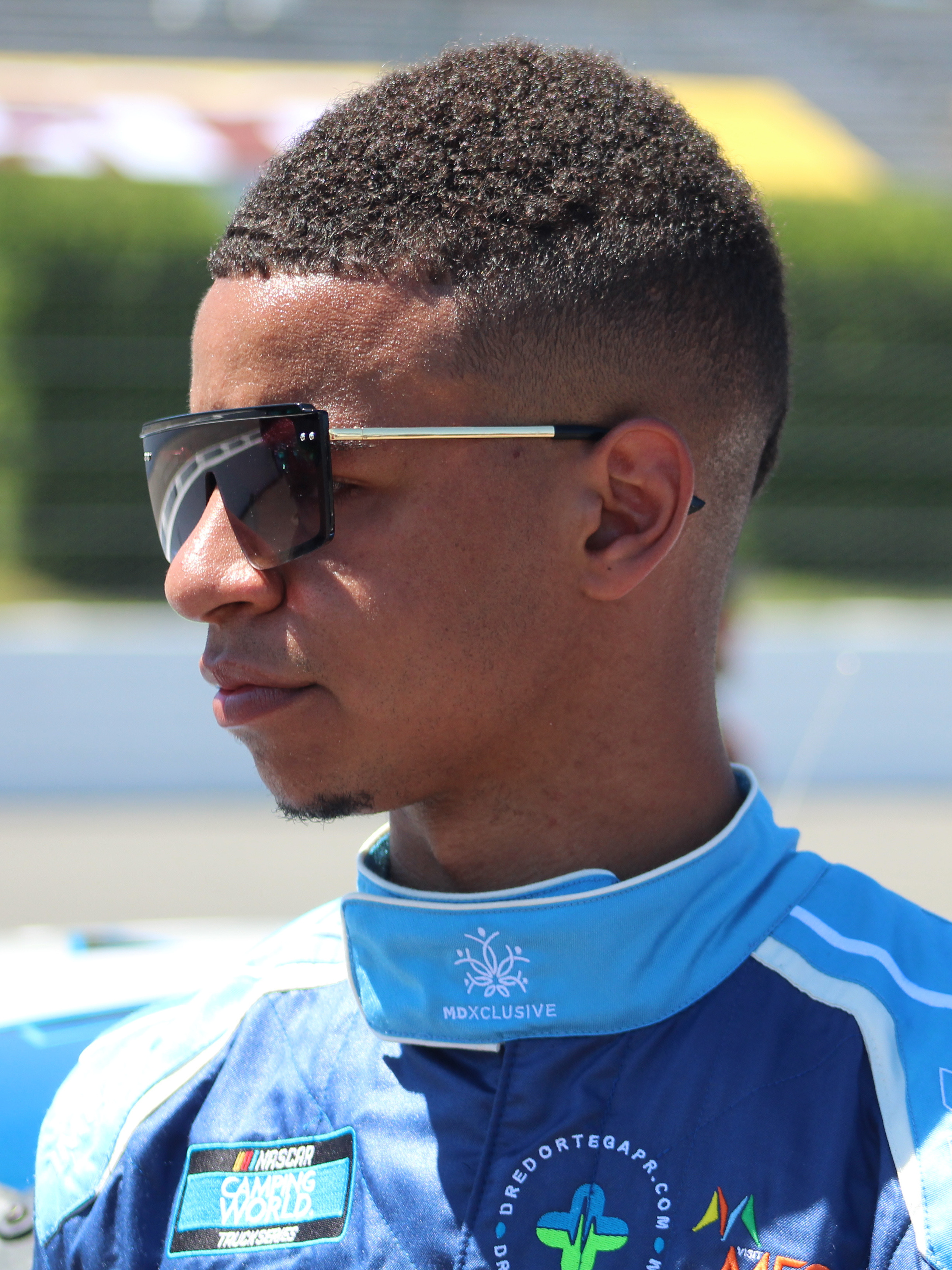
Kevin Hart
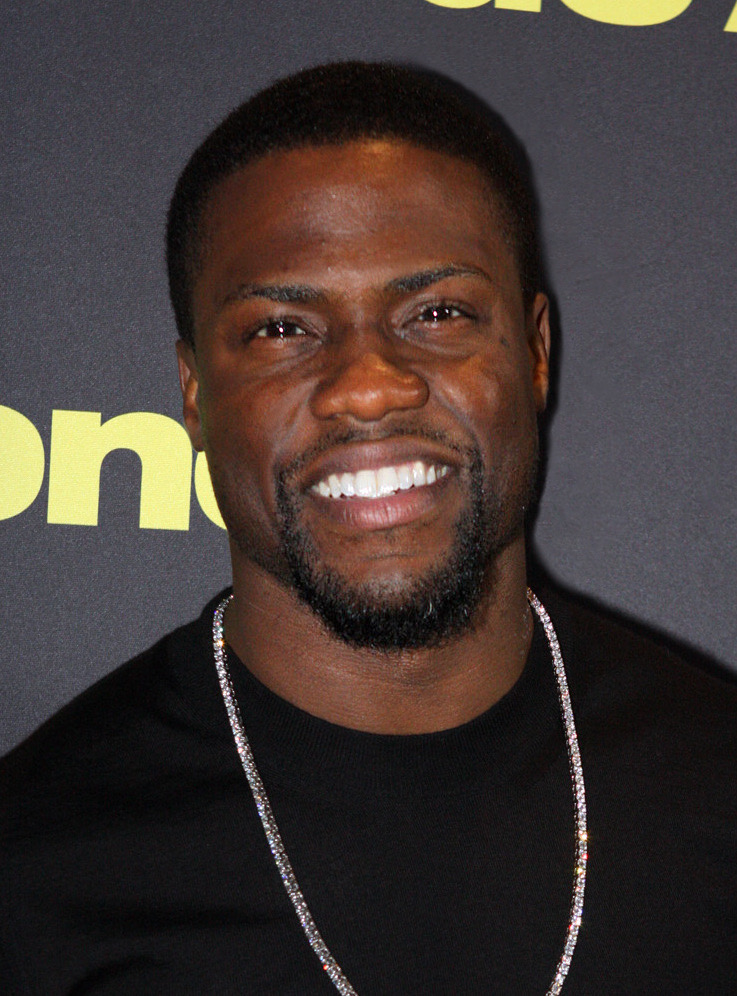
Stand-up comedian, actor; founder, HartBeat and Gran Coramino · b. 1979 · North Philadelphia, Pennsylvania
Two calls made by hand, not formulas. how we score →
Summary
His mother's steady job fed him; his father's addiction and jail time meant there was nothing left over to invest in him.
He sold shoes, got booed off Philadelphia stages, and in 2011 put up $750,000 of his own for a concert film that made ten times its budget with no studio behind it. Everything after went into ownership: a media company, a tequila brand, stakes bought back when they slipped.
How it happened
Born in Philadelphia in 1979 and raised in North Philly by his mother, Nancy Hart, a systems analyst in student registration at the University of Pennsylvania. His father, Henry Witherspoon, was a cocaine addict in and out of jail through most of Hart's childhood. Hart has said the habit of turning the house's tension into jokes started there. He has an older brother, Robert. The household had a real income, just not one that could fund anything beyond itself.
He graduated George Washington High School, tried the Community College of Philadelphia and left without a degree, telling a Philadelphia paper years later he'd done it without a dime of student debt. His first stand-up set, at Philly's Laff House under the name Lil Kev, went badly enough that someone threw a piece of chicken at him. He moved out on his own at eighteen, sold shoes to pay rent that was sometimes late, and worked his way through comedy competitions around Massachusetts while his delivery slowly found its shape.
Judd Apatow gave him his first real credit, a recurring part on "Undeclared" in 2001. Two years later Hart got his own sitcom, "The Big House," and produced it himself; it didn't come back for a second season. Through the early 2000s he was a working actor in other people's projects, not yet a name people paid to see on his own.
In 2011 Hart and his own production company put up roughly $750,000 for "Laugh at My Pain," a concert film they took to Codeblack, a distributor built for Black audiences, instead of waiting on a major studio. It opened in under a hundred theaters and pulled in $7.7 million, ten times its cost. That was the proof he needed: he could fill seats on his own name. Everything after, the stadium tours, the film paydays, the company he'd eventually own, ran on that same bet.
He started Laugh Out Loud in 2017 with Lionsgate as a partner and bought out most of their stake by 2019. In 2022 he merged it with his HartBeat Productions into Hartbeat, and private equity firm Abry Partners put in $100 million for what was reported as a 15% stake at a $650 million valuation. The same year he launched Gran Coramino tequila with Proximo Spirits, insisting on real equity rather than a licensing fee; by 2025 it had crossed $200 million in retail sales.
Hartbeat shrank hard in 2024 and 2025, with two rounds of layoffs and an executive lawsuit. In January 2026 Hart became a shareholder in Authentic Brands Group and used the deal to buy back Abry's stake in Hartbeat, trading day-to-day control of the media company for a cleaner ownership position and a bigger licensing partner. Estimates of his net worth run from roughly $300 million to $500 million; Hart himself has said the public figures aren't close.
The coded evidence
Thirteen groups, every claim sourcedDescendant
↗ en.wikipedia.orgnot established
He describes himself as a practicing Christian as an adult; a specific denomination or upbringing is not established in the public record.
↗ en.wikipedia.orgHis mother held a steady systems-analyst job at the University of Pennsylvania, a real if modest floor. It kept the household fed but never funded anything beyond it.
↗ web.archive.orgWorked as a shoe salesman after moving out on his own at eighteen, supporting himself while doing unpaid or low-paid comedy sets and entering competitions around Massachusetts.
↗ en.wikipedia.orgNone from his education. He has said publicly he left community college without any student loans.
↗ billypenn.comRented his first apartment in North Philly at eighteen with a roommate; he's said publicly that rent was sometimes late and the landlords were understanding about it.
↗ phillyvoice.comThe hardship was imposed, not chosen. There was nothing to fall back on.
A working-class income floor by necessity, not a chosen austerity.
↗ phillyvoice.comMother Nancy Hart worked as a systems analyst for the Office of Student Registration and Financial Services at the University of Pennsylvania. Father Henry Witherspoon's addiction kept him largely out of steady work and in and out of jail through Hart's childhood.
↗ web.archive.orgnot established
No account of his mother steering him toward or away from comedy specifically is established; he was already out on his own by the time he was performing regularly.
↗ en.wikipedia.orgAn immediate family member was incarcerated.
His father was repeatedly incarcerated on drug-related matters through most of Hart's childhood, tied to a cocaine addiction. Hart has discussed this on the record for years, including in his own memoir; the relationship improved after his father got clean. This is public, self-disclosed biography rather than a third-party allegation.
↗ web.archive.orgNorth Philadelphia, a working-class and by his own account rough neighborhood; he's referenced it repeatedly in interviews and in his later animated series about his childhood there.
↗ phillyvoice.comJudd Apatow cast him in a recurring role on "Undeclared" in 2001, Hart's first mainstream television credit.
↗ en.wikipedia.orgnot established
Accounts of his first stand-up sets at Philadelphia's Laff House describe him as young, but a specific age isn't consistently established across sources.
↗ en.wikipedia.orgBuilt through years on the club and competition circuit and a handful of stand-up albums (2009, 2010) before "Laugh at My Pain" (2011) proved he could sell tickets in his own name.
↗ en.wikipedia.orgReleased "Laugh at My Pain" through Codeblack, a distributor focused on Black audiences, and his own HartBeat Productions, rather than going through a major studio for his first concert film.
↗ en.wikipedia.orgHis self-produced sitcom "The Big House" (2004) did not return past one season; he kept working as an actor in others' projects for several more years before "Laugh at My Pain" changed the model.
Cancellation is inferred from the absence of a second season in the credited record rather than a direct statement.
↗ en.wikipedia.orgNo degree. Graduated George Washington High School in Philadelphia, attended the Community College of Philadelphia briefly, and left without finishing.
↗ web.archive.orgShoe-sales wages funded his early comedy years; no outside capital was raised for the stand-up career itself.
↗ en.wikipedia.orgIt paid its own way from the start. Revenue came before any outside money.
"Laugh at My Pain" (2011) was financed on a $750,000 budget and grossed $7.7 million before any major-studio backing.
↗ en.wikipedia.orgIn April 2022, Laugh Out Loud merged with HartBeat Productions into Hartbeat. The same year, private equity firm Abry Partners invested $100 million, reported at a $650 million valuation for roughly a 15% stake.
The Abry press release confirms the $100M investment and April 27, 2022 date; the $650M valuation and 15% stake are reported figures from business press (AfroTech, Celebrity Net Worth), not disclosed in the release itself.
↗ abry.comPut money and standing into Gran Coramino tequila (2022) as a genuine co-owner rather than a paid face, insisting on equity and operational involvement over a licensing fee; the brand passed $200 million in retail sales by 2025.
↗ forbes.comFounded Laugh Out Loud in 2017 with Lionsgate as a minority partner and bought out most of Lionsgate's stake by 2019, becoming majority owner of his own media venture.
↗ en.wikipedia.orgIn January 2026, Hart became a shareholder in Authentic Brands Group and used the proceeds to buy back Abry Partners' stake in Hartbeat, after two rounds of layoffs (late 2024 and late 2025) and an executive lawsuit had shrunk the company. He traded day-to-day operating control of Hartbeat for cleaner personal ownership and a larger licensing partner.
The ABG press release confirms the shareholder deal and date; the Abry buyout mechanism and Hartbeat's layoffs/lawsuit are reported by business press rather than stated in the ABG release itself.
↗ corporate.authentic.com2
Fame converted into ownership in two industries outside performing itself: media (Hartbeat) and spirits (Gran Coramino), plus a short-lived restaurant chain (Hart House, 2022-2024) that closed.
↗ forbes.com1
"The Big House" (2004), his first starring sitcom and first producer credit, did not return for a second season. Booed-offstage sets in his first year of stand-up aren't counted here as a separate venture.
↗ en.wikipedia.orgSelf, through shoe-sales wages, during the years between his first bad sets and his first paid stand-up work.
↗ en.wikipedia.orgRode the early-2010s boom in theatrically released stand-up concert films and DVD sales, then a mid-2010s run of $1B+ studio franchises (Jumanji) that made him one of the highest-paid entertainers in the world by the late 2010s.
↗ en.wikipedia.orgBuilt. Wrote and financed his own material and, later, his own distribution and ownership structure rather than acquiring an existing show or franchise.
↗ en.wikipedia.orgStand-up comedy, film, and media
↗ en.wikipedia.org450000000
Aggregator estimates for a private individual vary widely, roughly $300M-$500M depending on source and year, and none rest on a filing or disclosed valuation. Hart has publicly pushed back on the accuracy of online net-worth figures without giving his own number.
↗ finance-monthly.comAggregator
↗ celebritynetworth.com32500000
Forbes' 2017 highest-paid celebrities list; other aggregators cite higher touring-year figures (up to roughly $87M in 2016) that aren't independently confirmed to the same standard.
↗ web.archive.orgJournalistic estimate
↗ web.archive.orgHartbeat's $650M 2022 valuation was a peak, not a floor; two rounds of layoffs in 2024-2025 and a shrunken operating footprint by 2026 suggest the paper value never fully converted into realized wealth at that level.
↗ billionaires.africaA mix: fee income from film, touring, and endorsements alongside equity positions in Hartbeat and Gran Coramino. The equity side has been the more volatile of the two.
↗ forbes.comUncapped
Equity stakes in Hartbeat and Gran Coramino are uncapped in principle, even though Hartbeat's value has fallen from its 2022 peak.
↗ forbes.comCharged with DUI in April 2013 after his vehicle nearly collided with a truck on a Southern California freeway; pleaded no contest and was sentenced to three years' probation in August 2013.
↗ en.wikipedia.orgAfter
↗ en.wikipedia.orgUnrelated
Personal conduct with no evident bearing on his career or business trajectory.
↗ en.wikipedia.orgPersonal liability
Three years' probation doesn't map cleanly onto the schema's categories; it's a personal legal consequence short of incarceration, coded here as the closest fit.
↗ en.wikipedia.orgRelentless, Hands on, Polarizing
↗ forbes.comPublic
↗ en.wikipedia.orgBefore
His reputation as one of the hardest-working, highest-grossing touring comedians was established well before the 2018-19 Oscars controversy.
↗ en.wikipedia.orgMixed
↗ web.archive.orgIn December 2018, Hart was announced as host of the 91st Academy Awards; homophobic tweets he had posted between 2010 and 2011 resurfaced, and he stepped down within days after backlash over his response was reported as insufficient. He apologized to the LGBTQ community on December 7, 2018, briefly reconsidered hosting after Ellen DeGeneres's public support in early January 2019, then confirmed on January 8, 2019 that he would not host after his apology was widely reported as unconvincing. The ceremony went ahead without a host. His core comedy and film audience showed no lasting commercial pullback.
↗ web.archive.orgStructural context
The cost-of-failure score comes from this person's own money and circumstances. But who they were in America carried its own weight, the same way their household or income did, and it shaped how hard the path was just as much. That part isn't in the cost-of-failure number. It's here instead.
Men hold most of the ownership and gatekeeping across the creative and media industries, the default that recognition and deals flow toward.
↗ assets.uscannenberg.orgIn the creative and media industries, recognition comes far more easily to underrepresented creators than the ownership it should turn into. Among 2023's top-grossing film directors, for one measure, eight were Black.
↗ assets.uscannenberg.orgAmong the people recorded here — men: 115 · Black subjects: 58. Representation here is who reached these outcomes, not equal odds of reaching them.
Controlled comparisons
Each holds one thing constant and varies another, so the difference is the point. A list of similar names wouldn't tell you anything.