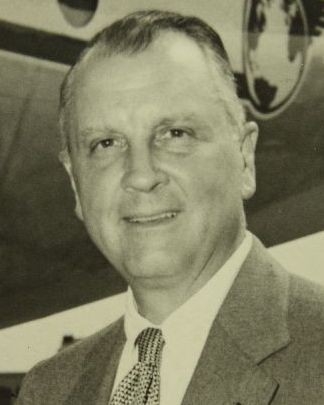
Kevin Systrom
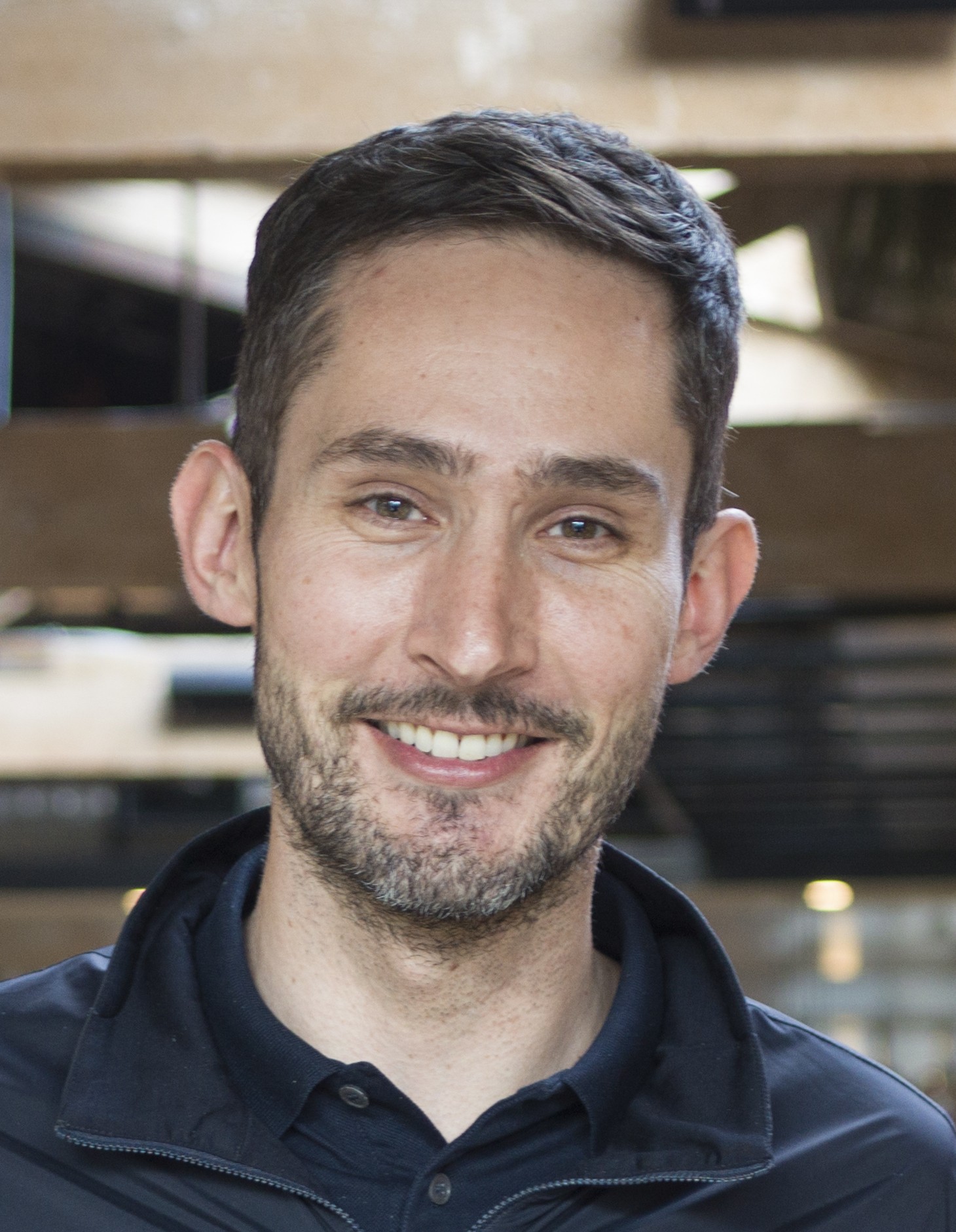
Co-founder and former CEO of Instagram · b. 1983 · Holliston, Massachusetts
Two calls made by hand, not formulas. how we score →
Summary
Raised outside Boston by a marketing executive and an HR vice president, he moved through an elite prep school, Stanford, and a Twitter-predecessor internship into a product-marketing job at Google.
In 2010 he pivoted a stalled check-in app into Instagram; Facebook bought the 13-person company about eighteen months later for roughly $1 billion. He left in 2018 amid tension over its independence.
How it happened
Born December 30, 1983, in Holliston, Massachusetts. His mother, Diane Systrom, was a marketing executive who had worked at Monster.com and Zipcar; his father, Douglas Systrom, was a vice president of human resources at the retailer TJX Companies. He grew up comfortable, in a stable two-parent household, with no documented financial strain at any point in childhood.
He attended Middlesex School, a private school in Concord, where a passion for the video game Doom II led him into programming. At Stanford he earned a B.S. in management science and engineering, graduating in 2006, and was one of twelve students chosen for the Mayfield Fellows Program, a selective Stanford entrepreneurship fellowship. That fellowship placed him in an internship at Odeo, the podcasting company that would later become Twitter. He reportedly turned down an early recruiting approach from Mark Zuckerberg while still a student, and spent a winter term studying photography in Florence.
After graduating he spent two years at Google as a product marketer, working on Gmail, Calendar, Docs, and Spreadsheets. In 2009 he left for Nextstop, a small social-travel-recommendation startup founded by former Google employees, and started spending nights and weekends teaching himself to build mobile apps. Out of that came Burbn, a location check-in app with photo-sharing, planning tools, and a points system.
Investors told him Burbn tried to do too much, and a first version struggled next to the already-established Foursquare. Working with Mike Krieger, a fellow Stanford student he brought on as co-founder, he stripped the app down to one feature: taking a photo, applying a filter, and sharing it. They renamed it Instagram and launched on the App Store on October 6, 2010. It passed a million users within a month.
Instagram closed a $500,000 seed round from Baseline Ventures and Andreessen Horowitz within about two weeks of Systrom leaving Nextstop, then a $7 million Series A in February 2011 from Benchmark Capital, Jack Dorsey, Chris Sacca, and Adam D'Angelo. In April 2012, days after closing a $50 million round at a $500 million valuation, Facebook agreed to buy the company — then 13 employees, about eighteen months old — for roughly $1 billion in cash and stock. Systrom owned about 40% of Instagram going into the deal.
Zuckerberg's commitment to run Instagram independently let Systrom stay on as CEO. The app grew from roughly 30 million users at acquisition to more than 800 million by the time he left, adding video, advertising, and Stories along the way. He joined Walmart's board in 2014, married Nicole Schuetz, founder of the clean-energy firm Sutro Energy Group, in 2016, and met with Pope Francis that year to discuss photography's role in connecting people across cultures.
Systrom and Krieger resigned together on September 24, 2018, saying they wanted to "explore our curiosity and creativity again." Contemporaneous reporting attributed the departure to mounting friction with Zuckerberg over Instagram's autonomy, including Facebook's replacement of an Instagram product lead with a member of Zuckerberg's inner circle a few months earlier. They had stayed six years past the acquisition, longer than most founders remain after being bought.
In January 2023 he and Krieger launched Artifact, a personalized, AI-driven news app. It shut down about a year later, in January 2024, and Yahoo acquired its technology that April. Systrom has also backed a SPAC, Ajax Capital, which took the online car marketplace Cazoo public in 2022.
Forbes put his net worth at about $2.4 billion as of March 2026, built almost entirely on the Meta stock he received in the 2012 deal and its appreciation since.
The coded evidence
Thirteen groups, every claim sourcedMulti-generational American; no recent immigration documented in the family line.
Inferred from absence of evidence, not directly documented.
↗ en.wikipedia.org0
No documented gap out of the workforce from his 2006 graduation through Google, Nextstop, Instagram, and Artifact.
↗ en.wikipedia.orgA stable, affluent two-parent household in Holliston, Massachusetts, on a marketing executive's and an HR vice president's combined income. No housing instability is documented at any point.
↗ en.wikipedia.orgTwo years of Google product-marketer income gave him savings and standing before he quit; a $500,000 seed round from Baseline Ventures and Andreessen Horowitz closed within about two weeks of his leaving Nextstop, well before any personal cushion would have run out.
↗ en.wikipedia.orgnot established
No dependents are documented during the Burbn or early Instagram years; he married in 2016, well after the company's founding.
↗ en.wikipedia.orgnot established
No debt figure is documented for his Middlesex, Stanford, or post-graduate years.
↗ en.wikipedia.orgnot established
No homelessness, food insecurity, or comparable instability is documented at any point.
↗ en.wikipedia.orgMother Diane Systrom, a marketing executive who worked at Monster.com and Zipcar; father Douglas Systrom, a vice president of human resources at TJX Companies.
↗ en.wikipedia.orgNeither parent was self-employed.
Both parents held salaried corporate roles in available accounts, not self-employment.
↗ en.wikipedia.orgnot established
Not directly documented, though both parents' executive roles imply college degrees at minimum.
↗ en.wikipedia.orgnot established
No documented account of a specific family sacrifice aimed at tuition; the household's income appears to have covered a private school and an elite university without strain.
↗ en.wikipedia.orgHolliston, Massachusetts, an affluent Boston-area suburb.
↗ en.wikipedia.orgMiddlesex School, a private school in Concord, Massachusetts, then Stanford University for management science and engineering.
↗ en.wikipedia.orgSuburban Boston in the 1990s had no comparable consumer-internet cluster; the industry access he needed came later, through Stanford and the Mayfield Fellows Program, which placed him directly inside Silicon Valley's startup and venture-capital circles.
↗ en.wikipedia.orgHolliston, Massachusetts, to Stanford, California, for college in 2002, staying in the Bay Area afterward for Google, Nextstop, and Instagram — a standard move toward a technology hub rather than a family migration.
↗ en.wikipedia.orgSelection for Stanford's Mayfield Fellows Program, a cohort of twelve students a year, placed him in an internship at Odeo, the company that became Twitter, an unpurchasable entry point into the Bay Area startup world that no application alone would have supplied.
↗ en.wikipedia.orgCold, direct-to-consumer distribution through Apple's App Store rather than a pre-existing personal or institutional relationship.
↗ en.wikipedia.orgMike Krieger, a fellow Stanford student, joined as co-founder and built much of Burbn's and then Instagram's technical infrastructure.
↗ en.wikipedia.org4
From his 2006 Stanford graduation and Google start to Instagram's October 2010 launch.
↗ en.wikipedia.org2
Google and Nextstop, both before he left to build Burbn into Instagram full time.
↗ en.wikipedia.orgMayfield Fellows Program, a selective Stanford entrepreneurship fellowship that admits twelve students a year and places them in startup internships; his placement was at Odeo.
↗ en.wikipedia.orgB.S. in management science and engineering, Stanford University, 2006.
↗ en.wikipedia.orgDirect path from an elite private secondary school to a selective research university, degree completed on schedule, with no financial interruption documented.
↗ en.wikipedia.orgStanford, and within it the Mayfield Fellows Program, functioned as both credential and network: the fellowship's Odeo placement, and the broader Stanford alumni and venture-capital circles he entered through it, fed directly into Instagram's founding and its first check.
↗ en.wikipedia.orgA $500,000 seed round from Baseline Ventures and Andreessen Horowitz, closed around March 5, 2010, roughly two weeks after Systrom left Nextstop to pursue Burbn full time.
↗ en.wikipedia.orgIt needed capital up front, before it earned anything.
Instagram was a free app with no monetization at launch or through the 2012 acquisition; it ran entirely on venture funding.
↗ en.wikipedia.orgTwo years of Google salary gave him personal savings, but the venture itself was funded almost immediately by outside seed investors rather than sustained personal income.
↗ en.wikipedia.org$500,000 seed (Baseline Ventures, Andreessen Horowitz, March 2010); $7 million Series A (Benchmark Capital, Jack Dorsey, Chris Sacca, Adam D'Angelo, February 2011); $50 million at a $500 million valuation, led by Thrive Capital, closing just days before the Facebook deal was announced in April 2012.
↗ en.wikipedia.orgInstagram raised three outside rounds in about two years and sold outright to Facebook rather than growing as an independent company; Systrom still held about 40% of the company going into the acquisition, an unusually high founder stake for a startup that had raised institutional venture capital.
↗ forbes.comFacebook paid mostly in its own stock rather than cash; Systrom held the position through Facebook's (later Meta's) subsequent growth rather than converting it to cash at the time, which is the largest single driver of his current net worth.
↗ forbes.comPersonal frustration on a Mexico vacation, when his girlfriend didn't want to post iPhone photos because the quality was poor, led him to build a filtering system; combined with an observed overload in Burbn's check-in features, that became the case for stripping the product down to photos alone.
↗ en.wikipedia.orgHe sold full economic ownership of Instagram to Facebook in 2012 but kept operating control as CEO for six more years, on Zuckerberg's stated commitment to run it independently — control without ownership, the reverse of the founder-favorable dual-class structures common elsewhere in this dataset.
↗ en.wikipedia.org0
Burbn's original check-in concept wasn't a separate failed venture; it was reworked, under the same seed funding and the same company, into Instagram. No distinct prior failed startup is documented.
↗ en.wikipedia.orgSeed investors Baseline Ventures and Andreessen Horowitz absorbed the financial risk of the Burbn-to-Instagram pivot, since the funding was outside capital rather than personal savings.
↗ en.wikipedia.orgLaunched two years after the App Store opened and as smartphone camera quality had just crossed a threshold worth sharing from, into a market where Foursquare had already defined check-in apps but no dominant photo-first social app yet existed.
↗ en.wikipedia.orgSan Francisco, where Burbn and then Instagram were built.
↗ en.wikipedia.orgBuilt — Instagram was a rebuilt, refocused version of his own Burbn product rather than an acquisition of an existing app or company.
↗ en.wikipedia.org14
From the April 2012 Facebook stock grant through the September 2026 net-worth figure used here; his wealth is almost entirely that holding's appreciation over this period.
↗ forbes.comConsumer technology and social media (Instagram); AI-driven news (Artifact, 2023-2024)
↗ en.wikipedia.org2401000000
Forbes real-time tracker, last updated March 10, 2026. Not the 2012 Instagram sale price, which was the company's price shared with co-founder Mike Krieger and outside investors — this is Forbes' current estimate of Systrom's own holdings, built mainly from the Meta stock he received in that deal and its appreciation since, plus smaller investment activity (including the Ajax Capital SPAC). No public filing discloses his exact current Meta share count, since he is no longer a company insider; treat as a band figure.
↗ forbes.comJournalistic estimate
↗ forbes.com2026
↗ forbes.comnot established
Instagram operated as a private Facebook subsidiary throughout his tenure as CEO; no proxy-statement-grade compensation figure is public.
↗ en.wikipedia.orgHe received mostly Facebook stock rather than cash in the 2012 deal — about $300 million cash and 23 million shares across the company as a whole, with Systrom's roughly 40% stake weighted toward the stock portion. That position is in a public company and could be sold, but no large realized sale is documented; his wealth reads as a long-held, appreciated equity position rather than a cashed-out fortune.
↗ en.wikipedia.orgWealth is almost entirely appreciated equity from the 2012 stock deal, not accumulated salary or founder income.
↗ forbes.comInstagram grew from roughly 30 million users at the 2012 acquisition to more than 800 million by the time he left in 2018, and now counts billions of monthly users, making him one of the more structurally influential figures in how photo- and video-based social media developed. He served on Walmart's board from 2014 to 2018 and made Forbes' 30 Under 30 list in 2014.
↗ en.wikipedia.org2
From Instagram's October 2010 launch to the April 2012 Facebook acquisition — a roughly 18-month span, with a wealth-defining outcome produced by a team that never grew past 13 people.
↗ en.wikipedia.orgUncapped
↗ en.wikipedia.orgNo regulatory finding or proceeding against Systrom personally is documented. Internal Meta research on Instagram's effects on teenage users' mental health became public through leaked documents in 2021, three years after his 2018 departure, and fed into later state and federal lawsuits against Meta; those actions concern the company under subsequent leadership and post-date the period covered by his own advantage.
Included for completeness given Instagram's later public scrutiny; not attributed to Systrom as personal conduct.
↗ en.wikipedia.orgAfter
↗ en.wikipedia.orgUnrelated
The later teen-mental-health research and litigation concern Meta's product decisions after Systrom's 2018 exit, not what produced his own wealth.
↗ en.wikipedia.orgdesign-focused, detail-oriented product builder, protective of Instagram's independence and brand, even-keeled, low-drama operator relative to Silicon Valley peers
↗ en.wikipedia.orgPress
↗ en.wikipedia.orgBefore
His reputation as a disciplined, design-minded founder was established well before the 2018 exit, through Instagram's own growth.
↗ en.wikipedia.orgAsset
His low-drama, product-first reputation helped Instagram keep its brand distinct inside Facebook for six years and continues to open doors — board seats, the Artifact launch, and investment access — since. Reporting on internal friction with Zuckerberg over autonomy complicates that picture but was never framed as personal misconduct.
↗ en.wikipedia.orgnot established
No major film, book, or dramatization of Systrom's story, comparable to those made about some other founders in this dataset, is documented.
↗ en.wikipedia.orgPublic coverage of the 2018 departure emphasized friction with Zuckerberg over Instagram's autonomy; Systrom and Krieger's own public statement was more measured, citing a wish to "explore our curiosity and creativity again" without naming a conflict directly.
↗ cnbc.comNo reputational crisis requiring recovery attaches to Systrom personally; his standing has stayed comparatively stable and positive since 2018, including through Artifact's 2024 shutdown, which was widely covered as an unsuccessful product bet rather than a personal setback.
↗ en.wikipedia.orgStructural context
The cost-of-failure score comes from this person's own money and circumstances. But who they were in America carried its own weight, the same way their household or income did, and it shaped how hard the path was just as much. That part isn't in the cost-of-failure number. It's here instead.
Men founded the companies that took nearly all the venture funding and almost every top outcome, a tailwind that never shows up in one person's own circumstances.
↗ techcrunch.comWhite founders are heavily overrepresented among funded companies and top-tier wealth relative to their share of the population, an edge that has nothing to do with a person's own money.
↗ techcrunch.comAmong the people recorded here — men: 169 · White subjects: 114. Representation here is who reached these outcomes, not equal odds of reaching them.
Controlled comparisons
Each holds one thing constant and varies another, so the difference is the point. A list of similar names wouldn't tell you anything.