LeBron James
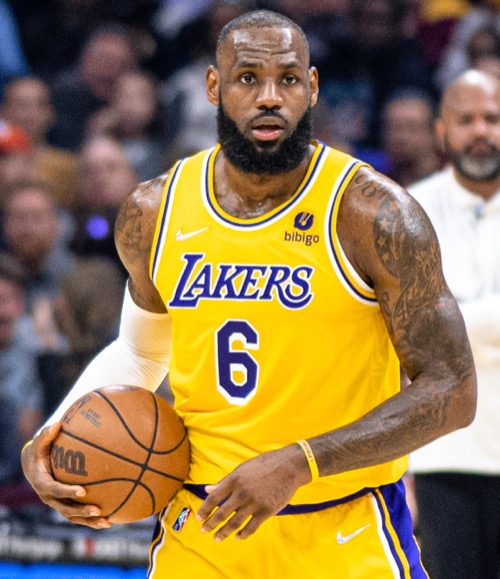
NBA player and founder, SpringHill Company · b. 1984 · Akron, Ohio
Two calls made by hand, not formulas. how we score →
Summary
Raised by a mother who was sixteen when he was born, moving between apartments until a coach's family took him in at nine.
Talent made him a national name before high school ended, and the first pick in the NBA draft straight out of it. What sets him apart is what came after: instead of only cashing endorsement checks, he started taking equity — a headphone company, a pizza chain, a soccer club.
How it happened
LeBron James was born in Akron, Ohio, to Gloria James, who was sixteen. His father, Anthony McClelland, had a criminal record including arson and theft and was never part of his life. The family moved repeatedly between apartments in the city's lower-income neighborhoods while Gloria looked for steady work, and he missed 83 days of school in fourth grade. At nine, she arranged for him to live with the family of Frank Walker, a local youth football coach with no prior connection to them, so he'd have a stable home. Walker introduced him to basketball.
By his sophomore year at St. Vincent–St. Mary High School, his games were broadcast on national television. Sports Illustrated put him on its cover in February 2002, while he was still a junior, under the headline "The Chosen One." Nike, Reebok, and Adidas entered a bidding war for him before he'd played a single NBA minute; he signed a seven-year, roughly $93 million deal with Nike days after Cleveland made him the first pick in the 2003 draft, straight out of high school with no college in between.
The shift started around 2010, when his business partner Maverick Carter described the renewed Nike relationship as "more like a joint venture" than an endorsement. A 2011 deal making Fenway Sports Group his global marketer came with a two-percent personal stake in Liverpool FC. In 2012 he put under a million dollars into a small pizza chain, Blaze Pizza; it was worth $25 million to him by 2017. When Apple bought Beats Electronics in 2014, his small ownership stake in the headphone company paid out more than $30 million. Each deal traded his name for a piece of the thing, not just a fee for using it.
In 2020 he and Carter folded three ventures into the SpringHill Company, named for the Akron housing complex where he was raised. He sold a minority stake in 2021 at a $725 million valuation. That same year he became a full partner in Fenway Sports Group itself, adding stakes in the Boston Red Sox, the Pittsburgh Penguins, and NASCAR's RFK Racing on top of Liverpool. In 2018, his foundation opened the I Promise School in Akron for at-risk kids, built around the instability of his own childhood.
Forbes named him the first active NBA player to become a billionaire and gives him its highest self-made score, even though the underlying asset — his talent — is nothing anyone can license or buy. His pretax career NBA salary runs past $500 million, and Forbes credits business ventures and endorsements with more than $1 billion pretax on top of that, roughly matching what he made just playing. Net worth is put at about $1.4 billion as of this review.
The coded evidence
Thirteen groups, every claim sourcedNo family-owned housing to fall back on. The family moved between apartments in lower-income Akron neighborhoods while Gloria James looked for steady work; at nine, she arranged for him to live with the family of Frank Walker, a youth football coach with no prior relationship to them, so he'd have a more stable home.
↗ en.wikipedia.orgGloria James is documented as unable to find permanent work during this period, which sources tie directly to the family's repeated moves. No father's income was present.
↗ en.wikipedia.orgMissed 83 days of school in fourth grade amid the family's repeated moves between apartments, before stabilizing at age nine when he began living with the Walker family.
↗ en.wikipedia.orgThe hardship was imposed, not chosen. There was nothing to fall back on.
Imposed by his mother's inability to secure steady work, not a chosen austerity.
↗ en.wikipedia.orgMother Gloria James's occupation during his childhood isn't documented beyond her being unable to secure permanent work. Father Anthony McClelland, who had a criminal record including arson and theft, was never part of the household.
↗ en.wikipedia.orgnot established
No siblings are named in the public record reviewed; treated as an only child.
↗ cnn.comFrank Walker, a local youth football coach with no prior family relationship, took him in at about age nine and introduced him to basketball — functioning as the stabilizing node an absent extended family would otherwise have supplied.
↗ en.wikipedia.orgGloria James arranged for him, at about age nine, to live with the Walker family for a more stable environment. This was an informal, long-running arrangement rather than a legal custody change.
↗ en.wikipedia.orgRepeated moves between apartments in lower-income Akron neighborhoods during early childhood, ending around age nine when he moved in with the Walker family.
↗ en.wikipedia.orgNo criminal record established for James himself.
↗ en.wikipedia.orgnot established
Not established as a count of distinct schools attended K–12. What is documented is 83 days of absence in fourth grade amid the family's repeated moves (see d1.instabilityDuringBuild).
↗ en.wikipedia.orgRaised partly in a low-income Akron apartment complex; the media company he later founded, SpringHill, is named directly after it.
↗ en.wikipedia.orgAkron public schools in his early years, then St. Vincent–St. Mary High School, a private Catholic school with a predominantly white student body, where he became a nationally covered basketball recruit.
↗ en.wikipedia.orgAttended St. Vincent–St. Mary as part of the "Fab Four," a group of childhood friends (with Sian Cotton, Willie McGee, and Dru Joyce III) who committed to the same high school together and formed the core of its championship teams.
↗ en.wikipedia.orgIn May 2017, a racial slur was spray-painted on the gate of his Los Angeles home. At a press conference afterward he said, "No matter how much money you have, no matter how famous you are, no matter how many people admire you, being black in America is tough."
Identity-based headwind that persisted independent of wealth or fame; feeds coded.headwinds, not hardness.
↗ cnn.comFrank Walker, the youth football coach who took him in at nine, was the person who introduced him to basketball in the first place.
↗ en.wikipedia.org18
Drafted first overall by the Cleveland Cavaliers on June 26, 2003, straight out of high school; born December 30, 1984.
↗ cnn.comWas already a nationally known figure — magazine covers, televised high school games — before entering the NBA, unusual for an entering professional athlete and part of what made the Nike bidding war possible before he'd played a pro game.
↗ cnn.comLong represented by Rich Paul and the agency Paul built around him, Klutch Sports Group; business partner Maverick Carter, rather than a traditional agent, structured the shift from endorsement fees toward equity stakes.
↗ forbes.comNationally covered as a top high-school recruit; Sports Illustrated put him on its cover in February 2002, while still a high school junior, as "The Chosen One," years before his first NBA game.
↗ cnn.comNo college. Entered the 2003 NBA draft directly out of St. Vincent–St. Mary High School in Akron.
↗ en.wikipedia.orgHis first major money was the rookie NBA contract paired with a seven-year, roughly $93 million Nike deal signed the same year — not founder capital in the conventional sense, but earned income tied directly to his talent.
↗ cnbc.comProceeds from the Beats sale and other equity conversions were redeployed into further ownership stakes — Blaze Pizza, SpringHill, Fenway Sports Group — rather than spent down.
↗ en.wikipedia.orgStarting with a 2010 Nike renewal his business partner described as "more like a joint venture" than an endorsement, he moved from pure fee-for-endorsement toward equity: a stake in Beats Electronics, a personal minority stake in Liverpool FC through the 2011 Fenway Sports Group deal, and founder equity in SpringHill Company and Blaze Pizza.
↗ cnbc.comThe SpringHill Company's name and the I Promise School's mission trace directly to his own upbringing — the company is named for the Akron housing complex where he was raised, and the school is built around the instability of his own childhood.
↗ en.wikipedia.orgnot established
Not applicable. Ventures were funded from abundant NBA and endorsement income rather than by liquidating a safety net, since none was ever depleted.
↗ forbes.com5
Audio hardware (Beats, sold to Apple 2014), food service (Blaze Pizza, invested 2012), sports team ownership (Liverpool FC/Fenway Sports Group, 2011 and 2021; later A.C. Milan and the Pittsburgh Penguins), media (SpringHill Company, 2020), and spirits (angel investment in Lobos 1707 tequila, 2020).
↗ forbes.comnot established
No failed venture is documented before his equity-conversion moves. His path ran through elite, early-recognized athletic performance rather than iterative venture attempts.
↗ en.wikipedia.org18
The 2003 NBA draft is the clearest single inflection point, though the ownership-conversion pattern the site tracks began later, around 2010–2011.
↗ cnn.comA mix. Built SpringHill and the I Promise School from nothing; bought into existing operations for Blaze Pizza, Beats Electronics, and the Fenway Sports Group/Liverpool stake.
↗ en.wikipedia.org26
The 2011 Fenway Sports Group/Liverpool stake and Beats equity mark the start of the equity-over-fee pattern.
↗ en.wikipedia.orgProfessional basketball and business ventures (media, consumer brands, sports ownership)
↗ forbes.comJournalistic estimate
↗ forbes.com2026
↗ forbes.comRoughly evenly split between two channels: upwards of $500 million in pretax NBA salary over his career, and more than $1 billion pretax from business ventures and endorsements — an unusually even split for an athlete, most of whom earn far more from playing than from equity.
↗ forbes.comFounded the I Promise School in Akron in 2018 for at-risk children, modeled on his own unstable childhood, and his foundation has pledged more than $40 million to send local kids to college. Widely regarded as one of the greatest basketball players in NBA history.
↗ forbes.comUncapped
↗ forbes.comTeam first, Business savvy, Activist, Self made
Forbes assigns him a Self-Made Score of 10, its highest tier, despite the athletic talent underlying it being impossible to copy.
↗ forbes.comPublic
↗ forbes.comBefore
His reputation as a top talent formed before the equity-conversion pattern (from roughly 2010 onward) that this record tracks.
↗ cnn.comAsset
His name and image were the consideration in every equity deal — Beats, Blaze Pizza, Fenway Sports Group, SpringHill.
↗ forbes.comThe reputation was deliberately built, through books, press, and PR.
Built SpringHill Company partly to control his own media narrative directly rather than solely through press coverage.
↗ en.wikipedia.orgBroadly popular and commercially dominant, but his outspokenness on race and politics — including the 2017 response to a racial slur spray-painted at his home, and his role backing a new ownership group for the WNBA's Atlanta Dream in 2021 — has drawn both strong support and vocal criticism from different audience segments.
↗ en.wikipedia.orgStructural context
The cost-of-failure score comes from this person's own money and circumstances. But who they were in America carried its own weight, the same way their household or income did, and it shaped how hard the path was just as much. That part isn't in the cost-of-failure number. It's here instead.
Men hold most of the ownership and gatekeeping across the creative and media industries, the default that recognition and deals flow toward.
↗ assets.uscannenberg.orgIn the creative and media industries, recognition comes far more easily to underrepresented creators than the ownership it should turn into. Among 2023's top-grossing film directors, for one measure, eight were Black.
↗ assets.uscannenberg.orgAmong the people recorded here — men: 169 · Black subjects: 58. Representation here is who reached these outcomes, not equal odds of reaching them.
Controlled comparisons
Each holds one thing constant and varies another, so the difference is the point. A list of similar names wouldn't tell you anything.