Leo Burnett
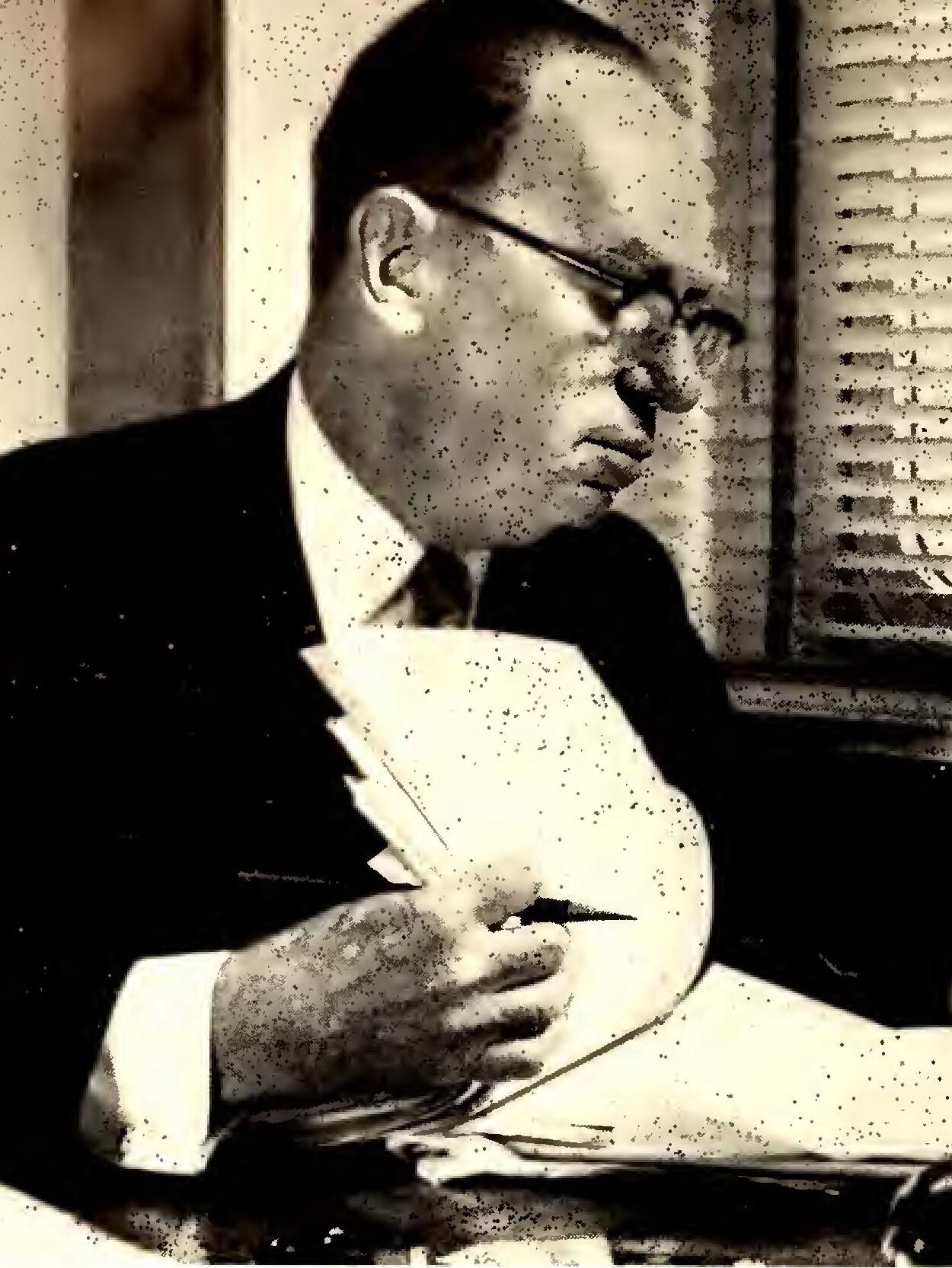
born Leo Noble Burnett
Founder of the Leo Burnett Company; created Tony the Tiger, the Marlboro Man, the Jolly Green Giant, and the Pillsbury Doughboy · b. 1891–1971 · St. Johns, Michigan
Two calls made by hand, not formulas. how we score →
Summary
A dry-goods merchant's son from small-town Michigan who spent nearly two decades in car-company and agency jobs before mortgaging his house and life insurance to open his own Chicago shop in 1935, mid-Depression.
He built brand characters like the Marlboro Man and Tony the Tiger into one of advertising's largest private agencies, then gave his controlling stock to a trust before he died.
How it happened
Leo Noble Burnett was born October 21, 1891, in St. Johns, a small county-seat town in central Michigan, the first of four children of Noble Burnett, who ran a dry-goods store, and Rose Clark Burnett. It was a comfortable, unremarkable childhood — a shopkeeper's household, not a wealthy one — and Burnett went on to the University of Michigan, where he earned a bachelor's degree in journalism in 1914 with an eye toward running a newspaper someday.
Instead he drifted into advertising by way of Detroit's auto industry, editing an in-house publication for Cadillac dealers and eventually becoming the division's advertising director, where he came under the influence of Theodore F. MacManus, an adman known for an understated, emotional style at a time when most advertising was dense with claims and specifications. After Navy service in World War I he worked as an advertising manager for LaFayette Motors in Indianapolis, then took his first agency job with the Homer McKee agency there. In 1930 he moved to Chicago as a vice president and head of the creative department at Erwin, Wasey & Company, a post he held for five years.
On August 5, 1935, at 43, he opened his own agency in Chicago with eight staff pulled largely from Erwin Wasey, one account, and — as the story is always told — a bowl of red apples on the reception desk. The Depression was still crushing Chicago and word on the street was that he wouldn't last the year. He funded the launch himself: by his own later account he "sold my house, hocked all my insurance, and took a dive off the end of a springboard," putting up somewhere around $25,000-$50,000 of capital with a wife and three young children to support. He also made a deliberate, unconventional choice to stay in Chicago rather than move to Madison Avenue, then the industry's undisputed center.
The agency grew by finding what Burnett called the "inherent drama" in ordinary products rather than arguing a case for them, and it produced some of the most recognized commercial characters of the century — Tony the Tiger, the Jolly Green Giant, the Pillsbury Doughboy, Charlie the Tuna, the Keebler Elves, the Maytag Repairman, Morris the Cat — plus the taglines "You're in Good Hands with Allstate" and "Fly the Friendly Skies of United." In 1954 the agency took on Philip Morris and built the Marlboro Man, recasting a cigarette that had been marketed mainly to women around a cowboy image; within a year Marlboro went from a minor brand to one of the best-selling cigarettes in the country. Billings ran under $1 million in the agency's first year, passed $22 million by 1950, and reached roughly $250 million by 1967.
In February 1967, four years before he died, Burnett transferred all of his voting stock in the company to a charitable trust rather than cashing it out or passing it to his family — a choice that kept the agency independent and privately held rather than converting his stake into a personal fortune.
Burnett kept working full days, by his own description, every day of the year except Christmas, and gave a widely quoted farewell talk to his staff in December 1967 titled "When To Take My Name Off The Door," warning them against ever settling for mediocre work once he was gone. He died of a heart attack at his farm near Lake Zurich, Illinois, on June 7, 1971, at 79. He was inducted into the Copywriters Hall of Fame in 1961 and the Advertising Hall of Fame, and Time named him one of the 100 most influential people of the 20th century in 1999. The company he founded stayed privately held for another three decades before Publicis Groupe acquired it in 2002.
The coded evidence
Thirteen groups, every claim sourcedCoded from a multi-generation white Midwestern family with an English surname and no documented recent-immigration history; not a self-declared category.
↗ encyclopedia.comMulti-generation descendant; no documented recent immigration in the family.
↗ en.wikipedia.orgNo housing instability of any kind is documented in childhood — a shopkeeper's household in a small Michigan town. The one housing risk on record came decades later and was self-imposed: to fund his 1935 agency, he mortgaged the house he owned rather than keeping it as a fallback.
Hardness is coded from the secure, comfortable origin, not from the 1935 founding risk, which was a deliberate bet made from an established career rather than a hard starting condition.
↗ encyclopedia.comBy 1935 he was a well-compensated vice president and creative-department head at Erwin, Wasey & Company with 18 years in the industry. He gave up that security rather than keeping it as a floor, funding the new agency by mortgaging his house and borrowing against his life insurance instead of drawing on outside investors or a wealthy backer.
↗ campaignlive.co.uk3
Wife Naomi Geddes Burnett and three children — Peter, Joseph, and Phoebe — at the time of the 1935 founding.
↗ encyclopedia.comA house mortgage and a loan against his life insurance, both taken on specifically to capitalize the 1935 founding rather than carried over from an earlier hardship.
↗ encyclopedia.comThe hardship was chosen. There was a home to go back to if it failed.
He chose to risk a secure, senior income and a paid-for house to found the agency; nothing forced the move, and a return to salaried agency work would very likely have been available to him if it had failed.
↗ campaignlive.co.ukFather Noble Burnett ran a dry-goods store in St. Johns, Michigan; mother Rose Clark Burnett is not documented as employed outside the home.
↗ encyclopedia.comA parent worked for themselves, the strongest known predictor of founding.
Owned the family dry-goods store rather than working for wages.
↗ encyclopedia.comnot established
How his University of Michigan tuition was funded is not documented; coded.credentialFunding is an inference from the family's comfortable, self-employed background.
↗ en.wikipedia.orgSt. Johns, Michigan — a small, non-industrial county-seat town.
↗ en.wikipedia.orgPublic schools in St. Johns, Michigan; no selective or private schooling documented before college.
↗ encyclopedia.comA series of domestic, career-driven moves in early adulthood: Ann Arbor for college, Peoria for a newspaper job, Detroit for Cadillac, Indianapolis for LaFayette Motors and the Homer McKee agency, then Chicago in 1930 for Erwin, Wasey & Company, where he stayed. No international migration.
↗ en.wikipedia.orgTheodore F. MacManus, his supervisor at Cadillac, was an advertising figure known for an understated, emotional "reason why not to shout" style at a time when most advertising leaned on dense claims and specifications; Burnett credited that early exposure with shaping his own approach.
↗ en.wikipedia.orgHis sole account on opening day, Minnesota Valley Canning Company, was won on his personal reputation rather than a cold pitch or an existing personal relationship — its president reportedly said he wanted "the little guy with dandruff and the rumpled suit."
↗ fundinguniverse.comErwin, Wasey & Company's Chicago office, where he spent five years as vice president and head of the creative department before leaving to found his own agency in 1935. Most of his original eight-person staff came from there.
↗ encyclopedia.comCredibility, Network, Skill
↗ encyclopedia.com25
First advertising-adjacent role editing Cadillac's dealer publication around 1917, after a year as a police reporter in Peoria.
↗ en.wikipedia.orgRoughly a decade and a half rising through automobile-company and agency advertising jobs, culminating in five years as a Chicago creative-department head, before starting his own shop.
↗ encyclopedia.com4
Cadillac, LaFayette Motors, the Homer McKee agency, and Erwin Wasey & Company, before founding his own agency.
↗ en.wikipedia.orgBS in journalism, University of Michigan, 1914.
↗ en.wikipedia.orgDirect — a public state university, no graduate degree.
↗ en.wikipedia.orgRoughly $25,000-$50,000 in capital to open the agency on August 5, 1935, drawn from mortgaging his own house and borrowing against his life insurance rather than from any outside investor.
Sources disagree on the exact figure — encyclopedia.com and Creative Hall of Fame both give $50,000 as the agency's opening capitalization, while a Campaign trade-press history puts his personal stake at "a $25,000 gamble." The two may describe different totals (personal stake versus full working capital) rather than a contradiction.
↗ encyclopedia.comIt paid its own way from the start. Revenue came before any outside money.
A service business with a paying client, Minnesota Valley Canning Company, from opening day.
↗ fundinguniverse.comThe house and life-insurance value he drew on came from more than fifteen years of increasingly senior advertising salaries, most recently five years as a vice president at Erwin, Wasey & Company — not from family money or inheritance.
↗ encyclopedia.comGrew entirely on founder capital and retained earnings. The agency never took outside investment and, unlike most major competitors, deliberately stayed privately held rather than going public in the 1960s wave of agency IPOs.
↗ fundinguniverse.comRather than cashing out or passing his controlling stake to his family, he directed it to a charitable trust four years before he died, consistent with a personal reputation for modesty over accumulation.
↗ en.wikipedia.orgA reaction against the fact-heavy, claim-driven advertising school dominant in the industry at the time, in favor of what he called finding the "inherent drama" already present in a product — a philosophy formed across his prior jobs rather than a single commissioned idea.
↗ encyclopedia.comIn February 1967, when billings were nearing $250 million, he transferred all of his personal voting stock in the company to a charitable trust rather than to his heirs or a buyer — separating himself from the wealth the company represented while keeping it independent and privately controlled.
↗ en.wikipedia.orgHe described the founding himself as having "sold my house, hocked all my insurance, and took a dive off the end of a springboard" — converting his own housing and insurance cushion directly into founding capital during the Depression, with a wife and three children depending on the outcome.
A genuine risk, but taken from an established, well-paid career rather than from an already-precarious position — the distinction the origin hardness score preserves.
↗ encyclopedia.com0
No venture of his own failed before the 1935 founding; a continuous employed climb through Cadillac, LaFayette Motors, Homer McKee, and Erwin Wasey.
↗ en.wikipedia.orgDepression-era Chicago in 1935, with agency failure widely expected — "the odds on the street" reportedly had him not lasting out the year.
↗ campaignlive.co.ukChicago, where he had already been working for five years; he chose to build there rather than relocate to New York's Madison Avenue, then the acknowledged center of the advertising industry.
↗ fundinguniverse.comBuilt — a new agency from scratch, not an acquisition.
↗ fundinguniverse.com36
From the 1935 founding to his death in June 1971; he stayed actively involved in the agency for essentially his whole career.
↗ en.wikipedia.orgDeliberately headquartered and kept the agency in Chicago rather than New York, a positioning the agency later made part of its identity.
↗ fundinguniverse.comAdvertising
↗ en.wikipedia.orgnot established
No credible, methodology-disclosed personal net-worth figure exists. The agency was privately held throughout his life, so there is no public-equity or filing basis for one, and no probate or estate figure was located. He also transferred his controlling voting stock to a charitable trust in February 1967, four years before his death, which would have further reduced whatever estate he left. Treated as not established; the magnitude band below is coded from the documented scale of the privately held agency he built and owned for most of its life, not from a personal wealth estimate.
↗ en.wikipedia.orgnot established
Not established. Predates the modern proxy-statement compensation disclosure regime, and the company was never public.
↗ en.wikipedia.orgWhatever wealth he held came from ownership of a privately held agency rather than salary, but he gave away his controlling stock to a trust in 1967 rather than converting it into a realized personal fortune before he died.
↗ en.wikipedia.orgCreated or oversaw the creation of Tony the Tiger, the Marlboro Man, the Jolly Green Giant, the Pillsbury Doughboy, Charlie the Tuna, the Keebler Elves, the Maytag Repairman, and Morris the Cat, along with the taglines "You're in Good Hands with Allstate" and "Fly the Friendly Skies of United." The Marlboro Man campaign is documented as having helped turn Marlboro, previously marketed mainly to women, into one of the best-selling cigarette brands in the world. Inducted into the Copywriters Hall of Fame (1961) and the Advertising Hall of Fame; named one of Time's 100 most influential people of the 20th century (1999). The agency he founded remained one of the largest independent shops in the world for decades after his death.
↗ en.wikipedia.orgUncapped
↗ fundinguniverse.comnot established
No personal regulatory or legal action against Burnett is documented. Cigarette advertising broadly came under increasing federal scrutiny and eventual broadcast restriction from the mid-1960s on, but that regulatory history targeted the tobacco industry and its advertising generally, not Burnett individually.
↗ en.wikipedia.orgBuilt the agency into one of the largest employers in its industry and is described consistently across sources as an unusually modest, hands-on, collaborative manager for the era, with no documented labor disputes or adverse findings against him personally.
↗ encyclopedia.comModest, Unpretentious, Visionary, Workaholic
Described as "the antithesis of the popular conception of the sleek, cynical advertising man," a poor public speaker but a collaborative manager with self-deprecating humor who worked every day of the year except Christmas. His agency's most famous campaign, the Marlboro Man, was built to sell cigarettes, and did so successfully for decades; that is a documented fact about the work rather than a comment on the man.
↗ encyclopedia.comPress
↗ en.wikipedia.orgBefore
His creative reputation began forming under Theodore MacManus at Cadillac, before he founded his own agency.
↗ en.wikipedia.orgAsset
His personal creative reputation helped the agency win and keep major clients — Kellogg, Pillsbury, Procter & Gamble, Philip Morris — across decades.
↗ encyclopedia.comThe reputation accrued from behaviour rather than being manufactured.
↗ encyclopedia.comStructural context
The cost-of-failure score comes from this person's own money and circumstances. But who they were in America carried its own weight, the same way their household or income did, and it shaped how hard the path was just as much. That part isn't in the cost-of-failure number. It's here instead.
Men founded the companies that took nearly all the venture funding and almost every top outcome, a tailwind that never shows up in one person's own circumstances.
↗ techcrunch.comWhite founders are heavily overrepresented among funded companies and top-tier wealth relative to their share of the population, an edge that has nothing to do with a person's own money.
↗ techcrunch.comAmong the people recorded here — men: 169 · White subjects: 114. Representation here is who reached these outcomes, not equal odds of reaching them.
Controlled comparisons
Each holds one thing constant and varies another, so the difference is the point. A list of similar names wouldn't tell you anything.