Michael Bloomberg
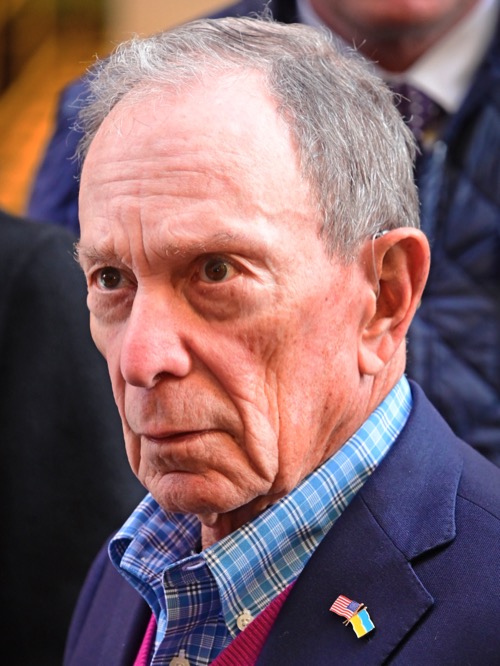
Founder, Bloomberg LP; three-term Mayor of New York City · b. 1942 · Boston, Massachusetts
Two calls made by hand, not formulas. how we score →
Summary
A Salomon Brothers partner until Phibro's 1981 takeover cost him his job, he took a roughly ten-million-dollar payout and built a financial-data terminal company instead of finding another Wall Street seat.
Merrill Lynch, from his old network, became the first customer and investor. He kept control as it grew into a global company, then ran New York City for three terms and gave away billions.
How it happened
Raised outside Boston in Medford, Massachusetts, by a father who kept the books for a dairy company and, by most accounts, never earned more than about six thousand dollars a year. Comfortable, not wealthy. He has said he put himself through Johns Hopkins for an engineering degree and then Harvard for an MBA.
Salomon Brothers hired him in 1966 at nine thousand dollars a year. He moved onto the equities desk, made general partner in 1972, and spent the next decade running trading and systems there — an insider seat that supplied both a professional network and, eventually, a soft exit.
In 1981 Phibro Corporation acquired Salomon and the new management let him go. His partnership stake converted into a severance reported at about ten million dollars. He put almost all of it into a company built to sell financial-data terminals to the same Wall Street firms he had just left.
Merrill Lynch bought the first twenty terminals and took a 30 percent stake for thirty million dollars in 1983, giving the fledgling Innovative Market Systems its first customer and its first outside capital before it had proven much else. Renamed Bloomberg LP in 1986, it grew into a data and media company he never stopped controlling.
He ran New York City for three terms starting in 2002 on a dollar-a-year salary, later returned to run Bloomberg LP again, then stepped back to spend heavily on gun control, climate, and public health. Forbes puts his fortune near a hundred billion dollars, almost all of it still the stake in the company he founded with his own severance.
The coded evidence
Thirteen groups, every claim sourcedPaternal grandfather Rabbi Alexander Bloomberg was a Polish Jewish immigrant; maternal grandfather Max Rubens was a Lithuanian Jewish immigrant from present-day Belarus. Family belonged to Temple Emanu-El in Manhattan in adulthood.
↗ en.wikipedia.orgThird generation American on both sides. Both grandfathers were the immigrants (Poland; Lithuania/Belarus); his parents, William Henry Bloomberg and Charlotte Rubens Bloomberg, are not documented as foreign-born themselves. The migration event sits one generation further back than his own household, which is why the coded facet below reads "none" rather than "second-gen."
↗ en.wikipedia.orgFamily later belonged to Temple Emanu-El, a Reform congregation in Manhattan.
↗ en.wikipedia.orgnot established
No specific family housing fallback is documented, and none was obviously needed: by 1981 he was a 39-year-old former Wall Street partner with a large cash payout in hand.
↗ en.wikipedia.orgThe roughly $10 million Salomon Brothers partnership payout, received in 1981, largely self-funded the company's first years. Behind that sat a highly re-employable resume — a former Salomon general partner would not have struggled to find another Wall Street seat if the venture had failed.
↗ en.wikipedia.orgnot established
He married Susan Brown-Meyer in 1975 and the couple had two daughters during the marriage; their exact ages relative to the 1981 founding are not established in the sources reviewed.
↗ en.wikipedia.orgnot established
No mortgage or debt overhang is documented at founding; the severance was cash in hand.
↗ en.wikipedia.orgnot established
No instability of any kind is documented during the build. This is among the softest launches here: a large, guaranteed cash payout with no gap in income, housing, or reemployability.
↗ en.wikipedia.orgnot established
No austerity narrative, chosen or imposed, exists for the founding period.
↗ en.wikipedia.orgFather William Henry Bloomberg was a bookkeeper for a dairy company, reportedly never earning more than about $6,000 a year. Mother Charlotte Rubens Bloomberg is not documented as working outside the home.
↗ en.wikipedia.orgNeither parent was self-employed.
A dairy-company bookkeeper was a salaried employee, not self-employed.
↗ en.wikipedia.orgnot established
He has said he "put himself through" Johns Hopkins and Harvard rather than describing family sacrifice directed at his schooling; no parental income-for-tuition arrangement is documented.
↗ biography.comHis father died suddenly while Bloomberg was still in college, before he had graduated from Johns Hopkins; a specific cause of death is not established in the sources reviewed.
↗ en.wikipedia.orgMedford, Massachusetts, a middle-class Boston suburb. The family lived briefly in Allston and then Brookline before settling in Medford by the time he was four.
↗ en.wikipedia.orgThree moves within the greater Boston area in early childhood — Allston to Brookline to Medford — all before age four, then no further relocation until college.
↗ en.wikipedia.orgMerrill Lynch, a firm reachable through his Wall Street network, became the first customer in 1983, buying the first 20 terminals and taking a 30 percent equity stake for $30 million, in exchange for a five-year restriction on Bloomberg selling competing terminals to other securities firms.
↗ en.wikipedia.orgSalomon Brothers, hired in 1966 and made general partner in 1972. The firm supplied the $10 million exit capital, Wall Street credibility, and the professional network that produced Bloomberg LP's first investor and customer in one relationship.
↗ en.wikipedia.orgCapital, Credibility, Network
↗ en.wikipedia.orgThomas Secunda, Duncan MacMillan, and Charles Zegar, former Salomon Brothers colleagues, co-founded the company with him in 1981.
↗ en.wikipedia.orgBS in electrical engineering, Johns Hopkins University (1964); MBA, Harvard Business School (1966).
↗ en.wikipedia.orgnot established
He has said he "put himself through" both degrees; specific loan amounts or debt-to-income at completion are not established in the sources reviewed.
↗ biography.comnot established
Widely repeated popular accounts describe a campus job funding part of his tuition, but a primary, verifiable source for specifics was not located in this pass. Left null rather than repeated on secondhand authority.
↗ biography.comThe roughly $10 million partnership payout from Salomon Brothers, received when Phibro's 1981 acquisition of the firm ended his job there, funded the founding of Innovative Market Systems.
↗ en.wikipedia.orgIt needed capital up front, before it earned anything.
The company needed years of product development before its first revenue, and a large outside investment (Merrill Lynch, 1983) arrived before meaningful sales, not after.
↗ en.wikipedia.orgThe full ~$10 million severance — accumulated from 15 years of Wall Street salary and partnership income, then paid out in a lump sum on exit — single-handedly funded the company's founding, with no family transfer and no outside investor at the start.
↗ en.wikipedia.orgIn 1983 Merrill Lynch bought the first 20 terminals and took a 30 percent equity stake for $30 million (later diluted to about 12 percent), in exchange for a five-year restriction on Bloomberg selling competing terminals to other securities firms.
↗ en.wikipedia.orgMerrill Lynch functioned as both the first paying customer and the first outside investor in the same deal — an operator-angel arrangement rather than a passive check.
↗ en.wikipedia.orgFinanced initially from Bloomberg's own severance, then one large minority investment from Merrill Lynch; after that the company grew on operating cash flow. Bloomberg retained majority ownership and full operating control throughout, reported at an 88 percent stake as of 2026.
↗ forbes.comPut nearly all of the severance into building the terminal rather than living on it, then reinvested company profits into growth rather than taking money off the table.
↗ en.wikipedia.orgPrior employer and personal expertise. The idea grew directly out of his years running equity trading and systems development at Salomon Brothers, building the kind of real-time data terminal he wanted on his own desk.
↗ en.wikipedia.orgRetained both majority economic ownership and full operating control the entire time, rather than diluting to a minority stake the way most venture-backed founders eventually do.
↗ forbes.comNo. Not applicable in the safety-net-conversion sense used elsewhere in this schema.
This is a cushion spent, not a safety net destroyed. The $10 million was a severance following an involuntary job loss, not retirement savings liquidated or home equity drawn down while still employed. Categorically distinct from the safety-net-conversion pattern despite the surface resemblance to "spent everything to start a company."
↗ en.wikipedia.org0
No earlier failed ventures are documented; Bloomberg LP was his only venture after 15 years as an employee.
↗ en.wikipedia.orgSelf, entirely, from his own severance at the start. Merrill Lynch shared subsequent risk once its 1983 investment arrived.
↗ en.wikipedia.orgStepped back from active control of Bloomberg LP in 2001 to become mayor, and again in 2019 to run for president — both times walking away from day-to-day control of a company worth many billions, rather than a small foregone payday.
↗ en.wikipedia.org41
The 1983 Merrill Lynch deal, the point the company stopped being a pre-revenue bet funded on his own severance and became a validated, partly outside-financed business.
↗ en.wikipedia.orgEarly-1980s Wall Street deregulation and the growth of electronic trading created fresh demand for real-time financial data just as personal-computer-era hardware made a dedicated desktop terminal practical.
↗ en.wikipedia.orgNew York City, already the center of the US financial industry he was selling into.
↗ en.wikipedia.orgBuilt. No existing terminal or data business was acquired; the product and company were built from nothing, informed by his years running a Salomon trading desk.
↗ en.wikipedia.org45
1981 founding to 2026. Not fully continuous day-to-day: he stepped away from active CEO control for the 2002–2013 mayoralty and again after 2019, though his ownership stake ran uninterrupted throughout.
↗ en.wikipedia.orgFinancial data, media, and technology; later three-term municipal executive and philanthropist
↗ en.wikipedia.org109400000000
Forbes real-time tracker figure as of 8 August 2026, based on an estimated valuation of his roughly 88 percent stake in the privately held Bloomberg LP against comparable public-company multiples, since the stock itself has no market price.
↗ forbes.comJournalistic estimate
↗ forbes.com2026
↗ forbes.comOwnership wealth concentrated almost entirely in one private company he still controls, not diversified holdings or a salary — as mayor he took $1 a year.
↗ en.wikipedia.orgThree consecutive terms as Mayor of New York City (2002–2013); Presidential Medal of Freedom (2024); UN Special Envoy for Cities and Climate Change; more than $24.5 billion given away over his lifetime, among the largest cumulative philanthropic totals of any living donor.
↗ en.wikipedia.org28
Years from the 1981 founding to his first appearance among the world's wealthiest in March 2009, when his fortune was reported at about $16 billion.
↗ en.wikipedia.orgUncapped
↗ en.wikipedia.orgA 2009 Manhattan DA investigation into $1.2 million Bloomberg had given the Independence Party, of which $750,000 went to political operative John Haggerty; Haggerty was convicted in 2011 of stealing the campaign funds and sentenced to prison. Bloomberg himself was not charged.
↗ en.wikipedia.orgTwo sexual-harassment suits against Bloomberg LP from former saleswomen: Olszewski v. Bloomberg L.P. (filed 1996, alleging assault by a supervisor and retaliatory termination after reporting it; dismissed 1999) and Garrison v. Bloomberg L.P. (filed 1997, alleging harassment including remarks attributed to Bloomberg himself; settled out of court in 2000 without an admission of wrongdoing).
↗ en.wikipedia.orgAfter
The harassment suits date from the 1990s, after the company was already dominant in its market.
↗ en.wikipedia.orgIncidental
Neither matter produced the company's market position or his mayoral outcome; both concern conduct once each was already established.
↗ en.wikipedia.orgCivil wrong
↗ en.wikipedia.orgFine absorbed
The Garrison suit was settled by the company with no personal liability for Bloomberg. The Haggerty campaign-finance matter carried a real consequence, incarceration, but it fell on Haggerty, not on Bloomberg.
↗ en.wikipedia.orgAs an employer he ran a company that drew multiple sexual-harassment suits in the 1990s, and a book collecting his own remarks, "The Portable Bloomberg," included comments later characterized by his own staff to reporters as disrespectful toward women. He did not visibly run a markedly different culture at the top than the trading-floor environment he came up in.
↗ en.wikipedia.orgData driven, Blunt, Controlling, Technocratic
↗ en.wikipedia.orgPublic
↗ en.wikipedia.orgBefore
The sharp, data-driven businessman reputation predates the mayoralty and the 2020 campaign.
↗ en.wikipedia.orgMixed
An asset in business and much of City Hall coverage; a liability with civil-rights advocates and stop-and-frisk critics.
↗ en.wikipedia.orgThe reputation was deliberately built, through books, press, and PR.
Extensive self-funded political campaigns and a large-scale philanthropic and public-health platform carrying his name.
↗ en.wikipedia.orgCredited across much of the political spectrum for technocratic City Hall management, while sharply criticized by civil-rights advocates and many Black and Latino New Yorkers for stop-and-frisk, a policy a federal court found unconstitutional in 2013. A 2015 recording of him defending the practice resurfaced during his 2020 presidential run and damaged him specifically with Black voters.
↗ en.wikipedia.orgPublicly apologized for stop-and-frisk in November 2019, days before launching his presidential campaign. The reversal did not repair his standing with Black voters during the primary, where he underperformed badly and dropped out days after Super Tuesday 2020.
↗ en.wikipedia.orgStructural context
The cost-of-failure score comes from this person's own money and circumstances. But who they were in America carried its own weight, the same way their household or income did, and it shaped how hard the path was just as much. That part isn't in the cost-of-failure number. It's here instead.
Men founded the companies that took nearly all the venture funding and almost every top outcome, a tailwind that never shows up in one person's own circumstances.
↗ techcrunch.comWhite founders are heavily overrepresented among funded companies and top-tier wealth relative to their share of the population, an edge that has nothing to do with a person's own money.
↗ techcrunch.comAmong the people recorded here — men: 169 · White subjects: 114. Representation here is who reached these outcomes, not equal odds of reaching them.
Controlled comparisons
Each holds one thing constant and varies another, so the difference is the point. A list of similar names wouldn't tell you anything.