Rex Tillerson
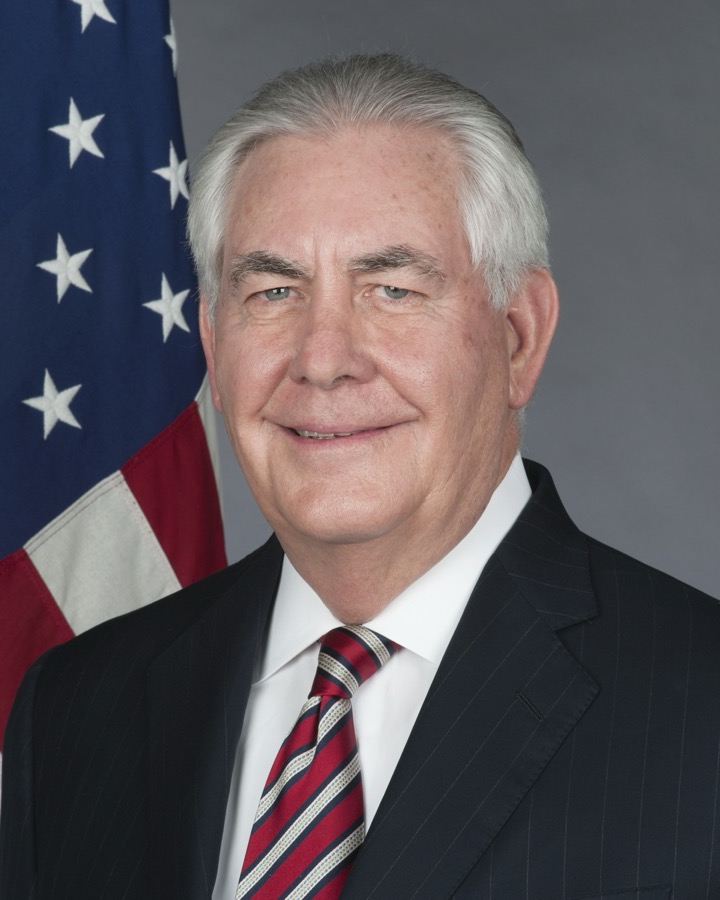
born Rex Wayne Tillerson
Chairman and CEO of ExxonMobil (2006-2016) · b. 1952 · Wichita Falls, Texas
Two calls made by hand, not formulas. how we score →
Summary
A Boy Scouts executive's son from small-town Texas went to the University of Texas on a band scholarship, joined Exxon as a production engineer in 1975, and never worked anywhere else.
He rose through field, Yemen and Russia posts to the top job in 2006. His pay and stock came from the company, never from anything he owned or started.
Where they worked
How it happened
Born March 23, 1952, in Wichita Falls, Texas, to Bobby Joe and Patty Sue Tillerson. His father worked as an executive with the Boy Scouts of America, and the job moved the family around Texas and Oklahoma, including Vernon, Stillwater and, later, Huntsville. Scouting shaped him early. He earned Eagle Scout in 1965 and has said the highlight of his youth was his Scouting achievements.
He led the percussion section of his high school band, and that earned him a scholarship from the University of Texas Longhorn Band. He graduated from UT Austin with a civil engineering degree in 1975. The sources used don't say whether he worked during college or took on debt.
He joined Exxon Company, U.S.A., in 1975 as a production engineer and, by the sources used, stayed with the company for the next four decades. By 1989 he was general manager of Exxon USA's central production division. In 1995 he took over Exxon Yemen and Esso operations.
In 1998 he became vice president of Exxon Ventures (CIS) and president of Exxon Neftegas, which put him in charge of the company's Russian work, including the Sakhalin-1 consortium. It was a large, visible overseas posting. Later partnership with the Russian state oil company Rosneft became a defining feature of his tenure.
Exxon named him president and a director in 2004, and he succeeded Lee Raymond as chairman and CEO on January 1, 2006, running what was then among the largest companies in the world by revenue. The board picked him from inside. Everything after that, the pay, the platform and the public profile, came through the appointment itself.
Exxon's 2017 proxy statement reports his total compensation as about $33.1 million for 2014, $27.3 million for 2015 and $27.4 million for 2016. When he left, he held more than 600,000 Exxon shares and roughly 2 million deferred shares, worth about $180 million, which were placed in an independently managed trust as part of a 2017 arrangement reported at the time.
He retired at the end of 2016. He was confirmed as US Secretary of State on February 1, 2017, and served until March 2018.
The coded evidence
Thirteen groups, every claim sourcednot established
No specific ethnic heritage is established in the sources used; coded.ethnicities carries the broad "European American" tag for the facet.
↗ en.wikipedia.orgnot established
No immigration history is documented; treated as multi-generational American absent evidence otherwise.
↗ en.wikipedia.orgSalaried at Exxon continuously from 1975, a single-employer career with no personal venture or capital at risk.
↗ history.state.govThe hardship was imposed, not chosen. There was nothing to fall back on.
No period of chosen austerity is documented.
↗ en.wikipedia.orgHis father, Bobby Joe Tillerson, was an executive with the Boy Scouts of America. His mother, Patty Sue (Patton) Tillerson, is not described by occupation in the sources used.
↗ en.wikipedia.orgNeither parent was self-employed.
His father held a salaried organizational job rather than running a business.
↗ en.wikipedia.orgA University of Texas Longhorn Band scholarship, earned through his high school percussion work, helped pay for college.
↗ en.wikipedia.orgBorn in Wichita Falls, Texas, and raised in Vernon and Huntsville, Texas, and Stillwater, Oklahoma.
↗ en.wikipedia.orgSeveral family moves across Texas and Oklahoma, tied to his father's Boy Scouts of America job, including a move to Huntsville.
↗ en.wikipedia.orgScouting. He became an Eagle Scout in 1965 and a Distinguished Eagle Scout, and served as National President of the Boy Scouts of America from 2010 to 2012.
↗ history.state.govnot established
No single sponsor or referral into Exxon is documented in the sources used.
↗ en.wikipedia.orgExxonMobil (Exxon Company, U.S.A. from 1975), his only employer through the end of 2016.
↗ history.state.govThe Boy Scouts of America, first as a Scout, then as national president from 2010 to 2012 while he was CEO.
↗ history.state.govRan Exxon Neftegas and the Russia/CIS ventures from 1998, then served as president and director from 2004, before becoming chairman and CEO in 2006.
↗ en.wikipedia.orgB.S. in civil engineering, University of Texas at Austin (1975).
↗ history.state.govA public-university engineering degree followed directly by an engineering job at Exxon, then promotion through operating and international posts.
↗ en.wikipedia.orgnot established
Not applicable in the founder sense; income came from Exxon salary, bonus and stock.
↗ en.wikipedia.orgSalary, bonus and restricted/deferred Exxon stock from one employer across a 41-year career. At departure he held more than 600,000 Exxon shares and about 2 million deferred shares.
↗ heraldnet.comOil and gas executive management
↗ history.state.gov40500000
Wikipedia reports a $40.5 million compensation package for 2012, which was not checked against that year's proxy statement. Exxon's 2017 proxy statement, the filing read directly, shows $33,096,312 for 2014, $27,297,458 for 2015 and $27,393,567 for 2016.
↗ en.wikipedia.orgProxy statement
↗ sec.govHigh salaried income plus large deferred stock awards, not an owned, appreciating business. About $180 million in deferred shares was reported at his 2017 departure.
↗ heraldnet.comChairman and CEO of ExxonMobil from 2006 to 2016, National President of the Boy Scouts of America (2010-2012), elected to the National Academy of Engineering in 2013, and US Secretary of State from February 2017 to March 2018.
↗ history.state.govCapped
A salaried public-company executive with board-set pay, not a founder's open-ended stake.
↗ sec.govWikipedia reports that the US Treasury assessed a civil penalty against ExxonMobil in July 2017 over Russia sanctions, relating to dealings during Tillerson's time as CEO, and that the New York Attorney General's office investigated Exxon's climate-related disclosures. Both matters were company-level; Tillerson's own role was the subject of press reporting and is not adjudicated here. How either matter was ultimately resolved is not covered in the sources used.
↗ en.wikipedia.orgAfter
The reported matters arose during his tenure as CEO, after he had reached the top job.
↗ en.wikipedia.orgUnrelated
The reported matters concern company conduct during his tenure and did not produce his path to the CEO role.
↗ en.wikipedia.orgEngineer, Company man, Russia-experienced
Light coding from how he is commonly described in press coverage cited on Wikipedia.
↗ en.wikipedia.orgPress
↗ en.wikipedia.orgPress reporting around the company's Russia ties, including a 2011 Arctic agreement with Rosneft and the 2013 Order of Friendship he received from Russia, was reported as contested by outside critics. This is reporting about the company during his tenure and is attributed to the press, not asserted here.
↗ en.wikipedia.orgStructural context
The cost-of-failure score comes from this person's own money and circumstances. But who they were in America carried its own weight, the same way their household or income did, and it shaped how hard the path was just as much. That part isn't in the cost-of-failure number. It's here instead.
Men held about 90% of Fortune 500 CEO seats in 2023, and a wider majority of the rungs below. The ladder is widest for them the whole way up.
↗ forbes.comWhite executives hold most Fortune 500 CEO seats relative to their share of the population, an edge that adds up at every rung of the climb.
↗ finance.yahoo.comAmong the people recorded here — men: 225 · White subjects: 125. Representation here is who reached these outcomes, not equal odds of reaching them.
Controlled comparisons
Each holds one thing constant and varies another, so the difference is the point. A list of similar names wouldn't tell you anything.