Brian Niccol
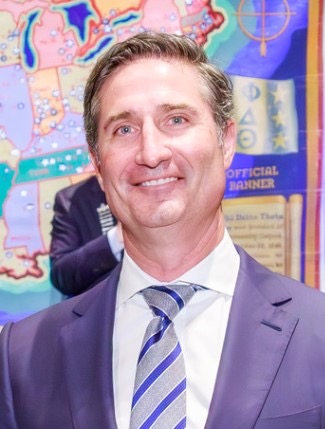
Chairman and CEO, Starbucks; former CEO of Chipotle and Taco Bell · b. 1974 · Philadelphia, Pennsylvania
Two calls made by hand, not formulas. how we score →
Summary
A marketing class at Miami University pulled him off an engineering track and into brand management at P&G.
From there he moved up through Yum! Brands, and each CEO job was a turnaround that came with a bigger platform. He has never owned a company. His pay comes from boards that hire him to fix big ones, which puts him on a high floor with a salaried ceiling.
People in this set who share a company with Brian Niccol.
Where they worked
How it happened
He grew up in Philadelphia. His parents' work, the household and who paid for school are not in the sources found. He started college at Miami University studying engineering, then took business electives after a marketing class caught his interest, and graduated in 1996.
He began at Procter & Gamble as an intern in 1995 and spent about ten years in brand management, on ThermaCare and then Pringles. He earned an MBA at the University of Chicago Booth School of Business in 2003, while still at P&G.
He joined Yum! Brands in 2005 as a vice president of strategic marketing and became Pizza Hut's chief marketing officer in 2007. Pizza Hut added text and web ordering in 2008 and an iPhone app in 2009 on his watch.
Named Taco Bell's chief marketing and innovation officer in October 2011, when sales had stalled after a beef-quality lawsuit. The company reported an 8% sales increase for fiscal 2012 after a breakfast launch and a new Cantina Bell menu. He was promoted to CEO on January 1, 2015.
He replaced founder Steve Ells as CEO of Chipotle in March 2018, after food safety problems that began in 2015. Wikipedia reports that revenue roughly doubled and the stock rose almost eightfold by the time he left in August 2024. Total pay in 2023 was reported at $22.5 million.
Starbucks named him chairman and CEO in August 2024 and he started on September 9. His first-year package was reported at $97.8 million by Wikipedia, and Starbucks' proxy puts fiscal 2024 total pay at $95.8 million. The company's proxy for fiscal 2025 reports restructuring costs from store closures and a lower operating margin, and its first positive global comparable sales in seven quarters in the fourth quarter.
Press reports said he would commute about 1,000 miles from Newport Beach to Seattle on a company jet, which drew criticism over emissions while store employees' commuting benefits were being cut. Chipotle closed an Augusta, Maine store in 2022 after workers sought to unionize, and the NLRB was reported to have found the closure illegal. A Starbucks workers' strike began in 2025 during his tenure. These are as reported, and the companies have their own accounts.
The coded evidence
Thirteen groups, every claim sourcedCoarse coding from public photographs and records; not stated in the sources. Race is a noisy, interpretive category.
↗ en.wikipedia.orgSalaried employment at four employers from 1995 on; the risk was losing a job, not a roof.
Inferred from the career timeline; no source describes his finances in his twenties or thirties.
↗ en.wikipedia.orgnot established
Not established. Wikipedia, Chicago Booth's alumni page and a search for profiles turned up nothing on his parents' work or education.
↗ en.wikipedia.orgnot established
Not established. Who paid for Miami University and for the Booth MBA is not in the sources found.
↗ en.wikipedia.orgPhiladelphia (native, per Wikipedia citing the Wall Street Journal). Neighborhood not established.
↗ en.wikipedia.orgProcter & Gamble brand management, then Yum! Brands (Pizza Hut and Taco Bell).
↗ chicagobooth.edu21
Computed from a 1974 birth year (itself tagged citation-needed on Wikipedia) and the 1995 P&G internship.
↗ en.wikipedia.orgMBA, University of Chicago Booth School of Business (2003); BA, Miami University (1996).
The 1996 graduation year is from Wikipedia citing Fortune. The Booth year is from Booth and Wikipedia.
↗ chicagobooth.eduExecutive equity grants. His stake at Starbucks is awards, not purchased or founding ownership.
The January 2026 proxy lists 69,382 Starbucks shares held by Niccol, well under 1% of the company. Unvested awards are not counted in that line.
↗ sec.gov0
No venture of his own. The record shows an unbroken run of promotions and hires, though it is a Wikipedia-level summary.
↗ en.wikipedia.org40
Taco Bell CEO on January 1, 2015, with a 1974 birth year that Wikipedia tags citation-needed. His first very large payout came at Starbucks in 2024.
↗ en.wikipedia.orgRestaurant and consumer brands
↗ en.wikipedia.orgnot established
Not established. forbes.com/profile/brian-niccol returned 404 and no credible estimate was found. Magnitude is coded from pay, so band 3 is a floor and may understate accumulated equity.
↗ en.wikipedia.org95801676
Fiscal 2024 total from the Starbucks summary compensation table, for the partial year from September 9, 2024. It includes a $5M sign-on bonus and $90.3M in stock awards, mostly sign-on grants. The fiscal 2025 total in the 2026 proxy is $30,992,773.
↗ sec.govProxy statement
↗ sec.govPay is large and mostly stock, granted by boards rather than built from an owned business. Chipotle paid him $22.5 million in 2023, as reported by Wikipedia citing an Institute for Policy Studies report.
↗ en.wikipedia.orgCEO of Taco Bell, Chipotle and Starbucks in turn. Bloomberg 50 and Fortune Businessperson of the Year in 2019, and Booth's Distinguished Alumni Award in 2020.
↗ en.wikipedia.orgChipotle closed a store in Augusta, Maine in 2022 after workers sought to unionize, and the National Labor Relations Board was reported to have ruled the closure illegal. A Starbucks workers' strike began in 2025 during his tenure, amid unfair labor practice accusations and stalled contract talks. Both are as reported on Wikipedia; the companies' own accounts are not summarized here.
↗ en.wikipedia.orgThe Guardian and the Washington Post reported on his planned company-jet commute from Newport Beach to Seattle, with criticism over emissions while store commuting benefits were cut. Starbucks' January 2026 proxy says a security study recommended that he use company aircraft for all air travel, including personal travel, and that the board in September 2025 replaced a $250,000 annual reimbursement threshold with quarterly review of his personal flights.
Press reports are cited by Wikipedia: https://www.theguardian.com/business/article/2024/aug/21/starbucks-ceo-backlash-super-commute and https://www.washingtonpost.com/business/2024/08/22/starbucks-ceo-brian-niccol-private-jet-seattle-commute/. The proxy is the company's own account.
↗ sec.govStructural context
The cost-of-failure score comes from this person's own money and circumstances. But who they were in America carried its own weight, the same way their household or income did, and it shaped how hard the path was just as much. That part isn't in the cost-of-failure number. It's here instead.
Men held about 90% of Fortune 500 CEO seats in 2023, and a wider majority of the rungs below. The ladder is widest for them the whole way up.
↗ forbes.comWhite executives hold most Fortune 500 CEO seats relative to their share of the population, an edge that adds up at every rung of the climb.
↗ finance.yahoo.comAmong the people recorded here — men: 225 · White subjects: 125. Representation here is who reached these outcomes, not equal odds of reaching them.
Controlled comparisons
Each holds one thing constant and varies another, so the difference is the point. A list of similar names wouldn't tell you anything.
Related companies
Companies connected to Brian Niccol through the profiled people they worked with. Each card says who the link runs through.