Doug McMillon
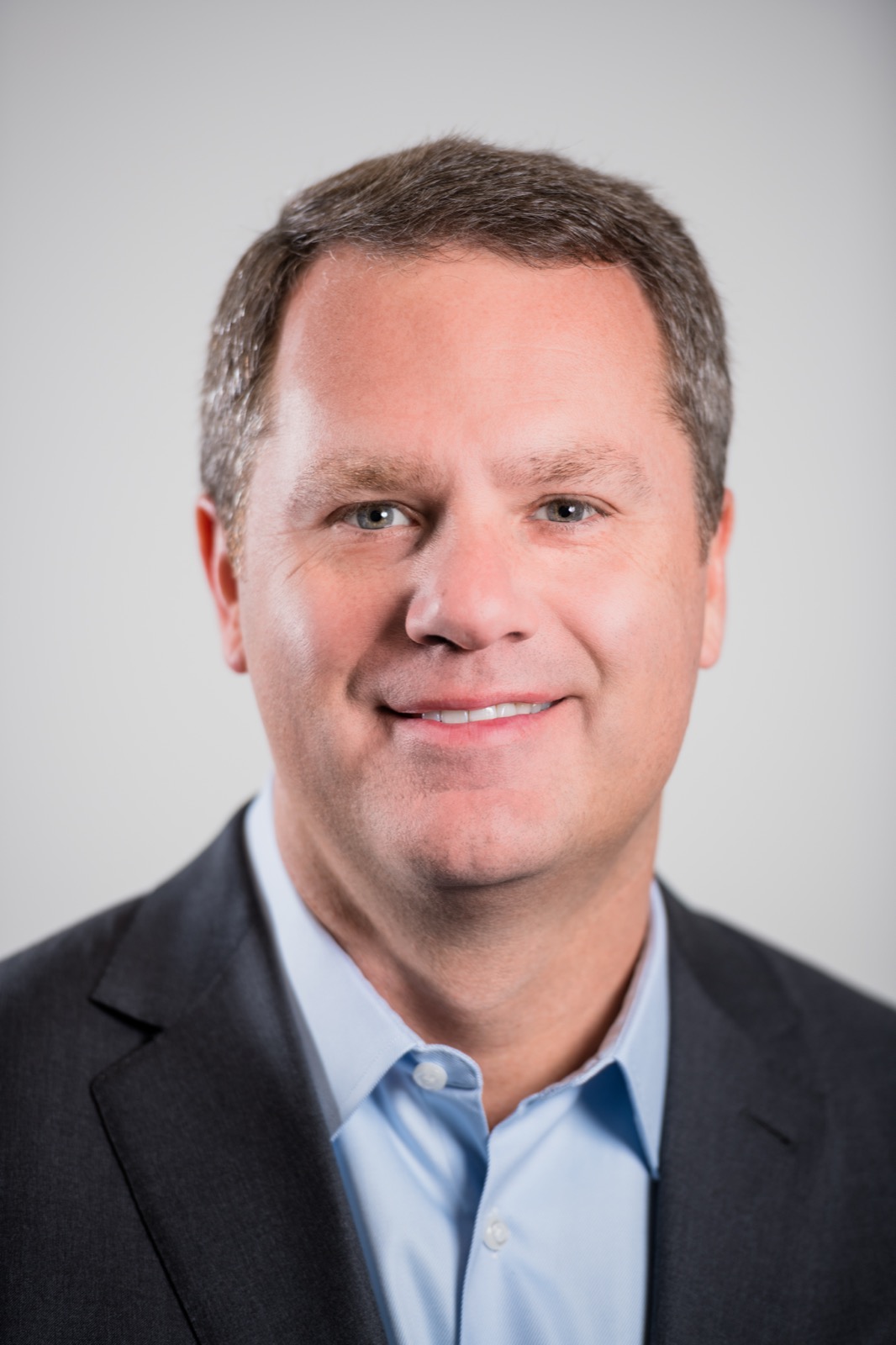
born Carl Douglas McMillon
Former President and CEO, Walmart (2014-2026) · b. 1966 · Memphis, Tennessee
Two calls made by hand, not formulas. how we score →
Summary
A dentist's son from small-town Arkansas took a $6.50-an-hour summer job unloading Walmart trucks and, apart from college, never really left.
A state accounting degree and an MBA led back to a buyer trainee desk, then three decades running Sam's Club, Walmart International, and finally the whole company from 2014. Every dollar came as an employee's salary and stock, never an owner's stake.
How it happened
Born October 17, 1966, in Memphis, Tennessee, the eldest of three children of Morris McMillon, a dentist who had served in Vietnam, and Laura McMillon. The family lived in Jonesboro, Arkansas, then moved to Bentonville when he was sixteen, the town that happened to be Walmart's headquarters. He played point guard on the Bentonville High School basketball team.
In the summer of 1984, as a teenager, he took a job unloading trucks at a Walmart distribution center for $6.50 an hour rather than working at McDonald's for less. It was ordinary summer work, not a hardship, but it put him inside the company for the first time.
He earned a business administration degree in accounting from the University of Arkansas in 1989, then enrolled in the MBA program at the University of Tulsa. While still studying, he called a Walmart executive and asked to be considered for the buyer-training program. Walmart rehired him as an assistant store manager in Tulsa in 1990, and after finishing his MBA in 1991 he moved to Bentonville full time as a buyer trainee, starting out buying fishing tackle.
He spent the next fourteen years as a merchandiser and buyer across food, apparel, and general merchandise, then became president and CEO of Sam's Club in 2005 and president and CEO of Walmart International in 2009, growing that division from roughly 3,300 stores in 14 countries to more than 6,300 stores in 26, including a $2.4 billion majority stake in South Africa's Massmart.
Walmart's board named him CEO effective February 1, 2014, its fifth chief executive and the youngest to hold the job since founder Sam Walton. Everything that followed, the pay, the platform, the public profile, ran through that appointment rather than through anything he built or owned himself.
He raised the company's minimum wage twice early on, to $9 an hour in 2015 and $10 in 2016, pushed billions into e-commerce and supply-chain technology, and was elected chairman of the Business Roundtable in September 2019, taking office in January 2020 for a two-year term. He also spoke out on a handful of political flashpoints: urging Arkansas's governor to veto a "religious freedom" bill in 2015, pulling Confederate flag merchandise and tightening gun sales after the Charleston and El Paso shootings, and writing an internal memo rebuking President Trump's response to the 2017 Charlottesville violence. Walmart's shares rose more than 400% over his tenure, adding roughly $576 billion in market value.
Walmart announced his retirement in November 2025 after nearly twelve years as CEO and more than four decades with the company. He stepped down as CEO on January 31, 2026, handing the role to longtime Walmart U.S. chief John Furner, another hourly-associate-to-executive climb, and stayed on as a board member and adviser through fiscal 2027.
The coded evidence
Thirteen groups, every claim sourcednot established
No specific European ethnic heritage is documented in sources reviewed; coded.ethnicities carries the broad "European American" tag for the facet.
↗ en.wikipedia.orgnot established
No immigration history is documented; treated as multi-generational American absent evidence otherwise.
↗ en.wikipedia.org0
Continuous employment at Walmart from his 1990-91 full-time entry to his 2026 retirement.
↗ en.wikipedia.orgA stable two-parent household on a dentist's income in Jonesboro, then Bentonville, Arkansas, from age 16 on. No housing instability is documented at any point.
↗ en.wikipedia.orgContinuously salaried at Walmart from his 1990-91 rehire onward, through a 35-year run at one employer with no personal venture or capital of his own ever at risk.
↗ en.wikipedia.orgnot established
No student debt or other debt figure is documented in sources reviewed.
↗ en.wikipedia.orgThe hardship was imposed, not chosen. There was nothing to fall back on.
No period of chosen austerity is documented; his origin was comfortable, not a soft landing he stepped away from.
↗ en.wikipedia.orgHis father, Morris McMillon, was a dentist who served in the Vietnam War. His mother, Laura McMillon, is not otherwise described by occupation in sources reviewed.
↗ en.wikipedia.orgA parent worked for themselves, the strongest known predictor of founding.
Dentists are typically self-employed private practitioners; not independently confirmed for Morris McMillon in sources reviewed.
↗ en.wikipedia.orgHis father held a dental degree, implied by his profession, but the specific institution is not documented in sources reviewed.
↗ en.wikipedia.orgnot established
No documented account of a specific family sacrifice aimed at tuition.
↗ en.wikipedia.orgJonesboro, Arkansas, through age 16; the family then relocated to Bentonville, Arkansas, the town that houses Walmart's headquarters.
↗ en.wikipedia.orgBentonville High School, a public high school, where he played point guard on the basketball team.
↗ en.wikipedia.orgOne documented relocation, from Jonesboro to Bentonville, Arkansas, when he was 16.
↗ en.wikipedia.orgWhile studying for his MBA in 1990, he called a Walmart executive himself and asked to be considered for the buyer-training program, which led directly to his rehire. No single external sponsor is documented driving his rise the way an internal mentor figures in some other executive climbs.
↗ en.wikipedia.orgWalmart. He first worked there as a teenage summer associate in 1984, unloading trucks at a distribution center, and spent his entire full-time career at the company from 1990-91 onward.
↗ en.wikipedia.org17
Sources differ on whether he was 17 or 18 during his summer 1984 Walmart job; he turned 18 in October of that year.
↗ ibtimes.co.ukDirect P&L responsibility for two major divisions before the top job: president and CEO of Sam's Club from 2005, then president and CEO of Walmart International from 2009, each a visible proving ground ahead of the 2014 CEO appointment.
↗ en.wikipedia.orgMBA, University of Tulsa (1991); BSBA in accounting, University of Arkansas (1989).
↗ en.wikipedia.orgWhile pursuing his MBA at the University of Tulsa, he worked as a Walmart assistant store manager in Tulsa, Oklahoma.
↗ en.wikipedia.orgDirect: two state-university degrees, undergraduate then MBA, followed immediately by full-time entry into Walmart's buyer-training program.
↗ en.wikipedia.orgnot established
Not applicable in the founder sense; his entire adult income came from Walmart salary, bonus, and equity grants, never a venture he personally financed.
↗ en.wikipedia.orgSalary, annual bonus, and stock and option grants from a single employer across a 35-year full-time career, not any personally controlled investment vehicle or venture.
↗ sec.govA Walmart salary throughout his career, with no employment gaps to sustain.
↗ en.wikipedia.orgTook over in 2014 amid slowing US growth and rising competition from Costco, Amazon, grocery chains, and discount stores; his tenure spanned the pandemic era, during which Walmart was designated an essential retailer and gained market share, and a sustained bull run in Walmart's stock.
↗ en.wikipedia.orgRetail management
↗ en.wikipedia.org561000000
Derived from insider Form 4 filings showing beneficial ownership of roughly 5.2 million Walmart shares, valued at a recent share price. Other aggregator estimates for around the same period range from roughly $350 million to $600 million depending on date and method. Walmart does not disclose a net-worth figure for him; this is a market-value proxy on his equity compensation, not an audited number.
↗ gurufocus.comAggregator
↗ gurufocus.com2026
↗ gurufocus.com29240930
Total fiscal-2026 compensation (year ended January 31, 2026, his final full year as CEO) from Walmart's pay-versus-performance table in the 2026 proxy statement's Summary Compensation Table total. Prior years: $27.4M (FY2025), $27.0M (FY2024), $25.3M (FY2023), $25.7M (FY2022).
↗ sec.govProxy statement
↗ sec.govThe bulk of his reported compensation across a 35-year career is Summary Compensation Table value, salary, bonus, and grant-date stock and option value, not gains realized from an owned, appreciating business he built himself.
↗ sec.govHigh salaried income with large annual stock and option grants, not an owned, appreciating asset base he created. His wealth is almost entirely Walmart stock earned as compensation, not a founder's stake.
↗ sec.govFifth CEO of Walmart and the youngest since founder Sam Walton. Elected chairman of the Business Roundtable in 2020-2022. Walmart's shares rose more than 400% over his tenure, adding roughly $576 billion in market capitalization, and cumulative reported compensation across his years as a named executive officer (fiscal 2009-2026) totals roughly $299 million.
↗ corporate.walmart.comCapped
A salaried public-company executive with board-set compensation, not an open-ended founder's equity stake.
↗ sec.govPress
↗ en.wikipedia.orgBefore
His public profile, Forbes rankings, and Business Roundtable chairmanship all formed years before his 2026 retirement.
↗ en.wikipedia.orgAsset
Generally credited as a steady, well-regarded operator through a long tenure with strong stock performance and a low-controversy exit.
↗ en.wikipedia.orgThe reputation accrued from behaviour rather than being manufactured.
No book, personal-brand institute, or comparable self-cultivated reputation project is documented, unlike some peer CEOs.
↗ en.wikipedia.orgWalmart has faced sustained criticism over decades for its wages, staffing, and labor practices, including a landmark 2011 Supreme Court gender-discrimination case and long-running advocacy campaigns, that predate McMillon's 2014 elevation to CEO and are generally attributed to the company and era rather than to him personally. His own tenure included raising the company's minimum wage twice, to $9 in 2015 and $10 in 2016, and further increases since. No personal finding or allegation against McMillon individually is documented in the sources reviewed.
↗ en.wikipedia.orgStructural context
The cost-of-failure score comes from this person's own money and circumstances. But who they were in America carried its own weight, the same way their household or income did, and it shaped how hard the path was just as much. That part isn't in the cost-of-failure number. It's here instead.
Men held about 90% of Fortune 500 CEO seats in 2023, and a wider majority of the rungs below. The ladder is widest for them the whole way up.
↗ forbes.comWhite executives hold most Fortune 500 CEO seats relative to their share of the population, an edge that adds up at every rung of the climb.
↗ finance.yahoo.comAmong the people recorded here — men: 169 · White subjects: 114. Representation here is who reached these outcomes, not equal odds of reaching them.
Controlled comparisons
Each holds one thing constant and varies another, so the difference is the point. A list of similar names wouldn't tell you anything.