Strive Masiyiwa
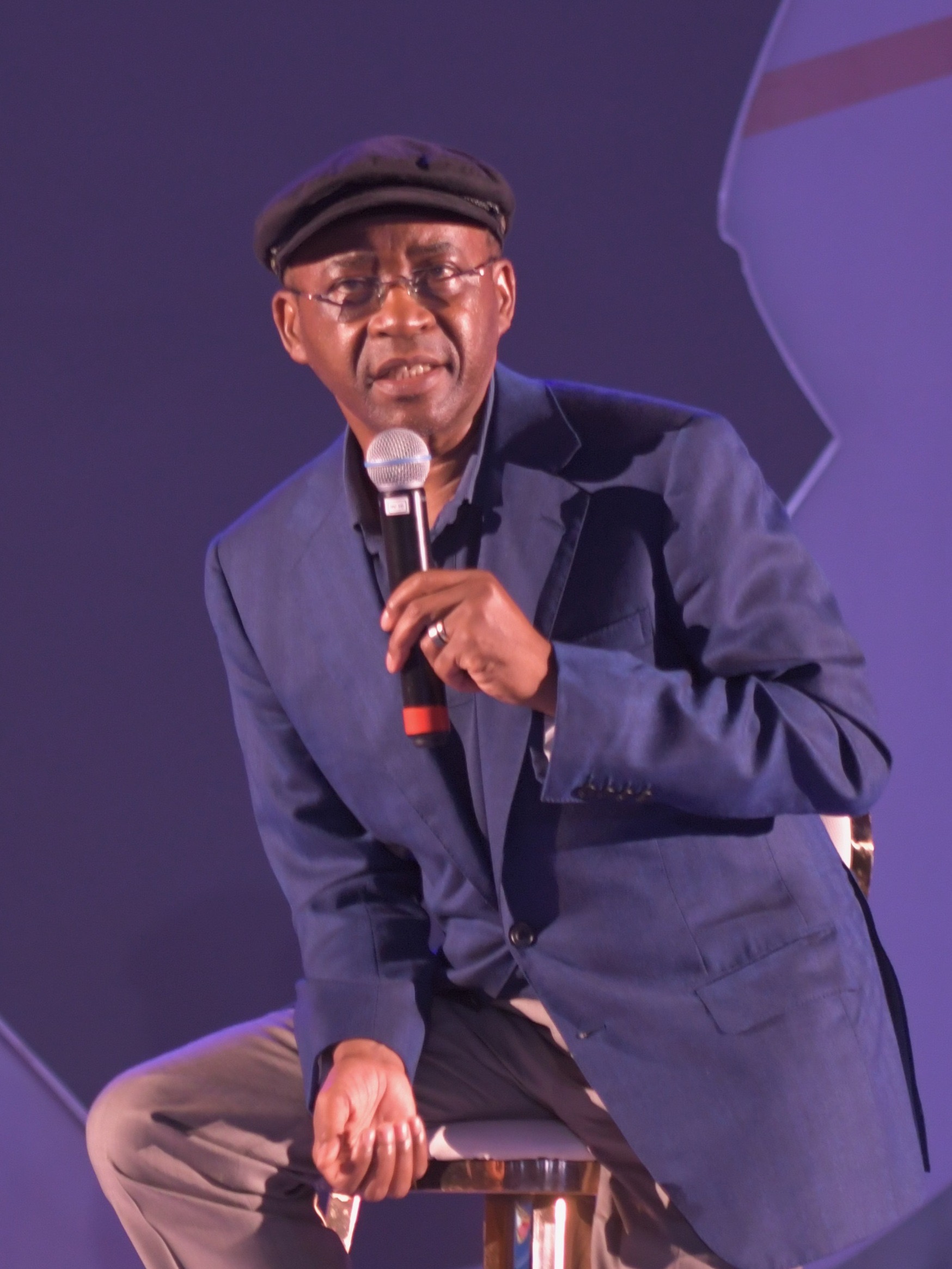
Founder and Executive Chairman, Econet Global and Cassava Technologies · b. 1961 · Mashonaland Central Province, Southern Rhodesia (now Zimbabwe)
Two calls made by hand, not formulas. how we score →
Summary
He was middle-class, not poor: a mother who ran her own businesses, a paid-for education in Scotland, a stable job at the state telecom company.
He quit that job to start a contracting firm with $75, sold it, and staked everything on a court fight against the government's phone monopoly. He won, launched Econet from nothing, and built most of what followed without anyone's permission.
How it happened
Born in 1961 in what was then Southern Rhodesia. When he was about seven, his family fled after Ian Smith's white-minority government declared independence from Britain, settling as refugees in Kitwe, a copper-mining town in Zambia. His mother ran her own businesses in retail, small-scale farming, and transport; his father had worked the copper mines before joining the family business. By the time he was twelve, his parents could afford to send him to a private school in Edinburgh, Scotland, a placement that started because a Scottish family happened to be their neighbors in Zambia.
When he finished school in Scotland in 1978, he went back to southern Africa intending to join the guerrilla forces fighting for Zimbabwean independence. A cousin running a training camp told him the war was basically won and what the country would need afterward was engineers, not more fighters, and helped him get funding through the British Council for an engineering degree in Britain instead. He earned an electrical engineering degree from the University of Wales and worked briefly in Cambridge before returning to newly independent Zimbabwe in 1984 to take a job as an engineer at the state telecom company.
Frustrated with government bureaucracy, he quit his job in 1988 with $75 saved from his salary and started his own electrical contracting firm, Retrofit, after a bank would lend him the money only if he traded in his car for a pickup truck. Retrofit grew into a substantial business winning government contracts, and he was named Zimbabwe's youngest Businessman of the Year in 1990.
In the early 1990s he saw mobile phones coming and asked the state telecom monopoly for a joint venture; they refused and told him going it alone would violate their monopoly. He sold Retrofit, rolled everything into a new venture called Econet, and sued. Every government contract he still held was cancelled the day he filed. He has described intelligence officers and police searching his house and staying "with us for quite a while... three years," and the fight took him, by his own account, to the brink of bankruptcy. After roughly four to five years and a string of rulings, Zimbabwe's highest court found that refusing him a license violated the constitutional guarantee of free expression, and struck down the monopoly.
Econet connected its first subscriber in 1998 and listed on the Zimbabwe Stock Exchange the same year. Within six weeks it had overtaken the state operator's own competing network. From there he built out Econet Wireless International across more than a dozen African countries plus stakes in New Zealand, built Liquid Telecom into a fiber-optic network spanning over 100,000 kilometers from Cape Town to Cairo, and grew EcoCash into Zimbabwe's dominant mobile-money platform. More recently he has folded the group's technology assets into Cassava Technologies, pushing into cloud and AI infrastructure across the continent.
In March 2000, after making a personal loan to owners of Zimbabwe's independent newspapers, he left for South Africa citing persecution and never returned to the country he built his fortune in. He now lives in London. Forbes puts his net worth at $2.2 billion as of 2026, though it has swung between roughly $1.2 billion and $3.1 billion in the past two years alone, tracking Zimbabwe's stock market and currency. He and his wife Tsitsi have given away hundreds of millions through the Higherlife Foundation and signed the Giving Pledge.
The coded evidence
Thirteen groups, every claim sourcedA national-origin tag, not a documented sub-national ethnic group; no source establishes a more specific ethnic identity.
↗ forbes.comnot established
Not a US-context category; not applicable to a Zimbabwe-born, Zimbabwe-built career.
↗ en.wikipedia.orgHis Christian faith is central to his own account of both the license fight (he has said he refused to pay bribes on religious grounds) and his philanthropy; denomination not established.
↗ arrowleadership.orgHis parents' businesses gave the family real, if unspectacular, standing, but during the multi-year license fight it was his own family, not a parental safety net, that absorbed the risk.
↗ web.archive.orgNone established for the fight years. By his own account every government contract tied to his firm was cancelled the day he filed suit in the early-to-mid 1990s.
↗ web.archive.orgTook a Barclays bank loan to start Retrofit in 1988, conditioned on trading in his car for a pickup truck as collateral-adjacent proof of seriousness.
↗ web.archive.orgHas said intelligence officers and police repeatedly searched his home during the license fight and were "with us for quite a while... three years," and that the case took him to the brink of bankruptcy.
↗ en.wikipedia.orgThe hardship was imposed, not chosen. There was nothing to fall back on.
↗ web.archive.orgMother an entrepreneur across retail, small-scale farming, and transport; father worked in the copper mines before joining the family business.
↗ referenceforbusiness.comA parent worked for themselves, the strongest known predictor of founding.
↗ referenceforbusiness.comA Scottish family were his parents' neighbors in Kitwe, Zambia, and their son's enrollment at a school in Edinburgh is what put Masiyiwa on the same path at age twelve, a purely informal connection rather than family wealth.
↗ web.archive.orgParents funded private secondary schooling in Edinburgh, Scotland from age twelve, described as affording him "a European education."
↗ referenceforbusiness.comMultiple biographical accounts, corroborated by his own interview remarks, describe his family fleeing Southern Rhodesia amid the white-minority government's 1965 declaration of independence and settling as refugees in Zambia when he was about seven.
Heavily documented across independent sources rather than a single unverified claim; not a third-party allegation, so not sequestered.
↗ en.wikipedia.orgKitwe, a copper-mining city in north-central Zambia, following the family's flight from Rhodesia.
↗ en.wikipedia.orgSouthern Rhodesia to Zambia at about age seven; Zambia to a boarding school in Edinburgh, Scotland at twelve; Scotland to Cambridge, England for a brief computer-industry stint after university; back to Zimbabwe in 1984; Zimbabwe to South Africa in 2000; later to London, where he lives today.
↗ en.wikipedia.orgBritish Council funding, arranged with help from a cousin involved in the liberation movement, got him into a UK engineering degree instead of the armed struggle he set out to join in 1978.
↗ web.archive.orgWent directly to the state monopoly with a joint-venture proposal, and when refused, built his own path to a license through the courts rather than through any inside connection.
↗ web.archive.org23
Joined the state telecom company, ZPTC, as an engineer in 1984 after graduating.
↗ en.wikipedia.orgTraveled to southern Africa in 1978 planning to join Robert Mugabe and Joshua Nkomo's guerrilla forces; a cousin running a training camp told him the war was effectively won and the country would need engineers, not more fighters, and redirected him toward a British engineering degree.
↗ web.archive.orgBachelor's degree in electrical engineering, University of Wales. Sources give the graduation year as either 1983 or 1984.
Wikipedia says 1984; referenceforbusiness.com says 1983.
↗ en.wikipedia.orgPrivate secondary schooling in Edinburgh funded by his parents, then a UK university degree funded through the British Council rather than a family or employer channel.
↗ referenceforbusiness.com$75 saved from his ZPTC salary, used to start Retrofit, an electrical contracting firm, in 1988.
↗ en.wikipedia.orgIt paid its own way from the start. Revenue came before any outside money.
Retrofit won government contracts and was a going, profitable concern well before Econet existed.
↗ referenceforbusiness.comTraded in his car for a pickup truck to secure a Barclays loan for Retrofit's start-up costs.
↗ web.archive.orgBuilt through reinvested profits, licenses won market by market, and a 1998 Zimbabwe Stock Exchange listing rather than one large outside equity round at founding; later ventures like Liquid Telecom and Cassava layered in additional partners and financing over time.
↗ en.wikipedia.orgSold Retrofit around 1994 and rolled the proceeds and his effort into Econet and the license fight, funded through a family holding company, TS Masiyiwa Holdings.
↗ referenceforbusiness.comBuilt and owns Liquid Telecom (now Liquid Intelligent Technologies), a fiber-optic and satellite network spanning more than 100,000 kilometers from Cape Town to Cairo, rather than leasing capacity from others.
↗ en.wikipedia.orgRecognized in the early 1990s that mobile cellular telephony was about to become the next big technology in a region with roughly one phone line for every 70 people, and proposed a joint venture to the state monopoly before building his own path when refused.
↗ web.archive.org0
No separate failed venture is documented before Retrofit or Econet; the real risk was the years-long license fight itself, not a string of failed prior businesses.
↗ en.wikipedia.orgSelf and family. By his own account, every government contract tied to his firm was cancelled the day he filed suit, and the fight brought him to the brink of bankruptcy.
↗ en.wikipedia.orgProceeds from selling Retrofit and family resources carried him through the roughly four-to-five-year court fight.
↗ referenceforbusiness.comSub-Saharan Africa had roughly one phone line per 70 people in the early 1990s, and mobile telephony was about to reach the continent; the constitutional ruling against Zimbabwe's monopoly landed just as that wave arrived, opening a market with almost no existing private competition.
↗ web.archive.orgBuilt. Retrofit from $75 in savings, and Econet from a license fight rather than an acquired network or franchise.
↗ en.wikipedia.orgTelecommunications, fiber and cloud infrastructure, and fintech across Africa
↗ forbes.com2200000000
Forbes estimate as of August 2026. His fortune is unusually volatile for this band: the Sunday Times Rich List put him at $3.1 billion in October 2024, and a Zimbabwe stock-market and currency slide brought Forbes-tracked estimates down to roughly $1.2-1.3 billion in October 2025 before recovering. All figures stay within the $1-10B band.
↗ forbes.comJournalistic estimate
↗ forbes.com2026
↗ forbes.comWealth, not salary, concentrated in a 38% stake in publicly-traded Econet Wireless Zimbabwe, a roughly 33% stake in EcoCash, and private holdings in Liquid Telecom and Cassava Technologies.
↗ forbes.comCredited with a landmark constitutional ruling that opened African telecom markets to private capital well beyond his own company; first Black billionaire to enter the Sunday Times Rich List (October 2024); named to Time's 2025 list of the World's 100 Most Influential People in AI; Netflix board member since December 2020.
↗ thetimes.comUncapped
↗ forbes.comIn May 2020, Zimbabwe's central bank ordered EcoCash to freeze more than 54,000 agent accounts, with the central bank governor reportedly describing the platform's agent-line structure as a "Ponzi scheme" fueling illegal foreign-currency trading. EcoCash denied wrongdoing, called the directive an untargeted "dragnet," and challenged it in court; the High Court ruled the central bank had acted within its mandate in issuing it. EcoCash lost roughly 16.5% of its subscriber base by the end of that September.
Attributed reporting on a dispute involving a Masiyiwa-controlled subsidiary, not a personal finding against him. The characterization as a "Ponzi scheme" is the central bank governor's disputed claim, not an adjudicated fact.
↗ qz.comThe founding legal fight ran the other direction: Masiyiwa was the plaintiff, suing the Zimbabwean state and its telecom monopoly, not a defendant facing an adverse finding. Separately, Econet pursued Netherlands arbitration around 2009 over a right-of-first-refusal dispute tied to a proposed sale of its Nigerian mobile-network partner.
↗ web.archive.orgAfter
↗ qz.comUnrelated
Occurred more than two decades after the fortune-defining license fight and Econet's launch.
↗ qz.comVisionary, Devout, combative when crossed, Philanthropic
↗ web.archive.orgPublic
↗ thetimes.comBefore
His reputation as a rule-of-law pioneer was established by the 1990s license fight, well before later regulatory disputes involving his companies.
↗ en.wikipedia.orgAsset
↗ thetimes.comEcoCash's subscriber base fell after the 2020 agent-line dispute but recovered; the episode did not visibly affect Masiyiwa's own standing as a philanthropist and Giving Pledge signatory.
↗ qz.comStructural context
The cost-of-failure score comes from this person's own money and circumstances. But who they were in America carried its own weight, the same way their household or income did, and it shaped how hard the path was just as much. That part isn't in the cost-of-failure number. It's here instead.
Men founded the companies that took nearly all the venture funding and almost every top outcome, a tailwind that never shows up in one person's own circumstances.
↗ techcrunch.comBlack-founded startups got roughly 0.5% of US venture funding in 2023, while Black Americans are about 14% of the population. That gap holds no matter where a founder personally started.
↗ techcrunch.comAmong the people recorded here — men: 115 · Black subjects: 58. Representation here is who reached these outcomes, not equal odds of reaching them.
Controlled comparisons
Each holds one thing constant and varies another, so the difference is the point. A list of similar names wouldn't tell you anything.