Warren Buffett
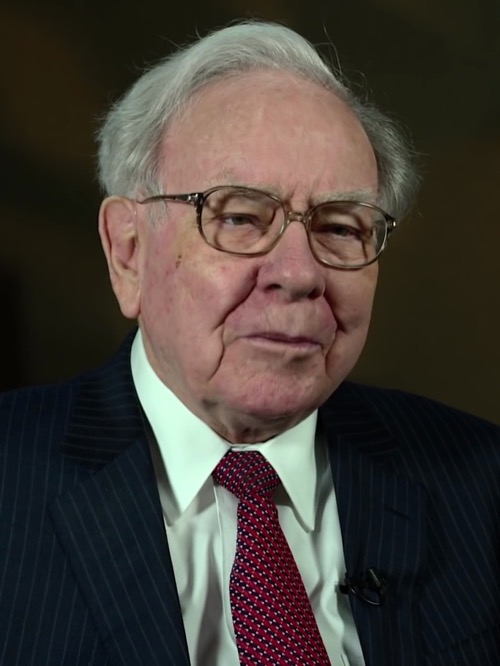
Chairman, Berkshire Hathaway · b. 1930 · Omaha, Nebraska
Two calls made by hand, not formulas. how we score →
Summary
No founding leap here, just a start date.
His father was a stockbroker turned congressman, Harvard's rejection sent him to Benjamin Graham's classroom instead, and relatives supplied the first outside money. Insurance premiums then gave him capital he never had to repay. The real input was seventy uninterrupted years of compounding, and having that much time was its own cushion.
How it happened
Omaha, second of three children. His father Howard ran his own brokerage and was later elected to Congress four times, so the house ran on finance and politics at once. Warren bought his first stock, three shares of Cities Service Preferred, at eleven, and by his teens was running paper routes for two rival papers and a small chain of pinball machines he placed in barbershops under a made-up company name.
Harvard Business School rejected him at nineteen. Paging through Columbia's course catalog that summer he recognized two names, Benjamin Graham and David Dodd, whose book he'd already read, and wrote asking to study under them. He later offered to work for Graham's firm for free; Graham said no at first and hired him onto the payroll a couple of years later.
In 1956, back in Omaha at twenty-five, he started an investment partnership with $105,100, all but $100 of it from his mother, sister, aunt, in-laws, and a couple of close friends. Nine years later he took control of a failing textile maker, Berkshire Hathaway, and in 1967 used it to buy an insurance company. The premiums it collected became capital he could invest indefinitely without raising it or paying it back.
He stayed in Omaha, away from Wall Street, and never traded up from the house he bought in 1958 for $31,500. The partnership-to-Berkshire run went unbroken from 1956 into 2026, when he handed the CEO job to Greg Abel at ninety-five and stayed on as chairman.
A fortune Forbes puts near $148 billion, built almost entirely from the appreciation of stock he never sold. He is now giving most of it away, aiming to have it out of his hands by 2034. The size of the outcome is inseparable from the length of time he had to compound it, and few people get that much runway.
The coded evidence
Thirteen groups, every claim sourcedDescendant
Buffett family in Nebraska for multiple generations before Warren; not a migration story.
↗ en.wikipedia.orgPresbyterian, non-practicing as an adult
Married at Dundee Presbyterian Church in Omaha in 1952; he has described himself as agnostic in adulthood.
↗ scmp.comA sitting congressman's household stood behind him through his twenties; there was never a point where failure meant losing a place to live.
↗ en.wikipedia.orgA salaried analyst job at Graham-Newman from 1954-1956 before he ever ran his own money, plus a family that could have absorbed a setback.
↗ en.wikipedia.orgHis first wife, Susan Thompson Buffett, ran the household and raised their three children through the 1950s and '60s while he built the partnership and then Berkshire.
↗ en.wikipedia.orgDomestic and childcare labor was absorbed by Susan Thompson Buffett, freeing his working hours entirely for reading filings and running the partnership.
↗ scmp.comThe hardship was imposed, not chosen. There was nothing to fall back on.
There is no period of imposed austerity in the record; his later frugality (the $31,500 house) is a chosen personal habit, not a survival constraint.
↗ en.wikipedia.orgFather Howard Buffett ran his own brokerage, Buffett-Falk & Co., from 1931, then served four terms as a Republican US Congressman from Nebraska starting in 1942. Mother Leila Buffett was a homemaker.
↗ en.wikipedia.orgA parent worked for themselves, the strongest known predictor of founding.
Howard Buffett founded and ran his own brokerage before entering politics.
↗ en.wikipedia.orgGrandfather Ernest Buffett ran Buffett's grocery store in Omaha for over four decades and put both Warren and, later, Charlie Munger to work there as teenagers.
↗ en.wikipedia.orgBuffett family established in Nebraska for multiple generations before Warren; his father and grandfather were both locally prominent in Omaha.
↗ en.wikipedia.orgUndergraduate and graduate tuition were family-funded; no record of debt or a job carrying the cost of either degree.
↗ en.wikipedia.orgComfortable, politically connected neighborhoods in Omaha, and later in Washington, D.C. during his father's congressional terms.
↗ en.wikipedia.orgPublic schools in Omaha and then Woodrow Wilson High School in Washington, D.C., graduating 1947.
↗ en.wikipedia.orgHis father's brokerage gave him direct childhood exposure to stock tickers and trading; as an adult his father's congressional office was itself a business and political network.
↗ en.wikipedia.orgMoved from Omaha to Washington, D.C. in 1942 when his father took office, then to New York for Columbia and Graham-Newman in 1950-1954, then back to Omaha permanently in 1956.
↗ en.wikipedia.orgAt twenty, on his own initiative, he took a Saturday train to GEICO's locked Washington headquarters, got let in by a janitor, and spent four hours being taught the insurance business by an executive who was the only other person in the building. He later called it a turning point.
↗ cnbc.comStudied under Benjamin Graham and David Dodd at Columbia, then worked as an analyst at Graham's firm, Graham-Newman Corp, from 1954-1956, an apprenticeship directly under the field's defining investor.
↗ finance.yahoo.comChose Columbia specifically to study under Graham and Dodd rather than for the degree itself, after the Harvard rejection.
↗ cnbc.comHarvard Business School rejected his application at nineteen after a ten-minute interview. Looking through Columbia's catalog that summer he recognized Graham and Dodd's names from a book he'd read and wrote asking to enroll.
↗ cnbc.comAfter graduating Columbia he offered to work for Graham's firm for free; Graham turned him down at first, then hired him onto salary in 1954 after Buffett kept sending him stock ideas for a few years.
↗ historydraft.comA congressman father gave him a base of business and political access in both Washington and Omaha from age twelve on.
↗ en.wikipedia.orgBS in business administration, University of Nebraska, 1950; MS in economics, Columbia University, 1951, studying under Benjamin Graham and David Dodd.
↗ en.wikipedia.orgDirect undergraduate-to-graduate path, redirected from Harvard to Columbia after rejection, both family-funded.
↗ cnbc.comColumbia put him directly in Graham's classroom and, through that relationship, into a job at Graham-Newman two years after graduating.
↗ finance.yahoo.comThree shares of Cities Service Preferred, bought at eleven for $114.75 out of savings from paper routes and other side jobs.
↗ cnbc.comOf the $105,100 that started Buffett Partnership Ltd in 1956, all but $100 came from his mother, sister, aunt, father-in-law, brother-in-law, a college roommate, and his lawyer.
↗ rationalwalk.comIt paid its own way from the start. Revenue came before any outside money.
The partnership earned fees on investment gains from its first year; there was no pre-revenue build phase.
↗ rationalwalk.comSeven limited partners, four of them family, assembled the founding capital for the 1956 partnership; Buffett himself put in $100 and took a share of profits above a hurdle rate rather than a management fee.
↗ joshuakennon.comIn 1967 he used Berkshire Hathaway, the failing textile mill he'd taken control of two years earlier, to buy National Indemnity and a sister insurer for $8.6 million. The premiums those companies collected became investable capital he never had to raise externally or repay, known as float; it grew from about $19 million in 1967 to well over $100 billion decades later.
↗ einvestingforbeginners.comDelivered newspapers for two rival papers at once and ran a small pinball-machine business, placed in barbershops under an invented company name, that was clearing about $50 a week by the time he finished high school; he sold it for $1,200 before leaving for college.
↗ cnbc.comTook control of Berkshire's board and operations in 1965 by accumulating a majority stake through the open market rather than being appointed or inheriting the role.
↗ newsletter.rationalwalk.com0
No documented failed venture; Berkshire's textile business itself underperformed for years under his ownership, but the vehicle survived and was repurposed rather than shut down.
↗ en.wikipedia.orgOne continuous run: paper routes and pinball machines as a teenager, into Graham-Newman, into the 1956 partnership, into Berkshire, with no gap, reset, or return to a salaried job.
↗ en.wikipedia.orgStarted the partnership in 1956, at the front of decades of postwar US equity market growth.
↗ en.wikipedia.org25
Continuous professional compounding dates from the 1956 partnership founding; the insurance-float structure that scaled it followed in 1967, at age 37.
↗ jermainebrown.org70
1956 partnership founding to end of 2025, when he stepped down as CEO at 95; he remains chairman and an investor, so the run continues in a reduced role.
↗ cbsnews.comReturned to Omaha permanently in 1956 after Columbia and Graham-Newman, deliberately building outside New York and Wall Street for the rest of his career.
↗ en.wikipedia.orgBought his Omaha house in 1958 for $31,500 and still lived in it as of 2023, alongside a famously low personal spending rate relative to his wealth.
↗ cnbc.comInvesting and insurance
↗ en.wikipedia.org147600000000
Forbes real-time tracker, August 8, 2026; fluctuates daily with Berkshire's share price.
↗ forbes.comPublic equity
Nearly all of his net worth is his disclosed, market-priced stake in publicly traded Berkshire Hathaway shares, not a private-company estimate.
↗ forbes.com2026
↗ forbes.comWealth is almost entirely unrealized appreciation in Berkshire stock held for decades, not salary; his official CEO salary was a nominal $100,000 a year for many years.
↗ en.wikipedia.orgPresidential Medal of Freedom, 2011. Co-founded the Giving Pledge with Bill and Melinda Gates in 2010. Has donated more than $60 billion to charity to date, mostly to the Gates Foundation, and is redirecting future giving toward family-run foundations with a goal of distributing nearly all his Berkshire shares by 2034.
↗ cnbc.comUncapped
↗ forbes.comSEC formally investigated Berkshire subsidiary Blue Chip Stamps' 1974-75 acquisition of Wesco Financial after a competing merger fell through and Wesco's stock dropped sharply. Buffett and Charlie Munger were subpoenaed and testified over two days. The matter settled by consent decree restricting Blue Chip's future acquisitions; no individual, including Buffett, was named or charged.
↗ en.wikipedia.orgAfter
Berkshire was already an established holding company under his control by the time of the 1974-75 investigation.
↗ en.wikipedia.orgIncidental
↗ en.wikipedia.orgCivil wrong
↗ en.wikipedia.orgFine absorbed
Consent decree bound the corporation; no personal fine or liability for Buffett is documented.
↗ en.wikipedia.orgIn 1991 he became interim chairman of Salomon Brothers, a company he was invested in but had not founded or run, after a bond-trading scandal by Salomon staff, and testified to Congress apologizing on the firm's behalf. He was not implicated in the underlying misconduct.
↗ talkativeman.comFolksy, Trustworthy, Patient
↗ en.wikipedia.orgPublic
↗ en.wikipedia.orgAsset
His reputation for integrity was specifically why Salomon's board brought him in during the 1991 crisis, and why regulators accepted him as interim chairman.
↗ talkativeman.comThe folksy 'Oracle of Omaha' persona coexists with a reputation among counterparties for extracting hard terms fast in a crisis, as in the Salomon and 2008-financial-crisis deals.
↗ en.wikipedia.orgStructural context
The cost-of-failure score comes from this person's own money and circumstances. But who they were in America carried its own weight, the same way their household or income did, and it shaped how hard the path was just as much. That part isn't in the cost-of-failure number. It's here instead.
Men held about 90% of Fortune 500 CEO seats in 2023, and a wider majority of the rungs below. The ladder is widest for them the whole way up.
↗ forbes.comWhite executives hold most Fortune 500 CEO seats relative to their share of the population, an edge that adds up at every rung of the climb.
↗ finance.yahoo.comAmong the people recorded here — men: 169 · White subjects: 114. Representation here is who reached these outcomes, not equal odds of reaching them.
Controlled comparisons
Each holds one thing constant and varies another, so the difference is the point. A list of similar names wouldn't tell you anything.