Alberto Perlman
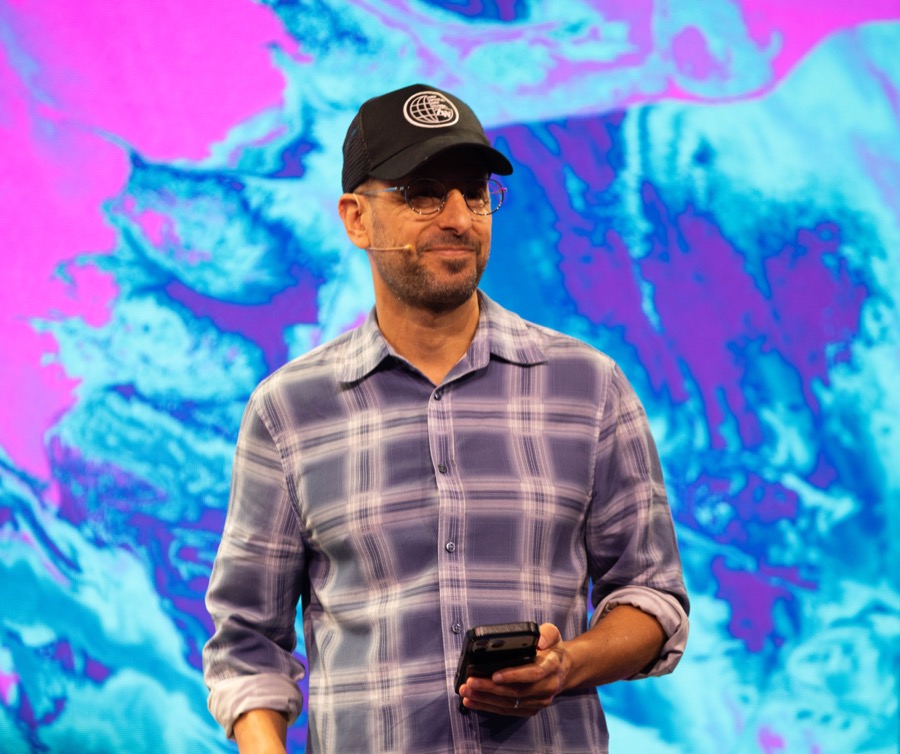
Co-founder and longtime CEO of Zumba Fitness, the Miami-based dance-fitness company he built with choreographer Beto Perez and childhood friend Alberto Aghion · b. 1977 · Bogotá, Colombia → Massachusetts → Miami, Florida
Two calls made by hand, not formulas. how we score →
Summary
Born into a Colombian family that ran an export leather business, he came to the US at about 17, studied at Babson, and watched an internet incubator die in 2001.
With almost no money, he and two partners turned Beto Perez's Miami class into a licensing network. Selling instructor memberships with their last $14,000 gave them recurring revenue.
Where they worked
How it happened
Perlman was born in Colombia in 1977 to a Jewish family. His great-grandfather had come from Jerusalem and sold textiles from town to town. In a 2010 New York Times first-person piece, Perlman says his father owned a factory that made leather goods and, when Perlman was 9, opened a distribution center in Florida. He describes Colombia in the 1980s as dangerous, with bombings he could hear from school.
He moved back to the United States in 1994 and graduated from Babson College in 1998 with a B.A. in finance and information systems. He then worked briefly as a management consultant, analyzing whether a bank's TV advertising worked. He says he found it boring, but it taught him about direct response marketing.
In 1999 he started a Miami conference for Latin American entrepreneurs, with IBM and Telefónica among the sponsors. He then co-created Spydre Labs, an incubator for Latin American internet companies, which raised several million dollars. When the bubble burst and funding dried up, he says he let everyone go and returned what was left to investors.
His parents had moved to Miami by then. Perlman says his mother, who had raved about Beto Perez's dance-fitness class during his visits home, suggested he start a business with Perez, who had also relocated to Florida. Perez had a following in Miami gyms. Perlman asked his school friend Alberto Aghion to join. Perlman says neither he nor Perez had any money.
Per the Financial Times, they poured their savings into the brand and tried to sell it through health clubs, and no chain bought in because each already had its own dance classes. By 2005 they were down to their last $14,000. The FT reports they covered living costs with income from Perez's classes, second jobs and Aghion's wife's salary.
They spent the remaining money on a training program for fitness instructors, marketed through videos and an infomercial. Perlman said 200 sign-ups would keep them going. The FT reports 450 instructors joined, each paying a training fee of $300 or more and then $30 a month. Perlman calls it the turning point because it produced recurring revenue.
Zumba reported about 50,000 locations in 75 countries in 2010. In March 2012 The Raine Group and Insight Venture Partners made a minority investment, and the press release says the founders kept ownership and operational control. Inc. estimated the company's value at $500 million in 2013, per the FT. A 2024 proxy statement for Bowlero, where he sits on the board, still describes him as Zumba's CEO.
The coded evidence
Thirteen groups, every claim sourcedColombian; Jewish family, with a great-grandfather from Jerusalem
Wikipedia says he was born to a Jewish family in Colombia and was the great-grandson of an immigrant from Jerusalem. The sources do not say whether the family is Ashkenazi or Sephardic, so only the national-origin tag is used in coded.ethnicities.
↗ en.wikipedia.orgBorn in Colombia and raised there, with a six-month stay in Florida at age 9. Moved to the United States in 1994, at about 17, and later stayed.
Age is inferred from the 1977 birth year and the 1994 move.
↗ nytimes.comHis parents had moved to Miami by 2001, and he had dinner at their house the night he got the idea for Zumba.
Whether he lived with them or could have relied on them for housing is not stated.
↗ nytimes.comIn the early years the founders relied on income from Beto Perez's classes, second jobs and Alberto Aghion's wife's salary. Perlman says he worked a morning job selling food to supermarkets in Colombia and showed up at Zumba in the afternoons.
The FT does not date the morning job precisely.
↗ ft.comnot established
He says he returned what remained of Spydre Labs investors' money; no personal debt is described.
↗ nytimes.comThe hardship was imposed, not chosen. There was nothing to fall back on.
The shortage of money was imposed by the failure of the dot-com incubator and the lack of buyers among gyms.
↗ ft.comFather owned a factory making leather goods and ran a US distribution center; mother's occupation not established.
↗ nytimes.comA parent worked for themselves, the strongest known predictor of founding.
↗ nytimes.comGreat-grandfather emigrated from Jerusalem to Colombia at 20 and sold textiles on horseback, per Perlman's own account.
↗ nytimes.comnot established
He describes bombings audible from school in 1980s Colombia, but no missed schooling is reported.
↗ nytimes.comBogotá, Colombia; no ZIP-level mobility join applies.
The podcast page says he grew up in Bogotá; the New York Times piece names only Colombia.
↗ thefounderhour.comSix months in Florida at age 9 while his father set up a distribution center; moved to the United States in 1994; Babson College in Massachusetts; then Miami, where his parents had also moved by 2001.
↗ nytimes.comHis father already had a distribution center in Florida, but the sources do not say who hosted him on arrival in 1994.
↗ nytimes.comHis mother, who took Beto Perez's classes in Colombia, suggested he talk to Perez after Perlman's dot-com incubator collapsed.
↗ nytimes.comBeto Perez, the choreographer who created the class, and Alberto Aghion, Perlman's friend since school who looks after operations.
↗ ft.com3
Roughly from the 1998 Babson graduation to 2001, spanning consulting, a conference and an incubator.
↗ nytimes.comNot Perlman's. Perez already had a large following in Miami when they partnered, per the FT.
↗ ft.comHealth club chains would not take Zumba because they had their own dance classes. The founders went to instructors directly, who had access to gyms and a reason to push the brand.
↗ ft.comThe Zumba Instructor Network, a paid membership of licensed instructors, plus direct-response videos and infomercials.
↗ ft.comB.A. in finance and information systems, Babson College (1998)
↗ nytimes.comnot established
How the degree was paid for is not established, so coded.credentialFunding of self-funded is a placeholder at low confidence.
↗ nytimes.comnot established
The FT describes Babson as famous for entrepreneurship, but no source ties a specific contact or deal to it.
↗ ft.comThe founders' own savings plus income from Perez's classes, second jobs and Aghion's wife's salary.
Total start-up capital is not disclosed; the FT says the founders decline to reveal financial details.
↗ ft.comIt paid its own way from the start. Revenue came before any outside money.
Instructor membership fees produced recurring revenue from 2005, before outside investment.
↗ ft.comSelf-funded until 2012. The FT mentions a small investment from angel investors, including a former gym entrepreneur, who joined the board. Raine and Insight made a minority investment announced March 2012; the amount was not disclosed.
The FT article is from February 2013, so its angel round is not dated precisely in the sources used.
↗ insightpartners.comMinority investment by Insight Venture Partners and The Raine Group in 2012. The press release says current leadership retained ownership and operational control.
↗ insightpartners.comZumba is the founders' own licensing platform; Perez co-owns it rather than being paid as a contractor.
The FT calls the three men the company's owners. Individual stakes are not disclosed.
↗ ft.comHis mother suggested the business after taking Beto Perez's fitness class in Colombia. The direct-response model drew on what Perlman had learned analyzing a bank's TV advertising.
↗ nytimes.comNo health club chain was interested in the program, per the FT. No rejection by investors is documented in the sources used.
↗ ft.com1
Spydre Labs, the Latin American internet incubator that collapsed with the 2001 downturn.
↗ nytimes.comSpydre Labs investors lost most of their money; Perlman says he returned what remained to them. Zumba's early costs fell on the three founders and their households.
↗ nytimes.com1
Zumba's first approach through health clubs failed; the 2005 instructor program was a change of distribution rather than a new company.
↗ ft.comLaunched into the aftermath of the dot-com crash. The instructor model arrived as dance fitness classes and DVD sales were both growing.
The second sentence is an inference from the FT's account of DVD and class growth, not a stated claim.
↗ ft.comMiami, Florida
↗ nytimes.comFitness licensing and consumer brands (Zumba Fitness)
↗ sec.govnot established
No personal net worth figure was found in primary or journalistic sources, and his Forbes profile page was not available. Magnitude 4 rests on Inc.'s 2013 estimate of $500 million for the company, reported by the FT, which he co-owns with two other founders and, since 2012, outside investors. His own share is not disclosed.
↗ ft.comNot established. The 2012 deal was a minority investment, and the sources used do not say whether the founders took money off the table.
↗ insightpartners.comZumba reported 110,000 locations in over 125 countries and 12 million weekly participants in 2012. He sits on the board of Bowlero Corp.
Bowlero directorship per its 2024 proxy statement.
↗ insightpartners.comUncapped
↗ ft.comStructural context
The cost-of-failure score comes from this person's own money and circumstances. But who they were in America carried its own weight, the same way their household or income did, and it shaped how hard the path was just as much. That part isn't in the cost-of-failure number. It's here instead.
Men founded the companies that took nearly all the venture funding and almost every top outcome, a tailwind that never shows up in one person's own circumstances.
↗ techcrunch.comImmigrants and their children are overrepresented among America's biggest companies, as founders and as senior leaders. They got there through the visa, credential, and network hurdles that make the path harder to even start down.
↗ forbes.comAmong the people recorded here — men: 225 · white subjects: 24. Representation here is who reached these outcomes, not equal odds of reaching them.
Controlled comparisons
Each holds one thing constant and varies another, so the difference is the point. A list of similar names wouldn't tell you anything.