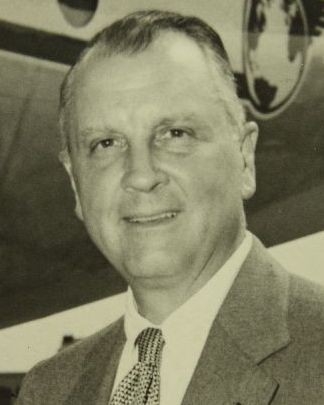
Anne Wojcicki
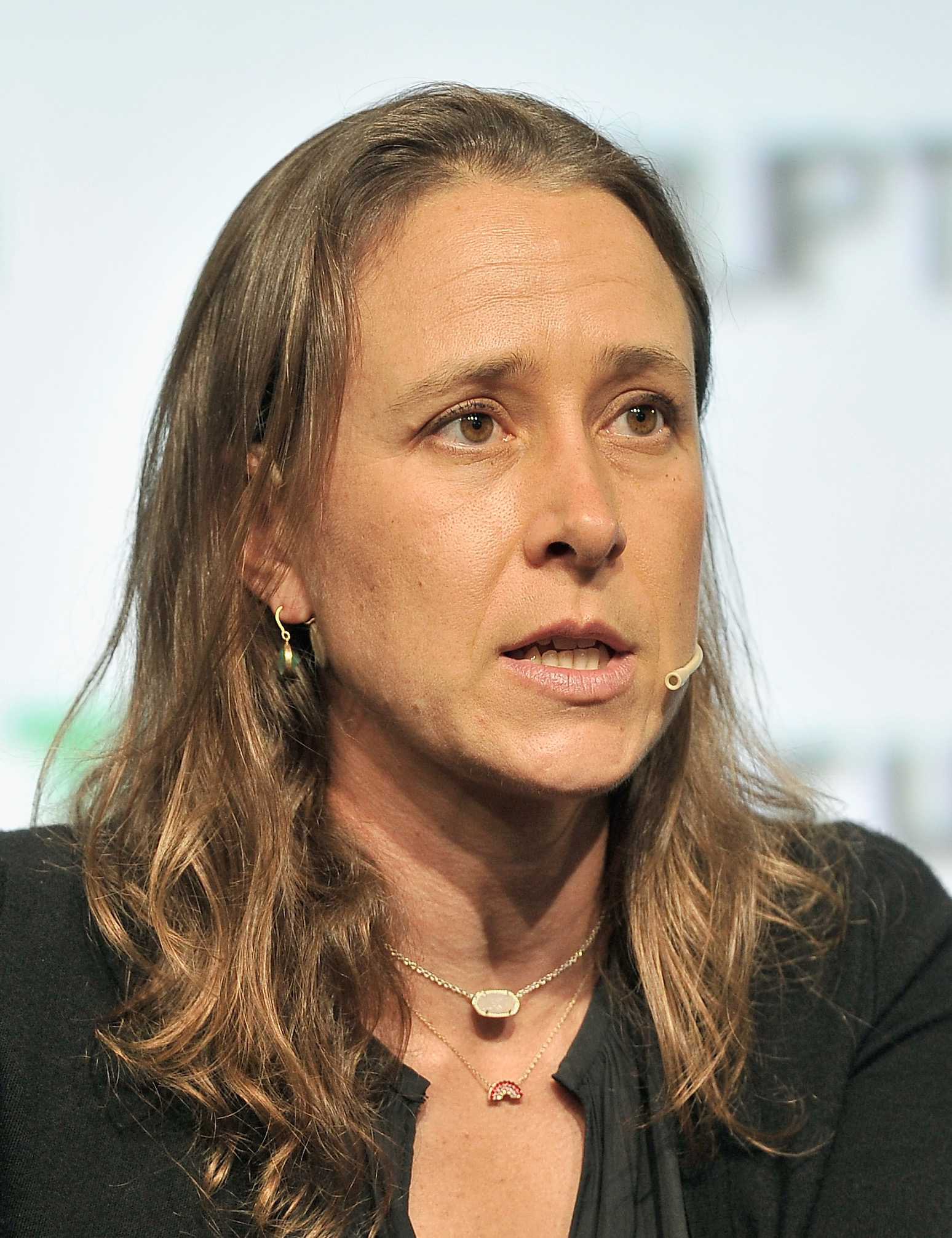
Co-founder and former CEO, 23andMe · b. 1973 · Palo Alto, California (raised on the Stanford University campus)
Two calls made by hand, not formulas. how we score →
Summary
Raised on the Stanford campus by a physics professor and an educator, then Yale and a decade reading biotech balance sheets on Wall Street before she co-founded 23andMe in 2006.
The company built consumer genetic testing into a household name and made her a paper billionaire at its 2021 SPAC debut. Most of that value was gone within three years, and the company filed for bankruptcy in 2025.
How it happened
Anne Wojcicki was born July 28, 1973, and grew up on the Stanford University campus in Palo Alto, the youngest of three daughters. Her father, Stanley Wojcicki, had fled Poland with his mother as a boy when communists took power there, made his way to the United States on a Harvard scholarship, and became a Stanford physics professor. Her mother, Esther Wojcicki, was the daughter of Russian-Jewish immigrants and taught journalism at Palo Alto High School for decades. Her sisters were Susan Wojcicki, later CEO of YouTube, and Janet Wojcicki, an academic epidemiologist.
She earned a BS in biology from Yale in 1996, having also done molecular-biology research at the NIH and UC San Diego, then spent roughly a decade as a healthcare investment analyst, mainly at Passport Capital and Investor AB, evaluating biotech and pharmaceutical companies for a living before she started one herself.
In April 2006 she co-founded 23andMe with Linda Avey and Paul Cusenza to sell genetic testing directly to consumers rather than through doctors. Google invested $3.9 million in 2007, alongside Genentech, New Enterprise Associates, and Mohr Davidow Ventures; Google co-founder Sergey Brin, whom she married that May, was one of the personal connections behind that early round. The company built the world's largest direct-to-consumer genetic database and largely invented the category.
23andMe went public in June 2021 through a SPAC merger with Richard Branson's VG Acquisition Corp, valuing the company at $3.5 billion. Her stake, held through a family trust, was worth roughly $1.3 billion at the Nasdaq debut, and Forbes named her a new self-made billionaire. A dual-class share structure gave her outsized voting control even though she owned only a modest slice of the company's total shares.
In October 2023, hackers used stolen passwords to reach the accounts of roughly 6.9 million users, harvesting names, ancestry data, and family matches; reporting said Ashkenazi Jewish and Chinese-descent users were specifically targeted and had their data offered for sale. 23andMe settled the resulting class-action suit for $30 million in 2024, admitting no wrongdoing. All seven independent board members resigned that September amid a dispute over her buyout proposal.
23andMe filed for Chapter 11 bankruptcy on March 23, 2025, and Wojcicki resigned as CEO that day, staying on as a director. She then formed a nonprofit, TTAM Research Institute, which outbid Regeneron Pharmaceuticals and bought substantially all of 23andMe's assets for $305 million in July 2025 — keeping the genetic database and its research mission out of a stranger's hands, at the cost of the company she'd spent nineteen years building.
The coded evidence
Thirteen groups, every claim sourcedSecond-generation American on her father's side (Stanley Wojcicki emigrated as a child, fleeing communist Poland in the late 1940s) and also second-generation on her mother's side (Esther Wojcicki's parents were Russian-Jewish immigrants). Anne Wojcicki herself was born in Palo Alto; coded.migration for her is `none` since she was US-born.
↗ en.wikipedia.orgnot established
Her father was raised Catholic and her mother's family was Jewish, but Anne Wojcicki's own religious upbringing is not documented in the sources reviewed.
↗ en.wikipedia.orgnot established
She had three children (born 2008, 2011, and 2019) while running 23andMe; no documented career interruption or leave.
↗ en.wikipedia.orgNo move was made for a partner's career.
She was already based in the Bay Area, as was Sergey Brin, whom she married in 2007.
↗ en.wikipedia.orgGrew up in a stable, two-parent household on the Stanford University campus, where her father was a tenured physics professor — a secure, resourced home with no documented housing precarity at any point.
↗ en.wikipedia.orgRoughly a decade of healthcare-investment-analyst income (Passport Capital, Investor AB) before founding 23andMe in 2006 gave her savings and industry standing; from 2007 she was also married to Google co-founder Sergey Brin, one of the wealthiest people in Silicon Valley, though her personal reliance on his income is not documented.
↗ en.wikipedia.org0
No children at the time of the 2006 founding; her three children were born in 2008, 2011, and 2019, during her tenure as CEO.
↗ en.wikipedia.orgnot established
No debt of any kind is documented at any point in the record reviewed.
↗ en.wikipedia.orgnot established
No homelessness, job loss, or comparable instability is documented during 23andMe's founding or early years.
↗ en.wikipedia.orgnot established
No period of visible austerity, chosen or imposed, is documented in the sources reviewed.
↗ en.wikipedia.orgFather Stanley Wojcicki was a Stanford physics professor; mother Esther Wojcicki was a journalism teacher at Palo Alto High School and later an author.
↗ en.wikipedia.orgNeither parent was self-employed.
Both parents held salaried academic and teaching positions rather than running a business.
↗ en.wikipedia.orgFather held a PhD in physics from UC Berkeley after a Harvard scholarship undergraduate degree; mother held a graduate degree in education.
↗ en.wikipedia.org2
Sisters Susan Wojcicki (former YouTube CEO, d. 2024) and Janet Wojcicki (academic epidemiologist).
↗ en.wikipedia.orgnot established
No documented grandparent or relative supplying mentorship, capital, or exposure beyond her parents.
↗ en.wikipedia.orgNo inherited wealth or titled family standing, but a household rich in academic and institutional standing: a Stanford professor father and, later, a sister who became CEO of YouTube. Cultural and professional capital rather than financial capital.
↗ en.wikipedia.orgGrowing up literally on a research university's campus, surrounded by working scientists, normalized an unconventional, science-driven career rather than making it feel risky.
↗ en.wikipedia.orgnot established
No self-disclosed or well-documented childhood adversity is on record.
↗ en.wikipedia.orgThe Stanford University campus, Palo Alto — one of the highest-opportunity areas in the country, adjacent to Silicon Valley's technology and biotech cluster from birth.
↗ en.wikipedia.orgGunn High School, a well-resourced public high school in Palo Alto, where she edited the school newspaper.
↗ en.wikipedia.orgGrew up inside a top research university's campus, with direct childhood proximity to the scientists, labs, and — by extension — the biotech and technology industries that Silicon Valley was built around, well before she entered either field professionally.
↗ en.wikipedia.orgHer father's Stanford faculty position is what put the family on campus in the first place, giving her ambient, daily exposure to a research-science environment from early childhood.
↗ en.wikipedia.orgnot established
No childhood relocation is documented; she appears to have grown up in Palo Alto throughout.
↗ en.wikipedia.orgCo-founders Linda Avey, who brought prior genomics-industry experience, and Paul Cusenza. Google's 2007 investment came the same year she married Google co-founder Sergey Brin, a personal connection alongside the deal's other investors (Genentech, New Enterprise Associates, Mohr Davidow Ventures).
↗ en.wikipedia.orgNo single prior employer functioned as a launch platform; rather, a decade split across two healthcare-investment employers (Passport Capital, Investor AB) supplied the biotech-sector fluency and Wall Street credibility she brought to founding 23andMe.
↗ en.wikipedia.orgSkill, Credibility
↗ en.wikipedia.orgLinda Avey and Paul Cusenza co-founded 23andMe with her in April 2006. Avey had prior genomics-industry experience.
↗ en.wikipedia.org23andMe sold genetic testing directly to consumers rather than through physicians or clinical labs, a business model that had no real precedent and initially operated in a gap the FDA had not yet moved to regulate.
↗ en.wikipedia.orgHer 2007 marriage to Sergey Brin put her in direct personal proximity to one of Google's co-founders in the same year Google invested $3.9 million in 23andMe — relevant here only as context for that investment, not as a claim about the marriage itself.
↗ en.wikipedia.orgBS in Biology, Yale University (1996)
↗ en.wikipedia.orgnot established
Not explicitly documented, but no student debt is mentioned anywhere in the record; coded.credentialFunding is set to family-funded at low confidence given her parents' stable professional-academic income.
↗ en.wikipedia.orgDirect — an elite private undergraduate degree straight from a Palo Alto public high school.
↗ en.wikipedia.orgYale, plus research stints at the NIH and UC San Diego, gave her scientific grounding and a credential recruiters in healthcare finance would recognize.
↗ en.wikipedia.org23andMe's first outside capital came from a 2007 round including Google ($3.9 million), Genentech, New Enterprise Associates, and Mohr Davidow Ventures, rather than from her own funds.
↗ en.wikipedia.orgIt needed capital up front, before it earned anything.
23andMe was capital-first and remained dependent on outside funding rounds for most of its history rather than reaching durable profitability.
↗ en.wikipedia.orgRoughly a decade of healthcare-investment-analyst income likely provided personal runway at founding, though no specific amount is documented.
↗ en.wikipedia.org2007 investors included Google ($3.9M), Genentech, New Enterprise Associates, and Mohr Davidow Ventures. The company went on to raise hundreds of millions more privately (including $300M from GSK in 2018) before its 2021 SPAC merger with VG Acquisition Corp valued it at $3.5 billion.
↗ en.wikipedia.orgA dual-class share structure (Class A, one vote; Class B, ten votes) let her retain outsized voting control. As of the July 2022 proxy statement, a Wojcicki-controlled trust held 98,633,827 shares of Class B stock — 51.3% of Class B shares outstanding — giving her 45.4% of the combined voting power across both classes while she held only a modest share of the company's total economic ownership.
↗ sec.govAn entity affiliated with the Anne Wojcicki Foundation subscribed for $25 million of Class A common stock in a private placement around the 2021 SPAC close — reinvesting into the company rather than diversifying personal gains out of it.
↗ sec.govGrew out of her own healthcare-investing thesis that consumers should have direct access to their own genetic and health information, combined with co-founder Linda Avey's prior genomics-industry background — a market gap rather than a single prior employer's idea.
↗ en.wikipedia.orgThe clearest case of the two diverging in this record: her Class B supervoting shares gave her structural control of a public company (45%+ of the vote) that she did not economically own outright. That control did not survive the 2025 Chapter 11 filing — she resigned as CEO the day of the filing, and public shareholders, herself included, were effectively wiped out as economic owners of 23andMe Holding Co.
↗ sec.gov0
23andMe, founded in 2006, was her first venture; no prior failed company is documented.
↗ en.wikipedia.orgVenture investors and, later, public shareholders (from the 2021 SPAC onward) absorbed most of the financial loss as the company's value collapsed and it entered bankruptcy in 2025.
↗ en.wikipedia.orgFounded during the mid-2000s consumer-genomics and DTC-health boom, as DNA-sequencing costs fell sharply after the Human Genome Project and venture capital was receptive to consumer health-tech, with no established FDA framework yet governing direct-to-consumer genetic testing.
↗ en.wikipedia.orgSan Francisco Bay Area, California — she was already there, not a relocation for the venture.
↗ en.wikipedia.org23andMe's 2008 "spit party" launch marketing and Time magazine naming its test the 2008 "Invention of the Year" drove a wave of press attention and early customer growth.
↗ en.wikipedia.orgDirect-to-consumer genetic testing operated in a regulatory gap when 23andMe launched in 2007 — no established FDA framework yet governed it. That window closed in November 2013, when the FDA ordered the company to stop marketing its health-related tests pending validation; it took until 2015–2018 to regain phased authorization.
↗ en.wikipedia.orgBuilt — 23andMe was a new venture, not an acquisition.
↗ en.wikipedia.org19
From the 2006 founding to the March 2025 Chapter 11 filing and her resignation as CEO.
↗ en.wikipedia.orgBiotechnology — direct-to-consumer genetic testing and consumer genomics
↗ en.wikipedia.orgnot established
This is a peak-vs-now story and the two numbers should not be confused. At 23andMe's June 2021 Nasdaq debut, her stake — 98,633,827 Class B shares held through a family trust, per the SEC Schedule 13D referenced in the company's 2022 proxy statement — was worth roughly $1.3 billion at the opening share price, and Forbes named her a new self-made billionaire. By December 2021 that had fallen to about $860 million as shares slid; Forbes put her net worth at $270 million as of June 2023. The stock kept falling — 23andMe's valuation had dropped to roughly 2% of its post-listing peak by late 2024 — and the company's March 2025 Chapter 11 filing left public shareholders, Wojcicki included, effectively wiped out as economic owners. No reliable current figure exists; Forbes no longer lists her as a billionaire. Coded null rather than guessed; coded.magnitude (3) is set well below the 2021 peak (which alone would read as band 5) to reflect that collapse.
↗ forbes.comnot established
No single reliable measurement basis applies across the peak-to-collapse trajectory described in the netWorth note.
↗ forbes.com32546430
Total FY2022 compensation from the 23andMe proxy summary compensation table, almost entirely stock ($12.6M) and option awards ($19.9M); her base cash salary was just $59,280–62,400, set at California's exempt-employee minimum by her own choice. Nearly all of this was paper compensation tied to stock that later lost most of its value.
↗ sec.govProxy statement
↗ sec.govAlmost entirely paper at every stage: the 2021 "billionaire" net worth was illiquid, unsold Class B stock, and her largest compensation years were stock and option grants rather than cash. No large personal liquidity event (a stock sale converting paper wealth to cash) is documented.
↗ sec.govHigh nominal compensation figures that were almost entirely equity in a company whose value later collapsed — a case where reported income and durable wealth diverged sharply.
↗ sec.govCo-created the modern direct-to-consumer genetic testing category and built the world's largest consumer genetic database at its peak; the 2007 test was named Time's 2008 "Invention of the Year." Joined The Giving Pledge in 2022. After 23andMe's 2025 bankruptcy, founded and leads TTAM Research Institute, a nonprofit that bought the company's genetic database and research assets for $305 million to keep them out of a for-profit acquirer's hands.
↗ en.wikipedia.orgUncapped
Structurally uncapped as founder equity in a venture-backed, later public, company — though the 2025 bankruptcy shows an uncapped ceiling is not a guaranteed floor.
↗ en.wikipedia.orgThe FDA sent 23andMe a warning letter on November 22, 2013, ordering it to stop marketing the health-related components of its Personal Genome Service pending clinical validation; the company complied, suspending health reports for new US customers from December 5, 2013, and regained phased FDA authorization between 2015 and 2018. Separately, following the 2023 data breach, the UK's Information Commissioner's Office fined the company £2.31 million in June 2025 for inadequate security measures, and California's Attorney General sued in May 2026 alleging failure to safeguard personal information under the state's consumer privacy law.
↗ en.wikipedia.org23andMe agreed to a $30 million settlement in September 2024 of a consolidated class action over the October 2023 data breach, which compromised roughly 6.9 million users' accounts through credential-stuffing; reporting said the breach specifically targeted users of Ashkenazi Jewish and Chinese descent, whose data was then offered for sale. The company admitted no wrongdoing as part of the settlement.
↗ en.wikipedia.orgnot established
No co-founder or investor litigation is documented; Linda Avey's 2009 departure from the company appears to have been amicable.
↗ en.wikipedia.orgAfter
The 2013 FDA action, 2023 breach, and 2025 bankruptcy all occurred well after the 2006 founding.
↗ en.wikipedia.orgIncidental
These are downstream business and security outcomes, not conduct that produced her original founding advantage. A company's data breach and bankruptcy are business failures, not evidence of personal wrongdoing.
↗ en.wikipedia.orgFine absorbed
The $30M breach settlement and UK fine were structured as corporate payments, with no personal liability, criminal charge, or regulatory action against Wojcicki individually on record. She did lose her CEO role and the great majority of her paper wealth when the company itself failed.
↗ en.wikipedia.orgnot established
No significant labor dispute or finding involving her as an employer is documented in the sources reviewed.
↗ en.wikipedia.orgMission driven, idealistic about consumer health data, Persistent
↗ en.wikipedia.orgPress
↗ en.wikipedia.orgAfter
Her public reputation as a genomics pioneer formed from running 23andMe, after the 2006 founding, not before it.
↗ en.wikipedia.orgMixed
An asset during the company's growth years (Time honoree, self-made billionaire coverage, Giving Pledge); a liability after the 2023 breach and 2025 bankruptcy, which drew sustained public criticism of the company's data-security practices and business judgment.
↗ en.wikipedia.orgThe reputation accrued from behaviour rather than being manufactured.
↗ en.wikipedia.orgPress and public largely frame her as a pioneer of consumer genomics whose company also became a cautionary tale about the durability of that model; some customers and mission-aligned supporters backed her nonprofit reacquisition of the company's assets through TTAM Research Institute after the bankruptcy, while investors who bought into the 2021 SPAC largely absorbed a near-total loss.
↗ en.wikipedia.orgRather than recovering the company or her original equity, she formed TTAM Research Institute, a nonprofit, to buy 23andMe's genetic database and research mission out of bankruptcy in July 2025. Whether this restores her personal financial or reputational position is not yet established.
↗ en.wikipedia.orgStructural context
The cost-of-failure score comes from this person's own money and circumstances. But who they were in America carried its own weight, the same way their household or income did, and it shaped how hard the path was just as much. That part isn't in the cost-of-failure number. It's here instead.
Startups founded only by women have drawn about 2% of US venture capital, a share that has barely moved in a decade. Raising money as a woman was harder than any one record shows.
↗ techcrunch.comWhite founders are heavily overrepresented among funded companies and top-tier wealth relative to their share of the population, an edge that has nothing to do with a person's own money.
↗ techcrunch.comAmong the people recorded here — women: 68 · White subjects: 114. Representation here is who reached these outcomes, not equal odds of reaching them.
Controlled comparisons
Each holds one thing constant and varies another, so the difference is the point. A list of similar names wouldn't tell you anything.