Arte Moreno
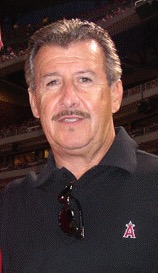
born Arturo Moreno
Owner, Los Angeles Angels; built the billboard company Outdoor Systems · b. 1946 · Tucson, Arizona
Two calls made by hand, not formulas. how we score →
Summary
Fourth-generation Tucson family, oldest of eleven children in a two-bedroom house.
He served in Vietnam, used the GI Bill for a marketing degree, then spent twelve years turning a small Phoenix billboard company into the country's largest, selling it in 1999 for roughly $8.3 billion in stock. Four years later he bought the Angels.
How it happened
He was fourth-generation Mexican-American on his father's side, born in Tucson in 1946, the oldest of eleven children of Maria and Arturo Moreno. His grandfather had founded a Tucson printing business decades earlier, and by some accounts started El Tucsonense, the city's first Spanish-language newspaper, in 1915; his father ran the paper for years and later kept a small print shop. None of it left much money behind — the family of thirteen lived in a two-bedroom, one-bathroom house — but it gave the Morenos a standing in Tucson's Mexican-American community that a paycheck alone doesn't buy.
He was drafted into the Army in 1966 and served two years, including a stint in Vietnam, before his discharge in 1968. The GI Bill paid for a marketing degree at the University of Arizona, which he finished in 1973, and he took a sales job with a local Phoenix billboard company afterward for a starting commission of $2.25. He later called it "a fun business, a people business" — long lunches and ballgames, the kind of relationship selling that carried into everything he built after.
In 1984 he and a partner, Wally Kelly, tried to buy an 80-billboard Phoenix company called Outdoor Systems outright from its owner, William Levine. The buyout fell through, and Moreno joined instead as an executive, working up to president and CEO. Over the next twelve years he ran the company through an aggressive, debt-financed acquisition strategy that took its annual revenue from $500,000 to $90 million and made it the largest outdoor-advertising company in the country. Outdoor Systems went public in 1996; the stock rose roughly 1,460% over the next three years. In 1999 he and Kelly sold the company to Infinity Broadcasting, then part of CBS, for around $8.3 billion in stock and assumed debt.
He already had a toe in sports ownership — a group he was part of bought the Salt Lake Trappers, a minor-league team, in 1986 and sold it in 1992 for what he called a "resounding financial success." In 2003 he bought the Anaheim Angels outright from the Walt Disney Company for $180 million, becoming the first Mexican-American to hold majority ownership of a major U.S. sports franchise. Two years later he renamed the team the "Los Angeles Angels of Anaheim" to reach the larger L.A. media market, a move the city of Anaheim sued over, arguing it violated the stadium lease. The Angels won.
A 2019 deal to sell Angel Stadium and its parking lots to Moreno's company for $325 million collapsed in 2022 after an FBI corruption investigation into Anaheim's city government; the city council canceled the sale days after Mayor Harry Sidhu resigned. The investigation centered on the mayor's office and city staff, and neither Moreno nor the Angels organization was accused of wrongdoing. Forbes puts his net worth near $5 billion now, built mostly on the original billboard fortune plus the franchise's own climb in value, from a $180 million purchase price to a valuation Forbes put above $2 billion by 2022.
The coded evidence
Thirteen groups, every claim sourcedCoarse public-record coding; race is a noisy, interpretive category.
↗ en.wikipedia.orgDescribed in multiple biographical sources as fourth-generation Mexican-American on his father's side, with the family rooted in Tucson since at least his grandfather's generation. This sits awkwardly against Wikipedia's own phrasing that his parents "immigrated from Mexico" — a claim that is hard to square with a grandfather who was already running a Tucson newspaper and print business decades before Arte was born. Treated here as an unresolved discrepancy rather than settled either way.
↗ notablebiographies.comA two-parent household throughout childhood, but a crowded one — the family of thirteen (two parents, eleven children) lived in a two-bedroom, one-bathroom house in Tucson.
↗ notablebiographies.comnot established
No source documents a specific income floor during his Army service or early sales career; his starting commission at his first billboard sales job was $2.25, but that is a data point, not an established floor.
↗ en.wikipedia.orgnot established
No imposed hardship narrative or chosen austerity is documented either way beyond the crowded childhood home.
↗ en.wikipedia.orgFather Arturo (Art) Moreno ran the family's Spanish-language newspaper, El Tucsonense, and later kept a small print shop. Mother Maria (Mary) Moreno's occupation is not established in the sources reviewed.
↗ notablebiographies.comA parent worked for themselves, the strongest known predictor of founding.
Father ran the family newspaper and later a print shop rather than working for someone else.
↗ notablebiographies.comHis grandfather is credited in a Tucson newspaper retrospective as Francisco Santos Moreno, founder of El Tucsonense in 1915, with Arte's father later serving as the paper's longest-running manager before it closed around 1963. This gave the family a multi-generation footprint in Tucson's Mexican-American press and community life, independent of any wealth it produced.
Sourced from a search-indexed excerpt of this article; a direct full-page fetch was rate-limited and could not independently confirm the wording. The broader "grandfather founded the family's Tucson newspaper/print business" fact is corroborated at medium confidence by notablebiographies.com; the specific name and closing date are lower confidence.
↗ tucson.comFourth-generation Mexican-American with roots in Tucson going back at least to his grandfather's newspaper. Named for his father, Arturo.
↗ notablebiographies.comTucson, Arizona; a two-bedroom, one-bathroom house shared by thirteen family members.
↗ notablebiographies.comHis first job after college was selling billboard space for a local Phoenix-area billboard company (identified as Eller Outdoor in some accounts, and elsewhere described only as "a local billboard company later bought by Gannett"). No family connection or introduction is documented; it reads as an ordinary entry-level sales job.
Sources vary on the exact name of this first employer.
↗ latinbusinesstoday.comWally Kelly, his partner in the 1984 attempt to buy Outdoor Systems and his longtime business partner through the company's growth and 1999 sale.
↗ en.wikipedia.org11
From his first billboard sales job (1973) to joining Outdoor Systems (1984).
↗ latinbusinesstoday.comHe and Kelly initially tried to buy Outdoor Systems outright from its owner, William Levine, in 1984; that buyout fell through. Rather than walking away, Moreno joined the company as an executive instead, working up to president and CEO over the following years.
↗ en.wikipedia.org2
One billboard sales job after college, then Outdoor Systems, before he ran the company himself.
↗ latinbusinesstoday.comBachelor's degree in marketing, University of Arizona, 1973.
↗ notablebiographies.comNone documented — funded through GI Bill benefits earned by his Army service, including a tour in Vietnam.
↗ forbes.comThe GI Bill functioned as a targeted, fully funded access program: military service, including combat deployment, converted directly into a paid-for college degree with no tuition debt.
↗ forbes.comNo personal seed capital is documented. The 1984 attempt to buy Outdoor Systems outright from William Levine fell through, and Moreno joined the company as an operator rather than an owner-investor; its growth was financed by reinvested revenue and debt-financed acquisitions rather than his own savings.
The exact financing of the failed 1984 buyout attempt, and the terms on which Moreno subsequently joined as an executive, are not spelled out in any source reviewed.
↗ en.wikipedia.orgIt paid its own way from the start. Revenue came before any outside money.
Outdoor Systems grew from $500,000 to $90 million in annual revenue over about twelve years before its 1996 IPO.
↗ notablebiographies.comGrew through debt-financed acquisitions of smaller billboard operators, then went public in 1996. The stock reportedly rose about 1,460% over the following three years before the 1999 sale.
↗ latinbusinesstoday.comProceeds from the 1999 Outdoor Systems sale funded the $180 million purchase of the Anaheim Angels in 2003, four years later.
↗ en.wikipedia.orgBillboards are a physical, owned advertising asset rather than rented attention — Outdoor Systems' value came from controlling the physical inventory of ad space outright, which is what let margins scale as it bought up more boards across more markets.
↗ en.wikipedia.org2
Converted the billboard fortune into ownership positions in two other categories — professional sports (Angels) and, briefly, Spanish-language radio (KMXE, 2006-2008).
↗ en.wikipedia.orgNo documented personal financial loss from the failed 1984 attempt to buy Outdoor Systems outright; he redirected into an operating role at the same company rather than absorbing a venture failure and starting over.
↗ en.wikipedia.org53
Outdoor Systems was sold to Infinity Broadcasting on December 7, 1999; born August 1946.
↗ en.wikipedia.orgBuilt during the outdoor-advertising industry's 1990s consolidation wave, when roll-ups financed by debt and then public equity bought up independent billboard operators nationwide; the Department of Justice required Outdoor Systems to divest billboards in ten markets after its 1997 acquisition of 3M National's billboard division, a standard antitrust condition on a fast-consolidating industry. Outdoor Systems went public into the mid-to-late-1990s bull market and sold at close to the top of it, in December 1999, months before markets turned.
↗ en.wikipedia.orgBuilt and run from Phoenix, Arizona, well outside the traditional media and advertising centers of New York or Los Angeles.
↗ en.wikipedia.orgOutdoor (billboard) advertising; professional sports ownership
↗ en.wikipedia.org5000000000
↗ forbes.com2026
↗ forbes.comThe 1999 Outdoor Systems sale was paid in Infinity Broadcasting/CBS stock and assumed debt rather than cash, so the initial windfall was paper wealth in someone else's stock. Whether and when he diversified out of that position isn't established in the sources reviewed; the $180 million cash purchase of the Angels in 2003 suggests at least part of it had been realized by then.
↗ latinbusinesstoday.comWealth built from one company sale rather than salary, then compounded through a second asset — the Angels franchise appreciated from a $180 million purchase price in 2003 to a Forbes estimate above $2 billion by 2022, meaning a large share of his current net worth is franchise appreciation rather than the original billboard fortune itself.
↗ en.wikipedia.orgBecame the first Mexican-American to hold majority ownership of a major U.S. sports franchise when MLB approved his purchase of the Angels on May 15, 2003.
↗ en.wikipedia.orgUncapped
Equity in an appreciating sports franchise plus a large one-time stock sale, rather than a salaried or fee-capped role.
↗ en.wikipedia.orgA 2019 deal for Moreno's company, SRB Management, to buy Angel Stadium and its surrounding parking lots from the City of Anaheim for $325 million collapsed in May 2022 after an FBI corruption investigation into Anaheim's city government became public. Anaheim Mayor Harry Sidhu resigned on May 23, 2022, and the city council voted to cancel the sale the next day, citing allegations of corruption and possible violations of the state's Surplus Land Act in how the deal was negotiated. The investigation and the reporting around it concerned the mayor's office and city staff; neither Arte Moreno nor the Angels organization was charged or accused of wrongdoing in the matter.
↗ en.wikipedia.orgThe City of Anaheim sued the Angels organization after Moreno renamed the team the "Los Angeles Angels of Anaheim" in 2005, arguing the move violated the stadium lease's requirement that "Anaheim" appear in the team's name. The Angels prevailed in court.
↗ usatoday.comAfter
Both the naming lawsuit (2005) and the stadium land deal collapse (2022) came well after the 1999 sale that built his fortune.
↗ en.wikipedia.orgUnrelated
The stadium land deal's collapse turned on alleged conduct by city officials, not on how Moreno built his wealth or acquired the team.
↗ en.wikipedia.orgNone
No fine, charge, or finding against Moreno or the Angels organization resulted from either matter.
↗ en.wikipedia.orgSelf made, Private, Results focused
Forbes assigns him a Self-Made Score of 8 out of 10. Wikipedia separately describes him as someone who "refuses most interviews" and avoids public discussion of his personal life.
↗ forbes.comPublic
↗ foxnews.comAfter
He had no public profile before becoming a visible MLB owner in 2003, well after the 1999 Outdoor Systems sale that built his fortune.
↗ en.wikipedia.orgMixed
An asset in the Angels' early years under his ownership (five AL West titles between 2004 and 2009, strong attendance). A liability more recently: the ten-year, $254 million Albert Pujols contract is widely viewed as one of the worst in MLB free-agency history, the team lost Shohei Ohtani to the Dodgers in free agency after the 2023 season, and in February 2026 MLBPA head Bruce Meyer publicly criticized Moreno after he told reporters that "winning is not in [fans'] top five" priorities, behind affordability and safety.
↗ foxnews.comFranchise-value press (Forbes, business coverage of the 2003 purchase and subsequent valuation growth) treats him as a financial success story. Fans, sportswriters, and the players' union have grown more openly critical as the team recorded its longest playoff drought in franchise history from 2015 onward, with a last-place, 72-90 finish in 2025.
↗ foxnews.comStructural context
The cost-of-failure score comes from this person's own money and circumstances. But who they were in America carried its own weight, the same way their household or income did, and it shaped how hard the path was just as much. That part isn't in the cost-of-failure number. It's here instead.
Men founded the companies that took nearly all the venture funding and almost every top outcome, a tailwind that never shows up in one person's own circumstances.
↗ techcrunch.comAmong the people recorded here — men: 115 · Hispanic/Latino subjects: 3. Representation here is who reached these outcomes, not equal odds of reaching them.
Controlled comparisons
Each holds one thing constant and varies another, so the difference is the point. A list of similar names wouldn't tell you anything.