Barbara Corcoran
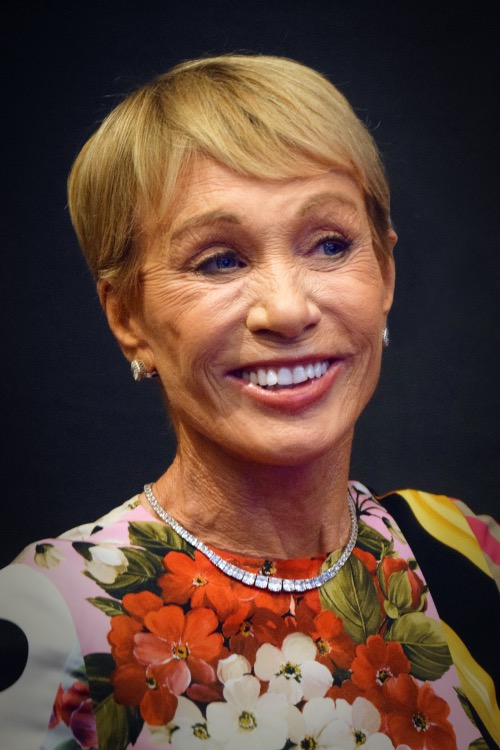
Founder, The Corcoran Group; Shark Tank investor · b. 1949 · Edgewater, New Jersey
Two calls made by hand, not formulas. how we score →
Summary
She borrowed $1,000 from her boyfriend to quit waitressing and start selling apartments, and when he left her seven years later to marry her secretary, she kept the business.
She had been called the dumb kid in school over undiagnosed dyslexia; she used the same drive to build the largest brokerage in New York and sell it for $66 million in 2001, then rebuilt her name again on television.
How it happened
Second of ten children in a working-class Irish Catholic family in Edgewater, New Jersey. Her father moved from job to job; her mother ran the house. Corcoran struggled through school with undiagnosed dyslexia, was labeled the "dumb kid," and graduated a D student. She held twenty jobs by the time she was twenty-three, including years waiting tables.
In 1973, while working as a receptionist at a Manhattan real estate firm, her boyfriend Ray Simone lent her $1,000 and the two opened The Corcoran-Simonè from her apartment. Her first deal came almost by accident: a client wanted to buy, not rent, so she found him an apartment through the classifieds and earned a $3,000 commission, which she spent hiring her first two salespeople instead of keeping it.
Seven years in, Simone told her he was leaving to marry her secretary. She kept the business, renamed it The Corcoran Group, and kept building alone. Every commission went back into the firm — more agents, more space — and by the mid-1970s a proprietary market report that made her the press's go-to source on New York real estate.
The firm grew into one of Manhattan's largest brokerages, brokering over a billion dollars a year by the late 1990s. She tried to raise venture capital to take it public and was turned down; she fielded acquisition offers roughly every five years and turned them down too, waiting for the market to peak.
She sold The Corcoran Group to NRT, jointly owned by Cendant and Apollo Management, for $66 million in 2001. In 2009 she became an original investor on Shark Tank, and a $50,000 stake she took in The Comfy in 2017 grew, by her own account, to $468 million within three years.
The coded evidence
Thirteen groups, every claim sourcedNot a direct self-identification quote; inferred from public record (Irish-American family background, categorized under "American people of Irish descent").
↗ en.wikipedia.orgDescendant
No immigration event in her own generation is documented; coded as descendant by default rather than confirmed by a specific source.
↗ npr.orgHer own East 86th Street apartment, which doubled as the company's first office. No parental or family financial backstop is documented at the time of founding.
↗ cooperatornews.comKept her receptionist job at the Giffuni Brothers real estate firm and moonlighted renting apartments before going independent; the $1,000 that funded the firm was a loan from her boyfriend, not her own savings.
↗ cnbc.comRay Simone was a working co-founder of The Corcoran-Simonè, not only a lender, until the partnership ended around 1978-1980 when he left to marry her secretary.
↗ en.wikipedia.org0
No children are documented until 1994, well after the firm was established; none during the founding and build years.
↗ en.wikipedia.orgnot established
Not established as applicable — no period of visible poverty or hardship is documented during the build itself; she held steady income throughout. That absence is itself part of why hardness is coded moderate rather than high.
↗ cooperatornews.comFather, Edwin W. Corcoran Jr., moved between jobs throughout her childhood; mother, Florence, was a homemaker. The family at times relied on free food deliveries from a local grocer.
↗ en.wikipedia.orgNeither parent was self-employed.
↗ en.wikipedia.orgnot established
Plausible for the second-oldest of ten children but not documented on the record either way.
↗ en.wikipedia.org3
Catholic elementary school, then St. Cecilia High School in Englewood, then transferred to Leonia High School after flunking several freshman-year courses.
↗ en.wikipedia.orgDyslexia, undiagnosed through childhood and school. Labeled the "dumb kid" by teachers and classmates, she was a straight-D student through high school. She has said on the record that the bullying "drove her to work harder," and later described the condition as a source of empathy and imagination rather than a limitation on her career.
↗ cnbc.comEdgewater, New Jersey — a working-class Bergen County town across the Hudson from Manhattan.
↗ en.wikipedia.orgCatholic elementary school and a Catholic high school (St. Cecilia), then a public high school (Leonia) after transferring.
↗ en.wikipedia.orgNot a real-estate or business cluster. Edgewater was a working-class commuter town; she said she didn't set foot in Manhattan until she was 17.
↗ cooperatornews.comMr. Giffuni, her employer at the Giffuni Brothers real estate firm where she worked as a receptionist, gave her a listing to rent — the only contact she had in the industry.
↗ cnbc.comCold. Her first sale — a $38,500 two-bedroom on Park Avenue — came from a buyer she found herself after searching the New York Times classifieds; there was no prior relationship.
↗ cooperatornews.comGiffuni Brothers, the real estate firm where she worked as a receptionist, supplied her only industry contact and first listing before she went independent.
↗ cnbc.comNetwork
↗ cnbc.comNo industry credential or network beyond her employer. She asked her own boss for a listing, then built her actual client base cold, through classified ads.
↗ cooperatornews.comRay (Ramone) Simone, her boyfriend, co-founded The Corcoran-Simonè and supplied the $1,000 that started it. The partnership ended when he told her he was leaving to marry her secretary.
↗ en.wikipedia.orgBachelor of Education, St. Thomas Aquinas College, 1971.
↗ en.wikipedia.orgnot established
She worked roughly 20 jobs by age 23, but which of those overlapped with her college years specifically is not established. Funding source for tuition is likewise not established; coded credentialFunding as self-funded on the strength of that broader work record, not a direct statement about the degree itself.
↗ en.wikipedia.orgDirect four-year Catholic college after a D-average high school record; taught school for a year afterward before entering real estate.
↗ cooperatornews.com$1,000, loaned by her boyfriend and co-founder Ray (Ramone) Simone in 1973.
↗ en.wikipedia.orgIt paid its own way from the start. Revenue came before any outside money.
Her first sale earned a $3,000 commission, which she used to hire her first two salespeople rather than keeping it; the firm never raised institutional capital.
↗ cooperatornews.comFinanced entirely from operating revenue after the initial $1,000 loan. Reinvested commissions into hiring and office space as the firm grew, and later sought venture capital to take the company public but failed to raise it.
↗ observer.comReinvested her first $3,000 commission immediately into hiring two salespeople, and continued reinvesting profits into staff and expanded office space through the 1970s and 1980s.
↗ cooperatornews.comPersonal circumstance rather than a planned strategy: a client wanted to buy an apartment rather than rent one, which she had nothing to sell him, so she found a listing herself and discovered the sales side of the business by accident.
↗ cooperatornews.comSought venture capital to take the company public in the years before the 2001 sale and did not secure it; the firm stayed privately financed from its own cash flow throughout its 28 years.
↗ observer.comnot established
No prior ventures or failed attempts are documented; The Corcoran Group was continuously operated from its 1973 founding to the 2001 sale.
↗ cooperatornews.comFielded acquisition approaches roughly every five years after founding and turned them down, waiting until 2001 — when she judged the market and the firm's value to be at a peak — to sell to NRT.
↗ observer.comBuilt through the 1970s conversion of New York rentals to co-ops, which created a large new pool of buyers and sellers almost overnight, and later rode the 1980s-90s Manhattan real estate boom.
↗ cooperatornews.comNew York City, having moved there from New Jersey at 17. The firm was founded out of her own East 86th Street apartment.
↗ cooperatornews.comBuilt. Founded a new firm from nothing and later created her own proprietary market-data product, The Corcoran Report, rather than acquiring an existing brokerage.
↗ cooperatornews.comReal estate brokerage; later media and early-stage investing (Shark Tank, Forefront Venture Partners).
↗ en.wikipedia.org100000000
Aggregator estimate with no disclosed methodology — per the project's own data-discipline standard, treat as a rough band only, not a precise figure.
↗ celebritynetworth.comAggregator
↗ celebritynetworth.comnot established
Page displays no explicit as-of date; treated as current to retrieval.
↗ celebritynetworth.comThe $66 million Corcoran Group sale was a realized cash exit in 2001. A separate $468 million figure she has cited for her Shark Tank stake in The Comfy (taken in 2017) is a value she stated in a 2023 interview; how much of that has actually been cashed out versus remains an equity mark is not established.
↗ cnbc.comWealth built through ownership of a firm she founded and sold outright, not a salary. Her post-2001 income — Shark Tank, books, columns, speaking — is a separate, smaller stream layered on top of that original exit.
↗ forbes.comUncapped
↗ forbes.comSelf made, Creative, Charismatic, Street smart
Drawn from NPR ("she used her charisma to conquer the streets of Manhattan"), CNBC's "self-made millionaire" framing, and her own account of using creativity to solve early business problems.
↗ npr.orgPublic
↗ cnbc.comAfter
Her public reputation as a real-estate authority formed through the firm's growth and The Corcoran Report in the mid-1970s onward, not before the 1973 founding.
↗ cooperatornews.comAsset
Her personal brand — the red suit, the trademark haircut, the company parties — was deliberately used as the firm's marketing identity.
↗ observer.comThe reputation was deliberately built, through books, press, and PR.
↗ observer.comStructural context
The cost-of-failure score comes from this person's own money and circumstances. But who they were in America carried its own weight, the same way their household or income did, and it shaped how hard the path was just as much. That part isn't in the cost-of-failure number. It's here instead.
Startups founded only by women have drawn about 2% of US venture capital, a share that has barely moved in a decade. Raising money as a woman was harder than any one record shows.
↗ techcrunch.comWhite founders are heavily overrepresented among funded companies and top-tier wealth relative to their share of the population, an edge that has nothing to do with a person's own money.
↗ techcrunch.comAmong the people recorded here — women: 68 · White subjects: 114. Representation here is who reached these outcomes, not equal odds of reaching them.
Controlled comparisons
Each holds one thing constant and varies another, so the difference is the point. A list of similar names wouldn't tell you anything.