Ben Lamm
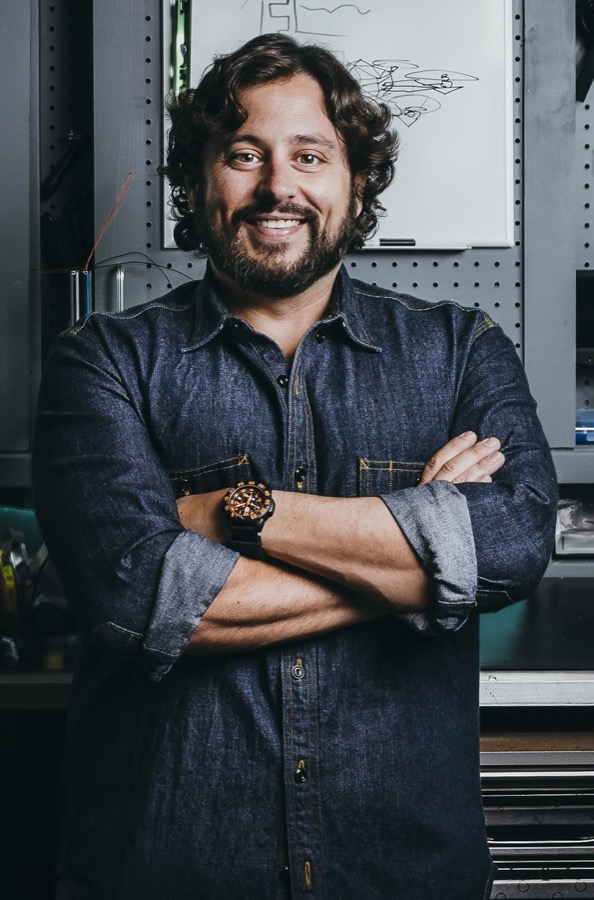
Co-founder and CEO of Colossal Biosciences, the de-extinction company; earlier founder of Chaotic Moon, Conversable and Hypergiant · b. 1981 · Austin, Texas
Two calls made by hand, not formulas. how we score →
Summary
A Texas serial founder who started his first company as a Baylor senior and sold four of the next ones.
In 2021 he co-founded Colossal with Harvard geneticist George Church and raised outside capital at a reported $10 billion or more valuation. Forbes puts him at $5.7 billion, almost all of it paper value in a private company.
Where they worked
How it happened
Wikipedia gives his birth as December 4, 1981 in Austin, Texas, and says he attended Baylor University. It says he founded his first company, Simply Interactive, while a senior there; Wikipedia cites D Magazine for the Baylor detail and says the company was later acquired by Agile in 2010. The sources consulted say nothing about his parents, their work or their money, and none confirms whether he finished the degree. Those are left blank rather than guessed.
In March 2010 he co-founded Chaotic Moon Studios in Austin with William "Whurley" Hurley and Mike Erwin. Wikipedia says WME and Silver Lake Partners took a significant position in 2013, so outside money was in this company before the sale. Accenture bought it in July 2015 for undisclosed terms. A game studio, Team Chaos, went to Zynga in 2016 and Conversable, a conversational-software company he started with Andrew Busey, went to LivePerson in 2018. No sale price is public for any of them, so how much he personally took out is not known.
Hypergiant Industries was his AI and machine-learning firm. TechCrunch reported in August 2023 that Trive Capital had acquired it, terms not disclosed, and that Lamm was staying on its board. Forbes describes the buyer differently, as Josh Kushner's Thrive Capital. The two names are one letter apart and the sources disagree, so the buyer here follows TechCrunch and Wikipedia.
In 2021 he co-founded Colossal Biosciences with George Church. Church supplied the science and the lab; the company's first money was $15 million of seed funding from other people, including Thomas Tull and Tim Draper, per Wikipedia. Lamm brought a record of selling companies, the ability to raise and the pitch itself, which was to bring back the woolly mammoth. Nothing in the sources shows him putting meaningful cash of his own into it. Later reported rounds were $60 million in 2022, $150 million in 2023 and $200 million in January 2025 at a stated $10.2 billion valuation, all from outside investors. The sources consulted don't show Colossal earning meaningful product revenue, so its valuation rests on investors' view of the science and the company's announcements.
In April 2025 Colossal announced three pups, Romulus, Remus and Khaleesi, which it called dire wolves. By Colossal's account they were gray wolves with 20 edits across 14 genes, based on DNA from a 13,000-year-old tooth and a 72,000-year-old ear bone. The IUCN Species Survival Commission Canid Specialist Group said, as reported, that they are not dire wolves under any definition. Colossal chief scientist Beth Shapiro was reported in May 2025 as saying they are gray wolves with 20 edits. Whether they should be called dire wolves is argued over; this site doesn't take a side. Colossal's mammoth, thylacine and dodo timelines are company goals, not achieved results, and none of those animals has been produced.
Forbes lists his net worth at $5.7 billion as of October 12, 2026, rank 736 and self-made. That figure depends on private-company valuations set by funding rounds, such as the $10.2 billion at the January 2025 round and a figure of $11.5 billion Forbes mentions for 2025. His ownership percentage isn't public in the sources consulted. In April 2026, per Forbes, he spun an AI company, Astromech, out of Colossal, valued at $3.8 billion that August. That is also a private mark.
The coded evidence
Thirteen groups, every claim sourcedCoding notes and placeholders. household "two-parent", credentialFunding "none" and originCapital "none" are PLACEHOLDERS because the enums have no "unknown"; no source consulted states his household, how he paid for Baylor, or what he started with. hardness 5 is a middle value for unknown class position, tempered by the documented outside investors in Chaotic Moon. ownershipRetained is coded true only because the field is required and Forbes counts him as a billionaire from Colossal; it is an inference, and his actual percentage is unknown. No ethnicity tag is set because no source consulted states it. education is omitted: attended Baylor, completion not established.
↗ en.wikipedia.orgnot established
Wikipedia and the profiles consulted say nothing about his parents.
↗ en.wikipedia.orgAustin, Texas (birthplace); later Dallas.
Forbes lists his residence as Dallas, Texas; Wikipedia gives Austin as birthplace.
↗ forbes.comCredibility, Idea, Skill
Interpretive. George Church's lab and name supplied the science and credibility; the mammoth idea is publicly credited to both.
↗ en.wikipedia.orgChaotic Moon with William Hurley and Mike Erwin; Conversable with Andrew Busey; Colossal with George Church.
Conversable co-founder is from a 2016 Dallas Innovates article, https://dallasinnovates.com/dallas-entrepreneur-ben-lamm-focuses-on-winning/. Colossal is from Wikipedia's Colossal Biosciences article.
↗ en.wikipedia.org24
Approximate, from founding his first company as a Baylor senior; exact year not given.
↗ en.wikipedia.orgnot established
Attended Baylor University; whether he graduated is not established in the sources consulted.
↗ en.wikipedia.orgColossal: $15 million seed (2021, Thomas Tull, Tim Draper and others), $60 million Series A (2022), $150 million Series B (2023), $200 million Series C (January 2025).
Round sizes and valuations are company-reported as carried by Wikipedia; colossal.com press releases on funding were not retrievable in this pass.
↗ en.wikipedia.orgColossal is private. Forbes cites a $11.5 billion valuation set by private investors in 2025; Wikipedia gives $10.32 billion. His ownership percentage is not public in the sources consulted.
↗ forbes.comColossal launched with the stated aim of bringing back the woolly mammoth, co-founded with geneticist George Church.
↗ en.wikipedia.orgnot established
Not established. The sources consulted list five exits and no shut-down company.
↗ en.wikipedia.org39
Colossal founded 2021; born 1981. The wealth step is the January 2025 round at age 43.
↗ en.wikipedia.orgBiotechnology (de-extinction) and technology
↗ forbes.com5700000000
Forbes as of 2026-10-12, rank 736, self-made score 8. Medium because it rests on private valuations of a company that has not sold shares to the public.
↗ forbes.comJournalistic estimate
↗ forbes.com2026
↗ forbes.comAlmost all paper. The Forbes figure follows Colossal's private valuation and his unstated stake. Proceeds from the earlier company sales are undisclosed.
↗ forbes.comTime 100 Next in 2025 per Wikipedia; launched the Colossal Foundation in October 2024, with about $100 million reported as of December 2025.
↗ en.wikipedia.orgUncapped
↗ forbes.comnot established
No lawsuit or regulatory action against Lamm was found in the sources consulted.
↗ en.wikipedia.orgserial entrepreneur
↗ forbes.comPress
↗ en.wikipedia.orgMixed
Publicity has helped raise money. Scientists, including the IUCN SSC Canid Specialist Group, have disputed the dire wolf framing, and some academics argue de-extinction diverts resources from conserving living species.
↗ en.wikipedia.orgStructural context
The cost-of-failure score comes from this person's own money and circumstances. But who they were in America carried its own weight, the same way their household or income did, and it shaped how hard the path was just as much. That part isn't in the cost-of-failure number. It's here instead.
Men founded the companies that took nearly all the venture funding and almost every top outcome, a tailwind that never shows up in one person's own circumstances.
↗ techcrunch.comAmong the people recorded here — men: 225. Representation here is who reached these outcomes, not equal odds of reaching them.
Controlled comparisons
Each holds one thing constant and varies another, so the difference is the point. A list of similar names wouldn't tell you anything.