Blake Mycoskie
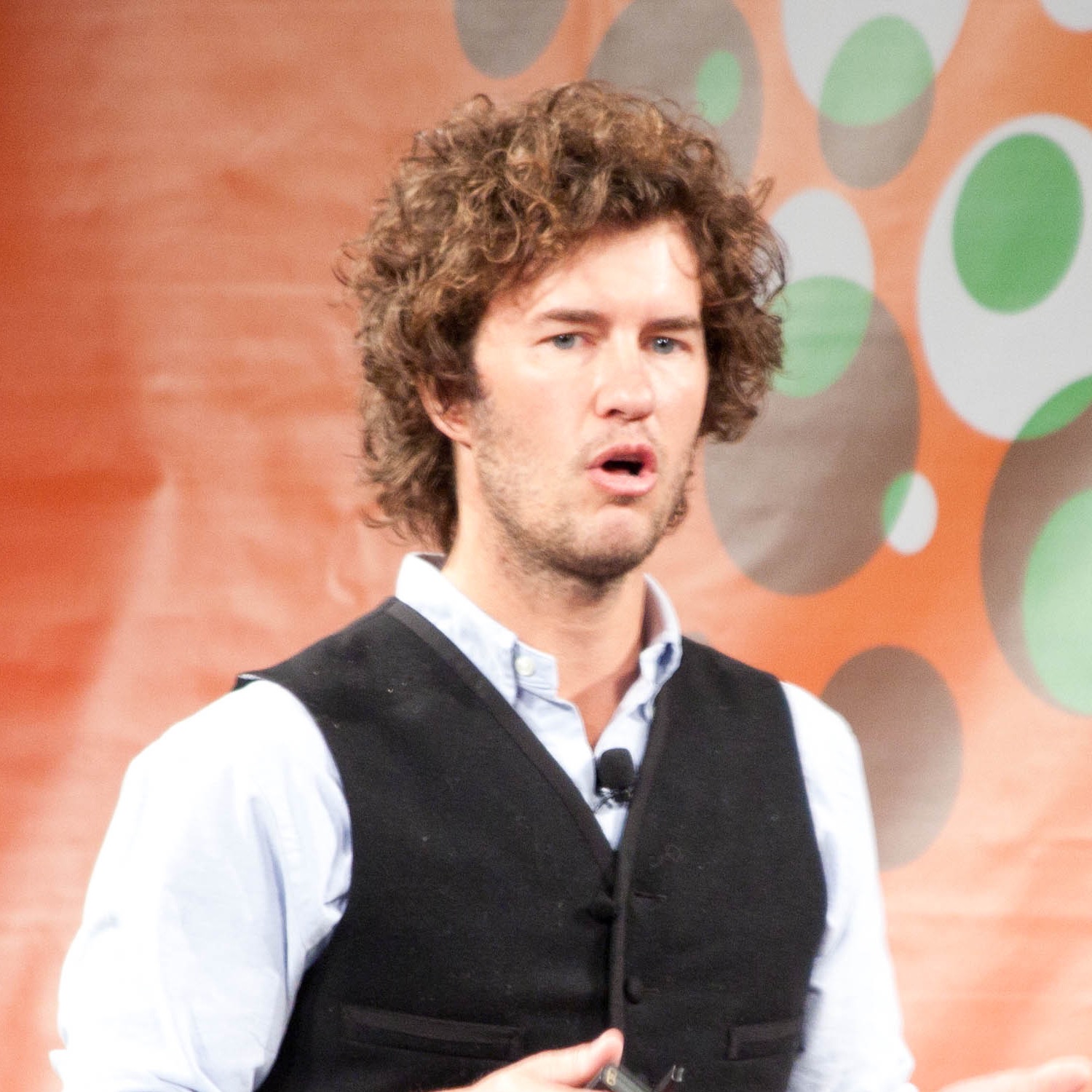
Founder of TOMS Shoes and its one-for-one giving model · b. 1976 · Arlington, Texas
Two calls made by hand, not formulas. how we score →
Summary
A surgeon's son with a tennis scholarship and a run of small ventures behind him, he paid for TOMS with about $500,000 from selling a driver education business.
The shoes took off, he sold half to Bain Capital at a reported $625 million valuation, and five years later the company's lenders took over the rest.
Where they worked
How it happened
Born in Arlington, Texas, to an orthopaedic surgeon and an author. He went to Southern Methodist University on a partial tennis scholarship, then left after an Achilles injury in his sophomore year ended his tennis career. He did not finish his degree.
His first company was EZ Laundry, a dry-cleaning service for SMU and then two other campuses. It reached more than 40 employees and about $1 million in sales, and he sold it to his partner in 1999. In Nashville he started a billboard company aimed at country music, which Clear Channel bought nine months in. He and his sister Paige finished third on The Amazing Race in 2002. The cable channel Reality Central, which he co-founded in Los Angeles, raised a reported $25 million and shut in 2005 after a rival channel outbid it for advertisers and programming.
He then partnered with the founders of TrafficSchool.com on DriversEd Direct, an online driver's education service. On a 2006 trip to Argentina he saw children without shoes and came back with the idea for a for-profit company that would give away a pair for every pair sold. Wikipedia, citing a university case study, says he sold the driver education company for $500,000 to finance it. That sale, not outside investors, paid for the first 250 pairs made by Argentine manufacturers.
TOMS began selling in May 2006. After a Los Angeles Times article ran, online orders reached nine times the available stock, and about 10,000 pairs sold in the first year. The first 10,000 donated pairs went to Argentine children in October 2006. By 2011 the company had added eyewear to the one-for-one model.
In August 2014 Bain Capital bought 50% of TOMS. Reuters reported the deal valued the company at $625 million and put Mycoskie's personal wealth at $300 million. Retail trade reports later said Bain paid $313 million for its stake. He kept the title Chief Shoe Giver and said he would put half the proceeds into a fund for social entrepreneurs, which Bain would match.
In December 2019, Reuters reported that TOMS's creditors, led by Jefferies Financial Group, Nexus Capital Management and Brookfield Asset Management, would take over the company in a debt restructuring. Credit rating agencies had said it likely couldn't repay a roughly $300 million loan due in 2020 without a deal. Mycoskie and Bain were no longer owners afterward. Separately, the company's 2019 impact report said it would move away from strict one-for-one giving toward grants.
In 2020 he launched Madefor, a subscription wellness program, with Pat Dossett. He has since said publicly that he was diagnosed with mild depression in the years after he stepped back from TOMS. In January 2026 he launched ENOUGH, a consumer brand tied to a nonprofit focused on mental health. He is also listed among the investors in Athletic Brewing, a maker of non-alcoholic beer.
The coded evidence
Thirteen groups, every claim sourcedCoarse coding from public photographs and biography; no self-description found.
↗ en.wikipedia.orgHe sold his driver education company, reportedly for $500,000, before committing to TOMS, which gave him a cash base while the shoe business started.
↗ en.wikipedia.orgFather Mike Mycoskie is an orthopaedic surgeon; mother Pam Mycoskie is an author.
↗ en.wikipedia.orgIn a 2020 podcast interview he said he woke up unmotivated and without a sense of purpose, which led to his first diagnosis, of mild depression. He placed this in the years after he sold half of TOMS and stepped back from day-to-day running of it. Wikipedia, citing Forbes (January 2026), says he has discussed depression and burnout publicly while launching ENOUGH.
Self-disclosed on the record. It came after the build and after the 2014 sale.
↗ tim.blogAttended Arlington Martin High School, then graduated from St. Stephen's Episcopal School in Austin in 1995.
↗ en.wikipedia.orgAfter a Los Angeles Times article about the shoes, online orders reached nine times the available stock, per the Wikipedia article citing a university case study.
↗ en.wikipedia.org9
Roughly from EZ Laundry (late 1990s, sold 1999) to TOMS in 2006; the exact EZ Laundry start year is not given.
↗ en.wikipedia.orgFinished third on The Amazing Race in 2002 with his sister, four years before TOMS. The sources opened don't say how much, if any, of the first-year demand came from that exposure.
↗ en.wikipedia.orgNo degree. Enrolled at Southern Methodist University in 1995 on a partial tennis scholarship, studying philosophy and business, and left after an Achilles injury ended his tennis career.
↗ en.wikipedia.orgAbout $500,000 from the sale of his online driver education company, according to a Wikipedia statement citing a university case study. His own telling of the amount was not found in the sources opened.
↗ en.wikipedia.orgIt paid its own way from the start. Revenue came before any outside money.
Sales began in May 2006 and about 10,000 pairs sold in year one. No outside round is reported before the 2014 Bain deal in the sources opened.
↗ en.wikipedia.orgReuters reported Bain's 2014 deal valued TOMS at $625 million including debt. Reports in 2019 said TOMS had a roughly $300 million loan due in 2020, which credit rating agencies said it could not repay without a restructuring.
Valuation and loan figures are as reported by Reuters and trade press; the company was private.
↗ en.wikipedia.orgA 2006 trip to Argentina, where he met a volunteer group giving shoes to children; he adapted the Argentine alpargata and tied each sale to a donated pair.
↗ en.wikipedia.orgSold 50% to Bain Capital in August 2014 and stayed as Chief Shoe Giver. In December 2019 creditors took over the company, per Reuters, after which he was no longer an owner.
↗ retaildive.com2
Footwear, then eyewear, coffee and a book under the TOMS name; later brands (Madefor, ENOUGH) are separate ventures.
↗ en.wikipedia.org1
Reality Central, co-founded in 2003, folded in 2005 per Wikipedia. His other earlier companies were sold.
↗ en.wikipedia.orgReality Central raised a reported $25 million from venture investors and other backers before closing, per Wikipedia citing Forbes. How the loss was split is not established.
Wikipedia flags the funding source as needing a better citation.
↗ en.wikipedia.orgTOMS grew through the late 2000s with a social-entrepreneurship boom behind it. It was in more than 500 retailers by 2011.
↗ en.wikipedia.orgFootwear and consumer brands
↗ en.wikipedia.org300000000
Reuters, August 2014, as cited by Wikipedia. There is no Forbes profile page for him (the URL returned 404), and no current figure was found. He lost his remaining ownership of TOMS in 2019, so the present figure is likely lower than the 2014 estimate, but that is not established.
↗ en.wikipedia.orgJournalistic estimate
↗ en.wikipedia.orgRetail and finance outlets reported Bain paid $313 million for its 50% stake in 2014. How much of that went to Mycoskie personally is not disclosed. He did not hold equity after the 2019 takeover.
↗ retaildive.comUncapped
↗ en.wikipedia.orgsocial entrepreneur, Cause driven
↗ en.wikipedia.orgPublic
↗ en.wikipedia.orgAsset
The cause-linked brand was central to early sales; the one-for-one model was also criticised, see recovery.
↗ en.wikipedia.orgInternational development critics have argued, as summarised on Wikipedia, that one-for-one models make buyers feel good without addressing the causes of poverty, and some questioned whether donated shoes help as much as cash donations. A 2014 Journal of Development Effectiveness paper found no statistically significant effect on local shoe markets, though with limited scope, and a later study of El Salvador suggested harm to local production. TOMS said in its 2019 impact report that it would move away from strict one-for-one giving.
Critiques are attributed to the cited researchers and commentators, not asserted here.
↗ en.wikipedia.orgStructural context
The cost-of-failure score comes from this person's own money and circumstances. But who they were in America carried its own weight, the same way their household or income did, and it shaped how hard the path was just as much. That part isn't in the cost-of-failure number. It's here instead.
Men founded the companies that took nearly all the venture funding and almost every top outcome, a tailwind that never shows up in one person's own circumstances.
↗ techcrunch.comWhite founders are heavily overrepresented among funded companies and top-tier wealth relative to their share of the population, an edge that has nothing to do with a person's own money.
↗ techcrunch.comAmong the people recorded here — men: 225 · White subjects: 125. Representation here is who reached these outcomes, not equal odds of reaching them.
Controlled comparisons
Each holds one thing constant and varies another, so the difference is the point. A list of similar names wouldn't tell you anything.