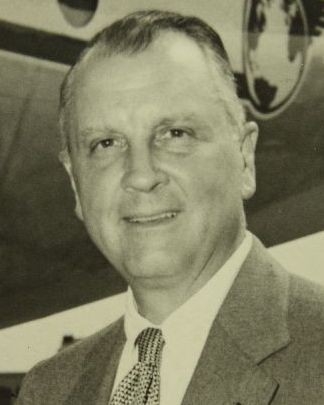
Brian Acton
Co-founder, WhatsApp; co-founder and executive chairman, Signal Foundation · b. 1972 · Michigan → Oviedo, Central Florida → Silicon Valley, California
Two calls made by hand, not formulas. how we score →
Summary
A mother who founded her own freight company and a Stanford computer science degree gave Brian Acton twelve stable, well-paid years at Yahoo and a wide margin for risk.
When Facebook and Twitter rejected him for a job in 2009, he funded and co-founded WhatsApp with his old Yahoo colleague Jan Koum instead, then walked away from Facebook in 2017, leaving $850 million on the table to build Signal.
How it happened
He grew up in Michigan and then in Oviedo, a middle-class Orlando suburb, where his mother founded a freight-forwarding company in 1985 and his father worked in it alongside her; his grandmother had started a golf club in Michigan before that. Acton has described a "certain degree of entrepreneurial risk-taking" running through his family, and has said watching his mother lose sleep over making payroll taught him early what owning a business actually costs. He won a full scholarship to study engineering at the University of Pennsylvania, transferred to Stanford after a year, and graduated in 1994 with a degree in computer science.
He worked briefly at Rockwell, then in product testing at Apple and Adobe, before joining Yahoo as one of its earliest engineers around 1996 and eventually rising to vice president of engineering. Jan Koum arrived the following year, and the two worked alongside each other for close to nine years, bonding over skiing trips and Ultimate Frisbee games. Acton left Yahoo in 2007 already comfortably wealthy from a decade of salary and stock, and spent the following year traveling with Koum before both, out of curiosity, applied for jobs at other companies.
Facebook turned him down for a job in the summer of 2009; so did Twitter. He posted about it on Twitter: "Facebook turned me down … looking forward to life's next adventure." Koum was sketching an idea for a phone-contact status app around the same time, and Acton signed on to help build it.
Acton put in the seed money himself and persuaded a handful of former Yahoo colleagues to fund the earliest round, which is what earned him formal cofounder status and a stake of roughly 20 percent. Sequoia Capital backed the company with $8 million in 2011 and $50 million more in 2013, and WhatsApp grew from a two-person side project into a service used by hundreds of millions of people on a payroll that barely reached fifty. Facebook bought the company for close to $19 billion in February 2014.
Acton stayed at Facebook through 2017, clashing with Mark Zuckerberg and Sheryl Sandberg over plans to put targeted ads and business messaging tools into WhatsApp. He has said Facebook prepared the answers he gave European antitrust regulators about how difficult it would be to merge WhatsApp and Facebook data; Facebook linked the accounts within eighteen months anyway and was later fined $122 million by the European Commission for providing misleading information during the merger review — a fine the company paid, not him. He left a year before his final stock grant vested, forfeiting roughly $850 million by his own account. In March 2018, as the Cambridge Analytica scandal broke, he tweeted "It is time. #deletefacebook" and has not tweeted since. He had already put $50 million of his own money into the newly formed Signal Foundation that February and become its executive chairman, rebuilding, without an advertising model, the ad-free product he has said WhatsApp was supposed to stay.
The coded evidence
Thirteen groups, every claim sourcednot established
No documented ethnic identity beyond a general European-American background. Not established.
↗ en.wikipedia.orgMulti-generational American; no documented immigrant ancestry within living memory. His grandmother had already established a business in Michigan a generation before he was born.
↗ forbes.comEnglish
Inferred from a multi-generational American family background; not explicitly confirmed on the record.
↗ orlandosentinel.comA family home in Oviedo, Florida, run by two working parents; nothing in the record suggests he would have been without somewhere to land had Yahoo or WhatsApp not worked out.
↗ orlandosentinel.comRoughly twelve years of salary and stock from Yahoo, where he rose to vice president of engineering, funded his living costs and gave him enough personal capital to seed WhatsApp's earliest round himself.
↗ forbes.com0
No spouse or children are documented at the time WhatsApp was founded in 2009; by early 2014 he had married and had a thirteen-month-old son.
↗ orlandosentinel.comNo money was owed or sent outward during the build.
No remittances or outward family support are documented anywhere in the record.
↗ orlandosentinel.comNone documented. He left Yahoo in 2007 already wealthy from salary and stock, and spent the following year traveling by choice with Koum before WhatsApp began.
↗ theguardian.comThe hardship was imposed, not chosen. There was nothing to fall back on.
No period of scarcity, chosen or imposed, appears anywhere in the record — the direct contrast to Koum's food-stamp years.
↗ forbes.comMother founded a freight-forwarding company in 1985; father worked in the business alongside her.
↗ forbes.comA parent worked for themselves, the strongest known predictor of founding.
One of the strongest documented founder predictors, and present here in a way it is not in Koum's family, where his father was employed managing crews rather than self-employed.
↗ forbes.comHis grandmother started a golf club in Michigan; Acton has credited her and his mother together as the source of what he called "a certain degree of entrepreneurial risk-taking" in his family.
↗ forbes.comnot established
One documented interstate move, Michigan to Florida, before high school; not established as disruptive. See d4.migrationEvents.
↗ orlandosentinel.comOviedo, Florida, a middle-class Orlando-area suburb; earlier childhood in Michigan.
↗ orlandosentinel.comPublic — Lake Howell High School, Seminole County, Florida.
↗ orlandosentinel.comLake Howell's math and computer teams won state championships during his years there under coach Michael Bouch — a strong scholastic peer group, though not an industry cluster in the way Silicon Valley itself would later be.
↗ orlandosentinel.comOne domestic move, Michigan to Central Florida, before high school; no international migration appears anywhere in the family's documented history.
↗ orlandosentinel.comnot established
Not applicable — no migration-driven change in family class is documented, the direct contrast to Koum's family.
↗ orlandosentinel.comYahoo, where he was one of the earliest employees starting around 1996 and rose to vice president of engineering by the time he left in 2007. It supplied his savings, his seniority, and Jan Koum.
↗ forbes.comSkill, Network, Capital
↗ forbes.comJan Koum, a Yahoo colleague who joined the year after Acton and worked alongside him for close to nine years; the two traveled South America together after leaving Yahoo in 2007 and both applied, unsuccessfully, to Facebook in 2009 before building WhatsApp instead.
↗ theguardian.com20
Approximate, based on a 1992 systems-administrator role at Rockwell International.
↗ en.wikipedia.orgWhatsApp matched users through phone numbers already in their address book, spreading through people users already knew rather than through paid acquisition.
↗ en.wikipedia.orgFacebook and Twitter both turned him down for a job in the summer of 2009; he tweeted, "Facebook turned me down … looking forward to life's next adventure." The adventure was WhatsApp, which Facebook eventually paid close to $19 billion for.
↗ theguardian.comBS in computer science, Stanford University, 1994. Began at the University of Pennsylvania on a full engineering scholarship and transferred to Stanford after a year.
↗ orlandosentinel.comnot established
No student debt is documented; the Penn scholarship was full, and nothing on the record indicates debt from the Stanford years.
↗ orlandosentinel.comDirect: dual-enrollment credit at the University of Central Florida while still in high school, a full scholarship to Penn, then a transfer to Stanford.
↗ orlandosentinel.comnot established
No family capital transfer into WhatsApp is documented; the money he put in came from his own Yahoo earnings.
↗ forbes.comPersonal savings and Yahoo stock, accumulated over roughly twelve years including several as vice president of engineering, funded his living costs and let him seed WhatsApp's earliest round personally.
↗ forbes.comActon persuaded a handful of former Yahoo colleagues to fund the initial seed round, which is what qualified him for formal cofounder status alongside Koum. Sequoia Capital, led by Jim Goetz, later put in about $8 million in a 2011 Series A and $50 million more in a February 2013 Series B.
↗ forbes.comThe Yahoo-alumni seed investors Acton recruited were operators rather than passive checks — several had worked alongside him and Koum directly.
↗ forbes.comRoughly $58 million raised across two Sequoia rounds before the $19 billion Facebook sale. Acton held about 20 percent of the company at the deal, a smaller share than Koum's roughly 45 percent, reflecting that Koum was the sole founder at incorporation while Acton joined formally once he had raised the seed money.
↗ forbes.comPut $50 million of his own money into the newly formed Signal Foundation in February 2018 and became its executive chairman; directed roughly $1 billion of the Facebook proceeds into philanthropic vehicles (Sunlight Giving, Acton Family Giving, Solidarity Giving) supporting healthcare and early-childhood development; has said he has kept a comparatively modest lifestyle since — a Honda minivan, a house about a mile from Mark Zuckerberg's.
↗ forbes.comThe product idea was Koum's, built around a status feature for phone contacts; Acton's contribution was the cofounder role he earned by funding and recruiting the seed round, not the original concept.
↗ forbes.com0
WhatsApp was his only venture; the record shows two 2009 job rejections (Facebook, Twitter), not a failed business.
↗ forbes.comLeft Yahoo in 2007, effectively stepped back from a vice-president role in 2008 to "decompress," then traveled before formally launching WhatsApp with Koum in February 2009.
↗ forbes.comLeft Facebook and WhatsApp in September 2017, a year before his final tranche of stock grants would have vested, after clashing with Mark Zuckerberg and Sheryl Sandberg over plans to add targeted ads and business-messaging tools to WhatsApp. He has said the decision cost him roughly $850 million in unvested stock.
↗ forbes.comApple added push notifications to the seven-month-old App Store in mid- 2009, which is what turned WhatsApp's status feature into real-time messaging; international SMS fees were still high, which helped drive adoption among immigrant communities texting relatives abroad.
↗ en.wikipedia.orgMountain View / Silicon Valley, where he had relocated years earlier for Yahoo.
↗ forbes.comBuilt. He funded and helped run the company Koum had started rather than acquiring or buying into an existing one.
↗ forbes.comHas said he has kept a comparatively modest personal lifestyle since the Facebook sale — a Honda minivan, a house about a mile from Zuckerberg's — despite a net worth in the billions.
↗ forbes.comConsumer software and mobile messaging; nonprofit encrypted- communications technology (Signal).
↗ forbes.comJournalistic estimate
↗ forbes.com2026
↗ forbes.comnot established
No salary-based peak income is documented; his Yahoo compensation was never disclosed, and his wealth since 2014 is almost entirely from WhatsApp/Facebook equity. Not established.
↗ forbes.comPartly realized. The 2014 deal was reported as roughly $4 billion cash, $12 billion in Facebook shares, and $3 billion in restricted stock split across the founders and employees; a further tranche of Acton's unvested stock, about $850 million of it, was forfeited when he left in 2017.
↗ en.wikipedia.orgWealth in owned equity converted at the Facebook sale, not salary; the $850 million he walked away from in 2017 was unvested stock, not cash already banked.
↗ forbes.comExecutive chairman of the Signal Foundation since 2018, which he funded with $50 million of his own money; the Signal protocol is also the encryption WhatsApp itself uses for its more than a billion users.
↗ wired.comUncapped
↗ en.wikipedia.orgnot established
No regulatory action was taken against Acton personally. The European Commission fined Facebook itself $122 million in 2017 for providing misleading information during the WhatsApp merger review; Acton has said Facebook prepared the answers he gave EU regulators about the technical difficulty of merging the two systems. See d13 for the attributed account of that episode.
↗ techcrunch.comActon has said, on the record, "At the end of the day, I sold my company. I sold my users' privacy to a larger benefit. I made a choice and a compromise. And I live with that every day" — his own account of agreeing to the Facebook sale despite its later conflict with WhatsApp's ad-free, encrypted-by-design promises.
↗ forbes.comprincipled on privacy, reluctant public figure, walked away from money over values
↗ forbes.comPress
↗ forbes.com4
Forbes, Wired, the Guardian, and TechCrunch have each reported independently on his account.
↗ wired.comAfter
The reputation for privacy conviction crystallized around the 2017 departure and the 2018 #deletefacebook tweet and Signal donation, years after the 2014 acquisition made him a billionaire.
↗ wired.comAsset
Widely read as a principled stand, reinforced by the size of the money forfeited and the choice to fund a nonprofit rather than start another company. He has also said, on the record, that Facebook prepared the answers he gave European antitrust regulators about the difficulty of merging WhatsApp and Facebook user data during the 2014 merger review; the European Commission later fined Facebook (not Acton) $122 million for providing misleading information in that review. Acton frames the episode as part of why he left, not as his own wrongdoing.
↗ forbes.comThe reputation accrued from behaviour rather than being manufactured.
Described by the Orlando Sentinel as "the fiercely private Acton," an "overnight but reluctant celebrity."
↗ orlandosentinel.comStructural context
The cost-of-failure score comes from this person's own money and circumstances. But who they were in America carried its own weight, the same way their household or income did, and it shaped how hard the path was just as much. That part isn't in the cost-of-failure number. It's here instead.
Men founded the companies that took nearly all the venture funding and almost every top outcome, a tailwind that never shows up in one person's own circumstances.
↗ techcrunch.comWhite founders are heavily overrepresented among funded companies and top-tier wealth relative to their share of the population, an edge that has nothing to do with a person's own money.
↗ techcrunch.comAmong the people recorded here — men: 169 · White subjects: 114. Representation here is who reached these outcomes, not equal odds of reaching them.
Controlled comparisons
Each holds one thing constant and varies another, so the difference is the point. A list of similar names wouldn't tell you anything.