Daniel Ek
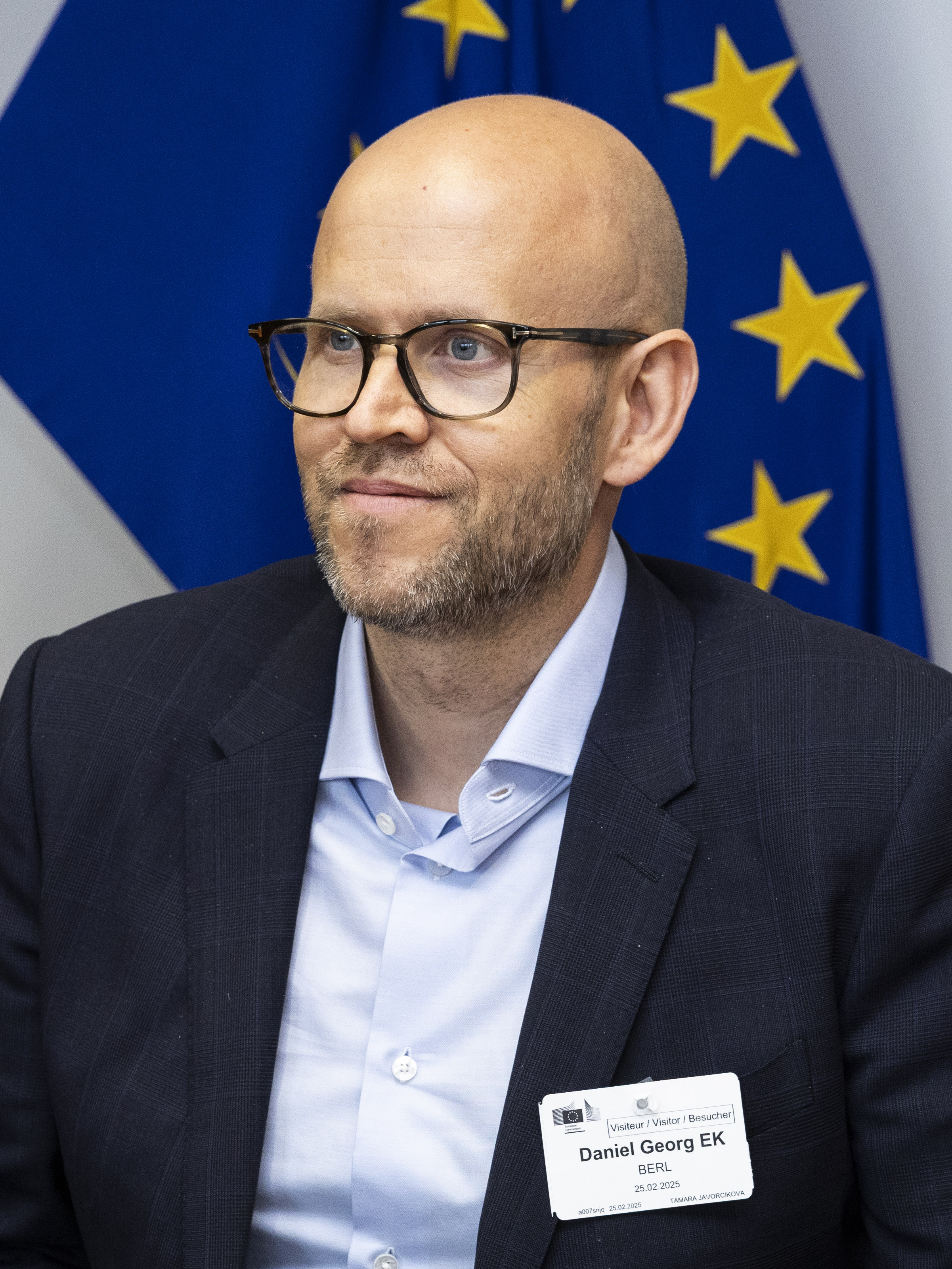
Co-founder and executive chairman, Spotify · b. 1983 · Rågsved, Stockholm, Sweden
Two calls made by hand, not formulas. how we score →
Summary
He grew up in a working-class Stockholm suburb raised by his mother, but Sweden's welfare state and the roughly two million dollars he'd already banked by 23 meant a failed startup wouldn't have ruined him.
What separated him was two years spent getting every major record label to license its catalog to a free, ad-supported product nobody had talked them into before.
How it happened
Daniel Ek was born in 1983 and grew up in Rågsved, a working-class Stockholm suburb some locals nicknamed "Drugsved." His father left when he was an infant; his mother raised him, and his stepfather worked in IT. A grandmother who had been an opera singer and a grandfather who played jazz piano filled the apartment with music. He started building websites for local businesses at fourteen, then enrolled at KTH Royal Institute of Technology after high school and dropped out after eight weeks, once he realized the whole first year was theoretical math.
A Stockholm ad-tech firm called Tradedoubler hired him to build tracking software, and it worked well enough that the company paid him roughly two million dollars for the rights and related patents in 2006. He was a self-made millionaire at 23, bought a Ferrari and a downtown apartment, and then found himself miserable. He later told Forbes he sold the car and moved to a cabin near his parents, wondering whether to just become a musician instead.
He had gotten close to Tradedoubler's chairman, Martin Lorentzon, who had taken the company public the year before and personally made around seventy million dollars from it. Ek gave him a one-week ultimatum: resign as chairman, publicly, and transfer a million euros into Ek's account, or there was no partnership. Lorentzon did both.
Where earlier services had loaded up on pirated music and dared labels to sue, Ek refused to launch until he had signed real licensing deals. He expected European rights to take three months; it took nearly two years of executives telling him to "send over some stats," which he says really meant no. His team quietly built pirated demo copies just to show label executives what the product felt like, and pledged million-dollar advances the company didn't have. No venture firm would touch it, so he and Lorentzon put in close to seven million dollars of their own money to keep it alive. Spotify launched legally in Scandinavia, France, Britain, and Spain in October 2008.
Spotify went public on the New York Stock Exchange in April 2018 through a direct listing rather than a traditional IPO. Regulatory filings show Ek held about 27 percent of ordinary shares at listing but controlled 37 percent of total voting power through a beneficiary-certificate structure, with Lorentzon holding even more; together the two founders controlled roughly four-fifths of the vote. Ek stepped down as CEO in late 2025, staying on as executive chairman while running Neko Health, a preventative-screening startup, and Prima Materia, an investment vehicle whose stake in the German defense-AI company Helsing drew public criticism from a number of musicians. His net worth is estimated at more than twelve billion dollars.
The coded evidence
Thirteen groups, every claim sourcedNative-born, no migration in his own or immediate family history
↗ en.wikipedia.orgnot established
Not established. No source documents a specific religious upbringing; Sweden's population is largely secular with a nominal Lutheran majority, but that isn't the same as a sourced fact about this family.
↗ en.wikipedia.orgA stable, if modest, working-class household in Rågsved with his mother and stepfather. As an adult, after selling his first company and going through a difficult period, he moved into a cabin near his parents rather than staying alone in Stockholm — a fallback that was actually used, not just theoretically available.
Cited URL is the original Forbes article (forbes.com/sites is a blocked-for-fetch domain); content verified via the Wayback Machine snapshot at the URL shown.
↗ web.archive.orgBy the time he founded Spotify in 2006 he was already a self-made millionaire from the Tradedoubler payout, so the company was self-funded from his own capital rather than dependent on a job or family income.
↗ forbes.com0
He married in 2016, well after Spotify's founding and launch; no children are documented during the 2006-2008 build.
↗ en.wikipedia.orgnot established
No housing, food, or income instability is documented during the Spotify build. His difficult period (a self-disclosed depressive episode) followed the Tradedoubler payout and preceded Spotify — it was a period of financial abundance and personal crisis, not material hardship.
↗ forbes.comThe hardship was imposed, not chosen. There was nothing to fall back on.
There's no visible-poverty narrative to correct for here — he self-funded Spotify from real capital he already had, so the anti- corruption question doesn't really apply in the usual direction.
↗ forbes.comMother's occupation is not established in the public record. His biological father left the family when Ek was an infant. His stepfather worked in IT.
↗ forbes.comHis maternal grandmother had been an opera singer and her husband a jazz pianist; a classical guitar hung on the wall of the family's Rågsved apartment. It supplied musical exposure well before any money did — he received a guitar around age 5, the same period his stepfather gave him a Commodore computer.
↗ forbes.comA self-disclosed depressive episode in his early twenties, after selling his ad-tech company and before founding Spotify. He told Forbes in 2012: "I was deeply uncertain of who I was and who I wanted to be. I really thought I wanted to be a much cooler guy than what I was." He sold the sports car and apartment he'd bought and moved to a cabin near his parents.
Self-disclosed, on the record, in his own words. Episodic and resolved before Spotify's founding, not chronic or active during the build — weighted as a light headwind input for that reason.
↗ forbes.comRågsved, a working-class public-housing district in southern Stockholm that some locals nicknamed "Drugsved" for its reputation.
↗ forbes.comIT-Gymnasiet in Sundbyberg, a public upper-secondary school with a computing focus; graduated 2002.
↗ en.wikipedia.orgnot established
Stockholm-born and raised; no cross-border or major internal migration in childhood.
↗ en.wikipedia.orgTradedoubler, the Stockholm ad-tech company that paid him roughly two million dollars for tracking software and related patents in 2006, and whose chairman, Martin Lorentzon, became his Spotify co-founder.
↗ forbes.comCapital, Network, Skill
↗ forbes.comNo prior relationships with major record labels. Access was built entirely through nearly two years of direct, repeated outreach and negotiation by Ek and his team, aided by entertainment lawyer Fred Davis, rather than through any existing industry connection.
↗ forbes.comMartin Lorentzon, Tradedoubler's chairman, who had taken that company public in 2005 and personally made roughly seventy million dollars from it. Before formally partnering, Ek required him to publicly resign as chairman and transfer a million euros of seed money into Ek's account within a week — Lorentzon did both.
↗ forbes.com14
Building commercial websites for local businesses at 14, per multiple biographical accounts.
↗ en.wikipedia.orgApplied to Google around age 16 and was reportedly told to come back once he had a higher degree — which he says motivated him to try building a competing search engine instead. That project failed but led to a paid job at an SEO firm, Jajja.
Single-source detail from the Swedish Wikipedia article; not independently corroborated.
↗ sv.wikipedia.org4
Jajja, Tradera, Stardoll (as CTO), and µTorrent (as CEO), before founding Advertigo and then Spotify.
↗ en.wikipedia.orgNo degree. Enrolled in the engineering program at KTH Royal Institute of Technology after high school in 2002 and dropped out after eight weeks.
↗ forbes.comWorked in search-engine optimization at Jajja while still in high school, using the pay to buy computer equipment.
↗ forbes.comPaid work building commercial websites for local businesses starting around age 14, then a paycheck from SEO work at Jajja while in high school.
↗ en.wikipedia.orgRoughly two million dollars from selling ad-tracking software and related patents to Tradedoubler in 2006, about one million for the software rights and another million from patents — made him a self-made millionaire at 23, years before Spotify existed.
This is the "prior-high-income" originCapital: not family money and not outside investment, but his own earned capital banked before the venture that made him famous.
↗ forbes.comNo venture firm would fund Spotify in its earliest, pre-launch years because of the licensing risk with major labels. Ek and Lorentzon self-funded roughly seven million dollars combined before any outside institutional round: Lorentzon's initial seed plus close to five million more from Ek.
↗ forbes.comMartin Lorentzon put a million euros of his own money into Ek's account as seed capital and joined as co-founder, bringing his own operating and public-company experience from taking Tradedoubler public the year before.
↗ forbes.comSpotify went on to raise substantial outside venture and growth capital over the following decade before going public on the NYSE in April 2018 through a direct listing — no new shares were sold and no underwriters priced an offering, unlike a conventional IPO.
↗ en.wikipedia.orgSpent part of the Tradedoubler payout on a downtown Stockholm apartment and a Ferrari, then sold the car and redirected the remaining capital, along with additional funds, into building Spotify.
↗ forbes.comPersonal frustration at watching the music industry collapse to piracy after Napster's shutdown, combined with his own belief that "you can never legislate away" piracy — the product had to be better and more convenient than stealing, not just legal.
↗ en.wikipedia.orgAt the March 2018 direct-listing registration, Ek held about 27.1% of ordinary shares but 37.0% of total voting power (41.8% of beneficiary certificates), achieved through a beneficiary-certificate structure giving certain shares outsized votes. Co-founder Martin Lorentzon held even more voting power relative to his economic stake (13.1% of shares, 43.5% of voting power). Combined, the two founders controlled roughly four-fifths of total voting power at listing despite holding a minority of the economic stake between them.
SEC Form F-1/A, filed 2018-03-23. Primary filing data, not an estimate.
↗ sec.gov1
A teenage attempt at building a competing search engine, after a reported Google rejection around age 16, that did not succeed but led to paid SEO work at Jajja. Single-source detail.
↗ sv.wikipedia.orgSelf — a low-stakes teenage side project, not a funded venture.
↗ sv.wikipedia.orgRecorded music revenue had fallen for most of a decade after Napster, and no legal service had yet combined free, ad-supported access with instant, on-demand play at scale. By the time Spotify launched in Sweden in 2008, roughly a third of the country had signed up within a few years, and the country's music industry saw its first revenue growth since the early 1990s — the proof of concept the U.S. licensing talks needed.
↗ forbes.comStockholm, Sweden — already living and working there.
↗ en.wikipedia.orgBuilt. A new company and product, not an acquired asset or format.
↗ en.wikipedia.org20
2006 founding to 2026, remaining involved throughout as CEO and then executive chairman.
↗ en.wikipedia.orgMusic streaming and consumer technology
↗ forbes.com12700000000
Forbes real-time tracker, not a filing. Band only, never used as a continuous value.
↗ forbes.comJournalistic estimate
↗ forbes.com2026
↗ forbes.comnot established
No salary-based peak income is documented; his wealth is almost entirely equity-based rather than earned as pay. Not established.
↗ forbes.comWealth built almost entirely on retained Spotify equity and control, supplemented by stakes in Neko Health and the Prima Materia investment vehicle, rather than salary.
↗ en.wikipedia.orgNamed the most powerful person in the music industry by Billboard in 2017. Made a reported £1.8 billion bid to buy Arsenal FC in May 2021, which the club rejected. Stepped down as Spotify CEO at the end of 2025, remaining executive chairman, with Alex Norström and Gustav Söderström becoming co-CEOs.
↗ en.wikipedia.orgUncapped
↗ en.wikipedia.orgPatient, methodical negotiator, Unflappable
Characterization from Spotify board member Sean Parker in a 2012 Forbes profile: "Over and over again he puts himself in a situation where a normal person would have thrown in the towel."
↗ forbes.comPress
↗ forbes.comBefore
The patient-negotiator reputation was established well before Spotify's 2018 direct listing and the scale of fame and wealth that followed.
↗ forbes.comMixed
↗ nme.comWidely regarded by investors and the press as one of the most successful entrepreneurs in music and technology. A separate, persistent criticism runs among a segment of working musicians. Spotify's per-stream royalty rates are too low, in their view — Jamiroquai guitarist Rob Harris has said publicly that what artists and labels are paid is "close to zero." Since mid-2025, criticism has also focused on Ek's investment vehicle Prima Materia, which put roughly 600 million euros into the German defense-AI company Helsing. Bands including Xiu Xiu and Deerhoof publicly pulled their catalogs from Spotify over the Helsing investment in 2025, with Xiu Xiu writing that "Spotify uses music money to invest in war drones" and Deerhoof saying "we don't want our music killing people."
Reported and attributed, not asserted as fact — these are the artists' own public statements and a documented pattern of catalog withdrawals, not a claim by this record about Ek's conduct or intent.
↗ nme.comStructural context
The cost-of-failure score comes from this person's own money and circumstances. But who they were in America carried its own weight, the same way their household or income did, and it shaped how hard the path was just as much. That part isn't in the cost-of-failure number. It's here instead.
Men founded the companies that took nearly all the venture funding and almost every top outcome, a tailwind that never shows up in one person's own circumstances.
↗ techcrunch.comWhite founders are heavily overrepresented among funded companies and top-tier wealth relative to their share of the population, an edge that has nothing to do with a person's own money.
↗ techcrunch.comAmong the people recorded here — men: 115 · White subjects: 74. Representation here is who reached these outcomes, not equal odds of reaching them.
Controlled comparisons
Each holds one thing constant and varies another, so the difference is the point. A list of similar names wouldn't tell you anything.