Dean Kamen
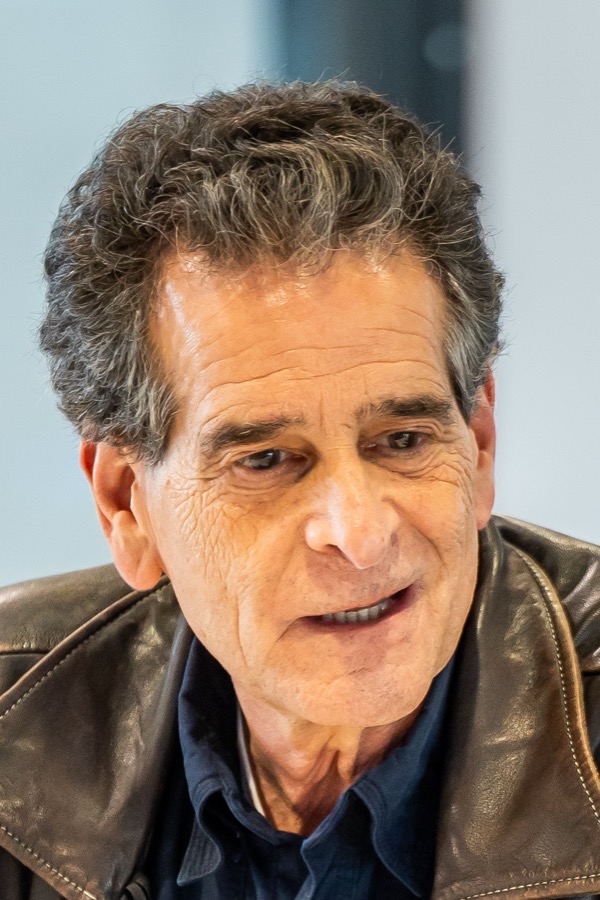
Inventor and founder of DEKA Research & Development, whose labs produced the AutoSyringe infusion pump, the iBOT wheelchair and the Segway PT, and founder of the FIRST robotics program · b. 1951 · Rockville Centre, Long Island, New York → Worcester, Massachusetts → Manchester, New Hampshire
Two calls made by hand, not formulas. how we score →
Summary
The son of a comic-book illustrator and a teacher, he was earning money from light-and-sound systems as a teenager.
A medical-student brother supplied the problem behind his first company. He sold it to Baxter around age 30, kept the cash, and funded DEKA as a private lab that licenses what it invents. Segway, his biggest swing, sold far below its hype.
Where they worked
How it happened
Kamen was born in 1951 in Rockville Centre, on Long Island. His father, Jack Kamen, drew for Mad and other EC Comics titles, and his mother, Evelyn, taught high school business courses. One biography describes his oldest brother, Bart, as a pediatric oncologist. The family is Jewish, per Wikipedia, and the sources used show no money trouble at home.
As a teenager he was already being paid for his ideas. Local bands and museums hired him to build light and sound systems, and one account puts his earnings at $60,000 a year before he finished high school. By 17 he held his first patent, for an automated control system for audiovisual displays, which was used at the Hayden Planetarium and Madison Square Garden according to a company history.
He went to Worcester Polytechnic Institute and left in 1976 without a degree, after about five years. The Lemelson-MIT program says that in his sophomore year he developed a programmable infusion pump, prompted by his brother's experiences in medical school. WPI gave him an honorary doctorate in 1992.
AutoSyringe was set up in 1976 to market the pump. A company history says it grew to about 100 employees once the pumps were used to deliver insulin. In 1982 he agreed to sell it to Baxter International, reportedly making him a multimillionaire at 30. The price is not stated in the sources used, and Lemelson-MIT dates the sale to 1981.
He started DEKA Research & Development in Manchester, New Hampshire, in 1982. It does contract research and licenses technology to manufacturers instead of selling to consumers. DEKA developed portable dialysis machines licensed to Baxter, and the iBOT stair-climbing wheelchair. New Hampshire Public Radio reported in 2023 that Kamen owns the company.
Segway was set up in 1999, and the PT launched in December 2001 after months of leaks and hype. A company history says Credit Suisse and Kleiner Perkins each put in $38 million for 7 percent stakes, and development cost about $100 million. Wikipedia reports the company targeted 40,000 units a year, sold about 6,000 by 2003 and about 23,500 by September 2006. Jimi Heselden bought the company in 2009 and Ninebot in 2015.
In 1989 he founded FIRST, a youth robotics and STEM program, and with Woodie Flowers created the FIRST Robotics Competition in 1992. He gave his $500,000 Lemelson-MIT Prize to FIRST. He received the National Medal of Technology in 2000 and went into the National Inventors Hall of Fame in 2005.
The coded evidence
Thirteen groups, every claim sourcedWikipedia says the Kamen family is Jewish, citing a 2008 Jewish Journal article. The sources used do not say whether the family is Ashkenazi, so the coded ethnicity stays at European American.
↗ en.wikipedia.orgBorn in New York; the sources used do not describe an immigrant generation.
Coded as no migration because nothing in the sources suggests otherwise.
↗ en.wikipedia.orgThe source says the family is Jewish; practice while he was growing up is not described.
↗ en.wikipedia.orgOne biography says his teenage lighting business ran out of the family basement. How long he lived at home is not established.
Single secondary biography adapted from an Investor's Business Daily piece; the original was not checked.
↗ gardenofpraise.comReported income from lighting and sound work while still in school; the AutoSyringe pump was later sold to hospitals and clinics.
↗ en.wikipedia.orgFather Jack Kamen was an illustrator for Mad, Weird Science and other EC Comics titles. Mother Evelyn Kamen (born Rothenberg) was a high school business education teacher.
The mother's occupation comes from the Segway company history; Wikipedia names her without an occupation.
↗ fundinguniverse.comA parent worked for themselves, the strongest known predictor of founding.
Inferred; a freelance illustrator, though the sources do not describe his employment terms.
↗ en.wikipedia.orgnot established
A brother, Bart Kamen, is named. A full count is not established.
↗ fundinguniverse.comHis brother Bart, a physician, supplied the clinical problem behind the first infusion pump.
Lemelson-MIT says a brother in medical school inspired the work; the Segway company history names Bart Kamen as a pediatric oncologist.
↗ lemelson.mit.eduRockville Centre, Long Island, New York; no ZIP-level mobility join applied.
↗ lemelson.mit.eduGrew up within reach of New York City, whose museums and venues bought his early lighting systems.
The company history names the Hayden Planetarium and Madison Square Garden as users of his first patented system.
↗ fundinguniverse.comHis brother, a medical student, described the drug-delivery problem that became the infusion pump.
↗ lemelson.mit.eduLocal bands and museums for the lighting work; hospitals and clinicians for the infusion pump. One biography says a first order asked for 100 pumps.
The first-order detail rests on a single secondary biography and is not repeated here as fact.
↗ en.wikipedia.orgnot established
No co-founder is named for AutoSyringe or DEKA in the sources used.
↗ fundinguniverse.com21
AutoSyringe was set up in 1976; birth year 1951. His lighting work began earlier, in his teens.
↗ fundinguniverse.comWorcester Polytechnic Institute's engineering program and, later, his own lab with in-house prototyping.
Access to specific equipment is not described.
↗ lemelson.mit.eduAttended Worcester Polytechnic Institute and left in 1976 without a degree. Honorary Doctor of Engineering from WPI, 1992.
Lemelson-MIT also says he left before completing his degree.
↗ en.wikipedia.orgnot established
Not established. coded.credentialFunding of none is a placeholder, since the enum has no value for unknown funding.
↗ en.wikipedia.orgYes. He was running a lighting business and developing the infusion pump while at WPI.
↗ lemelson.mit.eduEarnings from teenage light-and-sound jobs, reported as $60,000 a year before high school graduation in one account.
The $60,000 figure traces to a profile site cited by Wikipedia and was not checked against a primary source.
↗ en.wikipedia.orgnot established
One biography says relatives helped assemble early pumps; no money transfer is documented.
↗ en.wikipedia.orgIt paid its own way from the start. Revenue came before any outside money.
Inferred from AutoSyringe growing to about 100 employees with no outside financing described.
↗ fundinguniverse.comAutoSyringe appears to have been self-funded through sale. Segway was funded with outside capital, with Credit Suisse and Kleiner Perkins each holding 7 percent after investing $38 million apiece. DEKA is privately held; NHPR reported in 2023 that Kamen owns it.
↗ fundinguniverse.comProceeds of the AutoSyringe sale to Baxter went into founding DEKA in 1982.
The sale price is not stated in the sources used.
↗ fundinguniverse.comDEKA's model is contract R&D and licensing to manufacturers rather than consumer sales. It licensed its portable dialysis machines to Baxter.
↗ en.wikipedia.orgA brother in medical school described the problem of delivering drugs in steady doses, and Kamen designed a programmable pump to solve it.
↗ lemelson.mit.edunot established
Segway's sales fell well short of its targets but the company was sold rather than wound up, so it is not counted as a clean failure here.
↗ en.wikipedia.orgSegway's outside investors absorbed the shortfall. The company reportedly spent about $100 million on development against about 23,500 units sold by September 2006.
The sale prices in 2009 and 2015 are not fully disclosed, so investor outcomes are not established.
↗ en.wikipedia.org31
The Baxter sale in 1982; the source says he was 30 at the time of agreement, so 30 or 31.
↗ fundinguniverse.comThe Segway PT launched in December 2001.
Launch date only; no macro-economic effect is claimed.
↗ en.wikipedia.orgManchester, New Hampshire
↗ fundinguniverse.comMedical devices, mobility and contract R&D (DEKA), plus STEM education (founded FIRST)
↗ en.wikipedia.orgnot established
The Forbes profile page returned not found, and no net worth figure was located in primary or journalistic sources. Magnitude 4 is a judgment resting on his sole ownership of DEKA (reported by NHPR), a company of hundreds of engineers, plus a multimillion-dollar Baxter sale in 1982 and Segway's reported $600 million valuation in 2001, in which he was a founder. His own wealth is not stated.
↗ forbes.comNot established. DEKA is private, and the sale prices of Segway in 2009 and 2015 are not fully disclosed.
↗ en.wikipedia.orgNational Medal of Technology (2000), Lemelson-MIT Prize (2002), National Inventors Hall of Fame (2005), ASME Medal (2007), Benjamin Franklin Medal (2011), and over 1,000 patents per Wikipedia. The FDA approved DEKA's prosthetic arm in May 2014.
↗ en.wikipedia.orgCapped
Licensing and contract R&D income scales with deals rather than units, so the ceiling is judged capped.
↗ en.wikipedia.orgNHPR and APM Reports reported in 2023 that at least $34 million of funding to ARMI, a federally funded nonprofit Kamen directs, flowed to businesses he controls, and that ARMI pays rent to his real estate companies. ARMI disputed some findings, saying it operates with the highest ethics, that rents are at or below market, and that the federal government selected the grant recipients. Kamen declined an interview and answered in writing through ARMI.
Reported journalism, attributed; not an adjudicated finding.
↗ nhpr.orgStructural context
The cost-of-failure score comes from this person's own money and circumstances. But who they were in America carried its own weight, the same way their household or income did, and it shaped how hard the path was just as much. That part isn't in the cost-of-failure number. It's here instead.
Men founded the companies that took nearly all the venture funding and almost every top outcome, a tailwind that never shows up in one person's own circumstances.
↗ techcrunch.comAmong the people recorded here — men: 225 · white subjects: 24. Representation here is who reached these outcomes, not equal odds of reaching them.
Controlled comparisons
Each holds one thing constant and varies another, so the difference is the point. A list of similar names wouldn't tell you anything.