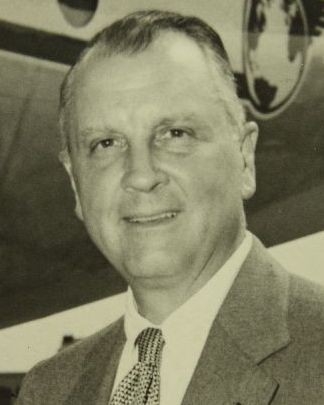
Drew Houston
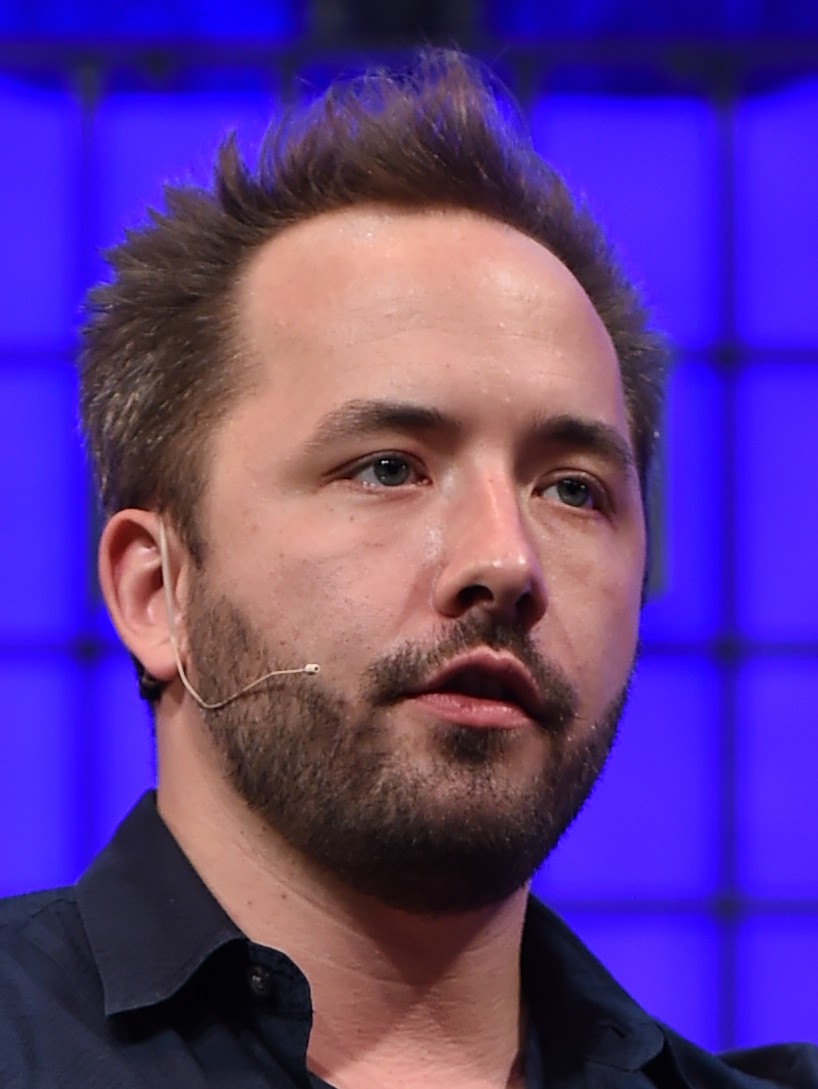
born Andrew W. Houston
Co-founder of Dropbox; CEO 2007-2026, now executive chairman · b. 1983 · Acton, Massachusetts
Two calls made by hand, not formulas. how we score →
Summary
Raised in Acton, Massachusetts by an engineer and a school librarian, he coded on his own before high school.
At MIT he built what became Dropbox after forgetting a USB drive on a bus, took a small Y Combinator seed in 2007, and used a demo video to turn a waitlist into a Sequoia-backed company within a month. Dropbox went public in 2018; he stayed CEO for nineteen years before becoming chairman.
How it happened
Born March 4, 1983, in Acton, Massachusetts. His father, Ken Houston, was an electrical engineer with a degree from Harvard; his mother, Cecily Houston, worked as a high school librarian. He grew up in a stable, comfortable two-parent household with no documented financial strain, and was drawn to computers early, teaching himself to program as a child rather than through any formal pipeline.
He attended Acton-Boxborough Regional High School, then MIT, earning a B.S. in computer science in 2006. While still a student he took a leave to co-found Accolade, an online SAT-prep company, with a former high school teacher, Andrew Crick, after learning the College Board was about to overhaul the test and make existing prep material obsolete. Accolade stayed small and modestly profitable but never became the business he wanted, and he eventually set it aside — a first company that taught him how to run one without becoming the one he's known for.
In 2007, after repeatedly forgetting his USB flash drive — including, by his own account, once boarding a Chinatown bus from Boston to New York without it — he started writing code for a service that would keep his files synced everywhere automatically, so he'd never need the drive at all. He recruited fellow MIT student Arash Ferdowsi as co-founder and CTO. They incorporated as Evenflow, Inc. that May and were accepted into Y Combinator's summer 2007 batch, which put a small seed investment behind the idea before it had a name the public would recognize.
Rather than fight through a crowded false-start of beta signups, he posted a short demo video showing the syncing working exactly as described; it drove tens of thousands of waitlist signups almost overnight and became the company's proof of demand ahead of any real marketing budget. Within a month of Y Combinator's August 2007 demo day, Houston and Ferdowsi closed a $1.2 million seed round in convertible debt led by Sequoia Capital. The company later renamed itself Dropbox, Inc. A $6 million Series A followed in October 2008, led again by Sequoia with Accel Partners participating.
Dropbox grew almost entirely through its own product rather than paid acquisition: every shared folder or file link exposed the service to someone who didn't have it yet, at close to zero marketing cost per new user. Registered users passed 1 million by April 2009, 50 million by October 2011, and 100 million by November 2012. The company raised further private rounds through the 2010s that valued it as high as $10 billion, while converting only a small fraction of its free users to paying subscriptions — about 11 million paying out of more than 500 million registered users by the end of 2017.
Dropbox went public on NASDAQ under the ticker DBX on March 23, 2018, priced at $21 a share and closing its first day up 42% at $29.89. The offering used three share classes: Class A carried one vote, Class B (held mostly by Houston and Ferdowsi) carried ten votes, and Class C carried none. Going into the offering Houston beneficially owned roughly 25.3% of the company's economic equity and controlled about 24.4% of the vote — the largest individual stake of anyone at the company, though short of outright control on his own. His base salary as CEO was set at $400,000, with the bulk of his compensation in restricted stock.
He stayed CEO for nineteen years after founding, through Dropbox's transition from a single consumer syncing app to a broader subscription business. He joined Meta's board of directors in February 2020 and co-founded FWD.us, an immigration-policy advocacy group, in 2013. In May 2026, with the core business stabilizing under product chief Ashraf Alkarmi, Dropbox announced Alkarmi would become co-CEO alongside Houston and then, after a transition period, sole CEO, with Houston moving into the role of executive chairman.
Forbes put his net worth at about $2.65 billion as of September 22, 2026, built almost entirely from his founder's equity in Dropbox and its appreciation since the 2018 IPO, with a self-made score of 8 on Forbes' scale.
The coded evidence
Thirteen groups, every claim sourcedMulti-generational American; no recent immigration documented in the family line.
Inferred from absence of evidence, not directly documented.
↗ en.wikipedia.org0
No documented gap out of work between his 2006 MIT graduation and Dropbox's founding the following year.
↗ en.wikipedia.orgA stable, comfortable two-parent household in Acton, Massachusetts, on an electrical engineer's and a school librarian's combined income. No housing instability is documented at any point in childhood.
↗ en.wikipedia.orgA small Y Combinator seed investment in summer 2007, followed within about a month of demo day by a $1.2 million Sequoia-led seed round in convertible debt — Dropbox had outside capital behind it well before any personal savings would have run out, and he was not supporting himself on family money during the build.
↗ ycombinator.comnot established
No dependents are documented during the 2007 founding years; he married and had children well after Dropbox was established.
↗ en.wikipedia.orgnot established
No student debt or other debt figure is documented for his MIT years.
↗ en.wikipedia.orgnot established
No homelessness, food insecurity, or comparable instability is documented at any point.
↗ en.wikipedia.orgFather Ken Houston, an electrical engineer with a Harvard degree; mother Cecily Houston, a high school librarian.
Widely repeated across secondary biographical accounts; no single primary interview transcript with the exact wording was located, so confidence is medium rather than high.
↗ discoveryacton.orgNeither parent was self-employed.
Father's role reads as a salaried engineering position in available accounts, not self-employment.
↗ discoveryacton.orgFather held a degree from Harvard University; mother's education level is not documented, though a school librarian role typically requires a college degree.
↗ discoveryacton.orgnot established
No documented account of a specific family sacrifice aimed at tuition; the household appears to have covered public schooling and MIT without strain.
↗ en.wikipedia.orgActon, Massachusetts, a middle- to upper-middle-class Boston suburb.
↗ en.wikipedia.orgActon-Boxborough Regional High School, a public school, then MIT for computer science.
↗ en.wikipedia.orgSuburban Boston had no consumer-internet cluster comparable to Silicon Valley, but MIT itself, and its dense concentration of technical talent and startup activity, supplied direct industry proximity once he enrolled.
↗ en.wikipedia.orgActon, Massachusetts to Cambridge, Massachusetts for MIT in 2002, then to San Francisco for Y Combinator and Dropbox's founding in 2007 — a standard move toward a technology hub rather than a family migration.
↗ en.wikipedia.orgAcceptance into Y Combinator's summer 2007 batch put Dropbox in front of Sequoia Capital and other early-stage investors within weeks of demo day, an unpurchasable entry point into venture funding that no application alone would have supplied.
↗ ycombinator.comCold, direct-to-consumer signups driven by a demo video and waitlist rather than a pre-existing personal or institutional relationship.
↗ en.wikipedia.orgArash Ferdowsi, a fellow MIT student, joined as co-founder and CTO and built much of the company's early technical infrastructure.
↗ en.wikipedia.org21
Co-founded Accolade, an SAT-prep company, while still an MIT student, before founding Dropbox at 24.
↗ en.wikipedia.org0
No conventional employer is documented between MIT and founding Dropbox; Accolade was his own company, not an employer.
↗ en.wikipedia.orgMIT's computer science program and Y Combinator's selective startup accelerator, which admitted the Dropbox team in summer 2007 before the product had a public name.
↗ en.wikipedia.orgB.S. in computer science, Massachusetts Institute of Technology, 2006.
↗ en.wikipedia.orgDirect path from a public suburban high school to a selective research university, degree completed on schedule, with no financial interruption documented.
↗ en.wikipedia.orgMIT supplied both the technical training and the co-founder: Arash Ferdowsi was a fellow MIT student, and the university's dense startup culture fed directly into his decision to apply to Y Combinator.
↗ en.wikipedia.orgA small Y Combinator seed investment as part of the accelerator's summer 2007 batch, followed about a month after demo day by a $1.2 million seed round in convertible debt led by Sequoia Capital, closed September 2007.
↗ ycombinator.comIt needed capital up front, before it earned anything.
Dropbox launched free, funded by Y Combinator and then Sequoia's seed capital, before any meaningful subscription revenue existed.
↗ en.wikipedia.orgnot established
No conventional prior salary is documented funding the build; Accolade's modest profits are the closest thing to prior personal income, and no figure is disclosed.
↗ en.wikipedia.orgY Combinator seed (summer 2007); $1.2 million seed in convertible debt led by Sequoia Capital (September 2007); $6 million Series A led by Sequoia with Accel Partners participating (October 2008); further private rounds through the 2010s that valued the company as high as $10 billion ahead of its 2018 IPO.
↗ ycombinator.comDropbox raised through Y Combinator and multiple venture rounds over more than a decade before going public in March 2018. Going into the IPO, Houston held roughly 25.3% of the economic equity and about 24.4% of the vote — a large founder stake for a company that had raised repeated institutional rounds, though not outright majority control on his own.
Figures from the Form S-1 beneficial-ownership table, filed February 23, 2018.
↗ sec.govHe has remained CEO or executive chairman and Dropbox's largest individual shareholder rather than cashing out; his wealth reads as a long-held, appreciating founder equity position rather than a realized fortune from a sale.
↗ forbes.comPersonal frustration at repeatedly forgetting a USB flash drive, including one occasion boarding a bus from Boston to New York without it, led him to start writing code for automatic file-syncing rather than carrying files around on physical media.
↗ en.wikipedia.orgDropbox's IPO used a three-class share structure: Class A common stock (one vote per share) sold to the public, Class B (ten votes per share) held mostly by Houston and Ferdowsi, and non-voting Class C. That structure let Houston's roughly 25% economic stake carry outsized voting weight relative to public shareholders, a control position negotiated before the offering rather than after.
↗ sec.gov1
Accolade, an online SAT-prep company he co-founded with a former teacher around 2004, stayed small and modestly profitable but never grew into the business he wanted; he eventually set it aside for Dropbox rather than shutting it down after a clean failure.
↗ en.wikipedia.orgAccolade appears to have been self-funded and stayed profitable, so no outside party absorbed a loss there. For Dropbox itself, Y Combinator and then Sequoia Capital absorbed the financial risk of the early build, since the funding was outside capital rather than personal savings.
↗ ycombinator.comFounded as broadband and always-on internet access were becoming standard and cheap cloud storage was just becoming commercially viable, ahead of the smartphone-driven multi-device syncing need that would make the product indispensable within a few years.
↗ en.wikipedia.orgCambridge, Massachusetts, moving to San Francisco for Y Combinator and Dropbox's founding in 2007.
↗ en.wikipedia.orgBuilt — Dropbox was a new product built from Houston's own prototype rather than an acquisition of an existing company.
↗ en.wikipedia.org19
He served as CEO for nineteen years, from the 2007 founding to the May 2026 transition to executive chairman, with his equity position continuing to compound throughout.
↗ sec.govCloud storage and file collaboration (Dropbox)
↗ en.wikipedia.org2653000000
Forbes real-time billionaires tracker, as of September 22, 2026 (ranked around #1,578 globally). Built almost entirely from his founder equity in Dropbox and its appreciation since the 2018 IPO; no filing discloses his exact current share count, so this should be read as a band figure rather than a precise point value.
↗ forbes.comJournalistic estimate
↗ forbes.com2026
↗ forbes.com400000
Base salary set at $400,000 under the employment letter disclosed in Dropbox's 2018 Form S-1; the bulk of his actual compensation came as restricted stock awards rather than cash, so this cash-salary figure understates his total annual compensation in years with large equity grants.
↗ sec.govProxy statement
Sourced from the S-1's compensation disclosure rather than a later annual proxy statement, but the same disclosure standard applies.
↗ sec.govHis position is overwhelmingly a long-held, appreciating equity stake in a public company rather than a cashed-out fortune; no large realized sale is documented, and he has remained the company's largest individual shareholder through 2026.
↗ forbes.comWealth is almost entirely appreciated founder equity rather than accumulated salary; his disclosed cash salary has stayed modest relative to his stock holdings.
↗ sec.govDropbox grew to more than 500 million registered users across 180 countries by the time of its 2018 IPO. Houston delivered MIT's 2013 commencement address as one of its youngest speakers, joined Meta's board of directors in February 2020, and co-founded the immigration advocacy group FWD.us in 2013.
↗ en.wikipedia.org1
From the 2007 founding to Sequoia's seed investment within about a month of Y Combinator's August 2007 demo day.
↗ ycombinator.comUncapped
↗ en.wikipedia.orgnot established
No regulatory finding or proceeding against Houston or Dropbox is documented in sources reviewed.
↗ en.wikipedia.orgnot established
↗ en.wikipedia.orgnot established
No adverse civil judgment against Houston personally is documented.
↗ en.wikipedia.orgnot established
↗ en.wikipedia.orgUnrelated
No documented conduct finding exists to assess for instrumentality; included for schema completeness.
↗ en.wikipedia.organalytical, product-and-engineering-minded founder, low-key relative to more publicity-seeking Silicon Valley peers, persistent through a long, gradual build rather than a single dramatic launch
↗ en.wikipedia.orgPress
↗ en.wikipedia.orgBefore
His reputation as a steady, technical founder was established well before the 2018 IPO, through Dropbox's decade of growth beforehand.
↗ en.wikipedia.orgAsset
His long, low-drama tenure and product-embedded growth story have generally been read favorably, including through Dropbox's later years of slowing growth and increased competition from free cloud storage bundled by Google and Apple, which was treated in coverage as a competitive and strategic challenge rather than a personal failing.
↗ en.wikipedia.orgnot established
No major film, book, or dramatization of Houston's story is documented.
↗ en.wikipedia.orgNo reputational crisis requiring recovery attaches to Houston personally; coverage of Dropbox's post-IPO stock underperformance and later competitive pressure has been framed as a business challenge, and his May 2026 move to executive chairman was reported as a planned succession rather than an ouster.
↗ en.wikipedia.orgStructural context
The cost-of-failure score comes from this person's own money and circumstances. But who they were in America carried its own weight, the same way their household or income did, and it shaped how hard the path was just as much. That part isn't in the cost-of-failure number. It's here instead.
Men founded the companies that took nearly all the venture funding and almost every top outcome, a tailwind that never shows up in one person's own circumstances.
↗ techcrunch.comWhite founders are heavily overrepresented among funded companies and top-tier wealth relative to their share of the population, an edge that has nothing to do with a person's own money.
↗ techcrunch.comAmong the people recorded here — men: 169 · White subjects: 114. Representation here is who reached these outcomes, not equal odds of reaching them.
Controlled comparisons
Each holds one thing constant and varies another, so the difference is the point. A list of similar names wouldn't tell you anything.