Dustin Moskovitz
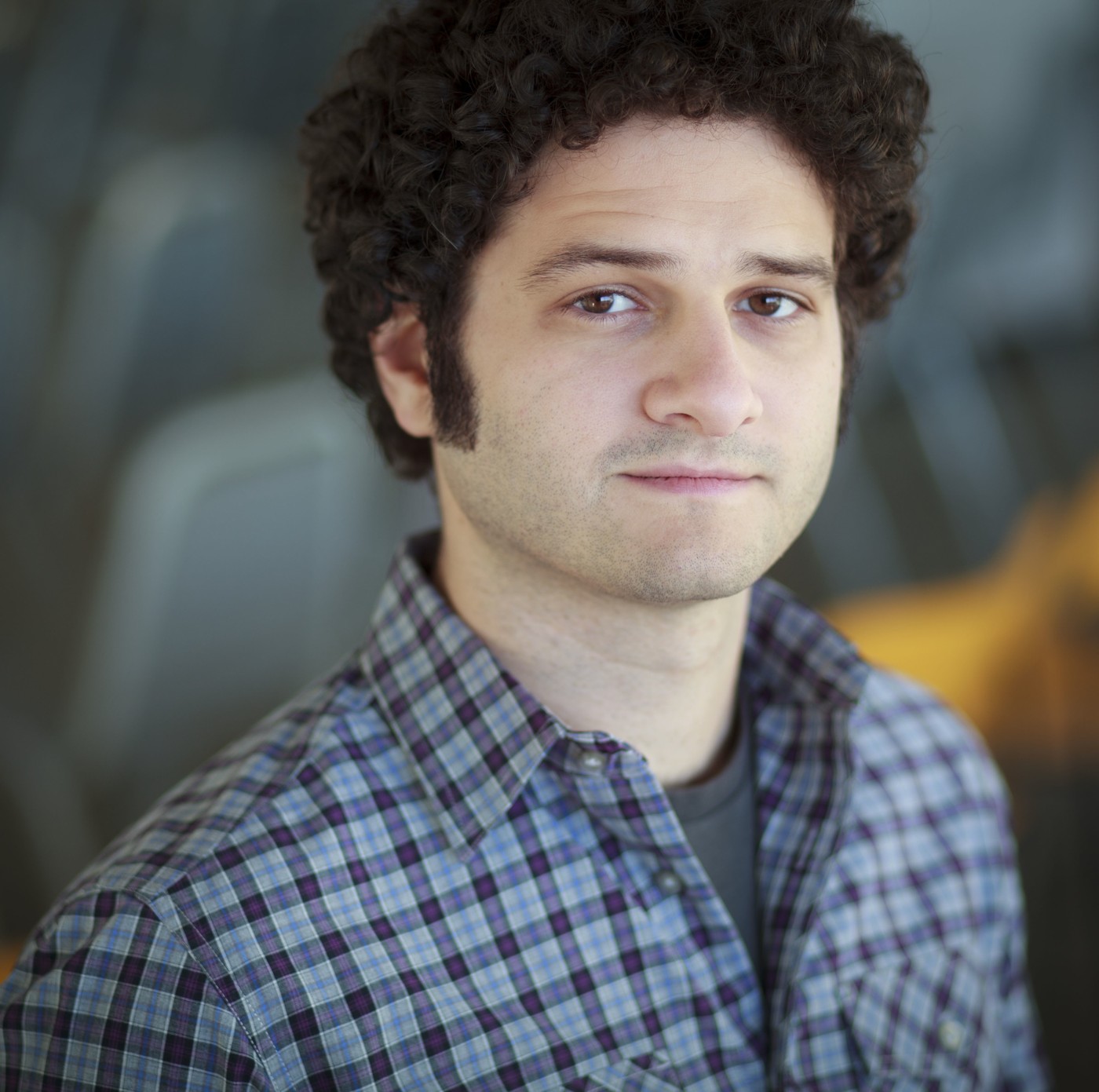
born Dustin Aaron Moskovitz
Co-founder of Facebook; co-founder and former CEO of Asana · b. 1984 · Gainesville, Florida
Two calls made by hand, not formulas. how we score →
Summary
A psychiatrist's son from central Florida left Harvard to code his roommate's dorm-room site.
Dropping out cost him nothing: the capital was Zuckerberg's, then Thiel's. He kept a 7.6% Facebook stake at its 2012 IPO, left in 2008 to build Asana, and ran it seventeen years. The fortune traces to the company he left, not the one he spent his career building.
How it happened
Born May 22, 1984, in Gainesville, Florida, and raised in nearby Ocala in what's consistently described as a comfortable, professional Jewish household, his father a psychiatrist and his mother a teacher — though the sourcing on that detail is thinner than the rest of this record. He graduated from Vanguard High School's International Baccalaureate program, then enrolled at Harvard as an economics major.
In February 2004, in a Harvard dorm room, he and roommate Mark Zuckerberg, along with Eduardo Saverin and Chris Hughes, launched thefacebook.com as a directory for Harvard students. Moskovitz became the new company's first chief technology officer and then its vice president of engineering. That June, he took a leave from Harvard with Zuckerberg and Hughes and moved the operation to Palo Alto. He never went back to finish the degree.
Facebook's 2012 IPO filing shows Moskovitz holding roughly 133.8 million Class B shares, about 7.6% of the company, held through a family trust. That stake, appreciating for two decades inside the company that became Meta, is the actual source of almost all of his wealth. Forbes has said as much directly: his fortune is "mostly because of his early Facebook stake," not the company he's known for running.
He announced his departure from Facebook on October 3, 2008, and co-founded Asana that December with Justin Rosenstein, an engineering manager he'd worked with there. Asana builds work-management software: task lists, project tracking, team coordination, a plainer, more workmanlike bet than the network he'd just left. He served as CEO, then also as CFO from 2009 to 2017, then as president from 2019 and board chair from the end of that year.
Asana went public on the NYSE in September 2020 via direct listing, at roughly a $5.5 billion valuation, and added a Long-Term Stock Exchange listing the following year. Its dual-class structure gave Moskovitz's Class B shares ten votes apiece; by early 2021 he controlled about 63% of total voting power. Rather than diversify out of his Facebook windfall, he kept redirecting it into Asana, buying more than $1.8 billion of stock on the open market since the listing and building his stake toward roughly 53% of outstanding shares by 2025.
Asana disclosed his planned retirement alongside fourth-quarter earnings on March 10, 2025; the stock fell more than 25% in after-hours trading the same day. Dan Rogers took over as CEO that July, with Moskovitz moving to board chair to focus more of his time on philanthropy.
Forbes put his net worth at about $9.1 billion as of September 24, 2026, down from a 2025 peak above $16 billion as Meta's share price moved — a reminder that most of it is still unrealized stock in a company he hasn't run in almost two decades. He and his wife, Cari Tuna, signed the Giving Pledge as its youngest couple and co-founded Good Ventures, which has distributed billions of dollars since 2011, including to the Open Philanthropy project they spun off — renamed Coefficient Giving in late 2025. He's also one of the largest individual Democratic donors of the last three election cycles.
The coded evidence
Thirteen groups, every claim sourcedMulti-generational American; no recent immigration documented in the family line.
Inferred from absence of evidence, not directly documented.
↗ en.wikipedia.org0
No documented gap between his 2002 Harvard enrollment and continuous work at Facebook, then Asana, from 2004 onward.
↗ en.wikipedia.orgSources converge on a financially stable, two-parent professional household, his father reportedly a psychiatrist, that made attending Harvard and then dropping out of it a reversible decision rather than a gamble. No housing or income instability is documented at any point in his childhood.
The specific "psychiatrist father" detail rests on several converging but low-quality biography aggregator sites rather than a single authoritative primary source; treated as low confidence accordingly. The broader picture of a stable, comfortable household is corroborated by his straightforward path through a selective public IB program into Harvard with no documented financial strain.
↗ thefamouspeople.comnot established
No period of chosen or imposed austerity is established in the record.
↗ en.wikipedia.orgFather reported as a psychiatrist who ran a private practice after an earlier University of Florida affiliation; mother reported as a teacher and artist.
Repeated across several secondary biography sites but not traced to a single primary interview or filing; no stronger source was located in this pass.
↗ thefamouspeople.comA parent worked for themselves, the strongest known predictor of founding.
A private psychiatric practice, if accurate, would be self-employment; same weak-sourcing caveat as parentOccupations.
↗ thefamouspeople.comGainesville, Florida (birth), raised in Ocala — a mid-sized central Florida city.
↗ en.wikipedia.orgVanguard High School in Ocala, graduating from its International Baccalaureate Diploma Program, then Harvard University as an economics major.
↗ ibo.orgOcala, Florida to Cambridge, Massachusetts for Harvard in 2002, then to Palo Alto, California in June 2004 to work on Facebook full-time.
↗ en.wikipedia.orgThefacebook.com launched restricted to a harvard.edu address; the first users were Harvard undergraduates before it opened to other campuses.
↗ en.wikipedia.orgHarvard College, which supplied both an elite peer network (Zuckerberg, Saverin, and Hughes were all fellow students) and a captive, .edu-verified first user base in the same physical place.
↗ en.wikipedia.orgCredibility, Network
↗ en.wikipedia.orgCo-founded Facebook with Mark Zuckerberg, Eduardo Saverin, and Chris Hughes in February 2004; later co-founded Asana with Justin Rosenstein, a Facebook engineering manager, in December 2008.
↗ en.wikipedia.org0
Co-founded Facebook while still enrolled at Harvard, with no prior job or venture.
↗ en.wikipedia.org0
No conventional employer is documented before Facebook, which he co-founded rather than joined.
↗ en.wikipedia.orgAttended Harvard University 2002–2004 as an economics major; left without completing a degree to work on Facebook full-time in Palo Alto.
Corroborated in Asana's 2021 proxy statement director biography ("Mr. Moskovitz attended Harvard University where he studied economics").
↗ sec.govDirect path from a selective public IB high school program to Harvard, with no financial interruption documented before he left voluntarily to work on Facebook.
↗ en.wikipedia.orgMoskovitz contributed no capital of his own at Facebook's founding; Zuckerberg and Saverin each put in $1,000 to launch thefacebook.com in January 2004. Moskovitz's contribution was engineering labor, not money.
↗ en.wikipedia.orgPeter Thiel put in $500,000 as Facebook's first outside investment in summer 2004, followed by Accel Partners' $12.7 million Series A in May 2005 — capital Moskovitz benefited from as a co-founder without having raised or supplied any of it personally.
↗ forbes.comAsana's dual-class structure gives Class B common stock ten votes per share against one for Class A. As of Asana's 2021 proxy statement, Moskovitz held 4,947,046 Class A shares (5.4%) and 50,707,189 Class B shares (70.6% of that class), controlling about 63.3% of total voting power as of March 31, 2021 — before the further buying that took his overall stake toward 53% of shares outstanding by 2025.
Figures from the DEF 14A beneficial-ownership table, filed May 3, 2021.
↗ sec.govRather than diversify his Facebook-derived wealth, he redirected a large share of it back into Asana, buying more than $1.8 billion of Asana stock on the open market since the 2020 listing and building his stake toward roughly 53% of outstanding shares by 2025.
↗ forbes.comFacebook's February 2012 Form S-1 shows Moskovitz beneficially owning 133,763,645 shares of Class B common stock, about 7.6% of the company, held mostly through a family trust. Forbes separately reports that he has an agreement letting Mark Zuckerberg vote his Facebook shares, meaning he kept the economic upside of the stake without keeping personal voting control of it.
Beneficial-ownership figure from the S-1's principal-stockholders table, filed February 1, 2012. The voting-agreement detail is corroborated by Forbes's profile but not independently verified against a filing in this pass.
↗ sec.govFacebook's early risk was absorbed by outside investors, Thiel and then Accel, rather than by Moskovitz's own savings or family money; he was a salaried-equivalent co-founder living on the company's funding from the start.
↗ en.wikipedia.orgFacebook launched as campus broadband and always-on internet use were becoming standard at American universities, just as MySpace and Friendster were proving social networking could draw a mainstream audience; its Harvard-only, real-name design was a deliberate contrast to the open, pseudonymous networks already live.
↗ en.wikipedia.org19
The Facebook equity position that became the bulk of his wealth began compounding at this age.
↗ en.wikipedia.org22
From the February 2004 founding to 2026, the period his retained Facebook/Meta stake has been appreciating.
↗ en.wikipedia.orgWork-management software (Asana, where he built his operating career); wealth is sourced from social media and consumer internet (Facebook/Meta).
↗ en.wikipedia.org9100000000
Forbes real-time estimate as of September 24, 2026 (#404 globally), moving with Meta's and Asana's share prices; a band figure, not a filing. Down from a reported peak above $16 billion in March 2025. Sourced primarily from his retained Facebook/Meta equity rather than from Asana, the company he actually ran — CNBC reported in March 2025 that his "total net worth of more than $16 billion" was "mostly because of his early Facebook stake."
↗ forbes.comJournalistic estimate
↗ forbes.com2026
↗ forbes.comNo large realized sale of either his Facebook/Meta or Asana holdings is documented; he has instead been a net buyer of Asana stock since its 2020 listing.
↗ forbes.comOverwhelmingly unrealized equity rather than salary or a cashed-out fortune: a Facebook/Meta stake dating to 2004–2012 that he never fully diversified out of, plus an Asana stake he actively grew through open- market purchases after the 2020 listing.
Original URL https://www.cnbc.com/2025/03/10/asana-ceo-dustin-moskovitz-announces-retirement-stock-price-drops-25percent.html; fetched via Wayback Machine as cnbc.com blocks automated fetches.
↗ web.archive.orgAsana went public at roughly a $5.5 billion valuation in September 2020 and reported $724 million in fiscal-2025 revenue with about 1,819 employees. Good Ventures, the foundation he co-founded with Cari Tuna, has distributed billions of dollars since 2011.
↗ en.wikipedia.orgUncapped
↗ forbes.comnot established
No regulatory finding or proceeding against Moskovitz personally is documented in sources reviewed.
↗ en.wikipedia.orgnot established
↗ en.wikipedia.orgnot established
No civil judgment against Moskovitz personally is documented. (The Winklevoss/ConnectU and Saverin disputes over Facebook's founding named Zuckerberg, not Moskovitz, as a defendant.)
↗ en.wikipedia.orgnot established
↗ en.wikipedia.orgUnrelated
No documented conduct finding exists to assess for instrumentality; included for schema completeness.
↗ en.wikipedia.orgLow key, technically minded, Deliberate, philanthropically driven
↗ en.wikipedia.orgPress
↗ en.wikipedia.orgAfter
His public profile was mostly formed after Facebook's success and The Social Network (2010), not before it.
↗ en.wikipedia.orgAsset
Coverage of his philanthropy and his relatively low-drama Asana tenure has generally been favorable; the March 2025 retirement and the stock's 25% drop were reported as a leadership-transition and business story, not as a personal failing.
↗ en.wikipedia.orgThe reputation was deliberately built, through books, press, and PR.
His public identity has been actively shaped through his own writing (a 2016 Medium post explaining a $20 million political donation, a 2013 essay on Burning Man) and through Good Ventures/Open Philanthropy's public communications about how they give.
↗ en.wikipedia.orgPortrayed by actor Joseph Mazzello in the 2010 film The Social Network. On Quora, Moskovitz said the film emphasized "things that didn't matter," including the Winklevoss brothers, whom he says he never met, and left out things that did, including the other people who supported the founding team.
↗ en.wikipedia.orgnot established
No personal reputational crisis requiring recovery is documented; the 2025 CEO transition was framed as planned succession.
↗ en.wikipedia.orgStructural context
The cost-of-failure score comes from this person's own money and circumstances. But who they were in America carried its own weight, the same way their household or income did, and it shaped how hard the path was just as much. That part isn't in the cost-of-failure number. It's here instead.
Men founded the companies that took nearly all the venture funding and almost every top outcome, a tailwind that never shows up in one person's own circumstances.
↗ techcrunch.comWhite founders are heavily overrepresented among funded companies and top-tier wealth relative to their share of the population, an edge that has nothing to do with a person's own money.
↗ techcrunch.comAmong the people recorded here — men: 169 · White subjects: 114. Representation here is who reached these outcomes, not equal odds of reaching them.
Controlled comparisons
Each holds one thing constant and varies another, so the difference is the point. A list of similar names wouldn't tell you anything.