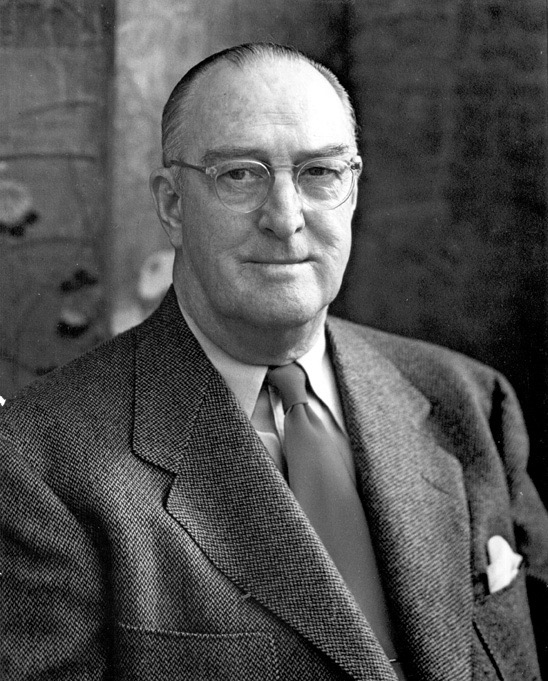
Fred Smith
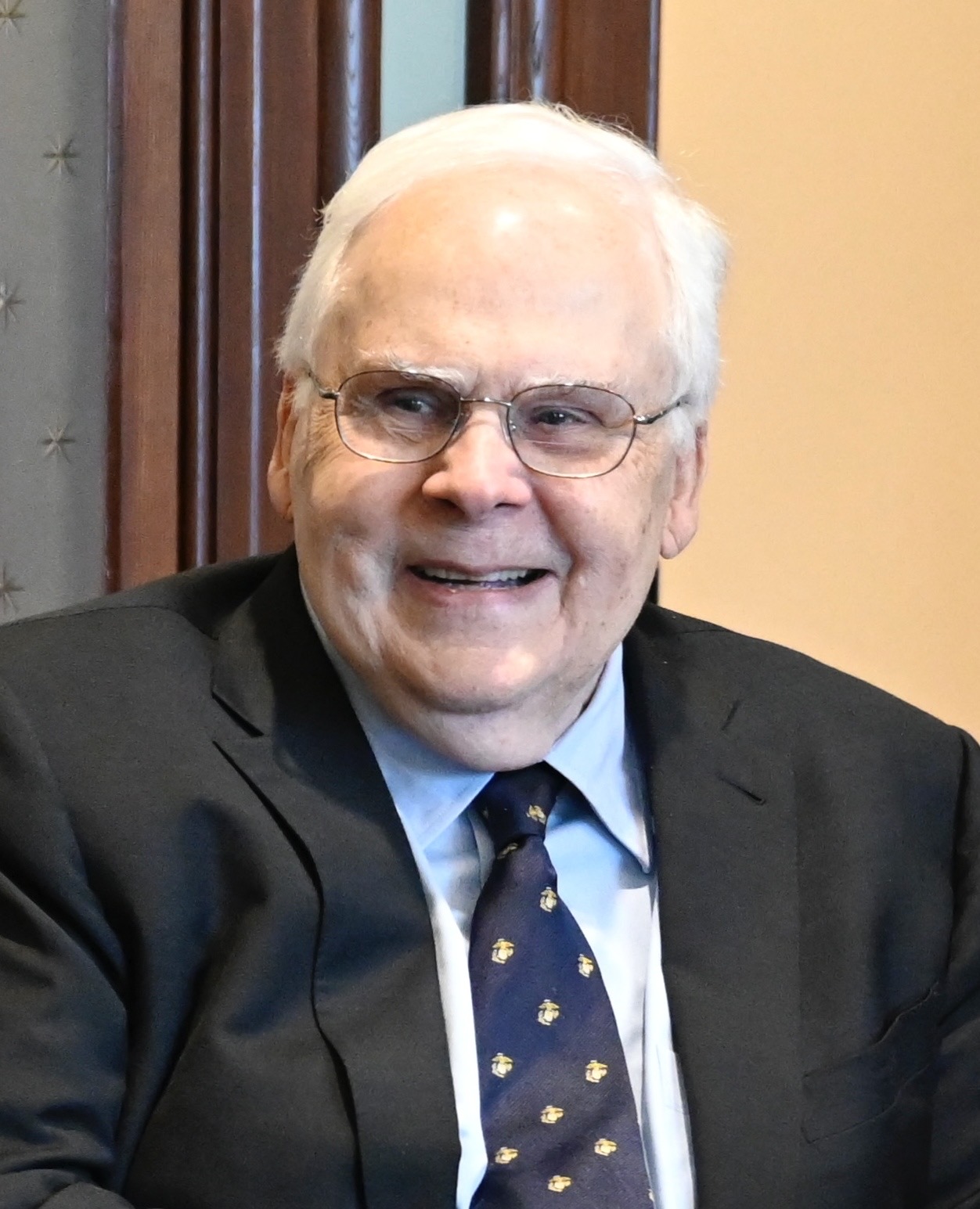
born Frederick Wallace Smith
Founder, chairman and longtime CEO, FedEx Corporation · b. 1944–2025 · Marks, Mississippi
Two calls made by hand, not formulas. how we score →
Summary
His father built a bus line and a restaurant chain, then died when Fred was four, leaving a trust fund that paid for prep school, Yale, and about $4 million of the money that started Federal Express.
A further $91 million in venture capital, one of the largest raises of its era, kept a hub-and-spoke overnight network flying through years of losses before the model worked.
How it happened
Born in Marks, Mississippi, in 1944. His father, James Frederick Smith, had built the Toddle House restaurant chain and what became Dixie Greyhound Lines, a regional bus company, and died when Fred was four. His mother, Sallie Wallace Smith, later remarried, and Fred was raised between Memphis and, later, Little Rock, where his mother and stepfather lived. The inheritance from his father funded a private elementary school, then Memphis University School, a prep school, with no financial strain on the household at any point.
He studied economics at Yale from 1962 to 1966, served as president of his fraternity, was tapped for Skull and Bones, and co-founded a recording studio, Ardent Studios, with two Memphis friends while still a teenager. He wrote an undergraduate paper arguing that an emerging, computerized economy would need a delivery system built around a central sorting hub rather than point-to-point routes. He has since said in interviews that he doesn't remember getting a good grade on it; the widely repeated claim that it was graded a C is not something he has confirmed himself.
He served roughly four and a half years in the Marine Corps, 1966 to 1969, including two tours in Vietnam as a rifle platoon leader and forward air controller, flying over 200 combat missions and earning the Silver Star, the Bronze Star, and two Purple Hearts. He later credited the experience with sharpening the logistics problem he'd written about at Yale: the military moved parts and supplies through the same kind of scattered, point-to-point system he thought a hub could fix.
Discharged in 1969, he settled near his mother in Little Rock and bought controlling interest in Arkansas Aviation Sales, an aircraft maintenance business, using trust-fund money and bank loans. Frustrated by slow parts deliveries in that business, he revived the hub idea and incorporated Federal Express on June 18, 1971, funding it with roughly $4 million of his own inheritance plus about $91 million in venture capital, one of the largest venture raises in the country at the time. Little Rock's airport commission and its bond house both turned him down as too risky, so he moved the operation to Memphis, where officials offered ramps, hangars, and a sorting facility. Operations began in April 1973 with a fleet of small jets serving 25 cities; the company lost on the order of $27-29 million in its first two years, and at one especially low point Smith took the last few thousand dollars in the company account to a Las Vegas blackjack table, won enough to cover a fuel bill, and kept the planes flying one more week. The company turned its first profit in 1976.
In January 1975, a federal grand jury indicted him on forgery charges after his father's daughters from an earlier marriage accused him of forging documents to secure a $2 million loan against family trust stock; he was tried and acquitted.
He ran FedEx as CEO for five decades, stepping down in 2022 to become executive chairman, and the company grew into a global air-and-ground delivery network with hundreds of thousands of employees. He died on June 21, 2025, at 80, and was buried with military honors at Arlington National Cemetery. Forbes put his fortune at roughly $5.3 billion at death, almost entirely FedEx stock built up over a career that started with a trust fund and a plan for a network no one else was running.
The coded evidence
Thirteen groups, every claim sourcedDescendant. No immigration event documented in the sources reviewed.
↗ en.wikipedia.orgnot established
He attended Presbyterian Day School in Memphis, which may or may not reflect the family's own denomination; not confirmed in the sources reviewed.
↗ en.wikipedia.orgEnglish
↗ en.wikipedia.orgA trust fund from his father's estate, not a return-home arrangement, was the operative cushion: it paid for prep school and Yale outright and supplied roughly $4 million of FedEx's founding capital. There was no point at which Smith personally risked homelessness or dependence on a family home; the family's wealth was liquid and already his.
↗ en.wikipedia.orgIndependent trust-fund wealth, not a job or salary, was his personal floor throughout the founding years. This is distinct from FedEx's own cash position, which was severely strained; his personal finances were not shown to be at comparable risk.
↗ aymag.comnot established
FedEx itself carried substantial early bank and venture debt, but no personal, non-dischargeable debt (student, medical, legal) on Smith himself is established in the sources reviewed.
↗ aymag.comnot established
The company nearly ran out of cash repeatedly in 1973-75, including the episode where Smith took the firm's last money to a Las Vegas blackjack table to cover a fuel bill. That is a corporate liquidity crisis, not personal instability: Smith's own housing, health coverage, and standing were never shown to be at risk regardless of how the company's cash position looked in a given week.
↗ en.wikipedia.orgnot established
No documented period of personal austerity to test against a fallback.
↗ en.wikipedia.orgFather James Frederick Smith founded the Toddle House restaurant chain and what became Dixie Greyhound Lines, a regional bus company, and was independently wealthy from both. Mother Sallie Wallace Smith's occupation before her second marriage is not established.
↗ en.wikipedia.orgA parent worked for themselves, the strongest known predictor of founding.
↗ en.wikipedia.orgnot established
Two half-sisters from his father's earlier marriage are documented (they brought the 1975 forgery accusation over trust stock); a count of full siblings is not established.
↗ en.wikipedia.orgUncles were involved in raising him and, by most accounts, in managing the family's business interests and trust after his father's death.
↗ en.wikipedia.orgA locally prominent Memphis and Mid-South business family through his father's bus and restaurant enterprises, with standing that predated and outlasted his father's death.
↗ en.wikipedia.orgnot established
Prep school and Yale were paid from inherited trust assets, not from a parent working to fund tuition.
↗ en.wikipedia.orgNo formal transfer, but his father's death when Smith was four meant he was raised primarily by his mother, with uncles and, after her remarriage, a stepfather in the household. The change in guardianship was informal rather than a legal custody event.
↗ en.wikipedia.orgA childhood bone or joint condition, not otherwise specified in sources reviewed, which he was reported to have overcome enough to play football competitively by around age ten.
↗ forbes.comU.S. Marine Corps, roughly 1966-1969, including two tours in Vietnam as a rifle platoon leader and forward air controller. Discharged as a captain with the Silver Star, the Bronze Star, and two Purple Hearts. Funded no subsequent education; his schooling was already complete and paid for before he enlisted.
↗ en.wikipedia.orgMarks, Mississippi, at birth; raised mainly in Memphis, Tennessee, then Little Rock, Arkansas after his mother's remarriage.
↗ en.wikipedia.orgPresbyterian Day School, then Memphis University School, both private schools in Memphis.
↗ en.wikipedia.orgMississippi to Memphis as a young child; Memphis to New Haven for Yale (1962-66); Marine Corps postings and Vietnam deployments (1966-69); then to Little Rock, where his mother and stepfather lived, to buy Arkansas Aviation Sales; then to Memphis in 1973 after Little Rock's airport authority declined to support the FedEx hub.
↗ aymag.comArkansas Aviation Sales, an aircraft maintenance business he bought controlling interest in around 1969-70 using trust money and bank loans. Chronic delays getting aircraft parts there is what pushed him back to the delivery-hub concept from his Yale paper.
↗ aymag.comCapital, Idea, Skill
The aviation business gave him working capital, direct exposure to aircraft parts logistics that sharpened the FedEx concept, and hands-on familiarity with buying and retrofitting used jets.
↗ aymag.comnot established
FedEx is consistently described as a solo founding; no co-founder is documented.
↗ en.wikipedia.orgWhen Little Rock's airport commission and a local bond house declined to back the hub, he relocated the entire operation to Memphis, where airport officials offered ramps, hangars, and a purpose-built sorting facility instead.
↗ aymag.comBachelor's degree in economics, Yale University, 1966.
↗ en.wikipedia.orgnot established
Paid from inherited trust funds; no student debt is documented or plausible given the funding source.
↗ en.wikipedia.orgDirect. Private prep school to an Ivy League undergraduate degree, no transfer or non-traditional route.
↗ en.wikipedia.orgYale, where he was fraternity president and a member of Skull and Bones. Several accounts of FedEx's early venture-capital assembly point to connections made through elite schooling and family standing, though no single named introduction to a specific investor is documented.
↗ en.wikipedia.orgRoughly $4 million of his own inheritance, put into Federal Express at its June 1971 founding.
↗ en.wikipedia.orgA trust fund from his father James Frederick Smith's estate, built from the Toddle House restaurant chain and Dixie Greyhound Lines. Amount at the time he could access it is not precisely established, but it covered prep school, Yale, the Arkansas Aviation Sales purchase, and about $4 million of FedEx's founding capital.
↗ en.wikipedia.orgIt needed capital up front, before it earned anything.
FedEx ran on inherited capital and venture financing for years before turning its first profit in 1976; it was not revenue-sustaining from the start.
↗ en.wikipedia.orgRoughly $91 million in venture capital raised alongside his own $4 million, described as one of the largest venture-capital-backed start-ups in the country at the time. Specific lead investors are not established in the sources reviewed.
↗ en.wikipedia.orgCapital-intensive from the outset: personal inheritance plus a large multi-investor venture raise, further bank loans against aircraft, and years of losses before profitability. This was a founder-capital path, not a bootstrap; the company needed outside money to exist at all.
↗ en.wikipedia.orgHis father's inheritance was deployed directly into two ventures (Arkansas Aviation Sales, then FedEx) rather than held or spent on lifestyle.
↗ aymag.comNo dual-class structure is documented. Ownership was diluted through the large early venture raise and the company's later public shareholder base; Smith's control ran through his executive role and board position rather than a preserved supermajority stake.
↗ en.wikipedia.orgA Little Rock bond house declined to finance the venture as too risky, and the Little Rock Municipal Airport Commission rejected his requests for runway and warehouse improvements despite two independent consulting studies supporting feasibility; he relocated the entire operation to Memphis afterward.
↗ aymag.com0
Arkansas Aviation Sales is not documented as a failure; FedEx was his first large-scale venture and did not fail, though it came close to running out of cash repeatedly.
↗ en.wikipedia.orgSelf and outside venture investors. Smith's own inheritance and roughly $91 million in venture capital absorbed the years of losses before profitability in 1976; no evidence his personal assets outside the trust were exhausted.
↗ en.wikipedia.orgAir-cargo regulation at the time restricted unlicensed carriers to smaller aircraft, which is part of why FedEx began with small Falcon jets rather than larger freighters; broader air-cargo deregulation later in the decade removed some of those constraints.
General regulatory-era context; a specific citation tying FedEx's aircraft choice to a named rule is not established in the sources reviewed.
↗ en.wikipedia.orgMemphis, Tennessee, chosen after Little Rock's airport authority declined to support the hub; Memphis offered ramps, hangars, and a dedicated sorting facility instead.
↗ aymag.comBuilt. The hub-and-spoke overnight air network was new; Arkansas Aviation Sales, the business he'd bought beforehand, supplied working capital and aircraft-industry exposure but was not itself the thing that scaled.
↗ aymag.com51
1971 founding to his 2022 step-down as CEO; he remained executive chairman afterward.
↗ en.wikipedia.orgAir-and-ground package delivery and logistics
↗ en.wikipedia.org5300000000
Figure at his death, June 2025, per Forbes as cited by Wikipedia and other obituary coverage. Forbes' real-time tracker had him at roughly $5.8 billion as of April 2025, two months before he died; both figures trace to the same public FedEx shareholding.
↗ en.wikipedia.orgPublic equity
↗ forbes.com10434589
2008 total compensation as CEO of FedEx, per Wikipedia's account of proxy-statement disclosure.
↗ en.wikipedia.orgProxy statement
↗ en.wikipedia.orgAlmost entirely ownership wealth in FedEx stock accumulated over a 51-year career, alongside decades of large executive compensation as CEO; not a case of income without an equity stake.
↗ en.wikipedia.orgBuilt the first large-scale integrated air-ground overnight delivery network in the United States. Recognitions include the 2008 Bower Award for Business Leadership, the 2011 Tony Jannus Award, and a 2014 spot on Fortune's "World's 50 Greatest Leaders." Buried with military honors at Arlington National Cemetery in 2025.
↗ en.wikipedia.orgUncapped
↗ en.wikipedia.orgIn January 1975, a federal grand jury indicted Smith on forgery charges after his father's daughters from an earlier marriage accused him of forging documents to secure a $2 million loan against family trust stock. He was tried and found not guilty; no conviction resulted.
Corroborated independently by contemporaneous Commercial Appeal wire reporting cited in Wikipedia and by later obituary coverage; stated here only to the extent of the charges and their resolution, not as established fact of wrongdoing.
↗ en.wikipedia.orgDuring
Both matters arose in January 1975, less than four years after FedEx's founding and while the company was still cash-constrained.
↗ en.wikipedia.orgIncidental
The alleged loan the forgery charge concerned was a small fraction of FedEx's roughly $95 million in founding capital, and he was acquitted; no evidence establishes that either matter produced the company's advantage.
↗ en.wikipedia.orgnot established
Not codeable. He was acquitted on the forgery count and the traffic charges were dismissed, so no adjudicated wrongdoing exists to grade.
↗ en.wikipedia.orgGrew FedEx into a large direct employer with hundreds of thousands of workers; a detailed record of labor practices relative to peers is not established in the sources reviewed for this profile.
↗ en.wikipedia.orgVisionary, Driven, Combative, Disciplined
↗ forbes.comPublic
↗ forbes.comAfter
His public reputation as a logistics visionary consolidated as FedEx succeeded through the late 1970s and 1980s, after the risky, cash-strapped founding years.
↗ en.wikipedia.orgAsset
Widely credited in business and logistics circles as having created a new industry category, with the 1975 legal matters largely absent from his later public profile.
↗ forbes.comStructural context
The cost-of-failure score comes from this person's own money and circumstances. But who they were in America carried its own weight, the same way their household or income did, and it shaped how hard the path was just as much. That part isn't in the cost-of-failure number. It's here instead.
Men founded the companies that took nearly all the venture funding and almost every top outcome, a tailwind that never shows up in one person's own circumstances.
↗ techcrunch.comWhite founders are heavily overrepresented among funded companies and top-tier wealth relative to their share of the population, an edge that has nothing to do with a person's own money.
↗ techcrunch.comAmong the people recorded here — men: 115 · White subjects: 74. Representation here is who reached these outcomes, not equal odds of reaching them.
Controlled comparisons
Each holds one thing constant and varies another, so the difference is the point. A list of similar names wouldn't tell you anything.