Gary Vaynerchuk
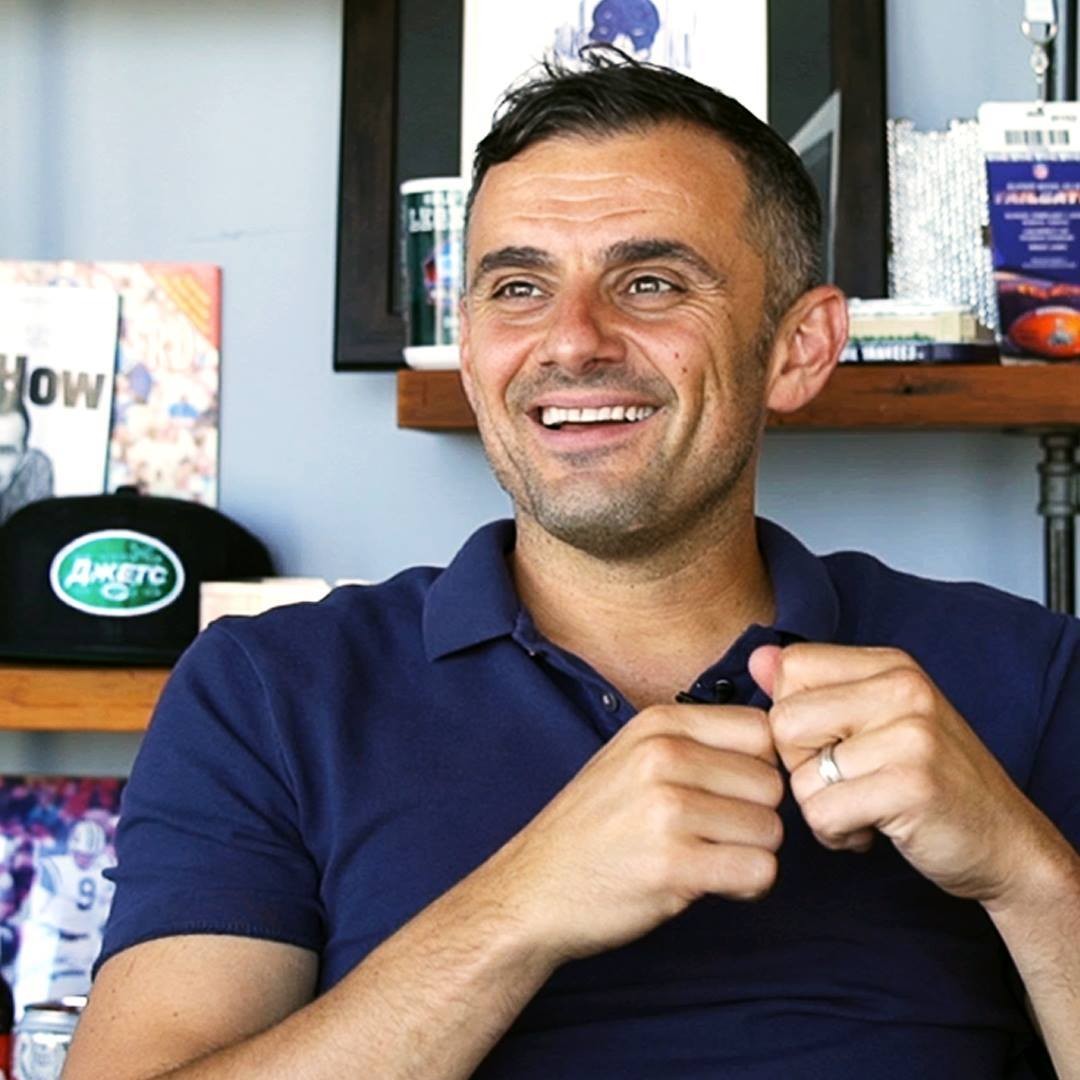
born Gennady Vaynerchuk
Co-founder and chairman, VaynerX; CEO, VaynerMedia; built his family's liquor store into Wine Library · b. 1975 · Babruysk, Belarusian SSR, Soviet Union → New York / New Jersey
Two calls made by hand, not formulas. how we score →
Summary
His family's liquor store, built after a 1978 refugee emigration from the Soviet Union, gave him a revenue-generating business to take over at twenty-two, not a venture built from nothing.
He grew it from roughly $3M to $60M, spent five years on a free daily YouTube wine show, then founded VaynerMedia with his brother in 2009 — self-funded, and still theirs.
Where they worked
How it happened
Born Gennady Vaynerchuk in Babruysk, in what was then the Belarusian SSR, in 1975. His family left the Soviet Union in 1978 as part of the US refugee resettlement program when he was about three, arriving in New York City and later settling in New Jersey. His father ran a retail liquor store, Shopper's Discount Liquors.
He took over day-to-day responsibility for the store after graduating from Mount Ida College in 1998, renamed it Wine Library, and pushed it into early e-commerce. Reported revenue grew from about $3 million a year to about $60 million. This was an inherited, already-operating business, not a venture he built from zero.
Starting in 2006 he filmed a daily webcast reviewing wine, eventually running to roughly 1,000 episodes before he retired the format in 2011. It cost almost nothing to produce and built him a large, direct following years ahead of most business figures using online video — the audience and personal brand that later clients came looking for.
In 2009, while still running Wine Library, he co-founded VaynerMedia with his brother AJ to help brands navigate the social platforms he'd already been using for years. He left Wine Library entirely in 2011 to run it full time. The agency was self-funded and billed clients from the start rather than raising outside capital — the clearest founding event in his career, and the business that defines his wealth today.
VaynerMedia grew into VaynerX, a holding company spanning the agency, media, and other ventures, with Gary as chairman and AJ as CEO of the parent group. Alongside it he became a prolific angel investor, an author of several bestselling business books, and co-founder of ventures including Resy and Empathy Wines, both later acquired.
He launched VeeFriends, an NFT and consumer-brand project, in 2021, and continues publishing books and content under the VaynerX umbrella. No Forbes-tracked net worth figure exists for him; aggregator estimates vary widely and none disclose a real methodology.
The coded evidence
Thirteen groups, every claim sourcedAshkenazi Jewish, Soviet/Belarusian-Jewish refugee family
Wikipedia states he is of Ashkenazi Jewish descent; coded at the coarse facet level only, no finer detail invented.
↗ en.wikipedia.org1.5 generation, arrived at approximately age 3
↗ en.wikipedia.orgInferred from documented Ashkenazi Jewish family background; practice level not established.
↗ en.wikipedia.orgnot established
Not established whether Russian or Belarusian was spoken at home after emigration.
↗ en.wikipedia.orgWhen he took over the family store in 1998 it was already generating roughly $3 million a year in revenue — an operating income floor from day one, not a venture started from nothing.
↗ en.wikipedia.orgnot established
No documented debt overhang at the time of either the Wine Library takeover or the VaynerMedia founding.
↗ en.wikipedia.orgnot established
No documented homelessness, housing loss, or comparable instability. The family's early resettlement years (1978 onward) are described only in general terms as working-class; no specific hardship event is sourced.
↗ en.wikipedia.orgThe hardship was imposed, not chosen. There was nothing to fall back on.
No visible-poverty narrative is part of his story. The genuine hardship, to the extent any is documented, was the imposed condition of refugee resettlement in 1978, not a chosen austerity performed later during either business build.
↗ en.wikipedia.orgFather owned and ran a retail liquor store (Shopper's Discount Liquors) after the family settled in the US; mother's occupation is not established in sources consulted.
↗ en.wikipedia.orgA parent worked for themselves, the strongest known predictor of founding.
↗ en.wikipedia.org1
At least one documented sibling, younger brother AJ Vaynerchuk, later his VaynerMedia/VaynerX co-founder. Full sibling count not confirmed.
↗ en.wikipedia.orgnot established
No documented multigenerational lineage or named family standing beyond the parents.
↗ en.wikipedia.orgHe has said in interviews he worked in the family store and sold goods (e.g. baseball cards, roadside sales) from a young age, with the family's small business providing both the opportunity and apparent tacit encouragement to hustle early.
General pattern is widely self-described in his talks and books; not independently documented here to a primary interview transcript given the research time budget.
↗ en.wikipedia.orgnot established
He speaks publicly about happiness, self-awareness, and emotional intelligence as content themes, but no self-disclosed diagnosed mental-health condition meeting the schema's gate was located.
↗ en.wikipedia.orgnot established
No self-disclosed or heavily documented survived trauma located; the 1978 emigration is coded under migration/household, not as trauma.
↗ en.wikipedia.orgSettled in the New York / New Jersey metro area after the 1978 arrival; sources place the family in Queens and later in New Jersey.
Specific town/school varies slightly across secondary sources; not resolved to a single address or school here.
↗ en.wikipedia.orgFamily emigrated from the Soviet Union (Babruysk, Belarusian SSR) to New York City in 1978, arriving via the US Refugee Resettlement program when he was about three years old, as part of the broader Soviet-Jewish refugee emigration of the period.
Wikipedia's own citation for this fact is a Fortune magazine article (fortune.com), a domain that blocks automated fetch; cited here via Wikipedia, which states the fact directly.
↗ en.wikipedia.orgnot established
The family's occupational standing in the Soviet Union before emigrating is not established in sources consulted.
↗ en.wikipedia.orgInherited customer base of an existing, decades-old retail liquor store.
↗ en.wikipedia.orgThe family's retail liquor store, Shopper's Discount Liquors, founded and run by his father after the 1978 emigration. He assumed day-to-day control after college in 1998, renamed it Wine Library, and used it as the base for an early e-commerce push. This is an inherited operating business, not a venture founded from nothing — the single most important qualifier on his early hardness score.
↗ en.wikipedia.orgCapital, Network
The store supplied an existing revenue base and supplier/customer relationships in the wine and liquor trade. The e-commerce and video strategy layered onto it, and later VaynerMedia itself, were his own added skill and idea rather than something the platform supplied.
↗ en.wikipedia.orgBrother AJ Vaynerchuk, co-founder of VaynerMedia (2009) and later CEO of VaynerX.
↗ en.wikipedia.org22
Age at formally taking over store operations in 1998 after college; he describes working in the store informally from much younger.
↗ en.wikipedia.orgBy the time VaynerMedia was founded in 2009, he already had a large, direct following built from roughly 1,000 episodes of Wine Library TV (2006–2011) — public recognition that preceded the agency and helped bring early clients to it.
↗ en.wikipedia.orgUsed an early, then-uncrowded YouTube channel to build a following in wine commentary without needing coverage from established wine critics or trade press.
↗ en.wikipedia.orgWine Library TV, a daily YouTube wine-review show he produced and owned outright (2006–2011, about 1,000 episodes).
↗ en.wikipedia.orgBA in management/business, Mount Ida College, 1998
↗ en.wikipedia.orgnot established
Not independently confirmed for the college years specifically, though he is widely described as having worked in the family store from a young age through adolescence.
↗ en.wikipedia.orgDirect enrollment at a small private college; no graduate study documented.
↗ en.wikipedia.orgInherited an already-profitable business (~$3M/year revenue) rather than needing to raise a first dollar to start it.
↗ en.wikipedia.orgThe liquor store his father built after the family's 1978 emigration was handed to him operationally in 1998 — a direct intergenerational business transfer, and the platform underneath everything that followed. This is why the path is coded as a moderated, not a hard, landing: the money and infrastructure already existed.
↗ en.wikipedia.orgnot established
Not a literal inheritance (no death or estate transfer documented); the business handoff is coded under familyTransfer instead.
↗ en.wikipedia.orgIt paid its own way from the start. Revenue came before any outside money.
True of both Wine Library (inherited revenue) and VaynerMedia (billed clients from the start; no VC round raised).
↗ en.wikipedia.orgVaynerMedia was founded in 2009 and self-funded while he was still running Wine Library, using the income, credibility, and audience built there rather than outside investment.
↗ en.wikipedia.orgVaynerMedia/VaynerX has operated on service revenue since founding, with no significant outside equity round documented for the agency itself; ownership has stayed with Gary and AJ Vaynerchuk.
↗ en.wikipedia.orgObserved, while running Wine Library TV, that brands had no real strategy for the social platforms he was already using daily — personal experience inside an existing business plus a market gap, not a prior employer's idea.
↗ en.wikipedia.org4
Converted personal recognition into an equity stake, rather than a fee, across at least four distinct categories: advertising/media (VaynerMedia/VaynerX), wine (Empathy Wines, co-founded, acquired by Constellation Brands 2020), dining tech (Resy, co-founded, acquired by American Express 2019), and collectibles/apparel (VeeFriends, 2021).
↗ en.wikipedia.org0
No prior failed independent ventures are documented before the Wine Library transformation or VaynerMedia; his path runs continuously through one inherited business and one founded one.
↗ en.wikipedia.orgSelf, from Wine Library / personal income.
↗ en.wikipedia.orgBrands in 2009 were largely unprepared for social media and had no internal expertise or budget process for it, creating an open window for a dedicated social-first agency.
↗ en.wikipedia.orgnot established
No single viral spike documented. Wine Library TV's audience grew from sustained daily output over five years (about 1,000 episodes) rather than one breakout moment.
↗ en.wikipedia.orgTook over and transformed an existing family business (Wine Library), then separately founded VaynerMedia from scratch. Neither was an acquisition of an unrelated asset.
↗ en.wikipedia.orgAdvertising and digital marketing, with an earlier chapter in e-commerce wine retail
↗ en.wikipedia.org200000000
No Forbes-tracked figure exists — his Forbes profile page (forbes.com/profile/gary-vaynerchuk/, checked 2026-10-02) lists no net worth at all. Aggregator estimates vary widely with no disclosed methodology: commonly cited figures cluster around $160M–$220M, and some aggregator and social-media-circulated claims run far higher (up into the billions), but none of those higher figures trace to a filing, equity-holding record, or credible journalistic estimate. Banded conservatively at $100M–1B (magnitude 4) on the better-supported cluster, not the outlier claims, and never used as a continuous value.
↗ investormint.comAggregator
↗ investormint.comWealth is built through ownership of VaynerMedia/VaynerX and a large angel-investment portfolio (reported stakes in Facebook, Twitter, Uber, Venmo, Snapchat, Tumblr, and Coinbase among others), rather than a fixed salary.
↗ en.wikipedia.orgMultiple New York Times bestselling books (including #AskGaryVee and Crushing It!); millions of followers across social platforms; a prominent keynote-speaking career; creator of the VeeFriends IP (2021).
↗ en.wikipedia.orgUncapped
↗ en.wikipedia.orgmarketing visionary, hustle-culture figure, Polarizing
Characterizations drawn from general business-press coverage of his public persona, not a single named source.
↗ en.wikipedia.orgPublic
↗ en.wikipedia.orgBefore
Reputation formed through Wine Library TV (2006–2011), largely before and overlapping with VaynerMedia's 2009 founding.
↗ en.wikipedia.orgMixed
Admired by many entrepreneurs and marketers as an early, credible pioneer of content-driven marketing; dismissed by others as hype- and self-promotion-driven. Neither view is treated here as established fact — this is reported as what each audience believes, not a verdict.
↗ en.wikipedia.orgThe reputation was deliberately built, through books, press, and PR.
Deliberately built and maintained a consistent public persona across two decades of daily content, books, and speaking.
↗ en.wikipedia.orgReputation splits by constituency: widely cited in marketing and entrepreneurship circles as a credible early mover, while critics in other quarters characterize his brand of motivational hustle content as noise. Both views coexist rather than one having displaced the other.
↗ en.wikipedia.orgStructural context
The cost-of-failure score comes from this person's own money and circumstances. But who they were in America carried its own weight, the same way their household or income did, and it shaped how hard the path was just as much. That part isn't in the cost-of-failure number. It's here instead.
Men founded the companies that took nearly all the venture funding and almost every top outcome, a tailwind that never shows up in one person's own circumstances.
↗ techcrunch.comImmigrants and their children are overrepresented among America's biggest companies, as founders and as senior leaders. They got there through the visa, credential, and network hurdles that make the path harder to even start down.
↗ forbes.comAmong the people recorded here — men: 225 · white subjects: 24. Representation here is who reached these outcomes, not equal odds of reaching them.
Controlled comparisons
Each holds one thing constant and varies another, so the difference is the point. A list of similar names wouldn't tell you anything.