Brett Adcock
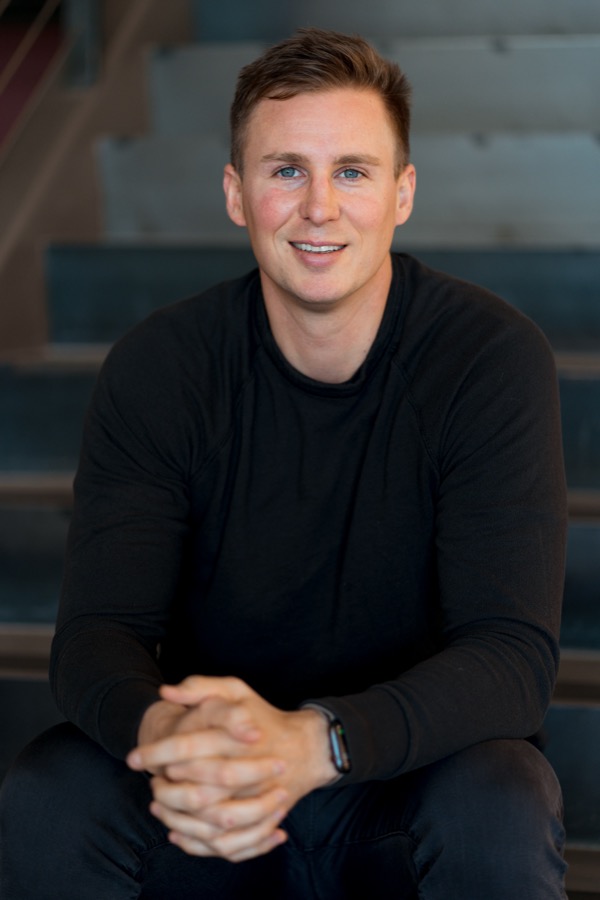
Founder and CEO, Figure AI (humanoid robots); earlier co-founder of Vettery and Archer Aviation · b. 1986 · Moweaqua, Illinois
Two calls made by hand, not formulas. how we score →
Summary
Adcock grew up on a third-generation family farm in Illinois, studied business at the University of Florida, and co-founded Vettery, which Adecco bought in 2018 for a little over $100 million.
That sale, and a second company, Archer, gave him the money and the name to start Figure AI in 2022. Forbes puts his net worth at $23.4 billion, most of it a private stake in Figure.
People in this set who share a company with Brett Adcock.
Where they worked
How it happened
Born April 6, 1986, in Moweaqua, Illinois. Wikipedia says he grew up on his family's third-generation farm and graduated as valedictorian of Central A&M High School. It also says that at sixteen he started web ventures, including an e-commerce site for outdoor electronics. His parents' occupations and the family's finances are not established in the sources used.
He started in industrial engineering and finished a bachelor's degree in business administration at the University of Florida in 2008, according to Wikipedia and Forbes. How the degree was paid for is not established.
Wikipedia says he and Adam Goldstein, who had both worked as hedge-fund analysts covering recruiting, founded the hiring marketplace Vettery in New York in 2013. It raised $11.9 million from investors including Greycroft and Raine Ventures, and TechCrunch reported that Adecco bought it in February 2018 for just over $100 million. Forbes gives the price as $110 million. This is the step that separated him: an exit large enough to anchor and vouch for what came after it.
In October 2018 he and Goldstein started Archer Aviation, an electric air-taxi company. It went public through a merger with a special purpose acquisition company in September 2021. Wikipedia reports that he left his co-CEO post and then the board in 2022, and Goldstein remained CEO.
He founded Figure in 2022. In September 2022 TechCrunch described him as bootstrapping the company with $100 million of his own funding. Wikipedia lists a $70 million seed round in May 2023, with $20 million of it from Adcock, and a $675 million Series B in February 2024 at a $2.6 billion valuation. Figure's own announcement says a Series C of more than $1 billion in September 2025 valued it at $39 billion.
Forbes lists his net worth at $23.4 billion on October 10, 2026 and says he owns an estimated 50% of Figure. Wikipedia says he also founded Hark, an AI hardware and model company that raised $700 million at a $6 billion valuation in May 2026. In November 2025 a former Figure safety engineer sued the company, alleging he was fired after raising safety concerns. The company's response and the outcome aren't established in the sources used.
The coded evidence
Thirteen groups, every claim sourcedMulti-generation American
Wikipedia describes a third-generation family farm in Illinois; wider ancestry is not established.
↗ en.wikipedia.orgnot established
Whether family could have housed or supported him during the Vettery years is not established in the sources used.
↗ en.wikipedia.orgWikipedia's Vettery entry says the two founders were previously hedge-fund analysts. Whether he kept a salary while starting Vettery is not established.
↗ en.wikipedia.orgnot established
Sources say he grew up on the family's third-generation farm; his parents' occupations and the farm's size and finances are not stated.
↗ en.wikipedia.orgA parent worked for themselves, the strongest known predictor of founding.
Inferred from a family-owned farm; ownership structure is not stated.
↗ en.wikipedia.orgMoweaqua, a small town in Shelby County, Illinois.
↗ en.wikipedia.orgCentral A&M High School, where Wikipedia says he was valedictorian.
↗ en.wikipedia.orgGrew up far from any tech cluster. Vettery began in New York, Archer in Palo Alto, Figure in the Bay Area.
↗ en.wikipedia.orgAdam Goldstein co-founded both Vettery and Archer Aviation with him.
↗ en.wikipedia.orgTechCrunch reported that by September 2022 he had assembled about 30 people for Figure, including roboticists and engineers from Boston Dynamics, Apple, Tesla, Google and Toyota Research Institute.
↗ techcrunch.comBachelor of Science in business administration, University of Florida, 2008.
↗ forbes.comnot established
Not established; how the degree was paid for is not reported in the sources used.
↗ en.wikipedia.orgnot established
The founders' own starting capital for Vettery is not established in the sources used.
↗ en.wikipedia.orgVettery raised $1.7 million in seed funding in 2015 and a $9 million Series A in 2016, led by Raine Ventures and Greycroft, for $11.9 million in total across three rounds.
↗ en.wikipedia.orgFigure's Series B in February 2024 was $675 million at a $2.6 billion valuation. Its Series C, announced September 16, 2025, was over $1 billion at a $39 billion post-money valuation, led by Parkway Venture Capital.
The Series B figures are from Wikipedia's Figure AI entry, not from the Series C page.
↗ figure.aiTechCrunch described him in 2022 as bootstrapping Figure with $100 million of funding. Wikipedia's Figure entry lists $20 million of the May 2023 seed round as coming from Adcock. Forbes does not say here how much of his Vettery proceeds went into either.
Coded originCapital as prior-high-income because Figure's first money followed the Vettery sale and Archer. The share that was his own cash, as against outside money, is not established, so the coding is a judgment call.
↗ techcrunch.comForbes estimates he owns about 50% of Figure.
An estimate of a private company's cap table.
↗ forbes.comnot established
Whether the web ventures he started as a teenager failed, or how any ended, is not established.
↗ en.wikipedia.orgArcher went public in 2021 and Figure raised its larger rounds in 2024 and 2025, during heavy investor interest in electric aircraft and then in AI.
Interpretive framing.
↗ figure.aiRobotics and artificial intelligence
↗ forbes.com23400000000
Forbes's figure as shown on its profile page on October 10, 2026. It is a point-in-time estimate. It rests mostly on an estimated 50% of Figure, a private company whose value moves with each funding round.
↗ forbes.comJournalistic estimate
↗ forbes.com2026
↗ forbes.comMostly paper. The Vettery sale, a little over $100 million, was a realized exit. The Figure stake is in a private company, and no sale of his shares is established in the sources used.
↗ forbes.comCEO of Figure AI, valued at $39 billion in September 2025. He also founded Hark, which Wikipedia says raised $700 million at a $6 billion valuation in May 2026.
↗ figure.aiUncapped
↗ forbes.comFigure's former principal robotic safety engineer filed suit against the company in the U.S. District Court for the Northern District of California on November 21, 2025, according to a secondary report. The suit alleges he was fired in September 2024 after raising safety concerns, including that the robots could fracture a human skull. These are the plaintiff's allegations.
Figure's response and the outcome of the case are not established in the pages cited. Wikipedia's Figure AI entry cites a March 2026 CNBC report on the suit.
↗ oodaloop.comAfter
↗ oodaloop.comStructural context
The cost-of-failure score comes from this person's own money and circumstances. But who they were in America carried its own weight, the same way their household or income did, and it shaped how hard the path was just as much. That part isn't in the cost-of-failure number. It's here instead.
Men founded the companies that took nearly all the venture funding and almost every top outcome, a tailwind that never shows up in one person's own circumstances.
↗ techcrunch.comWhite founders are heavily overrepresented among funded companies and top-tier wealth relative to their share of the population, an edge that has nothing to do with a person's own money.
↗ techcrunch.comAmong the people recorded here — men: 225 · White subjects: 125. Representation here is who reached these outcomes, not equal odds of reaching them.
Controlled comparisons
Each holds one thing constant and varies another, so the difference is the point. A list of similar names wouldn't tell you anything.
Related companies
Companies connected to Brett Adcock through the profiled people they worked with. Each card says who the link runs through.