Herb Kelleher
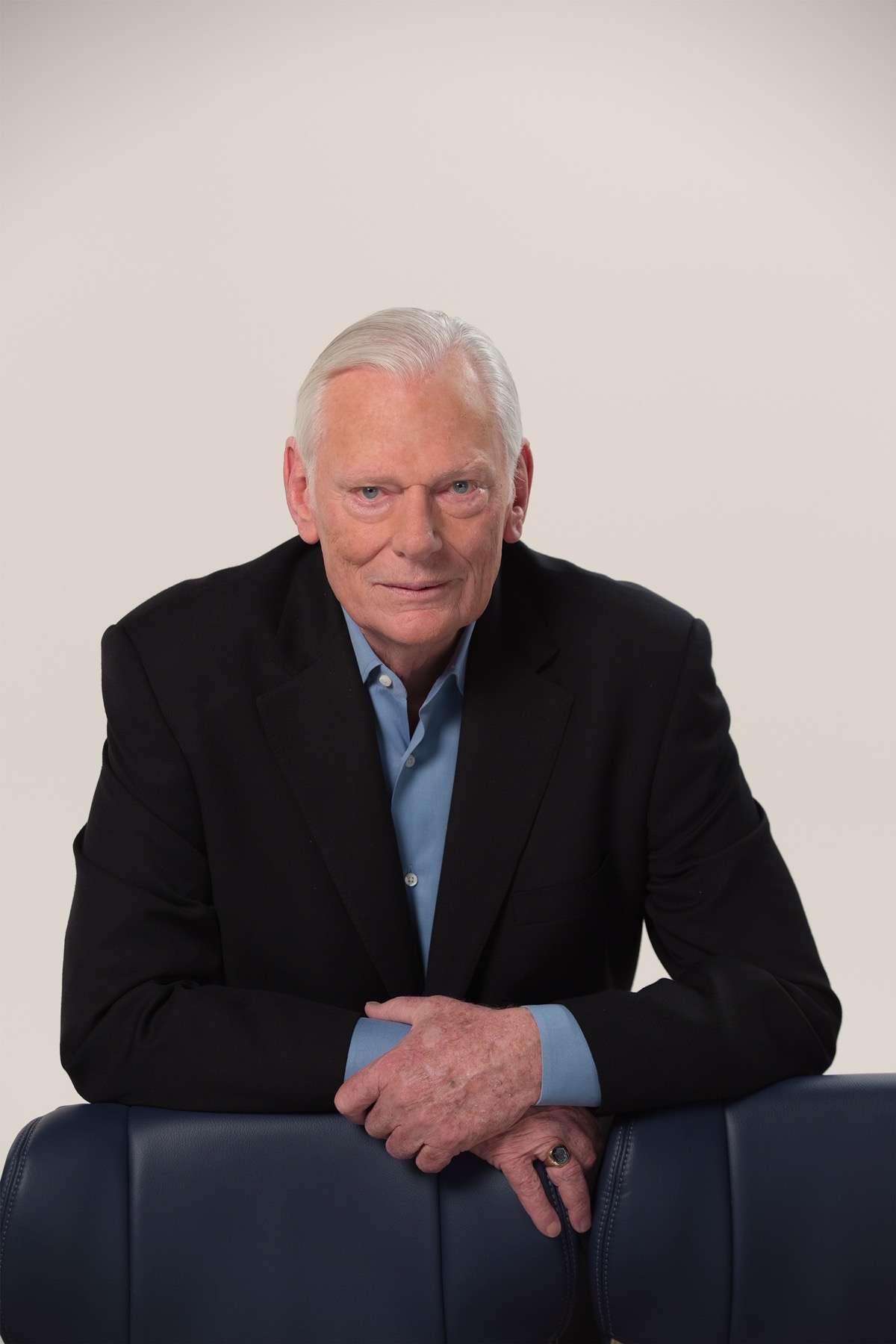
Co-founder, longtime CEO and chairman, Southwest Airlines · b. 1931–2019 · Camden, New Jersey
Two calls made by hand, not formulas. how we score →
Summary
His father managed a plant for the Campbell Soup Company and died when Herb was twelve, and an older brother was killed in the war soon after, but the family stayed stable enough that he reached Wesleyan and NYU Law on merit scholarships.
He kept his San Antonio law partnership through most of a four-year legal war three incumbent airlines waged to keep Southwest from ever taking off.
How it happened
Born March 12, 1931, in Camden, New Jersey, and raised mainly in Audubon. His father, Harry Kelleher, was a general manager at the Campbell Soup Company, where Herb himself worked summer jobs as a teenager. It was a comfortable, professional-class household, not a wealthy one.
His father died in 1943, when Herb was twelve, and an older brother was killed in combat in World War II not long after. Kelleher later told People magazine that he and his mother, Ruth, "became very close" in the years that followed, staying up late talking. No source reviewed documents financial hardship following his father's death; he finished high school as student body president and went on to a private university without interruption.
He attended Wesleyan University as an Olin Scholar, majoring in English with a philosophy minor, graduating cum laude in 1953. He then went to New York University School of Law as a Root-Tilden Scholar, a public-service merit scholarship, graduating in 1956. Both scholarships covered a substantial share of the cost of an elite undergraduate and law degree without his family paying full freight. He married Joan Negley, whom he'd met at Wesleyan, in September 1955.
After clerking for a New Jersey Supreme Court justice and a few years practicing in Newark, he and Joan moved to her home state of Texas in 1961. He made partner at a San Antonio firm, Matthews, Nowlin, Macfarlane & Barrett, and later at Oppenheimer, Rosenberg, Kelleher & Wheatley. One of his clients was a San Antonio businessman named Rollin King.
Around 1966-67, Kelleher and King worked out the idea for a low-fare airline connecting Dallas, Houston, and San Antonio, structured to fly only within Texas so it would sit outside federal Civil Aeronautics Board regulation. They incorporated as Air Southwest Co. on March 9, 1967. Three incumbent carriers, Braniff, Texas International, and Continental, sued to keep it grounded, and the case dragged through state and federal courts for roughly four years before Southwest won at the U.S. Supreme Court in December 1970 and the Texas Supreme Court in June 1971. Kelleher personally argued much of the litigation and did not bill it at his normal rate; he also kept his law partnership the entire time rather than depending on the airline for income. Southwest finally flew on June 18, 1971, with three Boeing 737s.
He served as general counsel through the 1970s, became chairman in 1978, and took over as full-time president and CEO in September 1981 after Howard Putnam's resignation, only then leaving his law practice for good. Southwest's model, low fares, one aircraft type, no assigned seats, point-to-point routes instead of hubs, secondary airports, was matched with a culture Kelleher built around treating employees as the customer that mattered most. He answered Braniff's 1973 promotional $13 fare with a choice of the same $13 or $26 with a free bottle of liquor, and in 1992 arm-wrestled a rival executive over a slogan dispute rather than litigate it, a stunt that raised money for charity.
He stepped down as CEO in 2001, stayed on as chairman until 2008 and then chairman emeritus, and chaired the Federal Reserve Bank of Dallas's board from 2010 to 2013. Fortune called him one of the best CEOs in America, and he collected honors that included the Tony Jannus Award, the Bower Award for Business Leadership, and induction into the National Aviation Hall of Fame. He died January 3, 2019, in Dallas at 87, having been diagnosed with prostate cancer two decades earlier. Southwest stock built over five decades left him worth roughly $2.5 billion.
The coded evidence
Thirteen groups, every claim sourcedDescendant. No immigration event documented for the subject in the sources reviewed.
↗ tshaonline.orgEnglish
↗ en.wikipedia.orgnot established
No documented period of housing risk; not a return-home-if-it-fails scenario at any point in the record reviewed.
↗ en.wikipedia.orgHe kept his equity partnership at a San Antonio law firm (Matthews, Nowlin, Macfarlane & Barrett, then Oppenheimer, Rosenberg, Kelleher & Wheatley) throughout Southwest's four-year founding litigation and its early years of operation. He did not leave the practice to work at Southwest full time until 1981, fourteen years after incorporation and well after the airline was established and profitable.
↗ tshaonline.orgnot established
No personal debt (student, medical, legal) at any career stage is established in the sources reviewed; both his major scholarships reduced the need for education debt.
↗ en.wikipedia.orgnot established
Southwest itself was cash-constrained and under legal siege for four years before it could fly, but that is a corporate risk, not a personal one: Kelleher's own housing, income, and standing were never shown to be at risk given his ongoing law partnership.
↗ en.wikipedia.orgnot established
No documented period of personal austerity to test against a fallback.
↗ en.wikipedia.orgFather Harry Kelleher was a general manager at the Campbell Soup Company. Mother Ruth (Moore) Kelleher's occupation before or after his death is not established in the sources reviewed.
↗ encyclopedia.comNeither parent was self-employed.
↗ encyclopedia.comnot established
Described as the fourth child of Harry and Ruth Kelleher, with at least one older brother (killed in World War II); a full sibling count is not established.
↗ encyclopedia.comnot established
No documented multigenerational family standing beyond his father's plant-management role; a comfortable, professional-class family rather than one with named social standing.
↗ tshaonline.orgWesleyan and NYU Law were funded substantially through merit scholarships he won himself (an Olin Scholarship at Wesleyan, a Root-Tilden Scholarship at NYU Law), not primarily through family income or sacrifice directed at tuition.
↗ history.southwest.comHis father died in 1943, when Herb was twelve; an older brother was killed in World War II combat not long after. Kelleher recalled to People magazine that he and his mother "became very close" afterward. No financial collapse is documented; he continued through high school and on to a private university without an evident interruption.
↗ encyclopedia.comDiagnosed with prostate cancer in 1999, at age 68, well after Southwest was established; underwent radiation therapy. Not documented as having constrained his career or the company's build.
↗ en.wikipedia.orgnot established
No military service by Kelleher himself is documented; his older brother served and was killed in World War II.
↗ en.wikipedia.orgCamden, New Jersey, at birth; raised mainly in Audubon, New Jersey.
↗ en.wikipedia.orgPublic schooling in Audubon/Haddon Heights, New Jersey, through high school; Wesleyan University and NYU School of Law for higher education.
↗ en.wikipedia.orgCamden/Audubon, New Jersey (childhood) to Middletown, Connecticut (Wesleyan, early 1950s) to New York City (NYU Law, mid-1950s) to Newark, New Jersey (early legal practice) to San Antonio, Texas (1961, following his wife Joan's home state).
↗ encyclopedia.comRollin King, a San Antonio businessman, was a client of Kelleher's law practice; their attorney-client relationship is how the Southwest concept originated. Banker John Parker is also credited as part of the founding conversations that produced the plan.
↗ en.wikipedia.orgHis own law partnership. Southwest began as a case he took on as counsel for a client's idea rather than a venture he left a salaried job to chase; he stayed a practicing, income-earning partner for the first fourteen years of the airline's existence.
↗ tshaonline.orgNetwork, Skill
His legal training and standing as a partner gave him the skill and courtroom access to fight a four-year multi-court battle himself rather than needing to hire it out.
↗ en.wikipedia.orgRollin King, a businessman and his law client; banker John Parker is also credited with helping originate the plan.
↗ en.wikipedia.org11
NYU Law graduation (1956) to Southwest's incorporation (1967), spent practicing law in New Jersey and then San Antonio.
↗ encyclopedia.comSouthwest was deliberately structured to fly only within Texas so it would fall outside federal Civil Aeronautics Board regulation, which governed the incumbent interstate carriers. When Braniff, Texas International, and Continental sued to block it anyway, Kelleher personally litigated the case through the Texas courts and the U.S. Supreme Court over roughly four years rather than abandon the certificate fight.
↗ en.wikipedia.orgJ.D., New York University School of Law, 1956; B.A. in English, Wesleyan University, 1953 (cum laude).
↗ encyclopedia.comnot established
Both degrees were substantially scholarship-funded (Olin Scholar, Root-Tilden Scholar); no debt figure is documented.
↗ history.southwest.comDirect. Public high school to an elite liberal-arts undergraduate degree to law school, no transfer or non-traditional route.
↗ encyclopedia.comWesleyan (Olin Scholar, class and student-body president) and NYU Law (Root-Tilden Scholar, a public-service leadership program). No single named introduction to a Southwest investor is documented as tracing to either school.
↗ en.wikipedia.orgnot established
No specific figure for Kelleher's own personal cash investment into Air Southwest Co. is established in the sources reviewed.
↗ en.wikipedia.orgnot established
No inheritance funding either his education or the airline is documented.
↗ encyclopedia.comIt needed capital up front, before it earned anything.
The company could not generate any revenue during its roughly four pre-launch years of litigation and needed outside capital assembled before it ever flew a route.
↗ en.wikipedia.orgSouthwest's initial capitalization was assembled with the help of banker John Parker, one of the founding group; a specific total figure or list of outside investors is not established in the sources reviewed.
↗ en.wikipedia.orgOutside capital was required to buy aircraft and fund four years of litigation before the company could earn a dollar; this was a founder-capital path from the start, not a bootstrap funded from Kelleher's own pocket or from early revenue.
↗ en.wikipedia.orgNo dual-class share structure is documented. Kelleher built a substantial personal shareholding in Southwest over five decades, with control running through his executive and board roles rather than a preserved supermajority stake.
↗ en.wikipedia.org0
Southwest was his first and only major venture beyond his law practice; no prior failed businesses are documented.
↗ en.wikipedia.orgSouthwest's outside investors and the company itself absorbed the cost of four pre-revenue years of litigation. Kelleher's own contribution was largely in kind: he litigated much of the case personally and, by most accounts, did not bill it at his normal partner rate, while remaining a paid law partner throughout.
↗ tshaonline.orgSouthwest was structured to fly only within Texas, which placed it outside the Civil Aeronautics Board's federal economic regulation that governed interstate carriers at the time; that gap in the regulatory regime, closed nationally by the 1978 Airline Deregulation Act, is part of what incumbents were suing to shut down.
↗ en.wikipedia.orgSan Antonio, Texas, where Kelleher practiced law and met his co-founder, Rollin King, as a client.
↗ en.wikipedia.orgBuilt. Southwest's low-cost, point-to-point, intrastate model had no direct precedent among the incumbent Texas or national carriers at the time.
↗ en.wikipedia.org40
Age when Southwest's first flight actually operated, June 18, 1971, after the four-year legal fight resolved.
↗ en.wikipedia.org52
From Southwest's 1967 incorporation to his death in January 2019; he remained chairman emeritus and kept an office at headquarters until the end.
↗ en.wikipedia.orgPassenger airlines; low-cost-carrier model
↗ en.wikipedia.org2500000000
Aggregator estimate at the time of his January 2019 death. No dedicated Forbes real-time-billionaires profile page for Kelleher could be located (forbes.com/profile/herb-kelleher and adjacent slugs return 404, and no archived snapshot exists), so this figure could not be cross-checked against Forbes directly.
↗ celebritynetworth.comAggregator
↗ celebritynetworth.comnot established
Not established in the sources reviewed; Southwest's SEC proxy statements would carry this but were not queried in this pass.
↗ en.wikipedia.orgAlmost entirely ownership wealth in Southwest stock accumulated across a five-decade association with the company, alongside two decades of executive compensation as CEO (1981-2001) and chairman.
↗ en.wikipedia.orgCo-created the low-cost-carrier model later copied industry-wide. Honors include the Texas Business Hall of Fame (1988), the Tony Jannus Award (1993), the American Academy of Achievement's Golden Plate (1996), Chief Executive magazine's CEO of the Year (1999), induction into the International Air & Space Hall of Fame (2002), the Bower Award for Business Leadership (2003), the L. Welch Pogue Award (2005), induction into the National Aviation Hall of Fame (2008), and a Dallas street renamed Herb Kelleher Way (2014).
↗ en.wikipedia.org4
Years from Air Southwest's March 1967 incorporation to its first flight in June 1971, consumed almost entirely by litigation.
↗ en.wikipedia.orgUncapped
↗ en.wikipedia.orgnot established
He lobbied against the 1979 Wright Amendment restricting flights from Dallas Love Field for decades, including congressional testimony in 2005, until its 2014 repeal; this is advocacy for Southwest's commercial interest, not a regulatory action taken against him.
↗ en.wikipedia.orgnot established
No criminal proceedings against Kelleher are documented in the sources reviewed.
↗ en.wikipedia.orgnot established
The founding-era litigation (Braniff, Texas International, and Continental suing to block Southwest's certificate) was ordinary business and regulatory competition, not a judgment against Kelleher or the company; Southwest won. No other civil judgment against him is documented.
↗ en.wikipedia.orgBuilt Southwest's culture explicitly around employees, with the company widely and consistently cited in surveys of admired employers and Kelleher personally credited for that reputation; no adverse labor findings are documented in the sources reviewed.
↗ history.southwest.comVisionary, Folksy, Hard driving, beloved by employees, Irreverent
↗ en.wikipedia.orgPublic
↗ en.wikipedia.orgAfter
His public reputation as an industry visionary consolidated through the 1980s-90s as Southwest's profitability and culture became widely studied, well after the risky founding-era litigation.
↗ en.wikipedia.orgAsset
Fortune called him among the best CEOs in America; his reputation is uniformly positive across every source reviewed, with no material negative counter-narrative found.
↗ en.wikipedia.orgThe reputation was deliberately built, through books, press, and PR.
Stunts like the 1992 "Malice in Dallas" arm-wrestling match over a slogan dispute were deliberate, publicized alternatives to litigation and company culture-building.
↗ tshaonline.orgStructural context
The cost-of-failure score comes from this person's own money and circumstances. But who they were in America carried its own weight, the same way their household or income did, and it shaped how hard the path was just as much. That part isn't in the cost-of-failure number. It's here instead.
Men founded the companies that took nearly all the venture funding and almost every top outcome, a tailwind that never shows up in one person's own circumstances.
↗ techcrunch.comWhite founders are heavily overrepresented among funded companies and top-tier wealth relative to their share of the population, an edge that has nothing to do with a person's own money.
↗ techcrunch.comAmong the people recorded here — men: 115 · White subjects: 74. Representation here is who reached these outcomes, not equal odds of reaching them.
Controlled comparisons
Each holds one thing constant and varies another, so the difference is the point. A list of similar names wouldn't tell you anything.