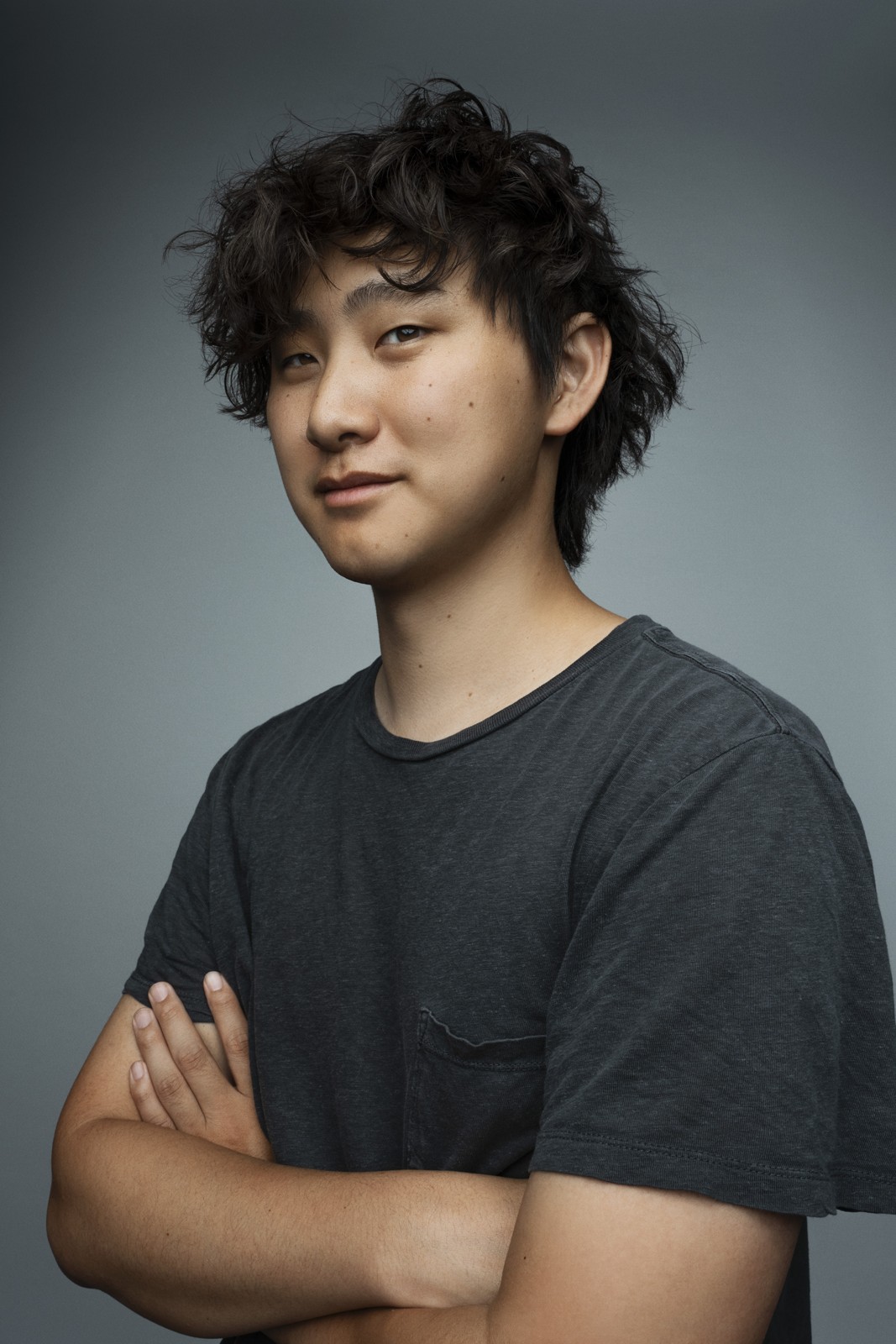
Herbert Boyer
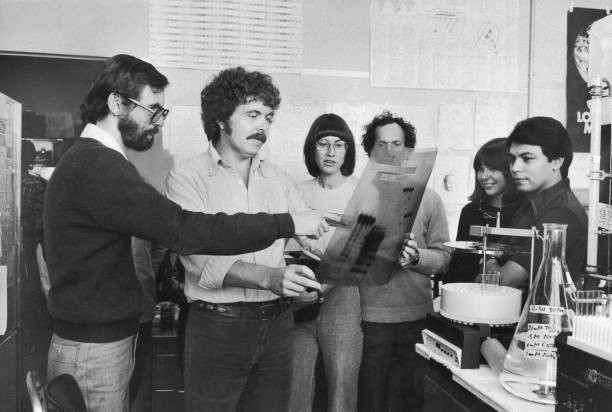
born Herbert Wayne Boyer
Biochemist who co-invented recombinant-DNA (gene-splicing) technology with Stanley N. Cohen, and co-founded Genentech, the company that launched the biotechnology industry · b. 1936 · Derry, Pennsylvania
Two calls made by hand, not formulas. how we score →
Summary
A Pennsylvania Railroad brakeman's son from a town of three thousand, Boyer rode a public-university science ladder — a commuter college, then a Pitt PhD — into a UCSF faculty post, co-invented recombinant DNA with Stanford's Stanley Cohen, and turned it into Genentech on $500 he borrowed on a credit card plus $100,000 from Kleiner Perkins.
How it happened
Boyer grew up in Derry, a Pennsylvania borough of about three thousand people whose two employers were the Pennsylvania Railroad and a Westinghouse plant. His father and grandfather both worked the railroad; his father had left school at thirteen, after his own father's death, to help support five younger siblings, and retired as a brakeman and conductor earning $12,500 a year — the same salary Boyer started at as a UCSF assistant professor decades later. "I just knew I had to get out of Derry," he later said, "and that was the only way I knew how to do it."
Neither parent pushed him toward college, and neither stood in the way. He commuted to Saint Vincent College, a small Catholic school near home, where a Benedictine priest, Fr. Joel Lieb, steered him toward genetics. A PhD in bacterial genetics at the University of Pittsburgh followed — after medical school had rejected him — then a postdoctoral fellowship at Yale, then a faculty position at UCSF in 1966.
At UCSF, Boyer isolated a restriction enzyme — later named EcoRI — from a bacterial sample tied to a patient's urinary-tract infection. At a 1971 conference in Hawaii he met Stanford's Stanley Cohen, who had built a plasmid that could carry foreign DNA into bacteria. Over the next two years the two labs combined Boyer's enzyme with Cohen's plasmid and spliced DNA from one organism into another — the founding technique of genetic engineering.
In 1976 the venture capitalist Robert Swanson called Boyer cold and asked for ten minutes. The meeting ran three hours and ended with Genentech. Boyer and Swanson each put in $500 — Boyer borrowed his on an American Express card — and Kleiner Perkins staged in an initial $100,000, sized deliberately to last nine months while the science was still an open question. Turning the recombinant-DNA technique into a company, rather than leaving it inside two university labs, is the single move that converted a scientific credential into a fortune.
Genentech's team produced the first human protein made in bacteria — somatostatin — in 1977, and synthetic human insulin by 1978, the company's first real product and the proof that the science could be manufactured at scale.
Genentech went public on October 14, 1980. The stock opened at $35, spiked to $88, and closed at $71 — one of the fastest first-day run-ups Wall Street had seen — turning paper into real wealth for the founders and researchers who held shares. The same day, Paul Berg's Nobel Prize was announced; Boyer, whose more directly commercial work never won one, later said he found the Academic Senate's internal review of UCSF's recombinant-DNA program and the broader public fight over the technology's safety harder to sit through than being passed over.
Boyer retired as Genentech vice president and from UCSF in 1991, a year after Roche took majority control of the company; Roche bought out the remaining shares in 2009. The Cohen-Boyer patent, assigned to Stanford and UCSF rather than to Boyer personally, generated roughly a quarter-billion dollars in licensing revenue for the two universities over its life, with named inventors entitled to a statutory share under standard university policy. Boyer and his wife Grace gave $10 million to Yale's medical school and $1 million to Saint Vincent College.
The coded evidence
Thirteen groups, every claim sourcedcoded.ethnicities is set to the broad "European American" facet bucket at low confidence — no source located specifies a finer national or ancestral origin, and none should be invented.
↗ en.wikipedia.orgNot an immigrant-origin family in any documented sense; both his father and grandfather worked for the Pennsylvania Railroad in the same western Pennsylvania region.
↗ latrobebulletinnews.comnot established
Not established directly, though he attended a Catholic college and credited a Benedictine priest, Fr. Joel Lieb, with steering him toward genetics — suggestive but not confirmation of the family's own religious affiliation.
↗ stvincent.eduEnglish
↗ pmc.ncbi.nlm.nih.govHis parents' household in Derry remained a documented fallback through his education, since he commuted to college from home; by the time of the Genentech bet in 1976 he held a tenured-track UCSF faculty position, which was itself the real safety net rather than a family home.
↗ stvincent.eduHe kept his UCSF salary and faculty position throughout — Genentech was built as a side venture on top of, not instead of, a stable academic income; he served concurrently as Genentech vice president and UCSF professor from 1976 to 1991.
↗ en.wikipedia.orgNone documented — the $500 initial investment was borrowed on a credit card, not funded from savings depletion, and his UCSF income continued throughout.
↗ dnalc.cshl.eduThe hardship was chosen. There was a home to go back to if it failed.
The $500-on-a-credit-card founding stake was a calculated, small personal risk taken from an already-secure tenured academic position, not survival hardship. Distinct from the imposed, non-voluntary economics of his childhood in Derry, which drives the hardness score.
↗ dnalc.cshl.eduFather was a Pennsylvania Railroad brakeman and later conductor, with an eighth-grade education, who left school at thirteen after his own father's death to help support five younger siblings; mother completed high school and married at eighteen.
↗ pmc.ncbi.nlm.nih.govNeither parent was self-employed.
↗ pmc.ncbi.nlm.nih.govFather, eighth grade; mother, high school graduate.
↗ pmc.ncbi.nlm.nih.govnot established
Sources document that Boyer's father was the eldest of six and had to support five younger siblings after his own father's death; Herbert Boyer's own sibling count is not established in the sourced record.
↗ pmc.ncbi.nlm.nih.govNo specific parental income push for schooling is documented; he commuted to a nearby college rather than boarding, which kept costs down, and worked jobs including ditch-digging and newspaper delivery as a teenager.
↗ pmc.ncbi.nlm.nih.govNeither parent actively encouraged college, though neither opposed it; he has described his own motivation — wanting to leave Derry — as the driving force rather than family push.
↗ pmc.ncbi.nlm.nih.govnot established
No moves before adulthood documented beyond the single town of Derry; not established.
↗ en.wikipedia.orgnot established
No modern ZIP-code/mobility-percentile join performed; childhood was in Derry Borough, Westmoreland County, Pennsylvania, a town of roughly 3,000 people.
↗ latrobebulletinnews.comPublic school in Derry, a graduating class of about 32; he played football, basketball, and baseball and was senior class president.
↗ pmc.ncbi.nlm.nih.govDerry's principal industries were the Pennsylvania Railroad and a Westinghouse manufacturing plant — proximity to stable industrial employment, not to the life sciences field he would eventually enter.
↗ latrobebulletinnews.comDerry, PA (childhood, commuted to Saint Vincent College nearby) → Pittsburgh, PA (PhD, University of Pittsburgh) → New Haven, CT (Yale postdoctoral fellowship) → San Francisco, CA (UCSF faculty, 1966 onward).
↗ en.wikipedia.orgRobert A. Swanson, a young venture capitalist, cold-called Boyer and asked for ten minutes; the meeting ran three hours and produced Genentech.
↗ historyofinformation.comHis UCSF faculty appointment supplied the laboratory, institutional credibility, and research freedom in which the EcoRI and recombinant-DNA work was done.
↗ en.wikipedia.orgCredibility, Skill
↗ en.wikipedia.orgRobert A. Swanson co-founded Genentech in 1976, supplying business judgment, the initial approach to Kleiner Perkins, and operating leadership as CEO; Stanley N. Cohen of Stanford was the separate scientific collaborator on the underlying recombinant-DNA technique but was not a Genentech co-founder.
↗ en.wikipedia.orgPhD in biochemistry/bacterial genetics, University of Pittsburgh (1963); BS in biology and chemistry, Saint Vincent College (1958).
↗ en.wikipedia.orgnot established
Not established — no source located on scholarship, assistantship, or family funding for his BS, PhD, or postdoctoral years. coded credentialFunding is coded "self-funded" at medium confidence, inferred from his commuting and part-time-work pattern rather than a documented scholarship or family-funding claim.
↗ en.wikipedia.orgWorked jobs including ditch-digging and newspaper delivery as a teenager; commuted to Saint Vincent College from his parents' home rather than boarding, which limited college costs.
↗ pmc.ncbi.nlm.nih.govLocal Catholic commuter college to a state-university PhD program to an Ivy League postdoctoral fellowship to a University of California faculty post — a public/accessible science-credential ladder rather than an elite pipeline from the outset. He was also rejected by medical school before turning to graduate work in bacterial genetics.
↗ pmc.ncbi.nlm.nih.govA Benedictine priest at Saint Vincent College, Fr. Joel Lieb, is credited with steering Boyer's interest toward genetics research.
↗ stvincent.eduGenentech was capitalized in 1976 with $500 each from Boyer and Swanson; Boyer borrowed his $500 on an American Express card.
↗ dnalc.cshl.eduKleiner Perkins staged in an initial $100,000 investment, deliberately sized — in Tom Perkins's words — to "last nine months," given the technical risk was still considered "huge."
↗ startup-book.comKleiner Perkins partner Tom Perkins functioned as an engaged, operator-style early investor — staging capital in tranches tied to scientific milestones rather than writing a single passive check.
↗ startup-book.comGenentech raised institutional venture capital from its founding and went public on Nasdaq on October 14, 1980, opening at $35/share, spiking to $88, and closing at $71. Roche acquired a majority (roughly 60%) stake in 1990 and bought out the remaining shares in 2009 for about $95/share, roughly $46.8 billion in total.
↗ statnews.comBoyer and his wife Grace directed a portion of their resources into philanthropy: $10 million to Yale School of Medicine (1990) and $1 million to Saint Vincent College for scholarships (1989).
↗ stvincent.eduThe Cohen-Boyer recombinant-DNA patent was assigned to Stanford (Cohen's institution) and UCSF (Boyer's institution) rather than held personally by the two scientists; licensing revenue over the patent's life totaled roughly a quarter-billion dollars across the two universities, with named inventors entitled to a statutory share under standard university royalty-sharing policy.
The exact dollar amount Boyer personally received from his inventor's share of UCSF's portion of the royalty stream is not established in the sourced record.
↗ statnews.comBoyer held an economic equity stake and the vice-president title, not a control-preserving share structure; control passed to Roche in stages (majority in 1990, full ownership in 2009), and Boyer retired from both Genentech and UCSF in 1991.
↗ en.wikipedia.orgSelf (the $500 credit-card stake) for the founding risk; Kleiner Perkins absorbed the larger capital risk of the venture itself.
↗ dnalc.cshl.eduPre-Bayh-Dole-Act (1980) era university technology-transfer norms; the Asilomar biosafety guidelines for recombinant-DNA research had only just been adopted (1975); no venture-backed biotechnology industry yet existed — Genentech is widely credited as its first company.
↗ genome.govSan Francisco Bay Area, California (UCSF; Genentech later headquartered in South San Francisco)
↗ en.wikipedia.org15
Genentech founded 1976 to his 1991 retirement as an active operating executive; patent royalties and equity value continued to accrue afterward.
↗ en.wikipedia.orgBiotechnology (recombinant DNA / genetic engineering)
↗ en.wikipedia.orgnot established
No specific, sourced personal net-worth figure was located for Boyer. coded.magnitude (band 4, $100M–$1B) is the author's best-supported estimate, based on: a founder/VP equity stake in Genentech held through its 1980 IPO (opening $35, closing $71) and fifteen years of operation before his 1991 retirement; a named-inventor share of the Cohen-Boyer patent's roughly $255 million in combined Stanford/UCSF licensing revenue; and documented eight-figure philanthropy ($10M to Yale, $1M to Saint Vincent). This is substantially below Genentech's eventual $46.8B acquisition value, which reflects the company's worth, not Boyer's personal stake — the magnitude here is coded from his personal wealth only, per the site's methodology, and should be read as an order-of-magnitude estimate, not a precise figure.
↗ statnews.comJournalistic estimate
No disclosed-filing or aggregator net-worth figure exists for Boyer; the magnitude band is inferred from the equity, royalty, and philanthropy record described above rather than a single published estimate.
↗ statnews.comWealth came from founder/VP equity in Genentech plus a share of Cohen-Boyer patent royalties, not from his UCSF professor's salary, which he retained throughout as his income floor.
↗ en.wikipedia.orgWidely credited as a founder of the biotechnology industry; National Medal of Technology (1989), National Medal of Science (1990), Albert Lasker Award (1980), Lemelson-MIT Prize (1996), and the Shaw Prize (2004, shared with Stanley Cohen).
↗ stvincent.eduUncapped
↗ en.wikipedia.orgNo regulatory or legal action was taken against Boyer personally. UCSF's Academic Senate did conduct an internal review of the university's recombinant-DNA research program during the 1970s biosafety debate that followed the Asilomar guidelines — a review of the technology's safety practices, not a finding against Boyer's own conduct. Boyer has said he found that review, and the broader public controversy over recombinant-DNA safety, harder to sit through than never winning a Nobel Prize.
↗ pmc.ncbi.nlm.nih.govBefore
The Academic Senate review and Asilomar-era controversy predate Genentech's 1980 IPO.
↗ pmc.ncbi.nlm.nih.govIncidental
The biosafety review concerned the technology broadly and did not produce the commercial advantage — it was a regulatory-adjacent headwind Genentech's founding survived, not a mechanism that created the outcome.
↗ pmc.ncbi.nlm.nih.govLegal gray
No violation was found or alleged; coded here only to reflect that recombinant-DNA research operated in a genuinely unregulated, newly-self-governing space before formal biosafety rules existed.
↗ pmc.ncbi.nlm.nih.govHumble, Grateful, Methodical, Collaborative
Drawn from his own on-record reflections in interview ("I am so lucky... and I'm so grateful") and consistent framing across institutional profiles of his collaborative work with Stanley Cohen.
↗ pmc.ncbi.nlm.nih.govInsiders
↗ pmc.ncbi.nlm.nih.govAfter
Broad public recognition followed the 1976 Cohen-Boyer breakthrough becoming known and, more substantially, Genentech's 1980 IPO and subsequent drug approvals.
↗ statnews.comAsset
↗ stvincent.eduStructural context
The cost-of-failure score comes from this person's own money and circumstances. But who they were in America carried its own weight, the same way their household or income did, and it shaped how hard the path was just as much. That part isn't in the cost-of-failure number. It's here instead.
Men founded the companies that took nearly all the venture funding and almost every top outcome, a tailwind that never shows up in one person's own circumstances.
↗ techcrunch.comAmong the people recorded here — men: 169. Representation here is who reached these outcomes, not equal odds of reaching them.
Controlled comparisons
Each holds one thing constant and varies another, so the difference is the point. A list of similar names wouldn't tell you anything.