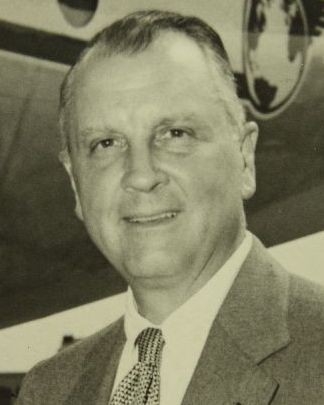
Jack Dorsey
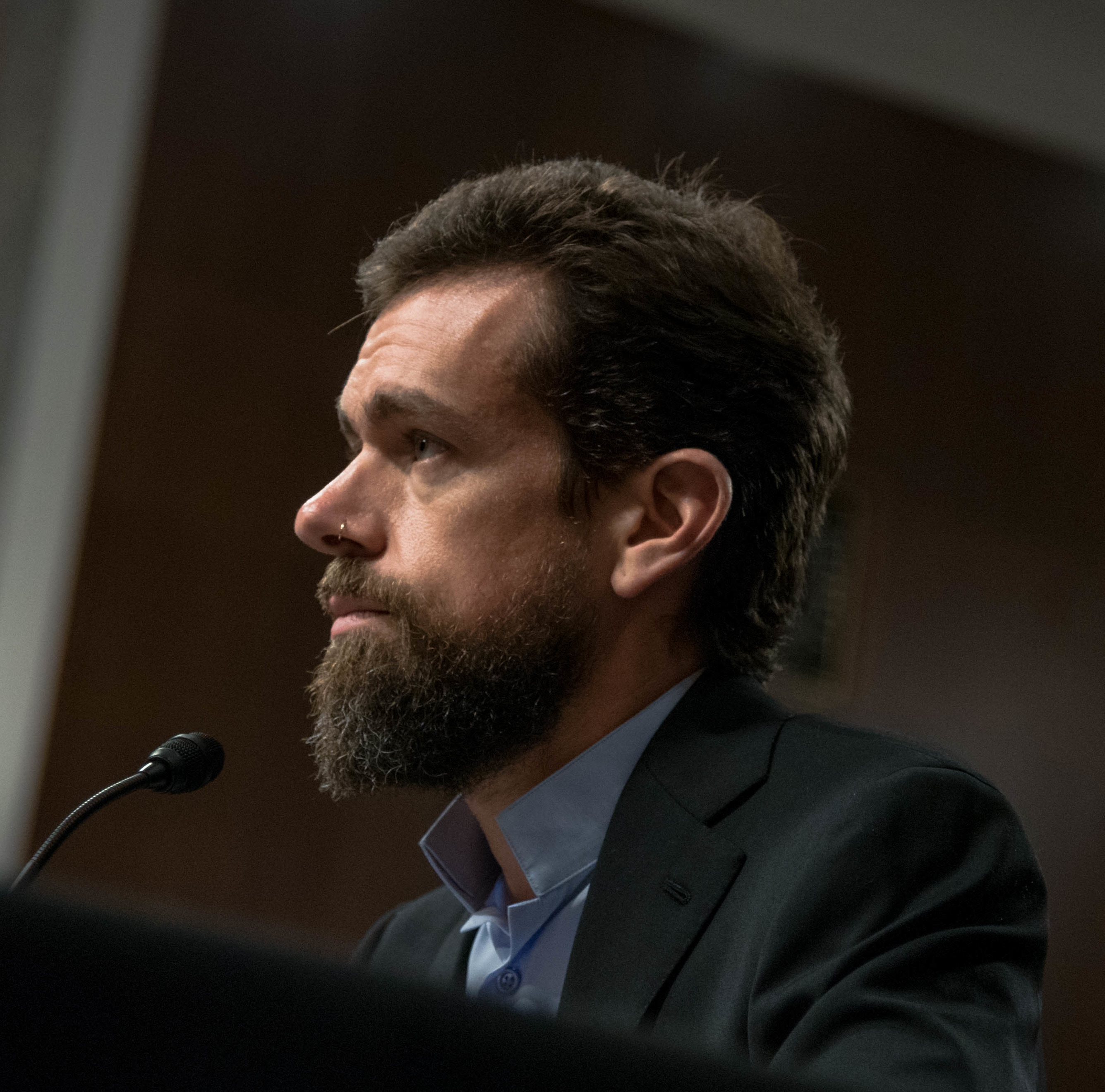
born Jack Patrick Dorsey
Co-founder of Twitter; co-founder and "Block Head" (CEO) of Block, Inc. (formerly Square) · b. 1976 · St. Louis, Missouri
Two calls made by hand, not formulas. how we score →
Summary
Raised middle-class in St.
Louis, the son of a medical-equipment engineer, he grew up with a stutter and never finished college. He helped invent Twitter inside a failing podcasting startup in 2006, was pushed out as its CEO in 2008, then co-founded Square in 2009 with Jim McKelvey. Square, renamed Block, became the base of his fortune; he also ran Twitter again from 2015 to 2021.
How it happened
Born November 19, 1976, in St. Louis, Missouri, the oldest of three sons of Tim Dorsey, an engineer at a company that built mass spectrometers and other medical equipment, and Marcia Dorsey, a homemaker. Raised Catholic, he was a quiet, withdrawn kid who stuttered badly enough that he later described it as sounding like gibberish. He worked at overcoming it through oratory and speech competitions rather than medical treatment, and by his own later account eventually spoke without it. As a boy he covered his bedroom walls with maps and grew fascinated with how cities moved people and information around; by fourteen he was listening to police and dispatch radio for the same reason, and at fifteen he was already writing dispatch software for taxi companies.
He enrolled at the University of Missouri at Rolla (now Missouri University of Science and Technology), then transferred to New York University, where he first sketched the idea of sharing short, real-time status updates with friends. He left NYU without finishing, by most accounts about a semester short of a degree, and moved to Oakland around 2000 to start his own dispatch-routing company for taxis, couriers, and emergency services. That venture didn't take off, and he supported himself afterward with freelance programming work before landing a job at Odeo, a struggling podcasting startup run by Evan Williams, who had recently sold Blogger to Google.
Odeo's podcasting business collapsed almost overnight once Apple built podcasts into iTunes in 2005. Williams, who had personally bought out Odeo's investors, let the team spend time on side projects, and in 2006 Dorsey, Williams, Biz Stone, and Noah Glass built a short-message status service out of one of them. It launched as Twitter and was spun out as its own company, with Dorsey as founding CEO. He ran it for two years before the board replaced him with Williams in October 2008; the public reason given at the time was that he'd been leaving the office early for yoga and fashion design, though he has since said the transition was painful and coincided with real friction over how he was managing the company's growth. He stayed on as chairman.
In late 2008, Dorsey's friend Jim McKelvey, a glassblower and software engineer, lost a roughly $3,000 sale because he had no way to take a credit card. The two of them built a small square-shaped card reader that plugged into a phone's headphone jack, and founded Square in February 2009 to sell it. It shipped in 2010, grew fast, took Square public in November 2015, and was renamed Block in December 2021 as it expanded into Cash App, Afterpay, Tidal, and Bitcoin hardware and mining. Unlike Twitter, where Dorsey's stake was diluted across multiple funding rounds and an eventual acquisition, Square and then Block is the company where he kept both his job and, through a dual-class share structure, outsized control — this is the venture that turned into the lasting base of his fortune.
Dorsey returned as Twitter's interim CEO in July 2015 and was made permanent that October, running both Twitter and Square at once for the next six years. He testified before the Senate Intelligence Committee on Russian election interference in 2018, banned political advertising globally in 2019, and in January 2021 backed Twitter's decision to permanently suspend Donald Trump's account after the Capitol riot, while publicly calling the precedent "dangerous." Fox Business and 24/7 Wall St. both named him among the country's worst CEOs, citing the split attention between two companies and a falling stock price, and in February 2020 the activist hedge fund Elliott Management pushed to replace him before settling days later on new board seats instead. He resigned as Twitter's CEO in November 2021, later writing that his biggest mistake there had been building tools to manage public conversation centrally rather than tools for people to manage it themselves.
In April 2020 he moved about $1 billion of his Square equity, roughly 28% of his wealth at the time, into a new LLC called Start Small to fund COVID-19 relief, girls' education, and universal basic income research. He became one of Bitcoin's most visible corporate advocates, building Bitcoin products and a mining pool through Block and declaring he'd work on Bitcoin full-time if he weren't running two companies already. He left Twitter's board in May 2022, before Elon Musk's acquisition closed, retaining a small stake; he later joined and then left the board of Bluesky, the decentralized protocol Twitter had spun off, citing disagreement with its direction.
Forbes puts his net worth at about $7.5 billion as of September 2026, almost entirely in Block stock. He takes a symbolic $2.75 annual salary from Block by his own request and no other cash or equity compensation, and per Block's 2026 proxy statement he holds about 8% of the company's combined stock but, through Class B super-voting shares, controls roughly 42% of the vote — more than five times his economic stake.
The coded evidence
Thirteen groups, every claim sourcedEuropean American; his mother's side is described as partly of Italian descent.
Paternal-side ancestry is not established in sources reviewed.
↗ en.wikipedia.orgMulti-generational American; no documented recent immigration in the family line.
↗ en.wikipedia.org0
No documented gap out of the workforce; he moved between his own dispatch venture, freelance programming, Odeo/Twitter, and Square without an extended interruption.
↗ en.wikipedia.orgA stable, middle-class two-parent household in St. Louis on an engineer's income. No housing instability is documented at any point.
↗ ebsco.comSupported himself with freelance programming work after his own dispatch-software venture failed, before landing a paid role at Odeo around 2005-2006, the company Twitter grew out of. By the time he co-founded Square in 2009 he had salary and stock history from Twitter/Twitter-related work.
↗ thefamouspeople.comnot established
No student debt or other debt figure is documented for his Missouri S&T or NYU years.
↗ en.wikipedia.orgnot established
No documented homelessness, food insecurity, or comparable instability; he worked occasional jobs, including modeling, while between ventures.
↗ en.wikipedia.orgFather, Tim Dorsey, was an engineer for a company that developed mass spectrometers and other medical equipment. Mother, Marcia Dorsey, was a homemaker.
↗ thefamouspeople.comNeither parent was self-employed.
↗ thefamouspeople.com2
Described as the oldest of three sons in a secondary profile; not confirmed in a primary source.
↗ ebsco.comnot established
No documented account of a specific family sacrifice aimed at tuition.
↗ en.wikipedia.orgDorsey has said on the record that he grew up with a stutter severe enough that he described it as sounding like gibberish, which made him quiet and withdrawn as a child. He worked at overcoming it through school oratory and debate competitions rather than medical treatment, and has said he eventually spoke without it.
Self-disclosed and repeated across multiple secondary profiles; not independently documented via a primary medical record. Coded as a low headwind — it resolved during childhood, well before his career, and there's no evidence it functioned as a bias or barrier for him as an adult white male founder and CEO.
↗ cbsnews.comSt. Louis, Missouri.
↗ en.wikipedia.orgBishop DuBourg High School, a Catholic parochial high school in St. Louis; then the University of Missouri at Rolla (now Missouri University of Science and Technology), a public university, before transferring to New York University, a private university. He did not complete a degree at either college.
↗ ebsco.comSt. Louis (childhood) to Rolla, Missouri (Missouri S&T) to New York City (NYU) to Oakland, California, around 2000 (his own dispatch venture) to San Francisco (Odeo, Twitter, Square/Block) — a standard move-to-the-coast tech trajectory rather than a family migration.
↗ thefamouspeople.comEvan Williams, who had recently sold Blogger to Google and personally bought out Odeo's investors, hired Dorsey and let the struggling podcasting company's team pursue side projects after Apple's iTunes podcast support made Odeo's core product obsolete almost overnight — the opening that produced Twitter. Jim McKelvey, a friend and fellow engineer, brought both the founding problem and half the founding team for Square.
↗ en.wikipedia.orgOdeo, a podcasting startup where Dorsey worked as an engineer alongside Evan Williams, Biz Stone, and Noah Glass. When Odeo's podcasting business collapsed, the team's internal side-project time produced the prototype that became Twitter, spun out as its own company in 2006.
↗ en.wikipedia.orgCapital, Credibility, Network, Idea
↗ en.wikipedia.orgTwitter (2006): Evan Williams, Biz Stone, and Noah Glass, all Odeo colleagues. Square (2009): Jim McKelvey, a friend who had lost a sale for want of a way to take a credit card.
↗ en.wikipedia.org15
First paid programming work, writing dispatch software for St. Louis taxi companies while still in high school.
↗ thefamouspeople.com17
From his first paid dispatch-software work at roughly 15 (around 1992) to co-founding Square in 2009 at 32.
↗ thefamouspeople.com2
His own failed dispatch company, freelance programming work, and Odeo (which became Twitter) before founding Square; hard to reduce to a clean count given the freelance stretch.
↗ en.wikipedia.orgnot established
No degree completed. Attended the University of Missouri at Rolla (now Missouri University of Science and Technology) for roughly two years, then transferred to New York University and left without finishing, by most accounts about one semester short of graduation.
↗ en.wikipedia.orgPublic technical university to a private university, both left without a degree, followed directly by paid engineering work rather than a return to school.
↗ en.wikipedia.orgSquare's origin is Jim McKelvey's account of losing a roughly $3,000 sale because he had no way to accept a credit card; the two of them built the card-reader prototype together and founded the company in February 2009.
↗ thefamouspeople.comIt needed capital up front, before it earned anything.
Both Twitter and Square raised outside venture capital relatively early, ahead of significant monetization.
↗ en.wikipedia.orgBlock, Inc. carries a dual-class structure: Class A common stock (one vote per share) and Class B common stock (10 votes per share, convertible to Class A at any time), the latter concentrated among Dorsey and McKelvey. Twitter, by contrast, had a single class of stock, and Dorsey's stake there was repeatedly diluted across funding rounds and its 2013 IPO before he sold most of it into Elon Musk's 2022 acquisition.
↗ sec.govIn April 2020 he moved roughly $1 billion of his Square equity, about 28% of his wealth at the time, into a newly formed LLC, Start Small, to fund COVID-19 relief, girls' education, and universal basic income research rather than personal consumption.
↗ en.wikipedia.orgTwitter drew on Dorsey's own teenage fascination with real-time dispatch and status updates, reworked inside Odeo after its original podcasting business collapsed. Square drew on a personal experience of a friend, Jim McKelvey, losing a sale for want of a way to take a card payment.
↗ en.wikipedia.orgPer Block's 2026 proxy statement, as of March 31, 2026, Dorsey held 1,000,000 shares of Class A common stock and 47,844,566 shares of Class B common stock — 79.8% of all outstanding Class B shares — for 42.2% of Block's total voting power. Against the filing's disclosed totals of 535,370,474 Class A and 59,991,242 Class B shares outstanding, his combined economic stake works out to roughly 8.2% of the company. He controls more than five times the voting power his economic ownership alone would carry.
The 8.2% combined-ownership figure is this author's calculation from the filing's own disclosed share counts, not a figure stated directly in the proxy.
↗ sec.gov1
His own dispatch-routing software company for taxis and couriers, started around 2000 in Oakland, did not take off before he moved into freelance programming and then Odeo.
↗ thefamouspeople.comHe absorbed it himself, through freelance programming work rather than any outside backer.
↗ thefamouspeople.comFreelance programming, and by some accounts occasional fashion-modeling work, sustained him between his dispatch venture's failure and joining Odeo, the company that became Twitter.
↗ en.wikipedia.orgSquare was founded in the wake of the 2008 financial crisis, in the window right after the iPhone (2007) and Android normalized smartphones, opening a new lane for hardware-plus-software mobile payments that hadn't existed a few years earlier.
↗ en.wikipedia.orgBuilt from scratch — a new card-reader hardware product and payments software stack — rather than acquiring an existing business.
↗ en.wikipedia.org17
From Square's February 2009 founding to 2026, continuing as Block Head and Chairperson throughout, including the years he also ran Twitter (2015-2021).
↗ sec.govnot established
He built directly inside the San Francisco Bay Area technology hub rather than at a deliberate distance from it.
↗ en.wikipedia.orgFinancial technology and mobile payments (Block, Inc.); social media (Twitter, Inc., 2006-2022)
↗ sec.gov7500000000
Forbes real-time tracker, September 18, 2026, ranked #537 globally. Primarily his Block, Inc. equity, which is independently verifiable against his SEC-disclosed share count, plus remaining proceeds from his 2022 Twitter share sale.
↗ forbes.comJournalistic estimate
↗ forbes.com2026
↗ forbes.com2.75
Per Block's 2026 proxy statement, Dorsey has requested and received no cash or equity compensation as Block Head beyond a deliberately symbolic annual base salary of $2.75, unchanged 2023-2025. His income is effectively nil by design; his wealth is entirely equity-based.
↗ sec.govProxy statement
↗ sec.govOverwhelmingly unrealized, illiquid public-equity holdings in Block, plus what remained of his Twitter shares after Musk's 2022 buyout. The one large deliberate realization was the roughly $1 billion moved into Start Small LLC in 2020, itself mostly redeployed rather than spent personally.
↗ en.wikipedia.orgEntirely a function of appreciating founder equity, not income — he draws a token $2.75 annual salary by his own request and has taken no equity grants at Block since well before 2023.
↗ sec.govMIT Technology Review's TR35 (2008); Wall Street Journal Innovator of the Year (2012); TechCrunch Crunchies Founder of the Year (2012); testified before the Senate Intelligence Committee on Russian election interference (September 2018); served on the Walt Disney Company board (2013-2018) and Bluesky's board (2022-2024).
↗ en.wikipedia.org17
From his first paid programming work at roughly 15 to co-founding Square at 32 in 2009.
↗ thefamouspeople.comnot established
No regulatory finding, fine, or consent decree against Dorsey personally is documented. His September 2018 Senate Intelligence Committee testimony on Russian election interference was informational testimony, not an enforcement action.
↗ en.wikipedia.orgnot established
No co-founder ownership or equity dispute is documented at either Twitter or Square/Block in sources reviewed.
↗ en.wikipedia.orgIn a November 2022 post, after leaving Twitter's board, Dorsey wrote that his biggest mistake as its CEO had been "continuing to invest in building tools for us to manage the public conversation, versus building tools for the people using Twitter to easily manage it themselves" — a self-critical assessment of his own content-moderation approach.
↗ en.wikipedia.orgAfter
The 2022 self-assessment came well after Square/Block's 2009 founding, and concerned Twitter, the earlier venture.
↗ en.wikipedia.orgUnrelated
A reflection on content-moderation strategy after the fact; it didn't produce his Square/Block wealth or his control of it.
↗ en.wikipedia.orgNone
No fine, suit, or personal liability; a voluntary public admission after departure.
↗ en.wikipedia.orgproduct-minimalist visionary, detached or part-time CEO (critics), meditative, low-visibility leadership style, Bitcoin maximalist
"Visionary" and similar characterizations recur around Twitter's 2006 launch and Square's product design; "part-time" and "detached" are critics' terms, most sharply from Fox Business's 2016 Worst CEOs ranking and Elliott Management's 2020 campaign.
↗ en.wikipedia.orgPress
↗ en.wikipedia.org3
Fox Business's and 24/7 Wall St.'s worst-CEO rankings and Elliott Management's 2020 public campaign are three independently sourced, critical characterizations reviewed here; broader coverage of his leadership style is far more extensive.
↗ en.wikipedia.orgBefore
His reputation as a spare, design-minded product founder formed around Twitter's 2006-2008 launch, before Square existed.
↗ en.wikipedia.orgMixed
An asset for fundraising credibility and media attention across both companies; a liability when critics argued his attention was split between running two public companies at once, culminating in Elliott Management's February 2020 campaign to replace him, which was settled with new board members rather than his removal.
↗ en.wikipedia.orgThe reputation accrued from behaviour rather than being manufactured.
He gives relatively few interviews and has not built a books-and- speaking-circuit brand the way some peers have; his public image (meditation retreats, a distinctive minimalist style, sparse posting) reads as consistent rather than obviously stage-managed, though the line between the two is hard to verify from outside.
↗ en.wikipedia.orgCelebrated within the Bitcoin and crypto community as one of its most credible corporate advocates, and generally credited within tech and finance for building two separate billion-dollar-plus companies. At the same time, he drew criticism from multiple directions during his second Twitter tenure — from those who felt Twitter's moderation was too permissive and, after the January 2021 Trump ban, from those who argued a private company shouldn't hold that kind of speech power at all.
↗ en.wikipedia.orgStructural context
The cost-of-failure score comes from this person's own money and circumstances. But who they were in America carried its own weight, the same way their household or income did, and it shaped how hard the path was just as much. That part isn't in the cost-of-failure number. It's here instead.
Men founded the companies that took nearly all the venture funding and almost every top outcome, a tailwind that never shows up in one person's own circumstances.
↗ techcrunch.comWhite founders are heavily overrepresented among funded companies and top-tier wealth relative to their share of the population, an edge that has nothing to do with a person's own money.
↗ techcrunch.comAmong the people recorded here — men: 169 · White subjects: 114. Representation here is who reached these outcomes, not equal odds of reaching them.
Controlled comparisons
Each holds one thing constant and varies another, so the difference is the point. A list of similar names wouldn't tell you anything.