Jay Chaudhry
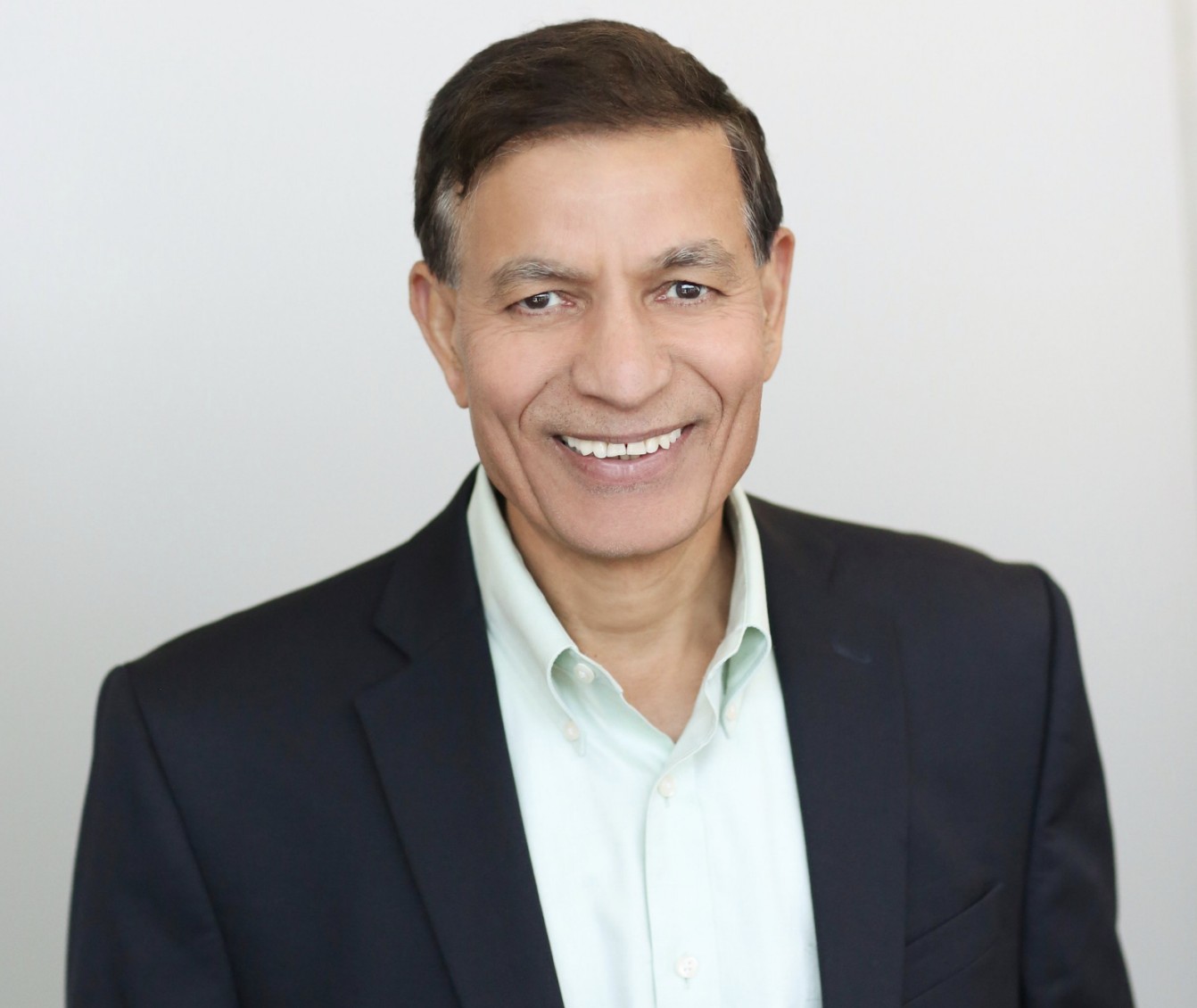
born Jagtar Singh Chaudhry
Founder, chairman and CEO of Zscaler; serial cybersecurity entrepreneur · b. 1958 · Panoh, Una district, Himachal Pradesh, India
Two calls made by hand, not formulas. how we score →
Summary
He grew up in a Himalayan village with no electricity or running water, tested into an elite Indian engineering institute, and left alone for graduate school in the US.
He and his wife spent essentially their full savings on his first startup, then rolled four straight exits into a $50 million bet on his own company, funded from his own pocket rather than a venture round.
How it happened
He grew up in Panoh, a farming village in the Himalayan foothills of what is now Himachal Pradesh, with no electricity or running water and a walk of several miles to school, often studying outdoors for lack of light at home. He was the first in his family to go to college.
A national entrance exam got him into IIT-BHU in Varanasi for an electronics engineering degree — the one credential route out of the village that his family's money could not have bought and could not block either. In 1980, at 22, he left India alone for graduate school at the University of Cincinnati.
Sixteen years into a stable engineering, sales, and marketing career at IBM, NCR, and Unisys, he and his wife Jyoti quit their jobs in 1996 and put roughly $500,000 — close to their full savings — into SecureIT, an early internet-security startup. VeriSign bought it two years later for nearly $70 million in stock.
He rolled that money, and three more exits — CoreHarbor, CipherTrust, and AirDefense — into a string of security companies through the 2000s. Each was sold. None was the last one.
In 2007 he put roughly $50 million of his own money into Zscaler rather than raise it from outside investors, betting that enterprise security was about to move off physical appliances and into the cloud. It went public on Nasdaq in March 2018, and he still holds close to a third of the company.
Forbes puts his net worth at roughly $11.5 billion as of late September 2026, almost all of it Zscaler stock, on a route that began with no electricity and one exam.
The coded evidence
Thirteen groups, every claim sourcedIndian, born in Panoh village, Una district, Himachal Pradesh (a region historically part of Punjab)
Coded to the "Indian" facet bucket at low confidence on coded.ethnicities. His forename "Jagtar Singh" is consistent with Sikh/Punjabi naming convention, but no source located explicitly confirms Sikh religious identity or Punjabi sub-ethnicity, so only the broader, well-documented "Indian" tag is coded on the facet; the region-of-birth detail here is well sourced.
↗ en.wikipedia.orgFirst-generation immigrant; left India in 1980, at 22, for graduate school in the US
↗ forbes.comnot established
Not established; likely Hindi or Punjabi but unconfirmed in sources.
↗ en.wikipedia.orgNone documented. His family of origin in Panoh were subsistence farmers with no capital to backstop a failed venture; by the 1996 SecureIT bet he and his wife were funding the risk from their own corporate savings, not a family cushion.
↗ nbcnews.comNone during the SecureIT build — both Jay (an executive at IQ Software) and his wife Jyoti (a systems analyst at BellSouth) quit their jobs in 1996 to found the company full time.
↗ nbcnews.comWife Jyoti Chaudhry co-founded SecureIT, contributing half of the couple's joint life savings and working in the venture directly.
↗ nbcnews.comnot established
Forbes reports three children overall but not their number or ages at the time of the 1996 SecureIT founding.
↗ forbes.comNone documented — by 1996 both held established, well-paid corporate roles; no homelessness or comparable instability is reported around any of his ventures.
↗ nbcnews.comThe hardship was chosen. There was a home to go back to if it failed.
Applies to the 1996 SecureIT bet specifically: a calculated risk taken from an already-secure, dual-income professional position, not survival hardship. Distinct from the imposed, non-voluntary poverty of his childhood in Panoh, which is what drives the hardness score.
↗ nbcnews.comFather Bhagat Chaudhry and mother Surjeet Chaudhry were small-scale, subsistence farmers in Panoh village.
↗ en.wikipedia.orgA parent worked for themselves, the strongest known predictor of founding.
Subsistence farming counted as self-employment in the strict sense.
↗ en.wikipedia.orgnot established
No account of a specific parental income push for schooling beyond ordinary village schooling; not established either way.
↗ en.wikipedia.orgFamily permitted and did not stand in the way of his pursuit of engineering exam preparation and eventual IIT-BHU admission, despite the household's subsistence-farming economics.
Inferred from the outcome; no direct quote located on parental attitude.
↗ en.wikipedia.orgnot established
No moves before adulthood documented beyond the single village; not established.
↗ en.wikipedia.orgnot established
No US ZIP applies — childhood was in Panoh village, Una district, Himachal Pradesh, India, a village of roughly 800 people with no running water or electricity into his teenage years.
↗ en.wikipedia.orgRural public school; walked roughly 4 km daily and often studied outdoors for lack of electricity at home.
↗ en.wikipedia.orgPanoh village, Himachal Pradesh → Varanasi (IIT-BHU, undergraduate) → Cincinnati, Ohio (University of Cincinnati, graduate school, 1980) → Atlanta and later the San Francisco Bay Area for his career, then Reno, Nevada.
↗ forbes.comNot an inversion case in the usual sense — the family was already at subsistence level in India, so migration functioned as an ascent route via an elite engineering credential and US graduate study, rather than a professional family losing standing abroad.
↗ en.wikipedia.orgnot established
No specific documented instance of hiring friction, credential discounting, or accent-related bias located in the sourced record for his IBM/NCR/Unisys years. Coded headwinds (4/10) reflects the general, well-documented pattern for a first-generation Indian immigrant building a technical and later entrepreneurial career in 1980s–2000s US corporate and investor circles — real but moderate friction — not a specific sourced incident.
↗ en.wikipedia.orgCorporate engineering, sales, and marketing career at IBM, NCR, and Unisys, and later an executive role at IQ Software, supplied technical credibility, sales training, and the income used to self-fund SecureIT.
↗ forbes.comSkill, Capital
↗ nbcnews.comWife Jyoti Chaudhry co-founded SecureIT in 1996–97.
↗ nbcnews.comMaster's-level graduate study (industrial engineering, computer engineering, and marketing) at the University of Cincinnati; BTech in electronics engineering from IIT (BHU) Varanasi; later an executive management program at Harvard Business School.
↗ en.wikipedia.orgnot established
Not established — no source located on how his graduate studies were financed (scholarship, assistantship, family, or loans). coded credentialFunding is coded "self-funded" at low confidence as the best available inference from an absence of any documented scholarship, assistantship, or family-funding claim; treat this as a genuinely uncertain field.
↗ en.wikipedia.orgAdmission to IIT-BHU came via a competitive national engineering entrance exam from a rural public school with no electricity — the one credential ladder out of the village his family's finances could neither buy nor block.
↗ en.wikipedia.orgNone — IIT admission was via open competitive exam, not a diversity, minority, or first-generation access pipeline.
↗ en.wikipedia.orgRetained ties to the IIT-BHU network; donated $1 million to its entrepreneurship center in the 2020s.
↗ en.wikipedia.orgSecureIT (1996) was funded with roughly $500,000 in joint life savings accumulated from Jay's and Jyoti's corporate salaries.
↗ nbcnews.comZscaler (2007) was self-funded with roughly $50 million of Chaudhry's own capital from his prior exits rather than outside venture investment. It went public on Nasdaq in March 2018; he retained roughly a 35% stake as of September 2026.
↗ forbes.comSecureIT sold to VeriSign in 1998 for nearly $70 million in stock; proceeds were reinvested into a string of new security ventures (CoreHarbor, CipherTrust, AirDefense) rather than consumed.
↗ en.wikipedia.orgnot established
Not established — no source located confirming a dual-class share structure at Zscaler; his roughly 35% stake appears to be an economic-ownership figure rather than a documented supermajority voting structure.
↗ forbes.comThe SecureIT bet consumed close to the couple's entire liquid household savings, not merely discretionary funds — this is scored here as a genuine hardness event at the time, even though both held re-employable technical careers to fall back on if it failed.
↗ nbcnews.com0
Notable in itself — SecureIT, CoreHarbor, CipherTrust, and AirDefense were all sold rather than shut down; no documented failed venture located in the sourced record.
↗ en.wikipedia.orgSelf and wife, from their own corporate savings, for SecureIT.
↗ nbcnews.comSan Francisco Bay Area, California (Zscaler headquartered in San Jose)
↗ forbes.comCybersecurity (cloud / zero-trust security)
↗ forbes.com11500000000
Forbes real-time billionaire tracker figure; fluctuates daily with Zscaler's share price. Band-level use only (magnitude 6, $10B+), not a precise continuous value.
↗ forbes.com2026
↗ forbes.comWealth built through founder equity across a string of five ventures — from a self-funded life-savings bootstrap to public-company ownership — not salary income.
↗ forbes.comUncapped
↗ forbes.comSelf made, Frugal, Risk tolerant, Methodical
Forbes assigns a 9/10 self-made score; profiles consistently frame him as frugal (vegetarian, modest lifestyle relative to net worth) and as a repeat, methodical risk-taker across five ventures rather than a single-shot founder.
↗ forbes.comPress
↗ forbes.comAfter
Broad press attention followed Zscaler's 2018 IPO and subsequent growth, not the earlier private-company years.
↗ forbes.comAsset
↗ forbes.comStructural context
The cost-of-failure score comes from this person's own money and circumstances. But who they were in America carried its own weight, the same way their household or income did, and it shaped how hard the path was just as much. That part isn't in the cost-of-failure number. It's here instead.
Men founded the companies that took nearly all the venture funding and almost every top outcome, a tailwind that never shows up in one person's own circumstances.
↗ techcrunch.comImmigrants and their children are overrepresented among America's biggest companies, as founders and as senior leaders. They got there through the visa, credential, and network hurdles that make the path harder to even start down.
↗ forbes.comAmong the people recorded here — men: 169. Representation here is who reached these outcomes, not equal odds of reaching them.
Controlled comparisons
Each holds one thing constant and varies another, so the difference is the point. A list of similar names wouldn't tell you anything.