Jessica Alba
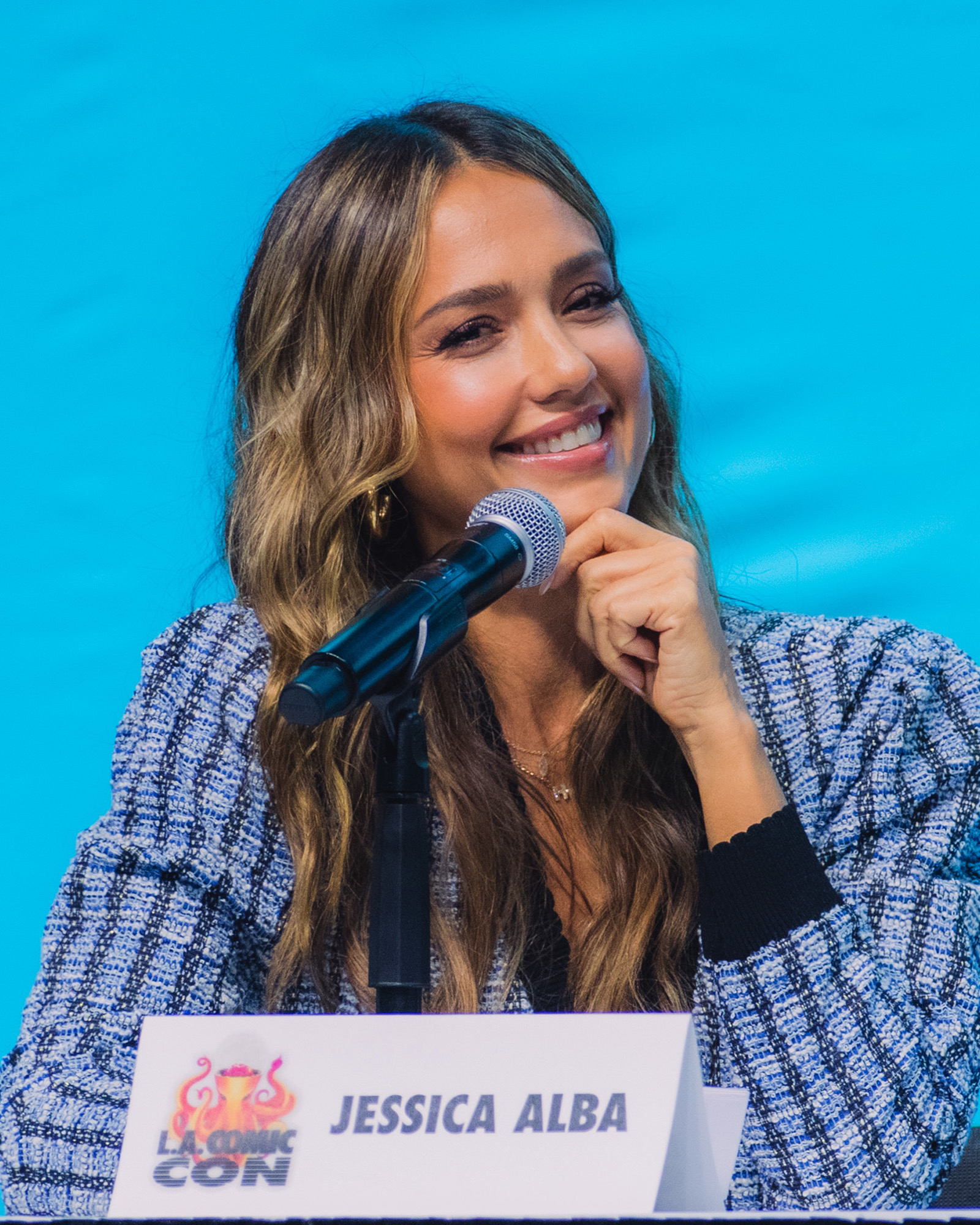
Actress; co-founder and former chief creative officer, The Honest Company · b. 1981 · Pomona, California
Two calls made by hand, not formulas. how we score →
Summary
She grew up in a working-class military family with no capital behind her, then spent two decades as a bankable actress while investors doubted an actress could run a real company.
She put her own acting income behind The Honest Company, which went public in 2021 — real ownership, not a licensing deal — though the stock's decline since has cut deeply into what her stake was once worth.
How it happened
Born in Pomona, California, to Catherine Alba, who worked as a lifeguard and taught her to swim before she could walk, and Mark David Alba, whose U.S. Air Force career moved the family to Biloxi, Mississippi, and Del Rio, Texas before they settled in Claremont, California, when she was nine. She has described the household as "a traditional, Catholic, Latin American family" with no money to speak of. Childhood brought recurring pneumonia, a ruptured appendix, and asthma serious enough that hospital stays kept her isolated from other kids at school.
At eleven she talked her mother into taking her to a Beverly Hills acting competition whose prize was free acting classes; she won, and an agent signed her nine months later. By nineteen she was the lead of "Dark Angel," chosen by James Cameron from more than a thousand candidates, and the film roles that followed — "Fantastic Four," "Sin City" — made her a genuine box-office name. She has also said the parts she was offered ran narrow: "the whore, or the motorcycle chick in leather, or the horny maid," roles she felt weren't written the same way for actresses like Natalie Portman.
In January 2012, after becoming a mother and researching why a laundry detergent marketed as gentle had left her family with a skin reaction, she co-founded The Honest Company with Christopher Gavigan, Brian Lee, and Sean Kane to sell baby, personal-care, and household products without the ingredients she'd gone looking to avoid. Lee had initially turned the idea down, and by her own account getting venture investors to treat a business fronted by an actress as something more than a licensing deal was one of the harder parts of getting it funded. This is the pivot: converting film income and fame into equity in an operating company, rather than a fee for lending her name to one.
The company raised a $6 million seed round from Lightspeed Venture Partners in 2012, hit unicorn status by 2015, and reached a reported $1.7 billion valuation on a further $100 million raise in 2016 — more than $500 million in outside capital by the time it went public. In 2016 the Wall Street Journal reported that Honest's laundry detergent contained sodium lauryl sulfate, an ingredient the brand's marketing said it avoided. The company disputed the finding, said it used a different substance, and a consolidated class action alleging false advertising over that and related ingredient claims settled in 2017 for about $1.55 million, with the company agreeing to relabel or reformulate the products in question.
The Honest Company went public on Nasdaq under the ticker HNST in May 2021, at roughly a $1.5 billion valuation; her stake, then about 6.6 percent, was worth well over $100 million on paper at the opening trade. The stock fell hard afterward — the company's market value sat around $380 million by mid-2026 — and her remaining shares fell with it. She stepped down as chief creative officer in April 2024. What's left is a minority stake in a public company she helped start, not a paycheck for appearing in its ads.
The coded evidence
Thirteen groups, every claim sourcedCoarse, noisy category by nature; a DNA-panel estimate is not the same thing as lived racial experience, which she has described as Latina.
↗ en.wikipedia.orgNo first- or second-generation immigrant history is documented on either side; the family reads as multi-generational American.
↗ en.wikipedia.orgA stable two-parent household throughout, though not a wealthy one — her father's Air Force career moved the family through Mississippi and Texas before they settled in Claremont, California, when she was nine. No family home or inheritance is documented as a fallback.
↗ en.wikipedia.orgBy the time she founded The Honest Company in January 2012 she had already spent roughly two decades as a working, well-paid film and television actress, including studio paydays from the "Fantastic Four" films and "Sin City." That income, not a salary from the new company, was her floor while the venture was unprofitable.
↗ en.wikipedia.org2
Daughter Honor (born June 2008) and daughter Haven (born August 2011) were both alive when the company launched in January 2012; a son, Hayes, followed in 2017.
↗ en.wikipedia.orgnot established
No personal debt is documented at any point in the record reviewed.
↗ en.wikipedia.orgnot established
No housing, food, or income instability during the company's build — an established acting career already made her financially comfortable well before 2012.
↗ en.wikipedia.orgThe hardship was imposed, not chosen. There was nothing to fall back on.
No austerity narrative, chosen or imposed, applies to the founding period.
↗ en.wikipedia.orgFather Mark David Alba served in the U.S. Air Force; mother Catherine Louisa Alba (née Jensen) worked as a lifeguard and taught her to swim before she could walk. Neither occupation produced significant savings or an industry connection to entertainment or consumer products.
↗ en.wikipedia.orgAt eleven she persuaded her mother to take her to a Beverly Hills acting competition offering free acting classes as the prize; she won, and an agent signed her nine months later. Her family didn't block the unconventional path that followed, though nothing suggests they could have bankrolled it either.
↗ en.wikipedia.orgRecurring childhood illness — pneumonia four to five times a year, two partially collapsed lungs, a ruptured appendix, and asthma — kept her hospitalized often enough that she said she never got close to classmates. It did not constrain her entry into acting; she began professional work at thirteen despite it, and it is treated here as biography rather than a career headwind.
↗ en.wikipedia.orgClaremont High School, a public school; graduated at sixteen.
↗ en.wikipedia.orgMoved from Pomona to Biloxi, Mississippi, and Del Rio, Texas, on her father's Air Force postings, before the family settled in Claremont, California, when she was nine. Later moved within California for the entertainment industry.
↗ en.wikipedia.orgHas said on the record that the scripts she was offered ran narrow — "the whore, or the motorcycle chick in leather, or the horny maid" — and that she felt those descriptions and the sexualized framing behind them weren't applied the same way to actresses like Natalie Portman, a pattern she attributed to how Hollywood cast and marketed Latina actresses at the time.
↗ thedailybeast.comA Beverly Hills acting competition at age eleven led to an agent nine months later; a decade later, James Cameron picked her from more than 1,000 candidates for the lead role in "Dark Angel," the role that made her a name.
↗ en.wikipedia.orgNo employer or firm — her own acting career functioned as the launch platform for The Honest Company, supplying personal capital, an existing audience, and enough public credibility that investors would take a meeting, though not enough on its own to make them write a check.
↗ en.wikipedia.orgCapital, Credibility
Not network or skill in the consumer-products industry itself — those came from co-founders.
↗ en.wikipedia.orgChristopher Gavigan, former CEO of the nonprofit Healthy Child Healthy World, supplied ingredient-safety expertise; Brian Lee, founder of LegalZoom, became the company's first CEO after initially turning the idea down; Sean Kane came in as chief operating officer.
↗ businessofbusiness.comBy the January 2012 founding she had two decades of film and television fame behind her (Dark Angel, the Fantastic Four films, Sin City), which gave the venture a built-in audience and press interest an unknown founder wouldn't have had.
↗ en.wikipedia.orgNo college. Graduated Claremont High School at sixteen and trained at the Atlantic Theater Company under William H. Macy and Felicity Huffman rather than pursuing a degree.
↗ en.wikipedia.orgDirect — professional acting training rather than a college degree.
↗ en.wikipedia.orgThe company's first outside money was a $6 million seed round from Lightspeed Venture Partners in 2012. No documented personal cash investment from Alba beyond the credibility and audience her name supplied.
↗ businessofbusiness.comIt needed capital up front, before it earned anything.
Capital-first — seeded by venture money from the start, not self-funded from operating revenue.
↗ businessofbusiness.comShe had already accumulated substantial wealth from her film and television career before founding the company in 2012, which gave her the personal cushion to spend years on an unproven consumer-products venture without needing it to pay her a salary immediately.
↗ en.wikipedia.orgRaised more than $500 million in total venture funding across rounds from Lightspeed Venture Partners, Institutional Venture Partners, General Catalyst, and others between 2012 and the 2021 IPO, reaching unicorn status by 2015 and a reported $1.7 billion valuation on a $100 million round in 2016.
↗ en.wikipedia.orgThe Honest Company IPO'd in May 2021 as a single class of common stock, one vote per share — no dual-class structure. Alba beneficially owned 5,645,118 shares, about 6.6% of outstanding stock before the offering and 6.2% after, per the final prospectus.
↗ sec.govPersonal experience. After becoming a mother she traced a family skin reaction back to a laundry detergent marketed as gentle, which sent her looking for ingredient-safe household and baby products she couldn't find on the market — and decided to make them instead.
↗ businessofbusiness.comWith no dual-class share structure, her board influence after the IPO tracked her roughly 6.6% economic stake rather than exceeding it — she held no outsized voting control the way some founders structure at the financing table.
↗ sec.govBrian Lee, who went on to become the company's first CEO, initially turned the idea down, and by her own account few investors believed early on that a company fronted by an actress was worth taking as a real, operationally serious business rather than a licensing deal. Getting venture capitalists to take it seriously, in her telling, was one of the hardest parts of getting it funded.
Inc.com blocks automated fetches and a Wayback snapshot wasn't retrievable during this review; the claim is corroborated across multiple secondary summaries of that reporting.
↗ inc.com1
One vertical — consumer products, spanning baby, household, and (from 2015) beauty lines under the same Honest Company umbrella — not equity stakes taken across separate unrelated industries.
↗ en.wikipedia.orgLaunched into a strong 2021 IPO market for direct-to-consumer and "clean" consumer brands, following a wave of pandemic-era demand for household and personal-care products.
↗ en.wikipedia.orgBuilt. A new company, not an acquisition of an existing brand.
↗ en.wikipedia.orgConsumer products (baby, household, and beauty); also a film and television acting career.
↗ en.wikipedia.org60000000
Aggregator estimate, March 2026. Her Honest Company stake alone has been estimated at roughly $350M at the company's 2015 peak private valuation, about $130M on paper at the May 2021 IPO price, and far less since as HNST stock has fallen sharply — a real decline this figure is meant to reflect, not a precise, filing-based number.
↗ celebritynetworth.comAggregator
↗ celebritynetworth.comnot established
No individual film or TV fee has been disclosed in a filing or court record.
↗ en.wikipedia.orgA mix: fee-for-work acting income (capped per project) alongside an equity stake in a public company that was uncapped in theory but has lost most of its paper value since the 2021 IPO.
↗ sec.govGolden Globe nomination for "Dark Angel" (2001); "The Honest Life" (2013) was a New York Times bestseller; became co-founder of a Nasdaq- listed company. Stepped down as chief creative officer in April 2024.
↗ en.wikipedia.orgUncapped
Equity ownership rather than a salary, though the value has fallen sharply since the IPO.
↗ sec.govMultiple class actions filed between 2015 and 2017 alleged that some Honest Company products, including its laundry detergent, contained an ingredient, sodium lauryl sulfate, that the company's marketing said its products avoided. The Honest Company disputed the claims, saying the products in question used a related but different substance, and the consolidated case settled in 2017 for about $1.55 million plus attorneys' fees, with the company agreeing to relabel or reformulate the affected products.
↗ topclassactions.comDuring
The lawsuits ran 2015–2017, while the company was privately held and still scaling toward its 2021 IPO.
↗ topclassactions.comIncidental
The alleged conduct was a reputational and legal cost during scaling, not what produced her founder-capital advantage.
↗ topclassactions.comCivil wrong
↗ topclassactions.comFine absorbed
The settlement was paid by the company; no personal liability or admission of wrongdoing by Alba is documented.
↗ topclassactions.comUnderestimated, Resilient, Mission driven
Framing drawn from press coverage of her early fundraising, corroborated across multiple secondary summaries.
↗ inc.comAfter
Her "actress underestimated as a founder" business reputation formed after the acting-era "sex symbol" reputation that preceded it.
↗ businessofbusiness.comMixed
A liability with early-stage investors who doubted the venture, and with the 2016–17 ingredient lawsuits given the brand's name; an asset with consumers who trusted her as the company rebuilt and reached the 2021 IPO.
↗ businessofbusiness.comThe company rebuilt consumer trust after 2017 through leadership changes and reformulated products, with pandemic-era demand helping drive revenue growth into the 2021 IPO — though the stock's decline since has been a separate, ongoing drag distinct from the earlier ingredient controversy.
↗ businessofbusiness.comStructural context
The cost-of-failure score comes from this person's own money and circumstances. But who they were in America carried its own weight, the same way their household or income did, and it shaped how hard the path was just as much. That part isn't in the cost-of-failure number. It's here instead.
Startups founded only by women have drawn about 2% of US venture capital, a share that has barely moved in a decade. Raising money as a woman was harder than any one record shows.
↗ techcrunch.comAmong the people recorded here — women: 54 · A 2014 genetic-ancestry test on PBS's "Finding Your Roots" put her admixture at roughly 72.7% European, 22.5% Native American, 2% sub-Saharan African, 0.3% Middle Eastern/North African, and 0.1% South Asian. She publicly identifies as Latina and Mexican-American. subjects: 1. Representation here is who reached these outcomes, not equal odds of reaching them.
Controlled comparisons
Each holds one thing constant and varies another, so the difference is the point. A list of similar names wouldn't tell you anything.