Jim Sinegal
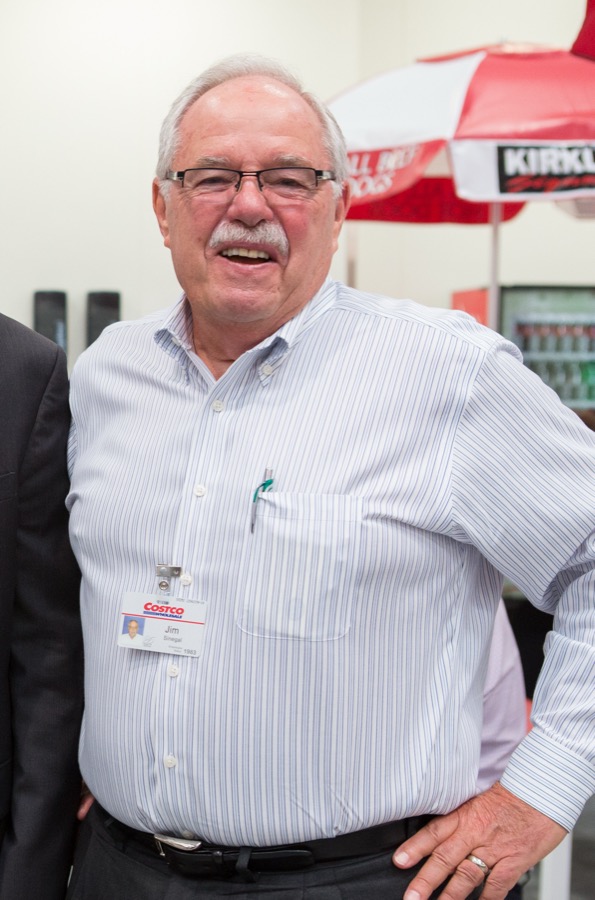
born James D. Sinegal
Co-founder of Costco Wholesale and its president and CEO from 1983 until 2012, after nearly three decades working up through Sol Price's FedMart and Price Club · b. 1936 · Pittsburgh, Pennsylvania → La Mesa and San Diego, California → Seattle, Washington
Two calls made by hand, not formulas. how we score →
Summary
A Pittsburgh working-class kid who started bagging groceries at FedMart in San Diego while in school, he spent 28 years learning retail under Sol Price before co-founding Costco in 1983 with a Seattle lawyer from a retailing family.
They raised outside money for the first stores. He ran the company for nearly three decades.
Where they worked
How it happened
Wikipedia says Sinegal was born on January 1, 1936, in Pittsburgh into a working-class Catholic family. He went to Central Catholic High School in Pittsburgh, and the family later moved to California, where he finished at Helix High School in La Mesa.
He earned an associate degree from San Diego City College in 1955 and a bachelor's from San Diego State in 1959, per Wikipedia. How the schooling was paid for isn't documented in the sources used here, though he was working at FedMart during those years.
In 1955 he started bagging groceries at FedMart, the San Diego membership store run by Sol Price. Over the following years he moved up through merchandising and operations to executive vice president. Sinegal has credited Price as his mentor and, in a 2012 CNBC documentary as cited by Wikipedia, said Price taught him to be tough and to feel socially responsible toward employees.
Fox Business describes him holding executive roles at the Price Company, Sol Price's warehouse-club business, into the early 1980s. He had spent about 28 years inside Sol Price's operations by the time he left.
He and Jeffrey Brotman, a Seattle attorney from an old retailing family, opened the first Costco warehouse in Seattle on September 15, 1983. A second opened in Portland a month later and a third in Spokane that year. Both men have said they set out to clone Price Club. A 2009 CNN account is reported to say the partners put in their own money and Brotman raised $7.5 million from investors for the first three stores. That figure is single-sourced and unconfirmed here.
Costco listed on NASDAQ in December 1985 at $10 a share with 17 warehouses. It merged with Price Club in 1993 into PriceCostco, with Sinegal sharing leadership with Sol Price's son Robert, and took the Costco name back in 1997. Wikipedia describes a high-wage, high-benefit approach under his watch. Sinegal retired as CEO on January 1, 2012, and left the board in 2018.
Wikipedia says he and his wife Janet have three children, and that he received an honorary doctorate from Dartmouth in 2017. A 2018 SEC filing shows him holding about 746,000 Costco shares, a stake worth several hundred million dollars at the share prices of recent years.
The coded evidence
Thirteen groups, every claim sourcedCoded from public photographs and family descriptions, not a self-declaration.
↗ en.wikipedia.orgnot established
No national-origin ancestry is stated in the sources reached. coded.ethnicities uses the generic "European American" bucket.
↗ en.wikipedia.orgnot established
Parents' birthplaces are not established, so migration is coded as internal (Pittsburgh to California) only.
↗ en.wikipedia.orgSalaried executive roles at FedMart and the Price Company until the Costco start in 1983.
Pay while building Costco in 1983 is not documented in the sources reached.
↗ foxbusiness.comnot established
Wikipedia describes a working-class Catholic family but names no parental occupations. Not established.
↗ en.wikipedia.orgnot established
How his degrees were paid for is not stated; coded.credentialFunding is a low-confidence placeholder.
↗ en.wikipedia.orgPittsburgh, then La Mesa, California; no ZIP-level mobility join performed.
↗ en.wikipedia.orgCatholic high school in Pittsburgh (Central Catholic), then Helix High School in La Mesa; San Diego City College and San Diego State.
↗ en.wikipedia.orgPittsburgh to the San Diego area as a teenager; later to Seattle for the 1983 Costco launch.
The year of the family's move west and the reason for it are not stated.
↗ en.wikipedia.orgA bagging job at FedMart in 1955, which put him under Sol Price.
↗ foxbusiness.comThe Price Club warehouse model, which both founders have said they set out to clone.
↗ en.wikipedia.orgJeffrey H. Brotman, a Seattle attorney from an old retailing family, who served as chairman until his death in August 2017.
↗ en.wikipedia.orgSol Price, whom Sinegal called his mentor in a 2012 CNBC documentary as cited by Wikipedia, and who he said taught him to be tough in business and socially responsible toward employees.
↗ en.wikipedia.orgHeld executive roles at Sol Price's Price Company into the early 1980s, before co-founding Costco.
The source gives no exact year for the move from FedMart to Price Club.
↗ foxbusiness.comnot established
Wikipedia lists FedMart, Builders Emporium, the Price Company and a brokerage, but the order and dates are unclear.
↗ en.wikipedia.orgBA, San Diego State University (1959); associate degree, San Diego City College (1955)
↗ en.wikipedia.orgBegan at FedMart in 1955, the same year he finished at San Diego City College.
Whether he worked continuously through his San Diego State years is not stated in the sources reached.
↗ foxbusiness.comCommunity college, state university, and a single retail employer family (FedMart, then Price) that served as the real apprenticeship.
↗ en.wikipedia.orgThe partners' own money plus outside investors, as reported in a 2009 CNN article.
The CNN page itself could not be loaded during research; this rests on a secondary summary of it. The split between founders' money and investors' is not established.
↗ money.cnn.comnot established
Not established. Brotman came from a Seattle retailing family; whether family money reached Costco is not stated.
↗ en.wikipedia.orgBrotman reportedly raised $7.5 million from investors for the first three warehouses, per a summary of CNN's 2009 account.
Single unverified summary of the article. Who the investors were is not established.
↗ money.cnn.comPublic on NASDAQ in December 1985 at $10 a share with 17 warehouses.
↗ en.wikipedia.orgCloning the Price Club warehouse-club format in the Pacific Northwest.
↗ en.wikipedia.orgnot established
His Costco shareholding and any voting rights were not retrieved from a proxy statement.
↗ en.wikipedia.orgWarehouse clubs were new. Price Club had proven the format in San Diego, and Costco entered a Pacific Northwest market without one.
The market-gap point is inferred from the founders' stated plan to clone Price Club, not from a market study.
↗ en.wikipedia.orgSeattle, Washington
↗ en.wikipedia.orgWarehouse-club retail
↗ en.wikipedia.orgnot established
No verifiable current net worth. Forbes profile pages for him returned 404, and aggregator sites gave conflicting figures ($1.2 to $3.1 billion) with no checkable source. The only hard number is an SEC Form 4 holding of 746,209 Costco shares as of January 17, 2018, which InsiderTrades.com values at about $698 million at that date. Magnitude 4 rests on that stake and could be a band low if he held more or the price has risen enough.
↗ insidertrades.comnot established
A 2018 Form 4 holding of 746,209 shares is the only figure found; later sales or gifts were not checked.
↗ en.wikipedia.orgHonorary Doctor of Humane Letters from Dartmouth College in 2017.
↗ home.dartmouth.eduUncapped
↗ en.wikipedia.orgWikipedia reports that over 90 percent of Costco employees qualified for employer-sponsored health insurance under his leadership, against a retail-industry average just under 60 percent.
A favorable data point, reported as Wikipedia states it; no labor findings were retrieved either way.
↗ en.wikipedia.orgHands on, Employee first, Frugal
Taken from Dartmouth's honorary-degree description, a flattering source. He is said to have visited every Costco location each year.
↗ home.dartmouth.eduPublic
↗ en.wikipedia.orgAfter
↗ en.wikipedia.orgAsset
↗ en.wikipedia.orgStructural context
The cost-of-failure score comes from this person's own money and circumstances. But who they were in America carried its own weight, the same way their household or income did, and it shaped how hard the path was just as much. That part isn't in the cost-of-failure number. It's here instead.
Men founded the companies that took nearly all the venture funding and almost every top outcome, a tailwind that never shows up in one person's own circumstances.
↗ techcrunch.comAmong the people recorded here — men: 225 · white subjects: 24. Representation here is who reached these outcomes, not equal odds of reaching them.
Controlled comparisons
Each holds one thing constant and varies another, so the difference is the point. A list of similar names wouldn't tell you anything.