John Mackey
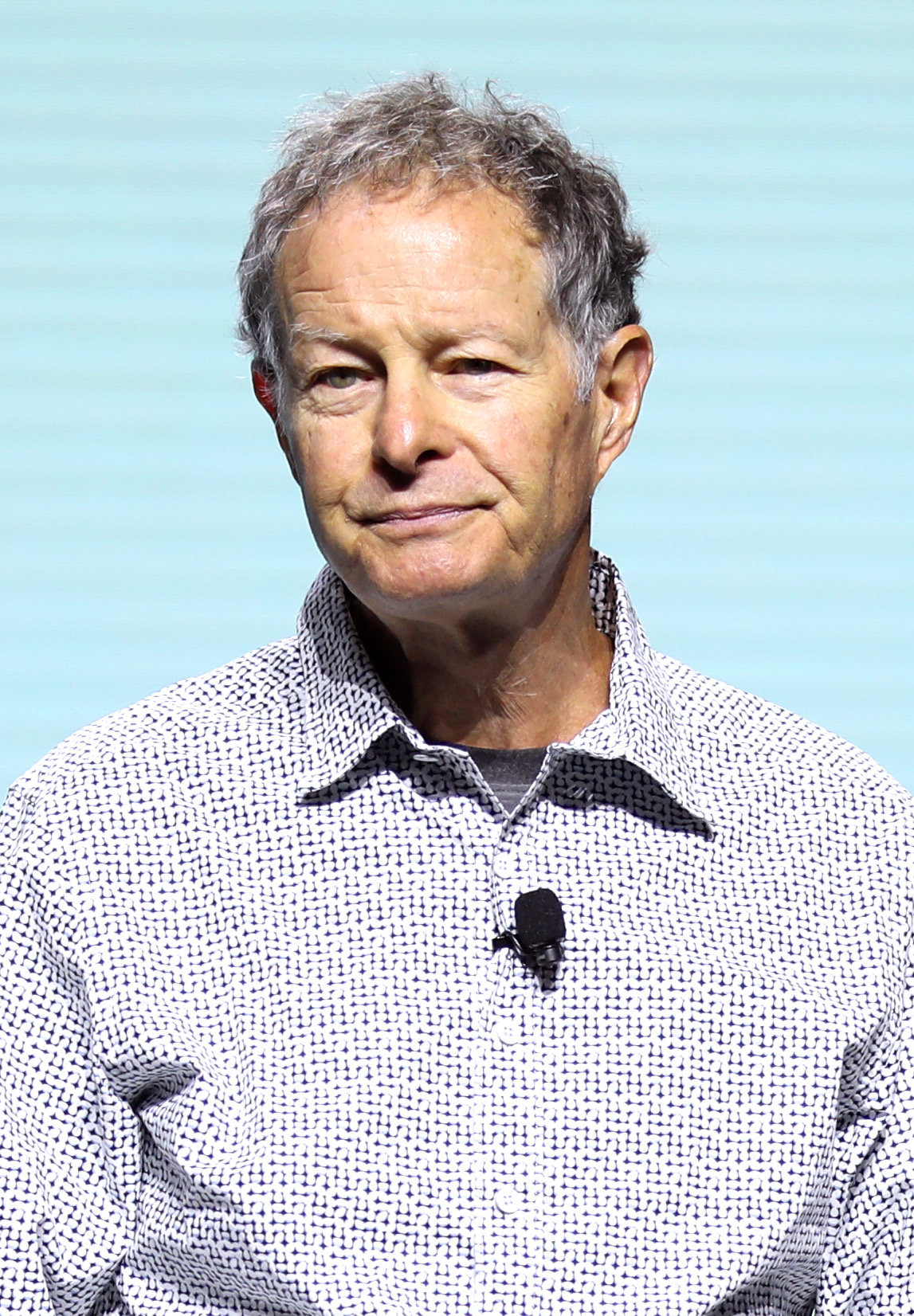
Co-founder and longtime CEO, Whole Foods Market · b. 1953 · Houston, Texas
Two calls made by hand, not formulas. how we score →
Summary
Raised comfortably in Houston, his father an accounting professor who later ran a healthcare company, he drifted through college for nearly six years without a degree.
In 1978 he and a girlfriend borrowed $45,000 from family and friends for a small natural-foods store; the 1980 merger with a rival shop, not the store itself, became Whole Foods Market and the country's largest organic grocer.
How it happened
Born John Powell Mackey on August 15, 1953, in Houston, Texas, the middle of three children. His father, William "Bill" Mackey, was an accounting professor and later became CEO of LifeMark Corporation, a healthcare company, and an early Whole Foods investor; his mother Margaret did not work outside the home and, by Mackey's own later account, thought he should pursue more "productive" work than running a grocery store. There is no record of financial strain in the household growing up.
He studied philosophy and religion at the University of Texas at Austin and later at Trinity University in San Antonio through most of the 1970s, living for a stretch in a vegetarian housing co-op, and left after nearly six years without completing a degree. He has described the choice as following his own curiosity rather than a credential, and it reads as a decision he could afford to make rather than a setback he had no choice about.
In 1978 he and his girlfriend at the time, Renee Lawson, borrowed $45,000 from family and friends to open SaferWay, a small vegetarian natural-foods store in Austin. After their landlord evicted them for storing food in their apartment, the two moved into the store itself, bathing with a hose attached to the dishwasher. It's a vivid detail that gets repeated in almost every account of the founding, and it reads harder than it was: nothing suggests either of them was ever without a family they could have gone back to if the store had failed.
Two years later, Mackey and Lawson merged SaferWay with Clarksville Natural Grocery, a nearby store run by Craig Weller and Mark Skiles, and the combined operation opened as Whole Foods Market on September 20, 1980, with about 10,500 square feet and 19 employees. All four are generally credited as co-founders. The original store was a modest, unremarkable thing — a single natural-foods shop in a college town. The real bet was that a full-size supermarket built entirely around natural and organic products could work at a scale no one had tried, and that combining with a competitor rather than fighting over the same small customer base was how to reach it.
The company expanded from Austin into Houston, Dallas, and New Orleans through the 1980s, reached the West Coast in 1989, and went public on Nasdaq in January 1992. Through the 1990s it grew largely by acquiring other regional natural-foods chains, among them Bread & Circus, Mrs. Gooch's, and Fresh Fields, and it became the largest natural and organic food retailer in the United States.
In 2006, with Whole Foods stock having made him wealthy on paper, Mackey cut his own salary to $1 a year, pledged to give away his remaining company stock, and set up a $100,000 emergency fund for employees, saying he'd reached a point where he no longer wanted to work for money. The following year it came out that he had spent years posting on Yahoo Finance message boards under the pseudonym "Rahodeb," at times praising Whole Foods and criticizing rival Wild Oats Markets while Whole Foods was pursuing an acquisition of that chain. The SEC investigated and closed the matter in 2008 without bringing charges; Mackey later called it "a mistake in judgment, but not in ethics." The FTC separately challenged the $565 million Wild Oats deal on antitrust grounds, and after losing on appeal, Whole Foods agreed to divest the Wild Oats banner in 2009 rather than fully unwind the merger.
A self-described free-market libertarian, Mackey co-founded what became Conscious Capitalism, Inc. and argued publicly that businesses perform best when they serve a purpose beyond profit. In August 2009 he wrote a Wall Street Journal op-ed opposing the public-option health-care plan then before Congress, arguing for health savings accounts over a new federal entitlement; the piece drew calls for a boycott of Whole Foods from the political left and organized "buycotts" of support from the right. He has also been openly and consistently opposed to unionization at Whole Foods — the company resisted and later moved to decertify a 2002 union vote at its Madison, Wisconsin store, and Mackey once compared unions to herpes: unpleasant, in his telling, rather than fatal. None of this is about how Whole Foods was built; it's a separate strand of his public life that ran alongside it.
Amazon announced its acquisition of Whole Foods in June 2017 for $13.7 billion, a deal completed that August. That figure describes what Amazon paid for the whole company, not what Mackey personally made from it — by then his stake had been diluted by decades of growth, acquisitions, and the 1992 IPO down to roughly 0.05% of outstanding shares, worth an estimated $42 million before tax at the deal price. He stayed on as CEO under Amazon's ownership until stepping down in September 2022, after 42 years running the company he'd started as one small Austin storefront.
The coded evidence
Thirteen groups, every claim sourcedDescendant. No immigration event documented in the sources reviewed.
↗ en.wikipedia.orgnot established
Not established. As an adult he is described as having experimented with various religions and philosophies and long rumored to be Buddhist before identifying as a "Perennialist," but no source reviewed states what, if any, faith he was raised in.
↗ en.wikipedia.orgEnglish
Inferred from a US-born Houston family; not explicitly stated in any source reviewed.
↗ en.wikipedia.orgA comfortable, professionally headed two-parent household. Nothing in the record suggests Mackey was ever at real risk of homelessness or lasting dependence: even the 1978 apartment eviction that pushed him into living inside the SaferWay store was a choice about where to sleep while running a new business, not evidence that no family home existed to fall back on.
↗ en.wikipedia.orgnot established
No account reviewed documents a personal income floor separate from the store's own thin early finances; nothing suggests he had a salary or family stipend covering him distinct from what SaferWay itself took in.
↗ en.wikipedia.orgnot established
No completed degree means no student debt. The $45,000 borrowed from family and friends to found SaferWay is coded as founding capital under d7, not a personal non-dischargeable debt overhang; it was an informal loan from people close to him, not a bank obligation.
↗ en.wikipedia.orgHe and Renee Lawson were evicted from their apartment in 1978 for storing store inventory there, and moved into the SaferWay space itself, bathing with a hose attached to the dishwasher. The anecdote is repeated in nearly every account of the founding.
↗ en.wikipedia.orgThe hardship was chosen. There was a home to go back to if it failed.
Chosen rather than imposed. Living in the store was a consequence of an eviction he could have avoided by asking for help, not a condition with no exit — his father was a comfortable, well-connected professional-turned-executive, and nothing in the record suggests the family could not or would not have absorbed him if the venture had failed. Treat the eviction anecdote as color rather than evidence of genuine hardness.
↗ en.wikipedia.orgFather William "Bill" Mackey was an accounting professor and later CEO of LifeMark Corporation, a healthcare company, and became an early investor in Whole Foods. Mother Margaret did not work outside the home.
↗ en.wikipedia.orgNeither parent was self-employed.
A tenured-track professorship and later a corporate CEO role read as salaried/executive positions rather than independent self-employment.
↗ en.wikipedia.orgFather held sufficient academic credentials to teach accounting at the university level; his mother's educational attainment is not established in the sources reviewed.
↗ en.wikipedia.orgnot established
No documented multigenerational family standing, named relatives, or inherited social capital beyond his father's own professional and later executive career.
↗ en.wikipedia.orgnot established
No account of a parent taking extra work specifically to fund his schooling; the household was comfortable enough that this wasn't documented as an issue.
↗ en.wikipedia.orgMixed rather than enthusiastic. His mother is described as believing he should pursue more "productive" work than opening a grocery store, which reads as friction rather than active encouragement toward the path he took — though the family's financial comfort meant that friction never closed off the option.
↗ en.wikipedia.orgMother Margaret died in 1987, when Mackey was 34, well after Whole Foods was established. Father Bill died in 2004, after decades as a Whole Foods investor. Neither death occurred during the 1978-1980 founding period.
↗ en.wikipedia.orgnot established
No self-disclosed or well-documented survived trauma is established.
↗ en.wikipedia.orgHouston, Texas.
↗ en.wikipedia.orgnot established
Whether he attended public or private schooling in Houston is not established in the sources reviewed.
↗ en.wikipedia.orgHouston to Austin for the University of Texas; a period at Trinity University in San Antonio; back to Austin, where he lived in a vegetarian housing co-op and later founded SaferWay and Whole Foods Market.
↗ en.wikipedia.orgRenee Lawson, his girlfriend at the time, co-founded SaferWay with him in 1978 after they met at a vegetarian housing co-op; Craig Weller and Mark Skiles, who ran the nearby Clarksville Natural Grocery, brought their store and customer base into the 1980 merger that created Whole Foods Market. All four are generally credited as co-founders.
↗ en.wikipedia.orgLocal Austin customers drawn to the natural and vegetarian foods movement, largely from the same college-town, health-conscious community Mackey and Lawson were already part of through the vegetarian co-op.
↗ en.wikipedia.orgRenee Lawson at SaferWay's 1978 founding; Craig Weller and Mark Skiles joined as co-founders of Whole Foods Market at the 1980 merger.
↗ en.wikipedia.org0
No separate career or industry job preceded SaferWay; he went from unfinished college studies directly into founding the store.
↗ en.wikipedia.orgnot established
A conventional small-retail founding rather than a bypass of an incumbent gatekeeper.
↗ en.wikipedia.orgAttended the University of Texas at Austin and Trinity University in San Antonio, studying philosophy and religion through most of the 1970s; left after nearly six years without completing a degree. Received an honorary bachelor's degree from Bentley University in 2008.
↗ en.wikipedia.orgnot established
No degree was completed, so no completion debt; whether tuition itself was family-funded or debt-financed during his college years is not explicitly confirmed, though the family's comfortable finances make debt-financing unlikely.
↗ en.wikipedia.orgSome college with no completed credential; not a licensing, trade, or transfer-based path.
↗ en.wikipedia.orgnot established
No specific investor or business introduction traced to either university is documented.
↗ en.wikipedia.org$45,000 borrowed from family and friends, put toward opening SaferWay in Austin in 1978.
↗ en.wikipedia.orgA loan of $45,000 from family and friends at SaferWay's 1978 founding; the exact split between family members and friends is not broken out in the sources reviewed.
↗ en.wikipedia.orgIt paid its own way from the start. Revenue came before any outside money.
SaferWay was a retail store selling to customers from the outset, not a venture running on outside investment ahead of revenue.
↗ en.wikipedia.orgBootstrapped: a single $45,000 loan from family and friends funded SaferWay in 1978, and the combined Whole Foods Market grew through reinvested retail revenue and, from the 1980s onward, stock-funded acquisitions of other regional chains. The company added outside public capital at its January 1992 IPO and continued raising and using equity through decades of acquisitions, but the origin was a single small, family-and-friends-funded store, not outside investment.
↗ en.wikipedia.orgIn 2006, with his Whole Foods stock worth a substantial paper sum, he cut his own salary to $1 a year, said he no longer wanted to work for money, pledged to give away his remaining company stock, and set up a $100,000 emergency fund for employees rather than drawing further personal income from his position.
↗ en.wikipedia.orgNo dual-class share structure existed at Whole Foods. By the time of the 2017 Amazon deal, decades of dilution through the 1992 IPO, stock-funded acquisitions, and his own 2007 decision to stop taking further stock grants had reduced his stake to an estimated 0.05% of outstanding shares, roughly 1 million shares, worth about $42 million pre-tax at the deal price. He ran the company through his CEO role rather than through a preserved ownership stake.
Forbes' original 2017 calculation of Mackey's ~1 million shares (~0.05% of Whole Foods, ~$42 million pre-tax at the $42-per-share Amazon deal price) is corroborated via a secondary source that quotes the same figures directly.
↗ forbes.comnot established
No documented instance of a rejected loan or investment application at founding.
↗ en.wikipedia.org0
SaferWay was his first venture and did not fail; it merged into what became Whole Foods Market rather than being abandoned.
↗ en.wikipedia.orgSelf, plus the family members and friends who supplied the $45,000 founding loan; no evidence the loan went into default or that anyone besides Mackey and Lawson bore an operating loss.
↗ en.wikipedia.orgA growing natural- and health-foods movement in the US through the 1970s, still served mainly by small independent shops rather than large chains; no significant regulatory constraint or opening is documented as specific to the founding.
↗ en.wikipedia.orgAustin, Texas, where he already lived and had founded SaferWay two years earlier.
↗ en.wikipedia.orgA merger of two small existing operations, SaferWay and Clarksville Natural Grocery, into a new, larger supermarket format rather than a pure de novo build or a straightforward acquisition of one by the other; the combined store and the full-size natural-foods supermarket concept it introduced were new to the market.
↗ en.wikipedia.orgNatural and organic foods retail
↗ en.wikipedia.org85000000
This is Mackey's own estimated net worth, NOT Amazon's $13.7 billion purchase price for Whole Foods — the two are frequently and wrongly conflated. His Whole Foods stake at the 2017 sale was worth an estimated $42 million pre-tax (roughly 0.05% of the company, about 1 million shares). Aggregator estimates as of the mid-2020s, reflecting a broader portfolio beyond that stake, put his current net worth in the $85-100 million range; this record uses the lower, more conservative end. No filing-grade figure exists because he is not a controlling shareholder of a public company at scale.
↗ forbes.comJournalistic estimate
↗ forbes.comnot established
Not established. He voluntarily cut his salary to $1 a year in 2006 and stopped taking additional stock grants in 2007, which makes any specific pre-2006 peak-year compensation figure both unrecovered in the sources reviewed and arguably less meaningful than for an executive who didn't cap his own pay.
↗ en.wikipedia.orgOverwhelmingly a small, heavily diluted equity stake built over four decades rather than salary. He took a nominal $1 annual salary from 2006 onward and stopped accepting further stock grants in his own company in 2007, an unusual voluntary choice for a founder-CEO running a company of Whole Foods' eventual scale.
↗ en.wikipedia.orgBuilt Whole Foods Market into the largest natural and organic food retailer in the United States, a chain of roughly 500 stores by the time of the Amazon acquisition. Helped popularize organic and animal-welfare sourcing standards later adopted across the grocery industry, and built "conscious capitalism" into an organized business philosophy and nonprofit. Named Ernst & Young's national Entrepreneur of the Year in 2003. Authored several books, including Conscious Capitalism (2013) and The Whole Story (2024).
↗ en.wikipedia.org2
1978 SaferWay founding to the September 1980 merger that created Whole Foods Market.
↗ en.wikipedia.orgUncapped
Structurally an equity-ownership path with no earnings cap; his personal choice to take a $1 salary from 2006 is a voluntary redistribution of income, not evidence the path itself was capped.
↗ en.wikipedia.orgIn 2007, Whole Foods' proposed $565 million acquisition of Wild Oats Markets was challenged by the Federal Trade Commission on antitrust grounds; a federal appeals court sided with the FTC on appeal in 2008, and Whole Foods ultimately agreed to divest the Wild Oats banner in 2009 rather than fully unwind the deal. Separately, it was reported in 2007 that Mackey had spent roughly seven years posting on Yahoo Finance message boards under the pseudonym "Rahodeb," at times praising Whole Foods and criticizing Wild Oats while the acquisition was under consideration; the SEC investigated and closed its inquiry in 2008 without bringing charges, and Mackey has said the postings were "a mistake in judgment, but not in ethics." Separately and much later, Whole Foods settled with California authorities for roughly $800,000 in 2014-2015 over allegations that some stores charged more per weight than package labels indicated, and paid about $1.6 million in 2018 to settle a California hazardous-waste-handling matter.
The pricing and hazardous-waste matters are corporate regulatory settlements without personal charges against Mackey; stated here only to the extent of the agency actions and their resolutions, not as an assertion of wrongdoing beyond what was found or admitted.
↗ en.wikipedia.orgAfter
All matters arose from 2007 onward, roughly three decades after the 1980 founding.
↗ en.wikipedia.orgIncidental
The pseudonymous posts and the FTC's antitrust challenge concerned a single acquisition attempt long after Whole Foods was already established; none of it produced the founding advantage that built the company. The later pricing and waste-handling settlements are unrelated corporate compliance matters.
↗ en.wikipedia.orgTos violation
The pseudonymous posting violated ordinary norms of disclosure and site terms rather than being adjudicated as securities fraud; the SEC closed its inquiry without charges. The pricing and waste matters were civil-regulatory settlements, not criminal findings.
↗ en.wikipedia.orgFine absorbed
The California pricing and hazardous-waste settlements were paid by the corporation; no personal fine or liability attached to Mackey in any of these matters, and the SEC brought no charges against him.
↗ en.wikipedia.orgMackey has been publicly and consistently opposed to unionization at Whole Foods throughout his tenure. Workers at the company's Madison, Wisconsin store voted to unionize in 2002; Whole Foods declined to bargain and later moved to decertify the union. The company also cut health benefits for roughly 1,900 part-time workers in 2019 and laid off about 1,500 employees (1.6% of the workforce) in 2015 to lower prices. A Philadelphia store became the first Whole Foods location to unionize in January 2025, after Mackey's 2022 retirement as CEO, and the company challenged the election result before the NLRB.
↗ en.wikipedia.orgVisionary, Polarizing, frugal despite his wealth, ideologically outspoken
↗ en.wikipedia.orgPublic
↗ en.wikipedia.orgAfter
His public reputation as a business philosopher and libertarian commentator consolidated well after Whole Foods succeeded, particularly from the mid-2000s onward.
↗ en.wikipedia.orgMixed
An asset among free-market business audiences and philanthropic circles; a liability among labor advocates and progressive consumers, particularly after his 2009 health-care op-ed and his long-running public opposition to unionization at his own stores.
↗ en.wikipedia.orgThe reputation was deliberately built, through books, press, and PR.
He wrote multiple books, gave frequent interviews, and co-founded an organization (Conscious Capitalism, Inc.) explicitly built around propagating his management philosophy.
↗ en.wikipedia.orgHis 2009 Wall Street Journal op-ed opposing the pending health-care legislation drew organized boycott calls from progressive groups and an organized "buycott" of support from Tea Party-aligned supporters — the same statement read as principled by one audience and objectionable by another, with no single verdict settling it either way. His anti-union stance produces a similar, ongoing split between business-press admirers and labor advocates.
↗ en.wikipedia.orgThe 2009 boycott and the 2007 pseudonym disclosure did not end his tenure — he remained CEO for another 13 years and stepped down on his own terms in September 2022, suggesting no lasting reputational collapse inside the company or with its board.
↗ en.wikipedia.orgStructural context
The cost-of-failure score comes from this person's own money and circumstances. But who they were in America carried its own weight, the same way their household or income did, and it shaped how hard the path was just as much. That part isn't in the cost-of-failure number. It's here instead.
Men founded the companies that took nearly all the venture funding and almost every top outcome, a tailwind that never shows up in one person's own circumstances.
↗ techcrunch.comWhite founders are heavily overrepresented among funded companies and top-tier wealth relative to their share of the population, an edge that has nothing to do with a person's own money.
↗ techcrunch.comAmong the people recorded here — men: 115 · White subjects: 74. Representation here is who reached these outcomes, not equal odds of reaching them.
Controlled comparisons
Each holds one thing constant and varies another, so the difference is the point. A list of similar names wouldn't tell you anything.