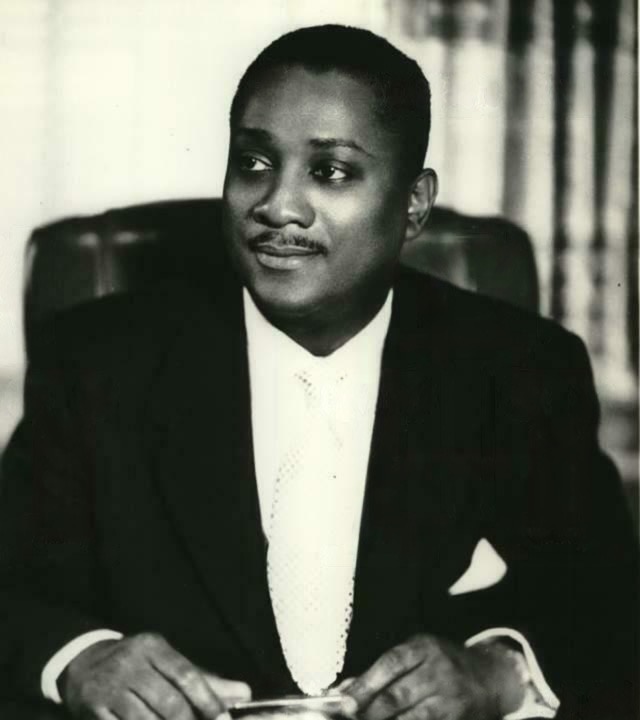
John W. Thompson
Former Chairman and CEO, Symantec; former Chairman, Microsoft · b. 1949 · Fort Dix, New Jersey → West Palm Beach, Florida
Two calls made by hand, not formulas. how we score →
Summary
Twenty-eight years inside IBM got him to general manager.
Then Symantec hired him from outside to run a company he never founded, and he grew it tenfold into a security giant. The money came from salary, bonus, and stock grants, not ownership. He later chaired Microsoft's board and picked its next CEO.
How it happened
Born near Fort Dix, New Jersey, and raised in West Palm Beach, Florida, where his father worked for the Postal Service and his mother taught school. Both jobs were steady and neither was rich. He got to Florida A&M University, an HBCU, on a music scholarship and studied business instead.
IBM hired him straight out of college in 1971 as a salesman. He stayed 28 years, took a leave of absence mid-career for an MBA at MIT's Sloan School as a company-sponsored Sloan Fellow, and rose through sales, software development, and server products to general manager of IBM Americas, a $37 billion division with 30,000 people under him. He never left, and he never owned a share of what he ran.
In September 1999 Symantec hired him in from outside to be chairman, president, and CEO of a consumer antivirus company he had no hand in building. He replaced two-thirds of the senior team, pushed the company toward corporate customers, and ran it through dozens of acquisitions, the biggest a roughly $13.5 billion merger with Veritas in 2004-05. Revenue went from about $632 million to over $6 billion in a decade. Black Enterprise named him its 2004 Corporate Executive of the Year and called him the best CEO in Silicon Valley.
Forbes ranked him the 8th-highest-paid CEO in the country in April 2006, at $71.84 million — a figure built mostly from the rising paper value of stock options he hadn't sold, not cash. His actual disclosed salary, bonus, and other compensation from Symantec's own filings peaked at $5.6 million in his last full year. He retired as CEO in 2009 holding a large stock position, not a stake in the company he'd run.
He ran Virtual Instruments, a Lightspeed-backed startup, from 2010, then joined Microsoft's board in 2012. In February 2014 he was named Microsoft's chairman the same day Satya Nadella replaced Steve Ballmer as CEO, a transition his own search committee produced. He chaired the board until 2021, later chaired Illumina's until shareholders removed him in 2023 after an activist campaign, and became a venture partner at Lightspeed in 2018.
The coded evidence
Thirteen groups, every claim sourcedDescendant
No immigration history is documented anywhere in the record; coded by absence rather than a stated family history.
↗ notablebiographies.comTwo working parents in steady jobs — a Postal Service worker and a schoolteacher — gave him a modest but genuine floor: a home to return to, not family wealth to draw on.
↗ notablebiographies.comA salary from IBM from age 22, then from Symantec from age 50. Across the whole career the risk was losing a job, never losing housing.
↗ en.wikipedia.orgnot established
No documented period of imposed poverty or chosen austerity at any point in the record. A stable salaried household throughout, not a hardship story.
↗ notablebiographies.comFather worked for the U.S. Postal Service; mother was a teacher.
Consistent across notablebiographies.com and encyclopedia.com. Black Enterprise (1994) independently describes his parents as having instilled "blue-collar values."
↗ notablebiographies.comNeither parent was self-employed.
↗ notablebiographies.comRiviera Beach / West Palm Beach, Florida.
Childhood and schooling took place in the Jim Crow-era segregated South; no source gives a specific desegregation event for him personally, so that is not coded as an integration-cohort claim.
↗ en.wikipedia.orgJohn F. Kennedy High School in Riviera Beach, Florida, a public school later renamed Suncoast Community High School.
↗ en.wikipedia.orgIBM. Hired directly out of Florida A&M University in 1971 into an entry-level sales role; the only employer before Symantec.
↗ notablebiographies.comSkill, Credibility, Network
Twenty-eight years built a track record and internal credibility that made him hireable as an outside CEO. No evidence it supplied capital.
↗ en.wikipedia.org3
IBM, then Symantec, then Virtual Instruments as CEO, before moving into board chairmanships and venture-partner roles rather than operating jobs.
↗ en.wikipedia.orgM.S. in management science, MIT Sloan School of Management, 1983 (Sloan Fellow). B.B.A., Florida A&M University, 1971, on a music scholarship.
↗ notablebiographies.comDirect four-year degree straight into an entry sales job at IBM, then a mid-career MBA taken on a leave of absence from IBM through the Sloan Fellows program, which historically required an employer to sponsor the fellow's tuition and salary.
No document states IBM's exact sponsorship terms for his fellowship; a leave of absence rather than a resignation is the strongest evidence the company backed it.
↗ encyclopedia.comFlorida A&M University, an HBCU. Later, MIT Sloan's Fellows program, a cohort of company-sponsored mid-career managers.
↗ en.wikipedia.orgHired into the antivirus and enterprise-security boom of the early 2000s; doubled the company's addressable market through a run of acquisitions capped by the roughly $13.5 billion Veritas merger in 2004-05.
Retrieved via Wayback Machine; original Black Enterprise URL cited.
↗ blackenterprise.comNeither built from nothing nor bought as a founder. Hired to run an existing public company, then scaled it mainly by acquiring dozens of other companies rather than through organic growth alone.
Retrieved via Wayback Machine; original Black Enterprise URL cited.
↗ blackenterprise.comEnterprise software and cybersecurity
↗ en.wikipedia.org200000000
Aggregator estimate, reported as roughly $250M on this page with no stated methodology or date; other aggregator figures run closer to $150M. Banded, not used as a precise figure. A tier-A SEC filing independently shows his unexercised, in-the-money Symantec options alone were worth about $79M at fiscal year-end 2006, three years before he left the company, which is at least broadly consistent with a nine-figure outcome.
↗ celebritynetworth.comAggregator
↗ celebritynetworth.com5638844
Total compensation for fiscal 2008 (his last full year as CEO) per Symantec's own Summary Compensation Table: $800,000 salary, no bonus, $3.42M in stock/option accounting expense, $1.15M non-equity incentive, $273,641 other. Forbes' widely cited "$71.84 million" figure for 2006 used a different methodology weighted toward unrealized option value and is not used here as the primary number; it is noted under paperVsRealized below.
↗ sec.govProxy statement
↗ sec.govSymantec's 2006 proxy shows Thompson exercised zero options that fiscal year while his unexercised, in-the-money options were worth about $69.6M (vested) plus $9.5M (unvested) on paper at fiscal year-end. Most of the wealth the compensation press wrote about in the mid-2000s was unrealized option value he was still holding, not cash he had taken off the table.
↗ sec.govCompensation as a hired executive and later as a board chairman: salary, bonus, and stock or option grants. He never owned founder-style equity in Symantec, IBM, or Microsoft.
↗ sec.govOne of the first Black CEOs of a major U.S. public technology company (1999). First Black chairman of Microsoft's board (2014), where he led the search that selected Satya Nadella as CEO. Appointed to the Financial Crisis Inquiry Commission by Speaker Nancy Pelosi in 2009, and was reportedly considered for U.S. Secretary of Commerce under President Obama that same year.
↗ fcic.law.stanford.eduCapped
Compensation set by salary, bonus, and equity grants as a hired executive and later a board chairman, not by founder ownership.
↗ sec.govMaster of the Turnaround, Best CEO in Silicon Valley
Black Enterprise's own characterization, naming him 2004 Corporate Executive of the Year. Retrieved via Wayback Machine; original URL cited.
↗ blackenterprise.comMixed
An asset through the Symantec and early Microsoft years; trade press later criticized his Virtual Instruments tenure ("spread too thin," CRN 2015), and Illumina's shareholders voted him out as chairman in 2023 after an activist campaign led by Carl Icahn over the company's Grail acquisition — a governance dispute, not an adjudicated finding against him personally.
↗ crn.comStructural context
The cost-of-failure score comes from this person's own money and circumstances. But who they were in America carried its own weight, the same way their household or income did, and it shaped how hard the path was just as much. That part isn't in the cost-of-failure number. It's here instead.
Men held about 90% of Fortune 500 CEO seats in 2023, and a wider majority of the rungs below. The ladder is widest for them the whole way up.
↗ forbes.comJust eight Fortune 500 CEOs were Black in 2023, about 1.6%, against roughly 13% of the labor force. The ladder narrows sharply by race near the top.
↗ finance.yahoo.comAmong the people recorded here — men: 115 · Black subjects: 58. Representation here is who reached these outcomes, not equal odds of reaching them.
Controlled comparisons
Each holds one thing constant and varies another, so the difference is the point. A list of similar names wouldn't tell you anything.