Jorge Pérez
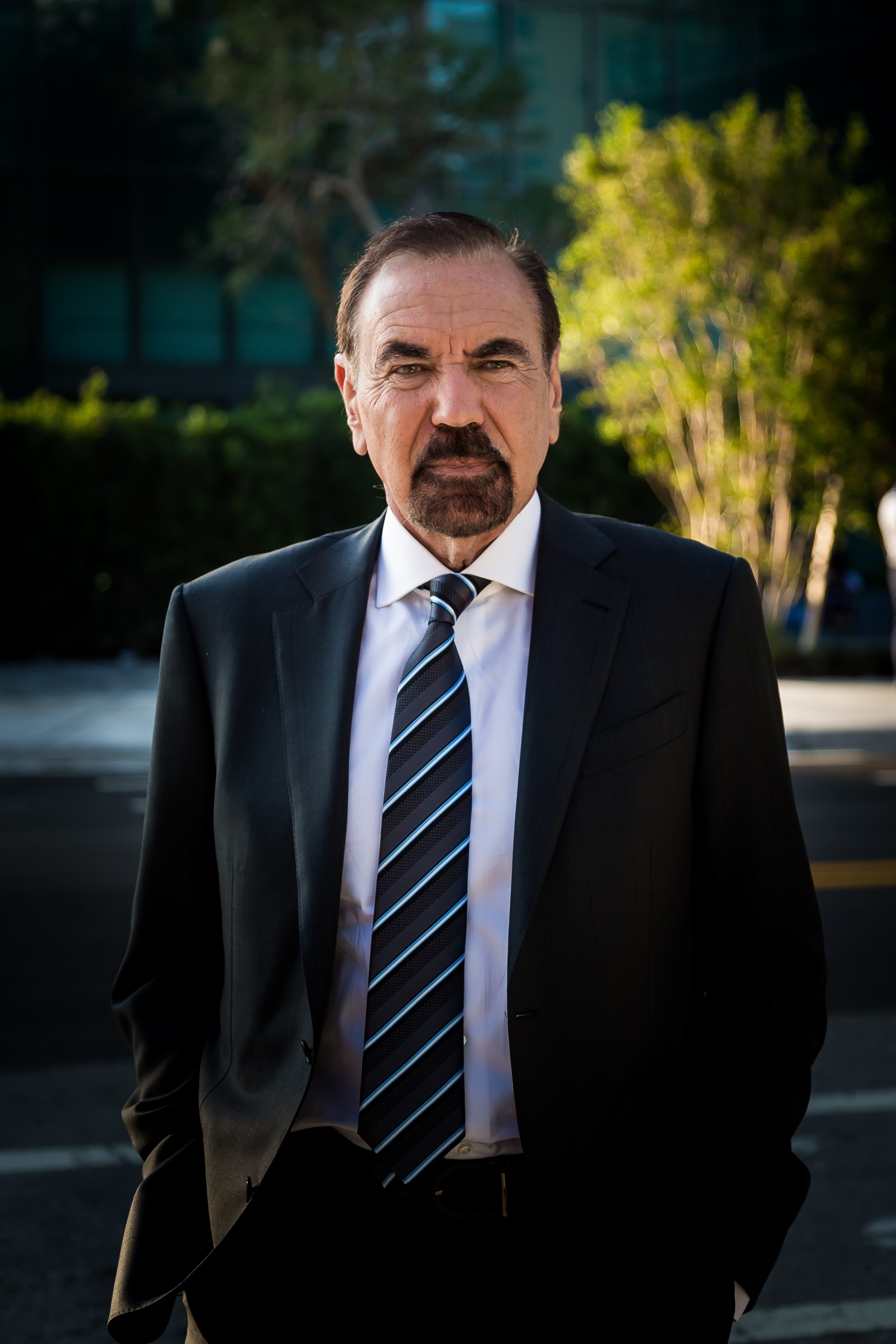
Chairman and CEO, The Related Group; the "Condo King of Miami" · b. 1949 · Buenos Aires, Argentina
Two calls made by hand, not formulas. how we score →
Summary
Born in Buenos Aires to Cuban parents who lost a pharmaceutical business to Castro's nationalization and rebuilt more modestly in Bogotá, he came to the U.S.
for college in 1968. A graduate planning degree and a partnership with a capitalized New York developer turned a subsidized-housing startup into Miami's dominant luxury-condo empire.
How it happened
Pérez was born on October 17, 1949, in Buenos Aires to Cuban parents of Spanish descent. The family had been comfortable in Cuba, where his father ran a pharmaceutical business, but Castro's revolution forced him to give up the company and the family's holdings. In 1959 the family went into exile in Bogotá, Colombia, where his father started over in the same trade. Pérez has said that watching his parents rebuild from nothing left him with what he calls "Cuba fear," a driver he later credited for his work ethic. Family philanthropy accounts also describe him, as a teenager in Bogotá, moving between wealthy neighborhoods and areas without running water or electricity, an early exposure to inequality he later connected to his interest in housing.
The family relocated again in 1968, this time to Miami, around the same year Pérez enrolled at C.W. Post College on Long Island, where he earned a bachelor's degree in economics in 1972. He went on to the University of Michigan for a master's degree in urban planning, finishing in 1976, then took a job as an economic-development planner for the City of Miami. He later said he found public-sector work too constraining and left after a couple of years, but the planning credential and the city job gave him a working knowledge of Miami's housing programs and permitting process before he ever developed anything on his own.
In 1979 Pérez bid on a small government-subsidized apartment building in Miami's Little Havana, planning to rehabilitate it. Steve Ross, then a rising New York developer, bid on the same project. Rather than stay rivals, the two became partners: Pérez turned the rehab into roughly a $200,000 profit over six months, and Ross's company took an equity stake, reported at around 20 percent, in the new firm the two men named The Related Group of Florida. Ross supplied capital and an outside developer's credibility to a company that started out building and preserving government-subsidized housing in Miami's poorer neighborhoods.
Related kept building affordable and government-backed housing through the 1980s, more than 60,000 units by some counts, but Pérez read the 1990s and 2000s Miami market differently: a wave of South American buyers wanted pieds-à-terre and investment condos, and he redirected the company toward high-rise luxury towers aimed at exactly that demand. Lenders competed to finance his projects; he later described himself in that period as the market's "golden boy." The pivot is what took Related from a mid-sized regional builder to the dominant name in Miami luxury condominiums, and it's the decision that separates this record from a stable but modest housing-development career.
The financial crisis hit Related's condo pipeline hard. Prices fell by more than half in some segments, buyers defaulted on contracts, and the company was left holding close to $3 billion in unsold or unfinished inventory. Pérez has called it the most difficult period of his career. He restructured debt, sold off inventory at a loss, and set up a fund to buy distressed properties rather than let the company fail outright. Related emerged smaller and more diversified, adding rental apartments and geographic expansion outside South Florida to a portfolio that had been almost entirely Miami condos.
In 2022 Pérez bought out Ross's roughly 25 percent stake in Related Group, giving him full ownership of the company for the first time since 1979. By then Related's portfolio was reported at more than $40 billion and over 100,000 residential units built. Pérez had also become one of the country's most prominent collectors and donors of Latin American and contemporary art; a 2011 gift of $35 million in cash and artwork led Miami's art museum to rename itself the Pérez Art Museum Miami. Forbes put his net worth at $2.6 billion in August 2026, making him one of the wealthiest Hispanic Americans.
The coded evidence
Thirteen groups, every claim sourcedCuban, of Spanish descent; born in Argentina, raised largely in Colombia.
Coarse public-record coding; ethnicity is a noisy, interpretive category, and his own upbringing spanned three countries.
↗ en.wikipedia.orgFirst-generation immigrant by the coding used here: he moved to the United States in 1968 at about eighteen or nineteen for college, and the family relocated to Miami the same year. He came independently for his own education and built his entire career and household in the U.S. afterward, which is closer to an adult immigrant's arc than to a child raised through the American school system (the more typical 1.5-generation pattern), even though he arrived at the tail end of adolescence rather than as a fully independent adult.
↗ en.wikipedia.orgSpanish, as the child of Cuban parents raised in Argentina and Colombia before the family's move to the U.S.
Inferred from family background; not a direct quote on household language.
↗ ncfp.orgNone of the family's Cuban wealth carried forward. His father rebuilt a pharmaceutical business in Bogotá after the 1959 exile, which gave the household a working professional-class income by the time Pérez left for college in 1968, but there was no restored fortune or property behind him when he later started Related Group.
↗ ncfp.orgA salaried job as an economic-development planner for the City of Miami preceded the 1979 founding of Related Group, giving him a stable income and direct knowledge of local housing programs before he risked anything of his own in development.
↗ floridatrend.comnot established
No personal debt burden at founding is documented in sources reviewed.
↗ en.wikipedia.orgThe instability in this record sits earlier, in two childhood exiles (Cuba to Colombia in 1959, then the family's move to Miami in 1968), not during the founding of Related Group itself. By 1979 the family was settled and Pérez held a steady planning job; no housing or income instability is documented for him personally around the company's start.
↗ ncfp.orgThe hardship was imposed, not chosen. There was nothing to fall back on.
The family's loss of its Cuban business was imposed by nationalization, not chosen.
↗ en.wikipedia.orgHis father ran a pharmaceutical business, first in Cuba, then rebuilt in Bogotá after the family's 1959 exile. Mother's occupation is not established in sources reviewed.
↗ ncfp.orgA parent worked for themselves, the strongest known predictor of founding.
↗ ncfp.orgA Cuban family of Spanish descent that had been comfortable enough in Havana to run a pharmaceutical business before the revolution; no documented wealth or standing predating that generation.
↗ en.wikipedia.orgNot explicitly documented, but the rebuilt Bogotá pharmaceutical business gives the household a plausible income source for his undergraduate years at C.W. Post starting around 1968; no scholarship, military funding, or personal debt is documented for either degree.
Coded family-funded on this inference; a direct statement of who paid tuition was not found.
↗ ncfp.orgBuenos Aires, Argentina, at birth; then Havana, Cuba, in early childhood; then Bogotá, Colombia, from 1959; then Miami, Florida, from 1968.
↗ en.wikipedia.orgArgentina to Cuba in early childhood; Cuba to Bogotá, Colombia, in 1959 after Castro's revolution; Colombia to Miami, Florida, in 1968, the same year he enrolled at C.W. Post College in New York.
↗ en.wikipedia.orgThe family's standing contracted once, sharply, when the Cuban pharmaceutical business was nationalized in 1959, then stabilized at a more modest professional level once his father rebuilt the same trade in Bogotá. There was no second inversion at the 1968 move to Miami; by then the household income was intact and Pérez left for college on schedule.
↗ ncfp.orgAs a teenager in Bogotá he has been described moving between well-off neighborhoods and areas without running water or electricity, an exposure to inequality that family accounts connect to his later interest in affordable housing. No specific documented instance of bias against him personally in the U.S. business world is established in sources reviewed.
↗ ncfp.orgMiami's large and fast-growing Cuban exile community by the 1970s gave him a base of cultural and business familiarity most immigrant founders in other American cities did not have, though no specific introduction or deal is documented as flowing from it.
↗ en.wikipedia.orgSteve Ross, a New York developer who bid against him on the same 1979 Little Havana rehabilitation project. Rather than compete, the two became partners, and Ross's company took an equity stake in the new firm.
↗ floridatrend.comA small government-subsidized apartment building in Miami's Little Havana, which he rehabilitated in 1979 for roughly a $200,000 profit over six months, the deal that became The Related Group's first project.
↗ floridatrend.comCapital, Credibility
Ross's stake supplied outside capital and the standing of an established New York developer to a first-time Miami builder.
↗ floridatrend.comStephen M. Ross, whose company took an equity stake reported at around 20 percent in the new firm.
↗ floridatrend.com3
University of Michigan master's degree in 1976 to Related Group's 1979 founding, with a City of Miami planning job in between.
↗ en.wikipedia.orgnot established
Not established; his city-planning background if anything gave him insider familiarity with the permitting process rather than a need to route around it.
↗ en.wikipedia.orgMaster's degree in urban planning, University of Michigan, 1976.
↗ en.wikipedia.orgDirect: a bachelor's degree in economics from C.W. Post College (1972), then a master's in urban planning from the University of Michigan (1976), then a City of Miami planning job, then Related Group in 1979. No transfer, military service, or non-traditional route.
↗ en.wikipedia.orgSome accounts describe Ross as a fellow University of Michigan alumnus, which would make the school a point of connection between them; other accounts describe the two meeting only later, as competing bidders on the same 1979 project. Both details are reported, and this profile does not treat the Michigan connection as the confirmed origin of the partnership.
Conflicting secondary accounts of how Pérez and Ross first connected; the competing-bid version is corroborated by Florida Trend's more detailed profile.
↗ en.wikipedia.orgRoughly $200,000 in profit from rehabilitating a government-subsidized apartment building in Little Havana in 1979, Related Group's first project.
↗ floridatrend.comnot established
No inheritance is documented; the family's Cuban wealth was nationalized before it could pass to him.
↗ en.wikipedia.orgIt paid its own way from the start. Revenue came before any outside money.
The first project was profitable on its own terms, alongside Ross's equity investment in the new firm, rather than the company running on outside financing before generating revenue.
↗ floridatrend.comSteve Ross's company took an equity stake reported at around 20 percent in The Related Group at its founding, functioning as an ongoing capital partner rather than a one-time investment. That stake grew to roughly 25 percent over the following decades before Pérez bought it out in 2022.
↗ forbes.comGovernment-subsidized housing financing funded the earliest projects; Ross's equity stake supplied ongoing outside capital and credibility through the 1980s and beyond; later luxury condo towers were financed through conventional bank and construction lending, with pre-sales to buyers used to secure financing, a structure that also produced the 2008-09 crisis when those buyers defaulted.
↗ floridatrend.comRelated Group's first project and much of its 1980s output relied on government-subsidized affordable-housing programs in Miami's poorer neighborhoods, before the company's strategy shifted toward market-rate luxury condominiums.
↗ floridatrend.comPérez ran the company as chairman and CEO from 1979 while Ross's company held a minority stake, reported at roughly 20 to 25 percent, for more than four decades. He bought out that stake in 2022, giving him full ownership for the first time since the company's founding.
↗ forbes.com0
No failed venture prior to Related Group's 1979 founding is documented; the company's 2008-09 near-collapse came decades into an established business, not as an early failed attempt.
↗ en.wikipedia.orgDuring the 2008-09 crisis, Related Group itself absorbed the cost through debt restructuring and inventory sold at a loss, and Pérez has described it as personally the hardest period of his career. The company did not fail outright, and no personal bankruptcy or asset loss on Pérez's own part is documented.
↗ floridatrend.comnot established
The shift toward luxury condominiums is described as unfolding through the 1990s and 2000s boom rather than at a single dated moment, so a precise age at inflection is not established.
↗ floridatrend.comA wave of South American capital seeking Miami condos as investments or second homes, alongside generally available construction and pre-sale financing, drove the 1990s-2000s boom that Related Group's pivot to luxury towers rode; the same pre-sale financing structure later amplified the 2008-09 crash when buyers defaulted.
↗ floridatrend.comMiami, Florida.
↗ floridatrend.comBuilt. Related Group grew through its own development pipeline rather than acquiring other builders; its main strategic move was a shift in what it built (subsidized housing to market-rate condos), not a purchase of an existing platform.
↗ floridatrend.comResidential real estate development, luxury and formerly subsidized condominiums and apartments.
↗ en.wikipedia.org2600000000
↗ forbes.comJournalistic estimate
↗ forbes.com2026
↗ forbes.comnot established
Related Group is privately held; no proxy statement or comparable filing discloses an annual income figure.
↗ forbes.comAlmost entirely ownership equity in a privately held company he ran for over four decades and has fully owned since 2022, not salary income.
↗ forbes.comNamed one of Time magazine's 25 most influential Hispanics in the United States in 2005. A $35 million gift of cash and artwork in 2011 led Miami's art museum to rename itself the Pérez Art Museum Miami; total family giving through the Pérez Family Foundation and related philanthropic vehicles is reported at more than $200 million.
↗ en.wikipedia.orgUncapped
↗ forbes.comDriven, Workaholic, Generous, the Condo King
↗ en.wikipedia.orgPress
↗ en.wikipedia.orgAfter
His reputation as a leading Miami developer consolidated with Related Group's growth through the 1990s-2000s boom, not before it.
↗ floridatrend.comAsset
↗ en.wikipedia.orgThe reputation was deliberately built, through books, press, and PR.
He co-wrote a 2008 business memoir, Powerhouse Principles, for which Donald Trump wrote the foreword, and has maintained a public profile as an art collector and philanthropist alongside the development business. Wikipedia reports he later publicly criticized Trump's presidency and policies despite the earlier collaboration; this profile states that reported fact without asserting a motive for either the collaboration or the later criticism.
↗ en.wikipedia.orgRelated Group survived the 2008-09 crisis through debt restructuring, discounted sales of unsold inventory, and a distressed-asset fund, and went on to a more diversified portfolio; Pérez's standing as Miami's leading developer was not permanently damaged by the episode.
↗ floridatrend.comStructural context
The cost-of-failure score comes from this person's own money and circumstances. But who they were in America carried its own weight, the same way their household or income did, and it shaped how hard the path was just as much. That part isn't in the cost-of-failure number. It's here instead.
Men founded the companies that took nearly all the venture funding and almost every top outcome, a tailwind that never shows up in one person's own circumstances.
↗ techcrunch.comImmigrants and their children are overrepresented among America's biggest companies, as founders and as senior leaders. They got there through the visa, credential, and network hurdles that make the path harder to even start down.
↗ forbes.comAmong the people recorded here — men: 115. Representation here is who reached these outcomes, not equal odds of reaching them.
Controlled comparisons
Each holds one thing constant and varies another, so the difference is the point. A list of similar names wouldn't tell you anything.