José Andrés
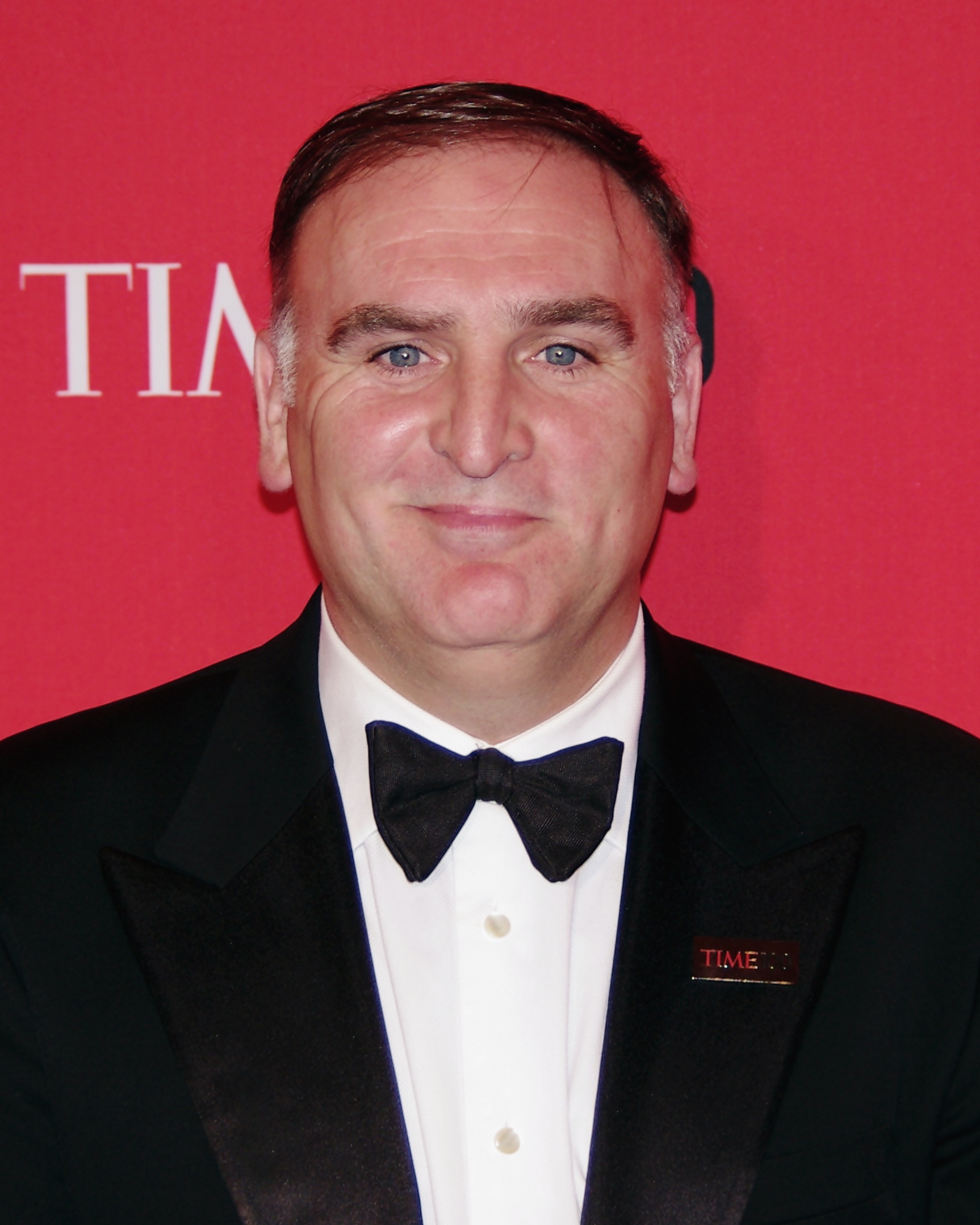
born José Ramón Andrés Puerta
Chef; founder of ThinkFoodGroup and World Central Kitchen · b. 1969 · Mieres, Asturias, Spain
Two calls made by hand, not formulas. how we score →
Summary
Raised by two nurses in Asturias, he trained under Ferran Adrià at elBulli, then landed in New York at twenty-one with about fifty dollars and cooked his way through line jobs.
By 1993 he ran a Washington tapas kitchen; he and a partner built that into ThinkFoodGroup. The standing it gave him funded World Central Kitchen, a nonprofit that now feeds people after earthquakes, hurricanes, and wars.
How it happened
José Ramón Andrés Puerta was born July 13, 1969, in Mieres, a mining town in Asturias, Spain. His parents, Mariano Andrés and Marisa Puerta, were both nurses; he has said that watching them work is where he first understood service to other people. The family moved to Santa Coloma de Cervelló, outside Barcelona, when he was six. At fifteen he enrolled at a Barcelona hospitality and culinary school, and he did his compulsory Spanish military service as a cook.
From 1988 to late 1990 he trained under Ferran Adrià at elBulli on the Catalan coast, then one of the most influential kitchens in the world. Adrià fired him in December 1990. Andrés has described the training as formative and the firing as the push that sent him toward the United States rather than another Spanish kitchen.
He arrived in New York in 1991 at twenty-one with, by his own account, about fifty dollars. He found work as a line cook at Eldorado Petit in Midtown and staged at The Quilted Giraffe, building an American résumé from nothing but the elBulli training and his own labor.
In 1993 he was hired to run the kitchen at Jaleo, a new tapas restaurant in Washington, D.C., at a moment when Spanish tapas were still close to unknown in American dining. He helped its owners open Café Atlántico, Oyamel, and Zaytinya through the 1990s and 2000s, and in 2006 he and business partner Rob Wilder formalized the operation as ThinkFoodGroup. It grew on restaurant revenue rather than outside investors, and by the early 2020s it ran roughly thirty venues across several U.S. cities and Puerto Rico. This is the base the rest of his career sits on: an immigrant line cook who became a company co-owner by building a market that barely existed when he started.
In 2010, after the Haiti earthquake, he founded World Central Kitchen, a nonprofit that cooks and delivers meals in disaster zones; it is funded separately from ThinkFoodGroup and its money is not his. WCK served more than two million meals in Puerto Rico after Hurricane Maria in a single month and has since operated in Ukraine, Turkey, the Bahamas, and Gaza, among other places. In April 2024 an Israeli airstrike killed seven WCK workers in Gaza; Andrés said publicly that he believed they were targeted and called for accountability, and WCK paused and later resumed its Gaza operations.
He became a U.S. citizen in December 2013, more than two decades after arriving. He has won two James Beard Foundation chef awards and its 2018 humanitarian award, Spain's Order of Arts and Letters, the U.S. National Humanities Medal, and the 2025 Presidential Medal of Freedom, and was nominated for the Nobel Peace Prize in 2019.
The coded evidence
Thirteen groups, every claim sourcedCoarse public-record coding; race is a noisy, interpretive category for a European-born subject. He is classified as Hispanic under U.S. Census convention because Spain is a Spanish-origin country, which is why the ethnicity facet carries "Spanish" separately.
↗ en.wikipedia.orgFirst-generation immigrant to the United States; emigrated from Spain in 1991 at twenty-one, naturalized as a U.S. citizen in December 2013.
↗ en.wikipedia.orgnot established
Not directly documented. Spain was overwhelmingly Catholic during his childhood, but no personal statement on this was found.
↗ en.wikipedia.orgSpanish
↗ joseandres.substack.comNo move was made for a partner's career.
He emigrated years before meeting his wife, Patricia Fernández de la Cruz, in Washington, D.C.; the move to the U.S. was not made to follow a partner.
↗ biography.comnot established
No U.S.-based fallback is documented. His parents' home in Spain presumably remained available if the move failed, but this is not stated anywhere in the record, so it is coded as unestablished rather than assumed.
↗ en.wikipedia.orgNone beyond his own wages. He arrived with about fifty dollars and supported himself on line-cook pay at Eldorado Petit and other New York kitchens before moving to Washington in 1993.
↗ biography.com0
He was unmarried and without children through the New York and early Jaleo years; he married in 1995.
↗ biography.comnot established
No homelessness, eviction, or comparable instability is documented. He moved through paid kitchen jobs from arrival, which is a harder start than a funded one but not an unhoused one.
↗ en.wikipedia.orgThe hardship was imposed, not chosen. There was nothing to fall back on.
Arriving with about fifty dollars in a country where he had no family and no standing credential recognition was a genuine financial risk, not a chosen period of austerity against a comfortable fallback.
↗ biography.comBoth parents were nurses: father Mariano Andrés, from Teruel; mother Marisa Puerta, from Barakaldo in the Basque Country.
↗ joseandres.substack.comNeither parent was self-employed.
Nursing in Spain's health system is typically salaried employment rather than self-employment; not explicitly confirmed either way.
↗ joseandres.substack.comBoth parents held nursing credentials.
↗ joseandres.substack.comNo documented multigenerational wealth or institutional standing. Stable, working-professional household on two nursing incomes, not a wealthy or connected one.
↗ joseandres.substack.comHis parents let him leave general schooling for a hospitality and culinary track at fifteen; he describes cooking alongside them at home from childhood, which suggests support for the path rather than resistance to it.
↗ joseandres.substack.comMieres, Asturias, to age six; then Santa Coloma de Cervelló, a working-class town outside Barcelona.
↗ joseandres.substack.comPublic general schooling, then a vocational hospitality and culinary school in Barcelona from age fifteen.
↗ en.wikipedia.orgGrew up in and around Barcelona and Catalonia during the rise of Catalan haute cuisine, culminating in apprenticing at elBulli — daily proximity to one of the most concentrated fine-dining scenes in the world at exactly the moment it was becoming internationally dominant.
↗ en.wikipedia.orgMoved from Mieres to the Barcelona area at six; emigrated to New York at twenty-one in 1991.
↗ en.wikipedia.orgModest downgrade rather than a full inversion. He left a three-year apprenticeship at one of the world's most acclaimed restaurants for entry-level line-cook wages in New York, a step down in professional standing that reflects the usual non-recognition of foreign culinary pedigree rather than a family class collapse.
↗ biography.comThe owners of the planned Jaleo restaurant in Washington, D.C. hired him to lead its kitchen in 1993 on the strength of his elBulli training; he had no prior U.S. reputation or connections.
↗ biography.comJaleo and its sister restaurants (Café Atlántico, Oyamel, Zaytinya) functioned as the platform: a decade-plus of running and helping open kitchens for one Washington ownership group before he and Rob Wilder formalized ThinkFoodGroup in 2006.
↗ biography.comCredibility, Skill, Network
The Jaleo years supplied reputation, kitchen leadership experience, and the Wilder partnership rather than direct capital.
↗ biography.comArrived in New York with no U.S. contacts and found work through the ordinary restaurant labor market — Eldorado Petit, then staging at The Quilted Giraffe — rather than through a prearranged introduction.
↗ biography.comRobert "Rob" Wilder co-founded ThinkFoodGroup with him in 2006, running the business and operations side of the company.
↗ biography.comRoughly three years, 1988 to late 1990, training directly under Ferran Adrià at elBulli in Roses, Catalonia, before Adrià fired him.
↗ en.wikipedia.orgBeing fired from elBulli by Adrià in December 1990 is the event he points to as pushing him to leave Spain; he emigrated to New York within roughly a year of the firing.
↗ en.wikipedia.org3
Eldorado Petit, The Quilted Giraffe (staged), then the Jaleo ownership group, before co-founding ThinkFoodGroup.
↗ biography.comVocational diploma from a Barcelona hospitality and culinary school (Escola de Restauració i Hostalatge), enrolled at fifteen. No university degree.
↗ en.wikipedia.orgDirect vocational track: culinary school at fifteen, then compulsory Spanish military service as a cook, then a professional apprenticeship at elBulli — no community-college or university detour.
↗ en.wikipedia.orgelBulli itself functioned as an elite network as much as a job — one of the most influential kitchens of the era, whose alumni went on to lead restaurants worldwide.
↗ en.wikipedia.orgArrived in New York in 1991 with, by his own frequently repeated account, about fifty dollars.
Widely repeated in his own interviews and secondary profiles; treated as a personal anecdote rather than a filed figure.
↗ biography.comIt paid its own way from the start. Revenue came before any outside money.
ThinkFoodGroup and its predecessor restaurants grew on restaurant revenue; no outside investment round is documented at founding.
↗ biography.comBy 2006 he had over a decade of executive-chef income and standing from Jaleo and its sister restaurants, which formed the base from which he entered ThinkFoodGroup as a co-owner alongside Wilder.
The exact capital contribution at ThinkFoodGroup's founding is not disclosed; this describes the general financial base rather than a documented dollar figure.
↗ biography.comRob Wilder functioned as an operating partner rather than a passive investor, running the business side while Andrés supplied the culinary concepts.
↗ biography.comThinkFoodGroup has grown as a privately held partnership financed from operating restaurant revenue rather than outside equity rounds; no venture or private-equity capitalization is documented.
↗ biography.comThinkFoodGroup operated roughly thirty restaurant venues by the early 2020s across Washington, D.C., Los Angeles, Miami, Las Vegas, and Puerto Rico; ownership versus leased-space structure per venue is not broken out in public sources.
↗ biography.comPersonal training and experience — bringing the Spanish tapas format and later Mediterranean and Latin American concepts to a Washington, D.C. dining market that had little exposure to them.
↗ biography.comnot established
No documented failed venture prior to his restaurant career taking hold.
↗ en.wikipedia.orgSelf, through wage labor in New York kitchens after arriving with about fifty dollars.
↗ biography.comIn 2016, already an established restaurateur, he withdrew from a contracted restaurant at Trump International Hotel in Washington after Donald Trump's 2015 remarks about Mexican immigrants. The Trump Organization sued him for breach of contract; he countersued, and the parties settled in April 2017 on confidential terms. It cost him a high-profile, already-signed deal for reasons of personal values rather than money.
↗ en.wikipedia.org37
Age at the 2006 co-founding of ThinkFoodGroup, when he converted from a hired executive chef to a company co-owner.
↗ biography.comEarly-1990s Washington, D.C. dining had almost no exposure to contemporary Spanish tapas, leaving the concept close to unclaimed in the U.S. market when he arrived at Jaleo.
↗ biography.comWashington, D.C.
↗ biography.comBuilt. Created new restaurant concepts and, later, a new disaster-relief organization from scratch rather than acquiring an existing business.
↗ en.wikipedia.org20
From ThinkFoodGroup's 2006 founding to 2026, run continuously as chef and co-owner.
↗ biography.comBuilt his base in Washington, D.C. rather than New York or Los Angeles, the more typical U.S. culinary media capitals of the period.
↗ biography.comRestaurants and hospitality (Spanish and Mediterranean cuisine); separately, disaster-relief humanitarian work
↗ en.wikipedia.orgnot established
No credible, methodology-disclosed net worth figure exists. He does not appear on Forbes' billionaire or executive-compensation trackers, and ThinkFoodGroup is privately held with no public filings. A commonly circulated content-aggregator estimate places it around $50-70 million, but it has no disclosed methodology and is not used here. Magnitude below is set instead from the documented scale of ThinkFoodGroup — co-founded 2006, roughly thirty restaurant venues across several U.S. cities and Puerto Rico by the early 2020s — which supports a $10M-100M band rather than a specific figure. World Central Kitchen's hundreds of millions of dollars in disaster-relief donations are nonprofit funds, not his personal wealth, and are excluded from this figure entirely.
↗ celebritynetworth.comAggregator
Included only to document that the lone circulating figure is an unsourced aggregator estimate, not a basis relied on here.
↗ celebritynetworth.comWhat value exists is concentrated in an owned, privately held restaurant company built since 2006, not a large public salary. World Central Kitchen is a separate nonprofit he founded and does not lead to personal income; its donation and grant flows are not his money.
↗ en.wikipedia.orgFounded World Central Kitchen in 2010 after the Haiti earthquake; it has since delivered over 130 million meals in Gaza alone as of 2025 and operated in dozens of other disaster and conflict zones, including Puerto Rico after Hurricane Maria, Ukraine, and Turkey after the 2023 earthquakes. Seven WCK workers were killed in an Israeli airstrike in Gaza in April 2024; Andrés said publicly he believed they were targeted and called for accountability. He has also received the National Humanities Medal (2016), the James Beard Humanitarian of the Year award (2018), and the Presidential Medal of Freedom (2025), and was nominated for the Nobel Peace Prize in 2019.
↗ en.wikipedia.orgUncapped
Private ownership stake in a growing restaurant company rather than a salaried or credentialed ceiling.
↗ biography.comTrump Old Post Office LLC sued Andrés for breach of contract in 2015 after he withdrew from a planned restaurant at Trump International Hotel in Washington, D.C., following Donald Trump's remarks about Mexican immigrants; Andrés countersued. The parties settled on confidential terms in April 2017, and no finding of liability against him is documented.
↗ en.wikipedia.orgAfter
Occurred roughly a decade after ThinkFoodGroup's founding, once he was already an established restaurateur.
↗ en.wikipedia.orgUnrelated
The dispute followed from a values-driven withdrawal after his success was already built; it did not produce any part of his outcome.
↗ en.wikipedia.orgCivil wrong
An ordinary contract dispute between two commercial parties, settled without any adjudicated finding against either side.
↗ en.wikipedia.orgNone
Settled confidentially in 2017; no fine, liability finding, or other consequence against Andrés is documented.
↗ en.wikipedia.orgvisionary chef, Tireless, Outspoken, mission-driven humanitarian
↗ biography.comPublic
↗ biography.com5
Wikipedia (his page and World Central Kitchen's), biography.com, his own Substack, and the aggregator net-worth source, among others reviewed.
↗ en.wikipedia.orgAfter
His broad public reputation, and especially the humanitarian reputation built through World Central Kitchen, formed well after the 1993-2006 restaurant-building years.
↗ biography.comAsset
His public profile has driven fundraising for World Central Kitchen and credibility for ThinkFoodGroup's expansion.
↗ en.wikipedia.orgThe reputation was deliberately built, through books, press, and PR.
Built partly through deliberate media work — cookbooks, a cooking show, television appearances — alongside reputation that accrued organically from restaurant awards and disaster-relief work.
↗ biography.comStructural context
The cost-of-failure score comes from this person's own money and circumstances. But who they were in America carried its own weight, the same way their household or income did, and it shaped how hard the path was just as much. That part isn't in the cost-of-failure number. It's here instead.
Men founded the companies that took nearly all the venture funding and almost every top outcome, a tailwind that never shows up in one person's own circumstances.
↗ techcrunch.comImmigrants and their children are overrepresented among America's biggest companies, as founders and as senior leaders. They got there through the visa, credential, and network hurdles that make the path harder to even start down.
↗ forbes.comAmong the people recorded here — men: 169 · White (Spanish/European) subjects: 1. Representation here is who reached these outcomes, not equal odds of reaching them.
Controlled comparisons
Each holds one thing constant and varies another, so the difference is the point. A list of similar names wouldn't tell you anything.