Judy Faulkner
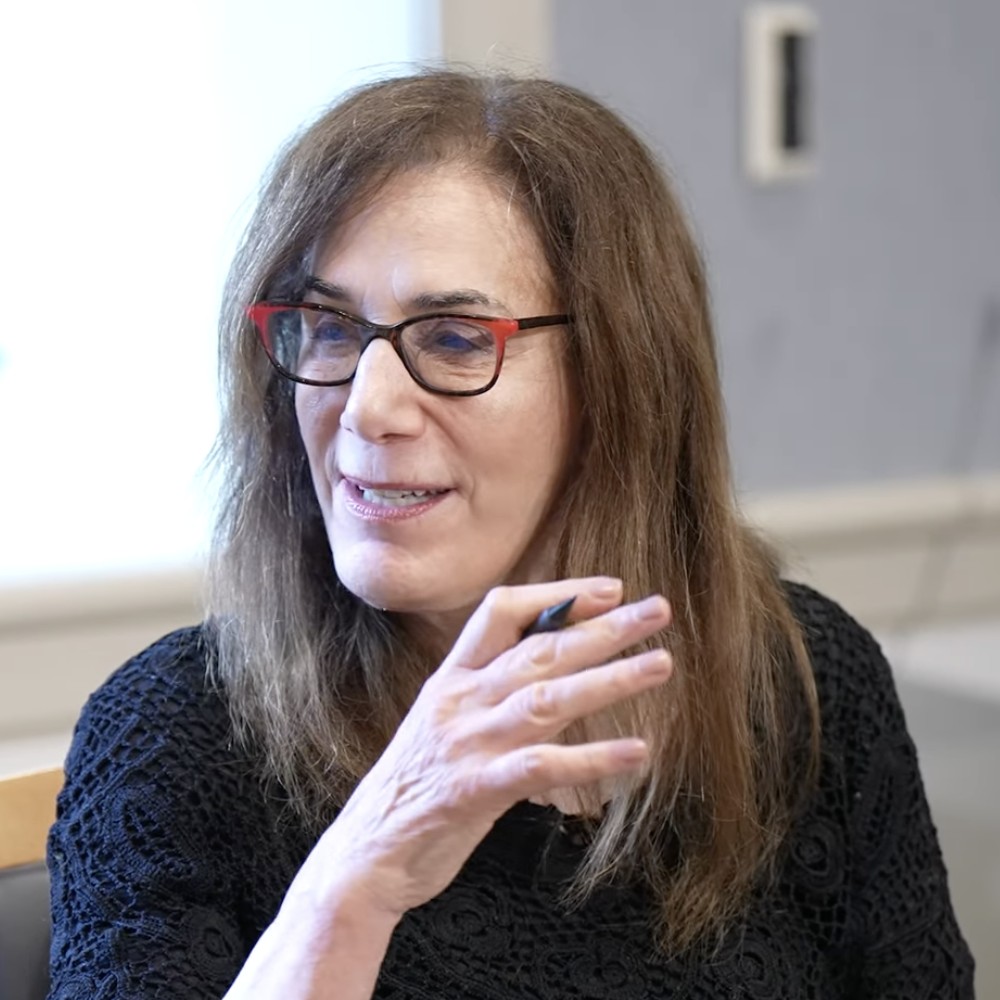
born Judith Faulkner
Founder and CEO, Epic Systems Corporation — the dominant U.S. electronic health records platform (EpicCare, MyChart) · b. 1943 · Cherry Hill, New Jersey → Madison, Wisconsin
Two calls made by hand, not formulas. how we score →
Summary
Faulkner is the daughter of a pharmacist and a peace activist.
She earned a math degree, then a computer science master's at Wisconsin, and in 1979 started what became Epic Systems with about $70,000 from friends and family. She never took venture money and never went public. Decades of retained ownership, not a salary, built one of the largest self-made fortunes in American software.
How it happened
Born Judith Greenfield on August 11, 1943, and raised in the Erlton section of Cherry Hill, New Jersey. Her father, Louis Greenfield, ran his own pharmacy with a soda fountain; her mother, Del Greenfield, was a peace activist tied to the South Jersey Peace Center and later directed Oregon Physicians for Social Responsibility, an organization that shared the 1985 Nobel Peace Prize. Her sister became a physician and her brother an attorney. She graduated from Moorestown Friends School, a private Quaker school, in 1961.
She earned a bachelor's degree in mathematics from Dickinson College, then went to the University of Wisconsin–Madison for a master's in computer science, finishing in 1967. There she took what is described as one of the first computers-in-medicine courses offered anywhere, and worked under Dr. Warner Slack and psychiatrist Dr. John Greist, building early software for tracking patient information.
In 1979 she and Greist founded Human Services Computing — later Epic Systems — in a basement office on University Avenue in Madison, with three employees and about $70,000 raised from friends and family. There was no venture round and never would be one. The company has never taken outside institutional capital, never gone public, and never been acquired; Faulkner and her family still hold roughly 42–43 percent of it.
For its first two decades Epic was a minor player — around 400 employees and 73 clients by 2000, off the list of top hospital vendors entirely. In 2003, Kaiser Permanente picked Epic over IBM and Cerner for a system-wide electronic-records rollout reported at roughly $2 billion, the deal that moved Epic into the top tier of health-IT vendors and set up two more decades of hospital-system contracts.
Epic moved to a themed campus in Verona, Wisconsin, in 2005 and grew into the largest electronic-health-records vendor in the country by market share, with records held on more than 325 million patients and its MyChart portal used by roughly 150 million of them. The company builds its software entirely in-house and has made no acquisitions. That same dominance has drawn antitrust suits, including one from the Texas attorney general in December 2025 alleging an illegal monopoly, and years of criticism from rivals and interoperability advocates that Epic's systems are built to resist sharing data outward — criticism Faulkner has publicly disputed, arguing federal data-sharing mandates would themselves undermine patient privacy.
Faulkner signed the Giving Pledge in 2015, committing to give away 99 percent of her fortune, and co-founded the Roots & Wings Foundation with her husband, pediatrician Gordon Faulkner, in 2019. She reportedly sells around $100 million in Epic stock back to the company most years to fund it.
The coded evidence
Thirteen groups, every claim sourcedEuropean American; a more specific ancestry is not clearly documented
Her maiden name, Greenfield, is a surname associated with (though not exclusive to) Ashkenazi Jewish families, and no source reviewed confirms or discusses her family's religion or ethnic ancestry directly. Coded at the broad regional level rather than guessed; her father's pharmacy and mother's peace-movement work are documented, but not an ethnic identity.
↗ en.wikipedia.orgNo immigration history documented for either parent.
↗ en.wikipedia.orgnot established
She attended Moorestown Friends School, a private Quaker school, but no source reviewed states her family's own religious affiliation.
↗ en.wikipedia.orgnot established
No documented family wealth or property behind the 1979 founding; an educated, professionally employed two-parent household, not a wealthy one.
↗ en.wikipedia.orgEpic began in 1979 with three employees in a basement office and about $70,000 in start-up money; growth was funded by client revenue from early on rather than a personal or family income floor.
↗ forbes.comThe hardship was imposed, not chosen. There was nothing to fall back on.
Nothing in the record frames the modest 1979 start as chosen austerity against a standing cushion.
↗ en.wikipedia.orgFather Louis Greenfield was an independent pharmacist who ran his own store; mother Del Greenfield was a peace activist affiliated with the South Jersey Peace Center and later director of Oregon Physicians for Social Responsibility, an organization that shared the 1985 Nobel Peace Prize.
↗ captimes.comA parent worked for themselves, the strongest known predictor of founding.
Her father owned his own pharmacy.
↗ captimes.comBorn Judith Greenfield in Cherry Hill, New Jersey.
↗ en.wikipedia.orgErlton section of Cherry Hill, New Jersey.
↗ en.wikipedia.orgMoorestown Friends School, a private Quaker school; graduated 1961.
↗ en.wikipedia.orgMoved from New Jersey to Madison, Wisconsin for graduate school around 1965–67 and stayed, founding Epic there in 1979 and remaining headquartered in the Madison area since.
↗ en.wikipedia.orgDr. Warner Slack and psychiatrist Dr. John Greist, University of Wisconsin–Madison faculty she worked under and with while a graduate student in one of the first computers-in-medicine courses offered anywhere; Greist became her co-founder.
↗ en.wikipedia.orgAcademic medical-computing research at UW–Madison, where she was developing patient-information software before Epic existed as a company.
↗ en.wikipedia.orgDr. John Greist, a University of Wisconsin–Madison psychiatrist.
↗ en.wikipedia.org22
Approximate age entering the UW–Madison computer science graduate program where she took the computers-in-medicine course.
↗ en.wikipedia.org12
From her 1967 master's to Epic's 1979 founding; her work in the interim is not fully documented in sources reviewed.
↗ en.wikipedia.orgMaster's degree in computer science, University of Wisconsin–Madison (1967), after a bachelor's degree in mathematics from Dickinson College. She later received an honorary doctorate from UW–Madison's Computer Sciences Department in 2010.
↗ en.wikipedia.orgDirect math degree, then a computer science master's; no gap or non-traditional route documented.
↗ en.wikipedia.orgUW–Madison's medical school and computer science department supplied her mentors, her co-founder, and the research question — tracking patient information — that became Epic's founding product.
↗ en.wikipedia.orgAbout $70,000 raised from friends and family to found Human Services Computing (later Epic Systems) in 1979.
↗ en.wikipedia.orgnot established
The $70,000 seed is described as coming from "friends and family" collectively; no source reviewed breaks out how much, if any, came specifically from her own family versus friends or other early backers.
↗ en.wikipedia.orgIt paid its own way from the start. Revenue came before any outside money.
↗ forbes.comEpic has never taken venture capital or private equity, never gone public, and has made no acquisitions in its history, building everything in-house. It remains privately held; Faulkner and her family own roughly 42–43 percent.
↗ forbes.comNever sold equity to outside investors and never listed publicly; ownership and control have stayed with Faulkner and Epic itself throughout.
↗ forbes.comGrew directly out of her graduate research building patient-tracking software under academic medicine faculty at UW–Madison, not from an outside market observation.
↗ en.wikipedia.orgAs founder, CEO, and roughly 42–43 percent owner of a private company that has never diluted through outside capital, she holds both economic ownership and operational control without the split that comes from raising venture money.
↗ forbes.com0
No prior venture, failed or otherwise, is documented before Epic's 1979 founding.
↗ en.wikipedia.org59
Approximate age when Epic won the 2003 Kaiser Permanente contract that moved it into the top tier of health-IT vendors.
↗ en.wikipedia.orgA multi-decade U.S. push toward digitizing hospital and clinic records, sharpened by the 2009 HITECH Act's incentive payments for adopting electronic health records, which pulled large health systems toward vendors like Epic through the 2010s.
↗ en.wikipedia.orgBuilt entirely from scratch and grown organically; Epic has made no acquisitions and develops all of its software in-house.
↗ forbes.comElectronic health records and health-information software
↗ en.wikipedia.org9600000000
Forbes real-time estimate, September 28, 2026. Epic is privately held, so this is a journalistic estimate of paper equity value (roughly 42–43 percent of the company), not a filing-derived figure. Forbes reported about $7.8B in July 2024, rising toward $9.6B by September 2026 as Epic's estimated value grew; band this figure rather than treating it as precise.
↗ forbes.comJournalistic estimate
↗ forbes.com2026
↗ forbes.comNearly all of her wealth is unlisted equity in Epic. She reportedly sells around $100 million in Epic shares back to the company in most years, with proceeds directed toward her Giving Pledge commitments.
↗ forbes.comWealth held as an appreciating stake in a private company rather than a salary. Epic reported about $6.7 billion in 2025 sales — that is company revenue, not her personal net worth, which is the figure coded in magnitude above.
↗ forbes.comWidely described as the wealthiest self-made woman in American technology and, per Forbes in 2013, "the most powerful woman in health care." Epic is the largest U.S. electronic-health-records vendor by market share, with records on more than 325 million patients and its MyChart portal used by roughly 150 million of them.
↗ en.wikipedia.orgUncapped
↗ forbes.comEpic faces multiple antitrust suits filed since September 2024, including one from Particle Health alleging Epic restricted health records access to pressure customers away from rival platforms, and one filed by the Texas attorney general in December 2025 alleging Epic maintains an illegal monopoly in the electronic-health-records market. These are allegations in active litigation, not adjudicated findings, and concern the company's market conduct rather than any personal finding against Faulkner.
↗ en.wikipedia.orgAfter
The antitrust suits arrived decades after Epic's 1979 founding and its 2003 Kaiser breakthrough, once Epic already held dominant market share.
↗ en.wikipedia.orgIncidental
The wealth mechanism was the 1979 bootstrapped founding and retained ownership; the current antitrust scrutiny concerns Epic's market conduct as an already-dominant incumbent decades later, not how the fortune was originally built.
↗ en.wikipedia.orgLegal gray
Reflects contested, unresolved allegations about competitive practices, not an adjudicated wrong.
↗ en.wikipedia.orgNone
No fine, judgment, or personal liability is documented as of this writing; the suits are pending.
↗ en.wikipedia.orgKnown internally as a demanding, detail-focused manager — one characterization has it that "working with Judy is like walking on the sun" — and as of 2022 Epic required nearly daily in-office attendance, with a small annual allowance of remote days.
↗ captimes.comLow key, Demanding, fiercely independent, Detail obsessed
Composite of how business and health-IT press have characterized her over multiple profiles, including a Forbes piece titled "Health Care's Low-Key Billionaire" and another titled "Epic Systems' Tough Billionaire."
↗ forbes.comPress
↗ forbes.comBefore
Her reputation as a disciplined, independent operator predates the recent antitrust scrutiny by decades.
↗ en.wikipedia.orgMixed
Her reputation for stability, privacy-mindedness, and independence from outside capital has been an asset in winning large, risk-averse hospital-system customers; the same closed, self-contained approach is what critics and regulators now point to as anti-competitive.
↗ en.wikipedia.orgThe reputation accrued from behaviour rather than being manufactured.
Consistently described as press-shy and Madison-based rather than as someone who built a public persona.
↗ forbes.comTrusted for decades by large hospital systems and generally well-regarded within Wisconsin business and civic circles; more recently criticized by health-tech competitors, interoperability advocates, and some regulators over allegations — not adjudicated — that Epic's systems resist sharing patient data outward to protect its market position. Faulkner has publicly disputed that framing, including in comments describing federal data-sharing mandates as a threat to patient privacy.
↗ fiercehealthcare.comStructural context
The cost-of-failure score comes from this person's own money and circumstances. But who they were in America carried its own weight, the same way their household or income did, and it shaped how hard the path was just as much. That part isn't in the cost-of-failure number. It's here instead.
Startups founded only by women have drawn about 2% of US venture capital, a share that has barely moved in a decade. Raising money as a woman was harder than any one record shows.
↗ techcrunch.comWhite founders are heavily overrepresented among funded companies and top-tier wealth relative to their share of the population, an edge that has nothing to do with a person's own money.
↗ techcrunch.comAmong the people recorded here — women: 68 · White subjects: 114. Representation here is who reached these outcomes, not equal odds of reaching them.
Controlled comparisons
Each holds one thing constant and varies another, so the difference is the point. A list of similar names wouldn't tell you anything.