Ken Griffin
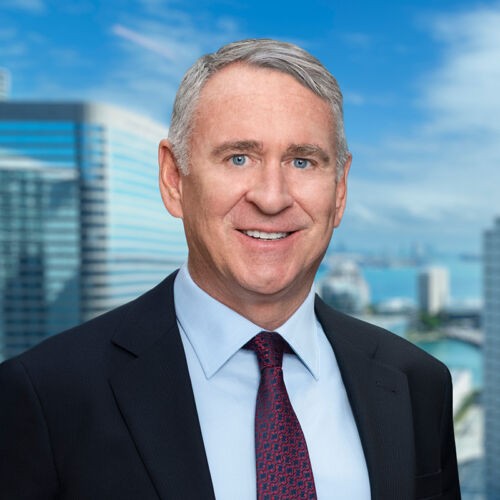
born Kenneth Cordele Griffin
Founder and CEO of Citadel, one of the world's largest hedge funds; founder of Citadel Securities, a dominant US market-making firm · b. 1968 · Daytona Beach, Florida
Two calls made by hand, not formulas. how we score →
Summary
Grew up comfortable in Boca Raton, Florida, with a grandmother whose inherited oil, farm, and seed businesses gave the family real money behind it.
He began trading from a Harvard dorm room in 1987 on roughly $100,000 raised from family, then was staked by investor Frank Meyer to found Citadel in 1990 with $4.6 million, building it and Citadel Securities into two of finance's dominant firms.
How it happened
Born 1968 in Daytona Beach, Florida, and raised mainly in Boca Raton (with stretches in Texas and Wisconsin). His father worked in project management in building-products distribution, later as a project manager at General Electric. His paternal grandmother, Genevieve Huebsch Gratz, had inherited an oil business, three farms, and a seed business — family wealth that gave him access to money well beyond a typical teenager's, and that he would draw on directly a few years later.
He enrolled at Harvard College in 1986 and earned a BA in economics in 1989. In 1987, working around a campus rule against running a business from a dorm room, he had a satellite dish installed on the roof of Cabot House to pull real-time market data and began trading convertible bonds from his room. He opened a brokerage account with roughly $100,000 raised from his grandmother, a family dentist, and other acquaintances, then launched a small fund with about $265,000 that profited by shorting into the October 1987 "Black Monday" crash — a start funded entirely by other people's money, none of it his own earnings.
After graduating in 1989 he moved to Chicago and traded under Frank Meyer at Glenwood Capital Investments, which allocated him roughly $1 million in capital; he reportedly earned about a 70% return that year. Meyer's backing supplied both a proven track record to point to and the relationship that financed what came next.
In 1990, at 21 or 22, he founded Citadel with $4.6 million, with Meyer contributing to the founding capital. The firm was not bootstrapped from savings or built on revenue first — it opened with a multimillion-dollar stake assembled from family money and an experienced investor's backing, the single event that set the rest of his career in motion.
Citadel's flagship funds fell roughly 55% in the 2008 financial crisis, a period that reportedly brought the firm close to closing client redemptions altogether, before rebounding with a 62% return in 2009. The firm survived a crisis that closed many comparable funds outright.
He founded Citadel Securities in 2002 as a separate market-making business. It grew into one of the largest market makers in US equities, at one point executing roughly one in every four US stock trades and handling a large share of retail brokerages' order flow, including a reported 40% of Robinhood's revenue by 2018 through payment-for-order-flow arrangements.
In January 2021, as Melvin Capital faced steep losses on a GameStop short position, Citadel invested $2 billion into Melvin. Days later Robinhood restricted GameStop purchases, and retail traders and some lawmakers alleged collusion between Citadel and Robinhood. Griffin testified before the House Financial Services Committee in February 2021 and denied any coordination; the SEC later concluded that the conspiracy theories were unfounded, and an investor lawsuit alleging a conspiracy was dismissed by a federal district court in 2022 and the dismissal was upheld by the Eleventh Circuit in 2024.
Citadel Securities has been the subject of several SEC enforcement actions over the years, including a $22.6 million penalty in 2017 over claims about trade pricing, a $3.5 million fine in 2018 for mis-reported trades, censures and fines under $1 million in 2020, and a $7 million settlement in 2023 for mismarked sell orders attributed to a coding error. These were firm-level civil settlements; sources reviewed document no personal charge or finding against Griffin himself.
In 2022 he moved Citadel's headquarters from Chicago to Miami, citing the business climate and, he said, concerns about crime and public policy in Chicago. He has become one of the largest Republican political donors of the 2020s, giving roughly $66 million across 2020 races and tens of millions more since, while describing himself as a "Reagan Republican." He has also given more than $2.7 billion to philanthropic causes, including $150 million to Harvard financial aid in 2014, $300 million to Harvard's Faculty of Arts and Sciences in 2023, and a $3 billion pledge to Carnegie Mellon University announced in September 2026, reported as the largest single gift to a US university. Forbes put his personal net worth at $57.5 billion as of September 30, 2026 — a figure distinct from Citadel's own roughly $77 billion in assets under management, which is client capital, not his.
The coded evidence
Thirteen groups, every claim sourcedEnglish
Inferred from a US-born, English-speaking Florida family; not separately documented.
↗ en.wikipedia.orgRaised in a stable two-parent household in Boca Raton, Florida, a comfortable Florida suburb; no source documents housing instability at any point in his upbringing.
↗ en.wikipedia.orgHis 1987 trading start and 1990 Citadel founding were both financed by other people's capital, not his own income or savings: roughly $100,000 from his grandmother and family acquaintances in 1987, a $1 million trading allocation from investor Frank Meyer in 1989, and $4.6 million in founding capital in 1990 with Meyer's backing. He bore essentially no personal financial risk during the build.
↗ en.wikipedia.orgnot established
He married Katherine Weingartt in 1991, after Citadel's 1990 founding; no partner labor is documented during the build itself.
↗ en.wikipedia.org0
No children are documented before or during Citadel's 1990 founding; his three children came later, with second wife Anne Dias-Griffin.
↗ en.wikipedia.orgNo money was owed or sent outward during the build.
No documented obligation to send money to family during the build; if anything, capital flowed to him.
↗ en.wikipedia.orgnot established
No student or startup debt is documented; the 1987 and 1990 capital came from family and an investor rather than loans.
↗ en.wikipedia.orgnot established
No housing, income, or comparable instability is documented around either the 1987 trading start or the 1990 founding.
↗ en.wikipedia.orgFather worked in project management in building-products distribution, later as a project manager at General Electric. Mother's occupation is not established in sources consulted.
↗ en.wikipedia.orgnot established
His father's exact employment structure (salaried vs. self-employed) isn't established in sources consulted.
↗ en.wikipedia.orgHis paternal grandmother, Genevieve Huebsch Gratz, had inherited an oil business, three farms, and a seed business, and was a direct source of the roughly $100,000 that helped seed his first 1987 brokerage account.
↗ en.wikipedia.orgA family with real, if not enormous, wealth behind it — a professional father and a grandmother with inherited business interests — rather than an old-money dynasty or a family with no spare capital at all.
↗ en.wikipedia.orgNo scholarship, employer, military, or debt financing for Harvard is documented; the family's comfortable circumstances make self- or family-funded tuition the most plausible read, coded here as a judgment call rather than an itemized sourced fact.
↗ en.wikipedia.orgnot established
Whether his parents actively encouraged or merely tolerated his dorm-room trading isn't established in sources consulted.
↗ en.wikipedia.orgBoca Raton, Florida — a comfortable Florida suburb, with earlier stretches in Texas and Wisconsin.
↗ en.wikipedia.orgnot established
His father's corporate/distribution career supplied no documented pathway into finance.
↗ en.wikipedia.orgnot established
No specific childhood social or professional network into finance is documented beyond the family's own money.
↗ en.wikipedia.orgFamily capital (his grandmother and a family dentist funding his first brokerage account) gave him a trading stake at 18; after Harvard, investor Frank Meyer at Glenwood Capital staked him with roughly $1 million and then backed Citadel's 1990 founding capital.
↗ en.wikipedia.orgHis Harvard College dorm room (Cabot House), fitted with a satellite dish for real-time market data.
↗ en.wikipedia.orgCapital, Credibility
Family money supplied initial capital; Frank Meyer/Glenwood's backing supplied both capital and a credible track record ahead of the 1990 founding.
↗ en.wikipedia.orgnot established
Citadel is documented as his own founding, not a co-founded venture.
↗ en.wikipedia.orgnot established
No documented political or institutional access preceded Citadel's founding; his political access and donor standing came much later.
↗ en.wikipedia.org1
Traded under Frank Meyer at Glenwood Capital Investments briefly after graduating (1989) before founding Citadel (1990).
↗ en.wikipedia.orgBA in Economics, Harvard College, 1989.
↗ en.wikipedia.orgnot established
Not established in sources consulted; family circumstances make debt financing unlikely.
↗ en.wikipedia.orgTraded convertible bonds from his dorm room throughout his final Harvard years, generating real trading income and a track record before graduation.
↗ en.wikipedia.orgDirect undergraduate admission to an elite private university (Harvard College), not a community-college or transfer route.
↗ en.wikipedia.orgnot established
No specific Harvard classmate or faculty connection is documented as having produced his first hires, clients, or the Meyer relationship.
↗ en.wikipedia.orgRoughly $100,000 raised from his grandmother, a family dentist, and other acquaintances to open a 1987 brokerage account.
↗ en.wikipedia.orgHis grandmother, Genevieve Huebsch Gratz, contributed to the roughly $100,000 that funded his first 1987 brokerage account; the exact dollar amount of her individual share isn't documented.
↗ en.wikipedia.orgnot established
The grandmother's contribution was a gift/investment made during her lifetime, not a bequest, so this isn't coded as inheritance.
↗ en.wikipedia.orgIt needed capital up front, before it earned anything.
Citadel opened in 1990 on assembled investor and family capital, not on existing fee or product revenue.
↗ en.wikipedia.orgnot established
Not applicable/documented; capital came as direct contributions, not loans against collateral.
↗ en.wikipedia.orgA 1987 $100,000 family-and-friends stake, a small 1987 fund of about $265,000, a 1989 $1 million trading allocation from Frank Meyer at Glenwood Capital, then $4.6 million in founding capital for Citadel in 1990 with Meyer's continued backing.
↗ en.wikipedia.orgFrank Meyer of Glenwood Capital Investments — allocated him roughly $1 million to trade in 1989 after seeing his Harvard-era track record, then contributed to Citadel's $4.6 million founding capital in 1990.
↗ en.wikipedia.orgCitadel remains privately held; Griffin has held majority ownership and the CEO role throughout.
↗ forbes.comCitadel LLC (founded 1990), which the firm reports has produced roughly $90.4 billion in net gains after fees since inception.
↗ en.wikipedia.orgDeveloped his own convertible-bond arbitrage trading approach from his Harvard dorm room in 1987, then built Citadel Securities as a separate market-making business starting in 2002.
↗ en.wikipedia.orgMajority owner and CEO of a privately held firm throughout its history — no documented dilution of control comparable to a public-company founder's.
↗ forbes.com0
No prior failed venture is documented in sources consulted; the 1987 fund and 1990 Citadel founding are both described as successful from the start.
↗ en.wikipedia.orgFamily and investor capital (his grandmother's and Meyer's) bore the financial risk of his early trading and Citadel's founding, not Griffin's own savings or income.
↗ en.wikipedia.org21
Born 1968; Citadel founded in 1990. Exact birth month relative to the founding date isn't established, so this is approximate.
↗ en.wikipedia.orgHis first fund profited from shorting into the October 1987 "Black Monday" crash; Citadel's later growth rode the broader 1990s–2000s expansion of institutional capital into hedge funds and, from 2002, the electronic-trading boom that built Citadel Securities into a dominant market maker.
↗ en.wikipedia.orgChicago, Illinois — Citadel's headquarters from its 1990 founding until the 2022 move to Miami.
↗ en.wikipedia.org36
From Citadel's 1990 founding to the 2026 review date; he remains founder and CEO.
↗ en.wikipedia.orgHedge fund management and electronic market making (Citadel and Citadel Securities)
↗ forbes.com57500000000
Forbes real-time billionaires-tracker figure as of 2026-09-30. This is Griffin's PERSONAL net worth, not Citadel's or Citadel Securities' assets under management — Citadel reported roughly $77 billion in AUM around the same period, which is client capital (pensions, institutions, and other investors) managed for a fee, not Griffin's own wealth, and the two should never be conflated.
↗ forbes.comJournalistic estimate
Citadel is privately held; no public filing establishes his exact ownership stake.
↗ forbes.com2026
↗ forbes.comMore than $2.7 billion donated to philanthropic causes, including major gifts to Harvard, the University of Chicago, and a $3 billion pledge to Carnegie Mellon University announced in September 2026, reported as the largest single gift to a US university; one of the largest Republican political donors of the 2020s.
↗ en.wikipedia.orgUncapped
↗ forbes.comCitadel Securities, the firm, has faced several SEC enforcement actions: a $22.6 million penalty in 2017 over claims about retail trade pricing, a $3.5 million fine in 2018 for mis-reported trades, a round of censures and fines under $1 million in 2020 over short-sale and delivery-failure rules, and a $7 million settlement in 2023 for mismarked sell orders attributed to a coding error. Sources reviewed document these as firm-level civil settlements, not a personal finding or charge against Griffin.
↗ en.wikipedia.orgAn investor lawsuit alleging that Citadel and Robinhood conspired during the January 2021 GameStop trading restrictions was dismissed by a federal district court in 2022; the Eleventh Circuit upheld the dismissal in 2024, finding the complaint lacked evidence of anticompetitive market effects.
↗ en.wikipedia.orgAfter
The SEC settlements and the GameStop litigation postdate both Citadel's 1990 founding and Citadel Securities' 2002 founding.
↗ en.wikipedia.orgIncidental
The regulatory settlements were costs of operating an already-dominant market-making business, not the source of its dominance; Citadel Securities' scale in retail order flow is not established in sources consulted as having depended on the specific violations settled.
↗ en.wikipedia.orgCivil wrong
Regulatory and civil settlements; no criminal charge is documented against Griffin or the firm in sources consulted.
↗ en.wikipedia.orgFine absorbed
Fines were paid by Citadel Securities as a firm; no personal liability for Griffin is documented.
↗ en.wikipedia.orgnot established
Sources consulted don't itemize specific attributed personality traits with independent sourcing strong enough to code here.
↗ en.wikipedia.orgPress
↗ en.wikipedia.orgAfter
His public reputation as a financier and, later, as a political donor and philanthropist, formed after Citadel's early success.
↗ en.wikipedia.orgMixed
An asset among institutional clients, conservative political circles, and the universities and institutions he has funded; more contested among retail traders and progressive critics over Citadel Securities' role in payment for order flow and the 2021 GameStop episode, and over his political spending.
↗ en.wikipedia.orgHis reputation splits sharply along political and market-structure lines: praised in conservative political circles as a major Republican donor and in academic/philanthropic circles for gifts to Harvard, the University of Chicago, and Carnegie Mellon; criticized by some retail traders and progressive commentators over Citadel Securities' role in payment for order flow, the 2021 GameStop/Robinhood episode (despite the SEC's finding that conspiracy theories about it were unfounded and the later dismissal of related litigation), and over his political spending.
↗ en.wikipedia.orgnot established
Not applicable as a single settled episode; reputation remains actively contested along the lines described above rather than resolved.
↗ en.wikipedia.orgStructural context
The cost-of-failure score comes from this person's own money and circumstances. But who they were in America carried its own weight, the same way their household or income did, and it shaped how hard the path was just as much. That part isn't in the cost-of-failure number. It's here instead.
Men founded the companies that took nearly all the venture funding and almost every top outcome, a tailwind that never shows up in one person's own circumstances.
↗ techcrunch.comAmong the people recorded here — men: 169 · white subjects: 12. Representation here is who reached these outcomes, not equal odds of reaching them.
Controlled comparisons
Each holds one thing constant and varies another, so the difference is the point. A list of similar names wouldn't tell you anything.