Kendra Scott
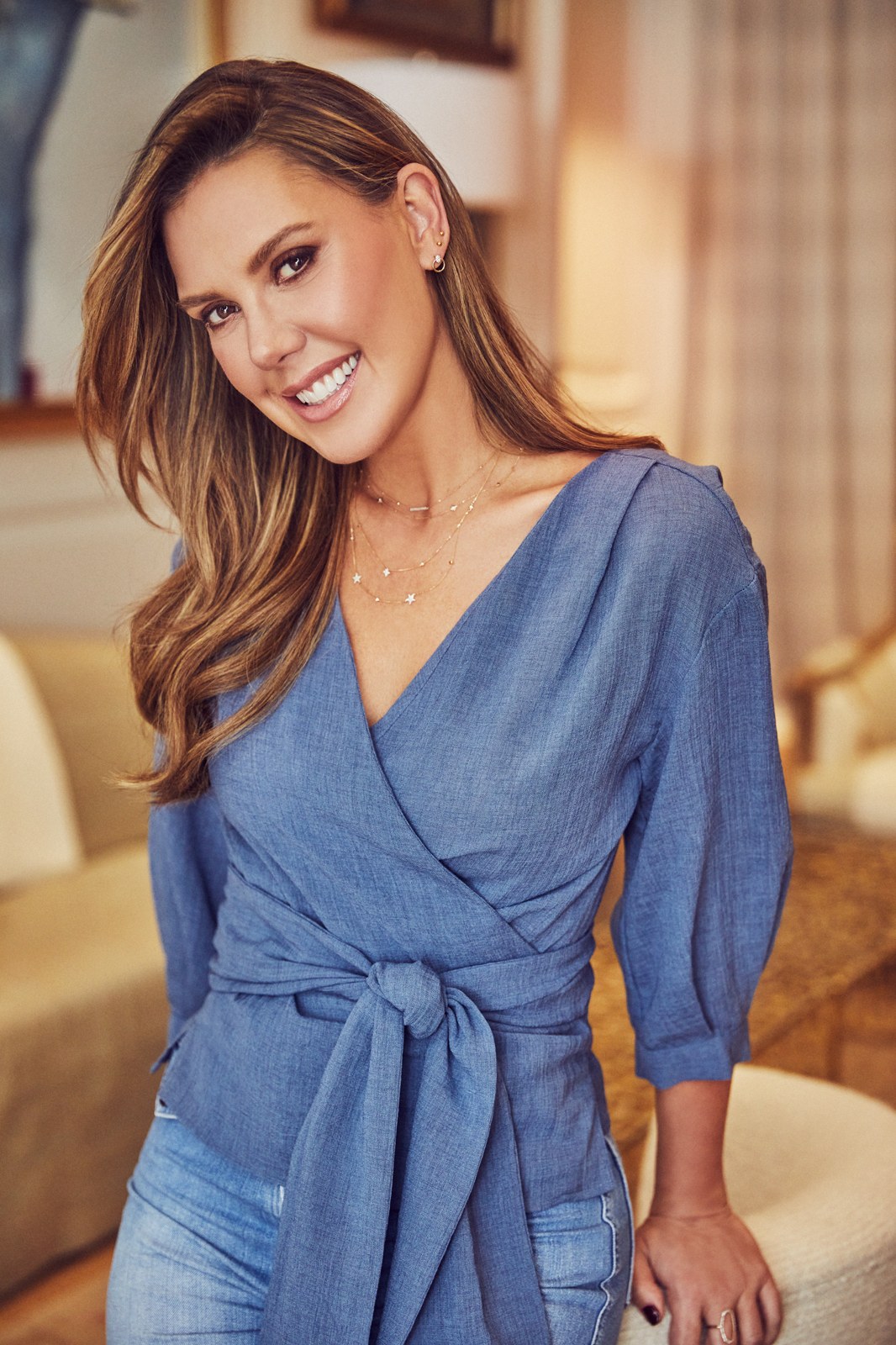
Founder and executive chairwoman, Kendra Scott LLC · b. 1974 · Kenosha, Wisconsin
Two calls made by hand, not formulas. how we score →
Summary
Raised mainly by her father after her parents divorced, she moved to Texas at sixteen when her mother remarried a man dying of cancer — the illness behind her first business, a hat company that failed within five years.
In 2002 she designed jewelry on $500 in a spare bedroom and sold it door to door. The "Color Bar" she later added scaled the brand into a chain Berkshire priced near a billion.
How it happened
Born Kendra Baumgartner in Kenosha, Wisconsin, in 1974. Her parents divorced when she was nine; she was raised mostly by her father while her mother, Janet, a Mary Kay sales director, eventually moved to Chicago for her career. Her father's sister, Jo Ann, a fashion director at Milwaukee's Gimbels department store, became a mentor, projecting slides of runway shows and talking color and cut with her niece.
At sixteen she spent a summer in Houston, where her mother had remarried a man named Rob. Soon after she returned home that fall, Rob was diagnosed with an incurable brain cancer, and she moved to Texas for good. She graduated from Klein High School and enrolled at Texas A&M, but left within her first year, too restless for lecture halls.
Rob's chemotherapy made him lose his hair, and the hats he tried on were all too scratchy. Scott designed something more comfortable, wrote a business plan, and in 1993 moved to Austin and opened The Hat Box, a line of hats for women and men undergoing chemo, donating a share of proceeds to cancer research. It closed inside five years — Austinites, it turned out, did not want to wear a cloche or a porkpie hat. Rob died in 1998.
She married John Scott in 2000 and, while pregnant with her first son, ran a small public-relations venture on the side and took jewelry- making classes. After her son Cade was born in 2002, she put about $500 of her own money into a collection, beaded it at her dining room table and in a spare bedroom, packed it in a wooden tea box, and — baby strapped to her chest — went door to door pitching Austin boutiques. She was turned away everywhere until Patty Hoffpauir, owner of the Garden Room boutique, agreed to carry a few pieces.
The line grew on word of mouth and wholesale orders with no outside money behind it: Nordstrom and boutiques nationwide picked it up, and Oscar de la Renta used her pieces on his runway for spring 2006. The 2008 financial crisis nearly closed the company; a new design called the Danielle, and a Nordstrom order that came with it, is credited with saving it.
In 2009 she introduced the Color Bar, an in-store bar where customers build their own jewelry from interchangeable stones and settings, and opened her first company-owned store on South Congress the following year. The customization concept and the store rollout it justified — rather than the original wholesale jewelry line — is what turned a regional brand into a national retail chain with its own real estate and recurring foot traffic.
Berkshire Partners bought a minority stake in 2016 at a valuation Forbes put near $1 billion; Berkshire sold that stake in 2024 to Singapore's 65 Equity Partners at a valuation still above $1 billion. Scott stepped down as CEO in 2021 to become executive chairwoman, briefly returned as interim CEO in 2025 after an executive departure, and handed the role to Chris Blakeslee in January 2026. She has said she has "never given up control of the company since day one" and still owns more than two-thirds of it. She has also appeared as a guest shark on Shark Tank and published a bestselling 2022 memoir, Born to Shine.
The coded evidence
Thirteen groups, every claim sourcednot established
No documented recent immigration in the family; not a migration-linked case.
↗ en.wikipedia.orgnot established
Not established for the 2002 jewelry launch specifically. By then she had lived independently in Austin for roughly a decade and was married; no parental home is documented as a fallback at that point.
↗ texasmonthly.comShe was married to John Scott through the 2002 founding and for several years after (they divorced in 2006). No source details his income or whether it functioned as a household floor while she built the company; she has said she went without her own salary early on to pay everyone else first.
↗ forbes.comnot established
No documented capital or labor contribution from John Scott to the venture; he is not named as a co-founder or investor.
↗ en.wikipedia.orgnot established
No startup debt is documented; the launch was funded from roughly $500 of personal savings.
↗ forbes.comnot established
No housing or income instability is documented during the 2002 build; she was married and settled in Austin.
↗ texasmonthly.comThe hardship was imposed, not chosen. There was nothing to fall back on.
She describes launching with no capital behind her and forgoing her own pay, a genuine bootstrap rather than a performed austerity, though it sat inside an otherwise stable, married household.
↗ forbes.comMother Janet worked as a Mary Kay sales director. Father's occupation is not established in the sources consulted.
↗ texasmonthly.comA parent worked for themselves, the strongest known predictor of founding.
A Mary Kay sales director is an independent, commission-based distributor rather than a salaried employee.
↗ texasmonthly.comHer father's sister, Jo Ann, a fashion director at Milwaukee's Gimbels department store, mentored her as a child — projecting slides of runway shows and discussing color and cut, and giving her an early, cost-free exposure to the fashion industry.
↗ texasmonthly.comHer family "stood behind" her and let her follow her dream when she opened her first business, The Hat Box, at nineteen, by her own account, even though it did not succeed.
↗ forbes.comAfter her parents' divorce when she was nine, she was raised mostly by her father in Kenosha, while her mother moved away for her career and later remarried in Houston.
↗ texasmonthly.comAt sixteen and into her college years she took on an active caregiving role for her terminally ill stepfather, Rob, during his brain-cancer treatment, which is what led her to move to Texas permanently and, indirectly, to start her first business.
↗ texasmonthly.com1
Changed high schools when the family relocated from Wisconsin to the Houston area around age sixteen.
↗ texasmonthly.comShe has spoken and written (in her 2022 memoir, Born to Shine) about caring for her stepfather Rob through his brain-cancer treatment and losing him in 1998, an experience she has said shaped her company's "Family, Fashion, Philanthropy" values.
Attributed to her own account; Rob is named only as she has named him publicly, with no disputed or third-party allegation involved.
↗ texasmonthly.comKenosha, Wisconsin, through age nine; then a Houston, Texas suburb from age sixteen.
↗ texasmonthly.comPublic schools — Klein High School, in a suburban Houston-area district.
↗ en.wikipedia.orgBorn and raised in Kenosha, Wisconsin. Moved to the Houston area around age sixteen after her mother remarried there. Moved to Austin in 1993, at nineteen, to open The Hat Box, and has been based there since.
↗ texasmonthly.comPatty Hoffpauir, owner of Austin's Garden Room boutique (opened 1979), was the first retailer to take a chance on her jewelry after she was turned away everywhere else going door to door.
↗ texasmonthly.comCold. She packed samples in a wooden tea box and, with her infant son strapped to her chest, pitched boutiques around Austin one at a time with no introductions.
↗ texasmonthly.comHer own dining room table and a spare bedroom of her Austin home.
↗ forbes.comSkill
Jewelry-making classes taken while pregnant supplied a craft skill; no capital, network, or industry credibility came with the launch.
↗ texasmonthly.com19
First fashion-retail venture (The Hat Box) in 1993; the jewelry company followed in 2002.
↗ texasmonthly.com0
No traditional employer is documented; she moved from one entrepreneurial venture (Hat Box, then a small PR business) directly into the next.
↗ texasmonthly.comSome college. Attended Texas A&M University beginning in 1993 but left within her first year without a degree.
↗ en.wikipedia.orgnot established
Not established; she left college within a year, making significant student debt unlikely though undocumented.
↗ en.wikipedia.orgPublic high school (Klein High School) to a brief, unfinished stint at a large public university; no vocational or professional credential followed.
↗ texasmonthly.comAbout $500 from her own bank account, put into a first jewelry collection in 2002.
↗ forbes.comIt paid its own way from the start. Revenue came before any outside money.
Early accounts describe her having to sell her remaining samples just to buy enough material to fill the orders she'd already taken — the business ran on reinvested sales from the start.
↗ en.wikipedia.orgnot established
No loan or collateral is documented at founding; she has described launching "with no capital behind me."
↗ forbes.comGrew for fourteen years — 2002 to 2016 — on reinvested revenue with no outside investment, expanding from wholesale orders into owned retail stores and the Color Bar concept.
↗ forbes.comBerkshire Partners bought a minority stake in 2016 at a valuation reported near $1 billion — the company's first outside institutional capital. Berkshire sold that stake in 2024 to Singapore's 65 Equity Partners at a valuation still above $1 billion.
↗ forbes.comNo outside capital for the first fourteen years. The 2016 and 2024 transactions were minority-stake sales into the company's cap table rather than a primary fundraise to fund operations, which the company had not needed; she has said she has "never given up control of the company since day one" and, as of early 2026, owns more than two-thirds of it.
↗ texasmonthly.comPersonal hobby and jewelry-making classes taken during her pregnancy, applied to an observed gap for affordable gemstone-based designs.
↗ forbes.com1
The Hat Box, a line of chemotherapy-patient hats she opened in Austin in 1993 at nineteen, closed inside five years. A small side public- relations venture she ran during her pregnancy is also documented but not described as a failure — it was simply set aside for the jewelry business.
↗ forbes.comLargely herself and her family; by her own account her family "stood behind" her through the Hat Box's failure. No specific dollar loss is documented.
↗ forbes.comAbout four years between the Hat Box's closure (circa 1997–98, after Rob's 1998 death) and the 2002 jewelry launch, during which she married, ran a small PR business, and took jewelry-making classes.
↗ texasmonthly.comThe 2008 financial crisis nearly closed the company; a new design (the Danielle) and an accompanying Nordstrom order are credited with saving it the year before the Color Bar launched.
↗ texasmonthly.comAustin, Texas, where she had been headquartered since founding.
↗ en.wikipedia.orgHer designs accessorized Oscar de la Renta's spring 2006 runway show in 2005 — an unusually high-profile placement for a young, self-funded jewelry line with no outside backing.
↗ en.wikipedia.orgBuilt a new in-store retail concept (the Color Bar) and a company- owned store fleet from scratch rather than acquiring an existing retailer.
↗ en.wikipedia.orgJewelry, accessories, and beauty
↗ forbes.com900000000
Forbes's estimate as of June 3, 2025. This is her personal net worth from her majority ownership stake, not the company's valuation — the 2016 Berkshire Partners minority investment and the 2024 sale of that stake to 65 Equity Partners both valued the whole company above $1 billion, but a minority stake sale is not the same as her personal wealth, and Forbes's own figure for her has sat below $1 billion.
↗ forbes.comJournalistic estimate
Kendra Scott LLC is privately held; no public filing establishes her exact ownership percentage.
↗ forbes.com2025
↗ forbes.comWealth held as a majority ownership stake in a private company rather than salary.
↗ texasmonthly.comGuest shark on Shark Tank (seasons 12, 14, 16); Ernst & Young Entrepreneur of the Year National Award (2017); inducted into the Texas Business Hall of Fame (2019); named to Forbes's America's Richest Self-Made Women list (2019, and #41 in 2025); published the bestselling memoir Born to Shine (2022); founded the Kendra Scott Foundation (2023) after years of in-house giving programs that had distributed more than $30 million since 2010.
↗ forbes.comUncapped
↗ forbes.comResilient, Scrappy, Relentless, Self made
A fellow Austin founder from the same era recalled "we were both broke, but she was relentless... never, ever, ever say die."
↗ texasmonthly.comPress
↗ texasmonthly.comBefore
Her reputation for persistence formed among fellow Austin entrepreneurs in the company's early, unglamorous years, before national press coverage arrived.
↗ texasmonthly.comAsset
↗ forbes.comThe reputation was deliberately built, through books, press, and PR.
She repeats an "up-from-her-bootstraps" telling of the founding story in interviews and in her memoir.
↗ texasmonthly.comStructural context
The cost-of-failure score comes from this person's own money and circumstances. But who they were in America carried its own weight, the same way their household or income did, and it shaped how hard the path was just as much. That part isn't in the cost-of-failure number. It's here instead.
Startups founded only by women have drawn about 2% of US venture capital, a share that has barely moved in a decade. Raising money as a woman was harder than any one record shows.
↗ techcrunch.comAmong the people recorded here — women: 68 · white subjects: 12. Representation here is who reached these outcomes, not equal odds of reaching them.
Controlled comparisons
Each holds one thing constant and varies another, so the difference is the point. A list of similar names wouldn't tell you anything.