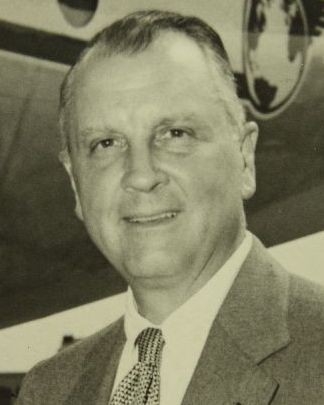
Logan Green
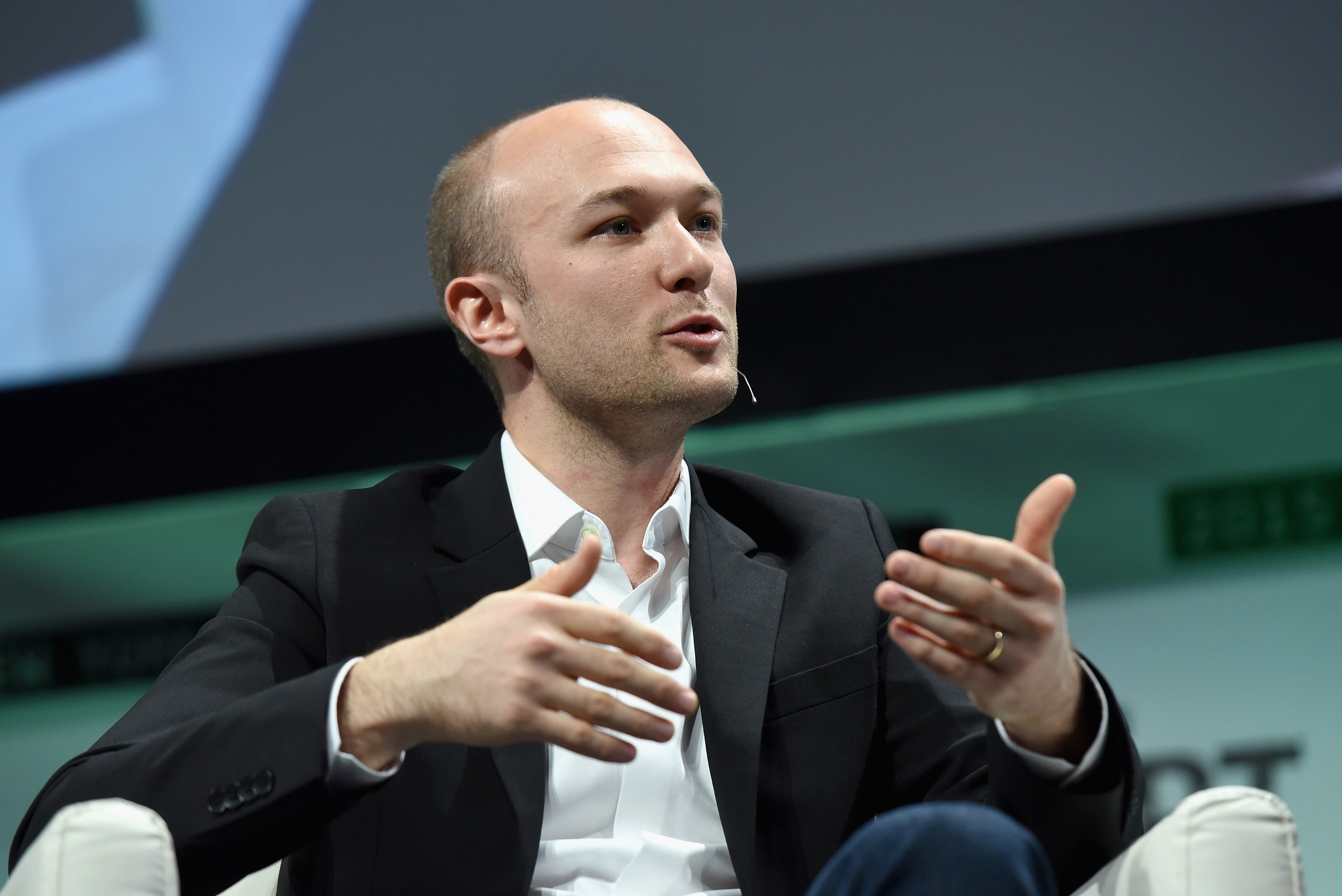
Co-founder and former CEO of Lyft · b. 1984 · Los Angeles, California
Two calls made by hand, not formulas. how we score →
Summary
Raised comfortably in Los Angeles by a veterinarian mother and a physician father, he finished a business economics degree at UC Santa Barbara, then spent five years building a campus carpooling company before pivoting it into Lyft in 2012.
Lyft went public in 2019, but as Uber's permanent number two its stock fell hard afterward, shrinking Green's paper fortune by roughly an order of magnitude.
How it happened
Born in 1984 and raised in the Los Angeles area, the son of a veterinarian mother and a physician father who were both environmental activists — accounts describe them helping unionize farm laborers and biking 350 miles to protest for the preservation of Mono Lake. He attended New Roads School, a private school in Santa Monica, then spent his adolescence, in his own telling, "stuck in traffic" around Los Angeles, which is where his interest in shared transportation started.
He enrolled at UC Santa Barbara and graduated in 2006 with a B.A. in business economics. As a student he founded a campus sustainability fund, sat on the Isla Vista Recreation and Park District board, and was elected the youngest-ever director of the Santa Barbara Metropolitan Transit District. He stayed on after graduating to work as the university's sustainability coordinator.
In May 2007 he co-founded Zimride with John Zimmer, whom he met after Zimmer responded to a Facebook post about the idea; the name came from a trip to Zimbabwe, where Green had seen locals organize informal shared-minibus routes. Zimride matched college students for long- distance carpools, launching first at Cornell and signing up roughly a fifth of the student body within six months. Facebook's fbFund gave the company its first $250,000 in 2007, and by 2011 Zimride had raised about $7.5 million total from investors including Floodgate, K9 Ventures, and Mayfield Fund. Both founders reportedly drew no salary for the first three years.
In May 2012, Zimride's team built a same-city, on-demand ride app as a side project and launched it as Lyft — a much bigger bet than the long-distance carpool business it grew out of. Within about a year Lyft was doing 30,000 rides a week and had raised a $60 million round led by Andreessen Horowitz. The company sold the original Zimride carpooling business to Enterprise Holdings in mid-2013 and took the Lyft name for itself, putting the whole company behind on-demand rides.
Lyft expanded into hundreds of U.S. cities over the next several years, raising more than $4 billion in venture funding, but it never overtook Uber, which launched three years earlier and stayed the larger company in nearly every market both operated in. Lyft went public on Nasdaq on March 29, 2019, pricing its IPO at $72 a share for a $24.3 billion valuation and closing its first day at $78.29. Its dual-class structure gave Green and Zimmer's Class B shares twenty votes each against one vote for ordinary Class A shares, so Green held about 18.7% of total voting power at a small fraction of that in actual economic ownership.
Green handed the CEO role to David Risher on April 17, 2023, staying on as board chair. Lyft's stock, which never got back near its IPO price and traded in the low teens for much of 2023 and 2024, kept falling through the transition. In August 2025 he and Zimmer completed a two-year succession plan: both left the board, and on August 15 every outstanding Class B share converted to ordinary Class A stock, ending the dual-class structure entirely. Green has since gone on as a venture partner at Autotech Ventures and continues to sit on the boards of eBay, which he joined in 2016, and Yelp.
At the 2019 IPO, Green's roughly 9 million shares were worth somewhere in the neighborhood of $650-700 million on paper — enough to make him a near-billionaire in press coverage at the time. Lyft's 2025 proxy statement shows him holding about 5.7 million shares as of March 2025, worth in the neighborhood of $90 million at Lyft's price in late 2026 — a real fortune, but roughly a tenth of the IPO-era paper figure, and a fraction of what Uber's founders ended up with from the same industry.
The coded evidence
Thirteen groups, every claim sourcedMulti-generational American; no recent immigration documented in the family line.
Inferred from absence of evidence, not directly documented.
↗ en.wikipedia.org0
No documented gap out of the workforce from his 2006 graduation through Zimride, Lyft, and his current board and venture-partner roles.
↗ en.wikipedia.orgA comfortable two-professional-parent household in the Los Angeles area — a veterinarian mother and a physician father — with no housing instability documented at any point.
Parent occupations are corroborated across secondary biographical sources but not confirmed by a primary interview or filing.
↗ businessmenstory.comNeither founder drew a salary from Zimride for its first three years (2007-2010), by John Zimmer's own account; Facebook's fbFund gave the company $250,000 in seed money in 2007, and further funding followed in 2010-2011, which functioned as the company's — not Green's personal — income floor during that period.
↗ en.wikipedia.orgnot established
No dependents are documented during the Zimride or early Lyft years; he married and had children well after Lyft's founding.
↗ en.wikipedia.orgnot established
No homelessness, food insecurity, or comparable instability is documented at any point.
↗ en.wikipedia.orgThe hardship was chosen. There was a home to go back to if it failed.
The unpaid years at Zimride were a choice made from a position of security — a finished economics degree and a comfortable family background stood behind him the whole time — not a hardship imposed with no alternative.
↗ en.wikipedia.orgMother a veterinarian, father a physician; both are described in secondary profiles as environmental and labor activists, including helping organize farm laborers and biking 350 miles to protest for the preservation of Mono Lake.
Single-secondary-source detail; not independently corroborated by a primary interview.
↗ businessmenstory.comnot established
Veterinarians and physicians are often self-employed practice owners, but this is not confirmed for either parent.
↗ businessmenstory.comnot established
Not established in sources reviewed, though both parents' professions imply graduate or professional degrees.
↗ en.wikipedia.orgnot established
No documented account of a specific family sacrifice aimed at tuition.
↗ en.wikipedia.orgHis parents' own activism — organizing labor and protesting for environmental causes — sits alongside his own early transit-board and sustainability-fund involvement as a student, suggesting a household that treated unconventional civic engagement as normal rather than a risk to be managed.
Inferential; no direct account of parents actively encouraging his transit-board or startup path.
↗ businessmenstory.comLos Angeles, California; secondary sources place the family more specifically in Culver City or Santa Monica.
↗ en.wikipedia.orgNew Roads School, a private secular school in Santa Monica, then UC Santa Barbara, a public university, for business economics.
↗ en.wikipedia.orgLos Angeles has no significant venture-backed software cluster comparable to the Bay Area; the industry access he needed came later, through UC Santa Barbara and then a move to the Bay Area to build Zimride and Lyft.
↗ en.wikipedia.orgLos Angeles (childhood) to Santa Barbara for college, then to the San Francisco Bay Area (Palo Alto, then San Francisco) around 2008 to build Zimride and Lyft — an in-state move toward a technology hub rather than a family migration.
↗ en.wikipedia.orgCornell University's student body, reached through cold, on-campus guerrilla marketing (including flyering in frog costumes) rather than any personal or institutional connection.
↗ en.wikipedia.orgJohn Zimmer, whom Green met after Zimmer responded to a Facebook post about the Zimride idea. The two shared an apartment in Palo Alto while building the company. Green served as CEO throughout Zimride and Lyft until 2023; Zimmer held the president/vice-chair role.
↗ en.wikipedia.org1
Roughly one year between his 2006 graduation (and brief stint as UCSB sustainability coordinator) and co-founding Zimride in 2007.
↗ en.wikipedia.orgnot established
Zimride and Lyft both launched through conventional venture-funded, direct-to-consumer channels rather than an incumbent-ignored distribution route.
↗ en.wikipedia.orgJoined eBay's board of directors in June 2016 as an independent director, and separately serves on the board of Yelp — both positions acquired well after Lyft's founding, on the strength of his own track record rather than a prior connection.
↗ ebayinc.comB.A. in business economics, University of California, Santa Barbara, 2006.
↗ en.wikipedia.orgDirect enrollment at a public university, degree completed, followed by a brief campus staff role before founding Zimride.
↗ en.wikipedia.orgFacebook's fbFund gave Zimride $250,000 in seed funding in 2007, the company's first outside money; no personal capital contribution from Green is documented.
↗ en.wikipedia.orgIt needed capital up front, before it earned anything.
Zimride and Lyft both raised outside venture capital early and repeatedly, well ahead of company-wide profitability.
↗ en.wikipedia.orgZimride raised about $250,000 from Facebook's fbFund in 2007, $1.2 million in August 2010 from Floodgate, K9 Ventures, Keith Rabois, and Teddy Downey, and a $6 million Series A in 2011 from Mayfield Fund, Floodgate, and K9 Ventures — roughly $7.5 million total. After the 2012 pivot, Lyft went on to raise more than $4 billion before its 2019 IPO, including a $60 million round led by Andreessen Horowitz in 2013.
↗ en.wikipedia.orgLyft's IPO structure gave Class B shares, held only by Green and Zimmer, twenty votes each against one vote for ordinary Class A shares — a common founder-control mechanism. As of March 2025, Green held 267,640 Class A shares and 5,442,102 Class B shares (63.8% of all outstanding Class B), giving him about 18.7% of total voting power on an economic stake well under 2%. On August 15, 2025, all outstanding Class B shares converted automatically to Class A under the terms of Lyft's charter, ending the dual-class structure entirely; Green and Zimmer converted a combined 9.69 million shares.
↗ sec.govNo large personal windfall consumption or reinvestment event is documented; SEC filings show a steady pattern of routine share sales (RSU tax withholding and 10b5-1 plan sales) rather than a single liquidity event.
↗ sec.govPersonal frustration with car-dependent Los Angeles and a trip to Zimbabwe, where he observed locals organizing informal shared-minibus routes, gave Zimride its name and its original carpooling concept; Lyft itself began as a same-city, on-demand side project inside Zimride.
↗ en.wikipedia.orgFor most of Lyft's public life Green held outsized voting control relative to his economic stake through the twenty-vote Class B shares. That control was structural, not permanent: he and Zimmer voluntarily ended it in August 2025, converting to a one-share-one-vote structure as part of their board exit — a founder giving up control rather than fighting to keep it, the reverse of the more common pattern in this dataset.
↗ sec.gov0
Zimride, co-founded in 2007, was his first venture; no earlier failed attempt is documented.
↗ en.wikipedia.org28
Age at Lyft's May 2012 launch, the pivot from Zimride's carpool business; born 1984.
↗ en.wikipedia.orgLaunched three years after Uber, into a market Uber had already begun defining, at a point when smartphone GPS and payment infrastructure had matured enough to support on-demand ride apps and city regulators had not yet caught up. Lyft benefited from the same window Uber did but entered it as the follower rather than the category creator.
↗ en.wikipedia.orgSan Francisco Bay Area, where Zimride/Lyft was based by the time of the 2012 pivot.
↗ en.wikipedia.orgBuilt — Lyft grew out of an internal side project at Zimride rather than an acquisition of an existing ride service.
↗ en.wikipedia.org18
From Zimride's 2007 founding through his August 2025 board departure and share conversion.
↗ en.wikipedia.orgRide-hailing and mobility technology (Zimride/Lyft)
↗ en.wikipedia.org90000000
Calculated here, not taken from a single published figure: Lyft's April 2025 proxy statement discloses Green held 5,709,742 combined Class A and Class B shares as of March 31, 2025 (the most recent confirmed count; he left the board in August 2025 and no longer appears in a beneficial-ownership table since), valued against Lyft's trading price around $15.50 in September 2026, plus a small (roughly $4M) eBay director stake. Journalistic aggregators disagree sharply — Benzinga's SEC-informed figure runs near $136M, while Celebrity Net Worth cites $750M with no disclosed methodology — and this record deliberately does not adopt either. The $750M figure in particular looks like a stale echo of his 2019 IPO-era paper position rather than a current estimate.
↗ sec.govPublic equity
↗ sec.gov2026
↗ sec.gov13909482
Summary Compensation Table total for fiscal 2021, his peak year as Lyft's principal executive officer, per Lyft's 2026 proxy statement's pay-versus-performance table. Almost entirely stock awards rather than cash salary.
↗ sec.govProxy statement
↗ sec.govHis roughly 9 million shares at the March 2019 IPO were worth somewhere near $650-700 million on paper at the $72 offer price, making him a near-billionaire in contemporary press coverage. Most of that position was never sold at anything close to those prices; SEC filings show gradual sales at $10-15 a share through 2023-2025, as Lyft's stock spent years well below its IPO price, so the bulk of the paper value never converted into realized wealth at the peak.
↗ investor.lyft.comAlmost entirely founder and executive equity rather than cash salary, both as CEO and in his post-2023 non-employee director compensation.
↗ sec.govUncapped
↗ en.wikipedia.orgLyft, alongside Uber, was the subject of a California Superior Court preliminary injunction in August 2020 ordering it to reclassify drivers as employees under AB 5; the injunction was affirmed on appeal in October 2020. California voters passed Proposition 22 that November, which let Lyft and similar companies continue classifying drivers as independent contractors, and it took effect that December. This was a company-wide, industry-wide regulatory dispute rather than a finding against Green personally.
↗ ballotpedia.orgAfter
The AB5/Prop 22 dispute occurred in 2020, eight years after the 2012 Lyft pivot and after Lyft's core valuation was already established.
↗ ballotpedia.orgUnrelated
The independent-contractor model was a cost structure Lyft defended, not the source of Green's original advantage, which rested on venture capital, timing, and the Zimride-to-Lyft pivot itself.
↗ ballotpedia.orgNone
Proposition 22's passage meant no reclassification or personal liability ultimately followed; no personal fine or judgment against Green is documented in sources reviewed.
↗ ballotpedia.orglow-key, introverted operator, mission-driven, transit-focused founder, the friendlier, less scandal-prone alternative to Uber
↗ money.comPress
↗ money.comBefore
Lyft's community-oriented, driver-friendly branding (the pink mustache, the fist bump) predates the 2019 IPO and shaped his public reputation well before that inflection.
↗ money.comAsset
Being positioned as the calmer, more principled alternative to Uber's 2017 scandals helped Lyft's IPO narrative and continued goodwill with regulators and the press; no comparable scandal or personal-conduct controversy attaches to Green in sources reviewed.
↗ money.comThe reputation was deliberately built, through books, press, and PR.
Lyft's driver-friendly, community-focused branding was a deliberate company positioning choice, distinct from Green's own personal low public profile, which reads as accrued rather than built.
↗ money.comnot established
No reputational crisis requiring recovery is documented; his public standing has stayed comparatively stable and positive throughout.
↗ en.wikipedia.orgStructural context
The cost-of-failure score comes from this person's own money and circumstances. But who they were in America carried its own weight, the same way their household or income did, and it shaped how hard the path was just as much. That part isn't in the cost-of-failure number. It's here instead.
Men founded the companies that took nearly all the venture funding and almost every top outcome, a tailwind that never shows up in one person's own circumstances.
↗ techcrunch.comWhite founders are heavily overrepresented among funded companies and top-tier wealth relative to their share of the population, an edge that has nothing to do with a person's own money.
↗ techcrunch.comAmong the people recorded here — men: 169 · White subjects: 114. Representation here is who reached these outcomes, not equal odds of reaching them.
Controlled comparisons
Each holds one thing constant and varies another, so the difference is the point. A list of similar names wouldn't tell you anything.