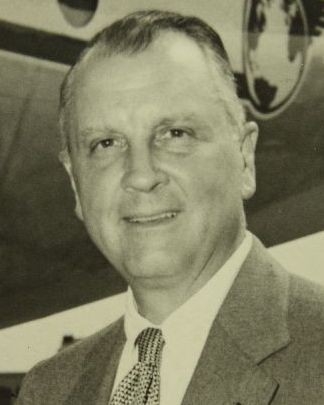
Luis von Ahn
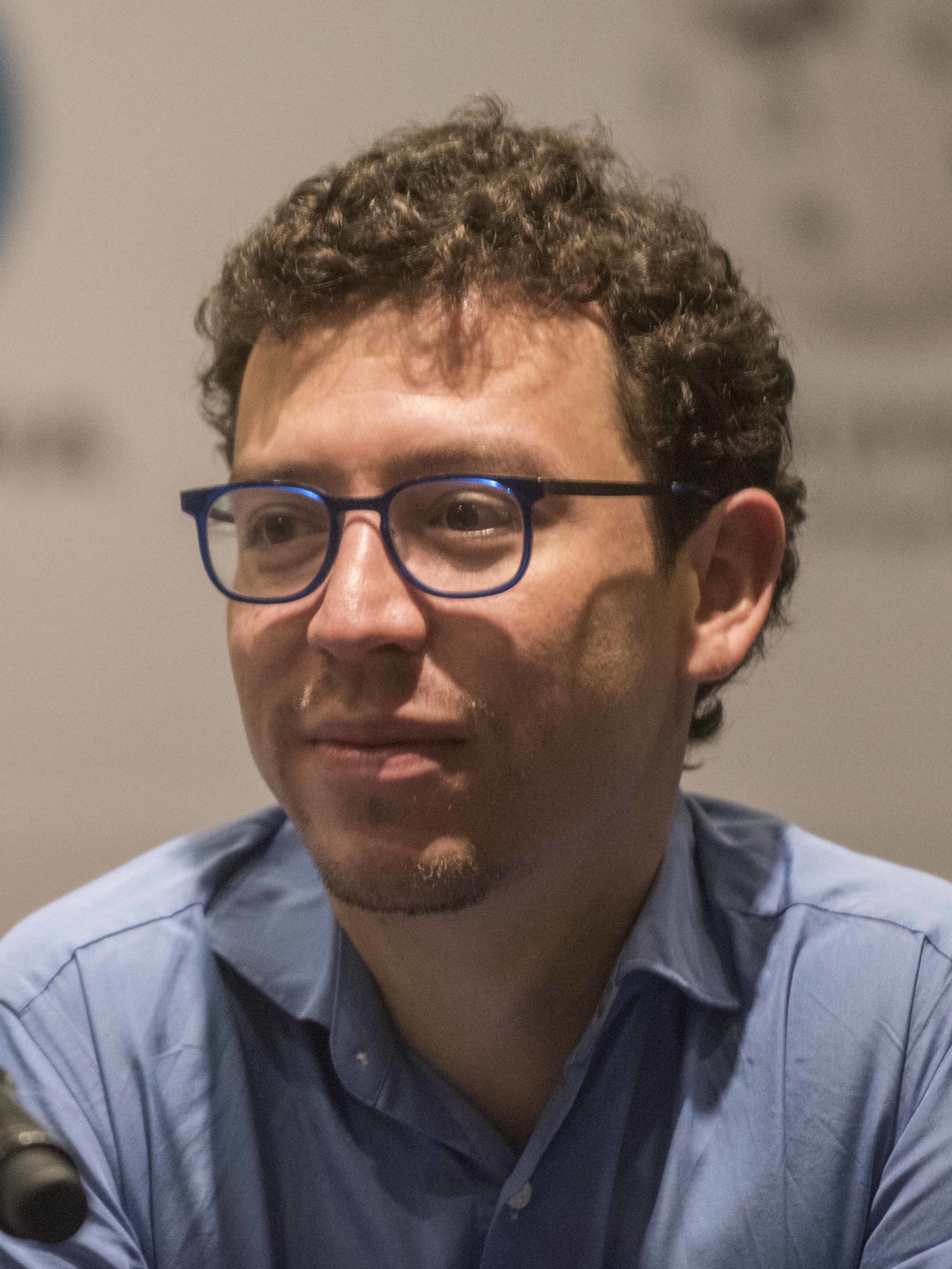
Co-founder and CEO of Duolingo; inventor of CAPTCHA and reCAPTCHA · b. 1978 · Guatemala City, Guatemala
Two calls made by hand, not formulas. how we score →
Summary
Raised by a single mother who was one of the first women in Guatemala to finish medical school, in a home comfortable enough for private schooling and an early computer.
A decade of research around one invention, CAPTCHA, made him famous and led Google to buy the next one, reCAPTCHA. Duolingo grew out of that standing, and he still controls it through founder shares worth twenty votes each.
How it happened
Luis von Ahn was born in Guatemala City on August 19, 1978, and raised by his mother alone from birth; she had become one of the first women in Guatemala to complete medical school and gave birth to him at 42. She enrolled him at the American School of Guatemala, a private English-language school he has called a considerable privilege, and bought him a Commodore 64 computer when he was eight, at a time when few Guatemalan families owned one. When he applied to universities in the United States, there was no TOEFL testing center in Guatemala, so he had to fly to El Salvador and pay more than $1,200 to take the exam — an experience that left him thinking of the testing and language-credentialing industry as "extractive."
He left for Duke University at eighteen, in 1996, and graduated summa cum laude in mathematics in 2000. He went on to a PhD in computer science at Carnegie Mellon, advised by Manuel Blum, a Turing Award-winning cryptographer. Working with Blum, he helped invent CAPTCHA around 2000, the distorted-text test that tells humans and computers apart, and his 2005 dissertation coined the term "human computation." He joined CMU's faculty in 2006, the same year he won a MacArthur Fellowship at 27.
In 2007 he built reCAPTCHA, a version of the same test that also digitized old newspaper and book text that optical character recognition couldn't read; it ran on more than 100,000 websites and helped digitize the New York Times archive. Google acquired it in 2009 for an undisclosed sum, and he stayed on to work on related Google projects while keeping his Carnegie Mellon professorship. Between the MacArthur money, the Google deal, and a tenured position, he had a level of financial security he had not grown up with.
In 2009 he started building Duolingo with Severin Hacker, a CMU graduate student he was advising, aimed at the same problem the TOEFL flight to El Salvador had shown him: language learning that costs real money is a wall for people who don't have it. Duolingo launched a private beta in November 2011 backed by a $3.3 million round from Union Square Ventures, went public to users in June 2012, and grew to hundreds of millions of users on a free, ad- and subscription-supported model. It listed on Nasdaq in July 2021. The company built a dual-class share structure at the IPO giving Class B shares, held only by von Ahn and Hacker, twenty votes each against one for the publicly traded Class A stock — so even though his economic stake is a minority of the company, he and Hacker together control a majority of the vote.
Forbes put his net worth over $1 billion by 2025, almost all of it Duolingo stock; his cash salary has stayed at $750,000 a year. In April 2025 he posted a companywide memo declaring Duolingo "AI-first" and said the company would stop using contractors for work AI could handle — and the reaction was fast and largely negative, with users publicly deleting the app and the company's TikTok following dropping sharply within weeks. He later said the memo "didn't do that well" at giving context and that full-time hiring hadn't slowed, and by 2026 he had walked back the AI-usage rule for performance reviews entirely.
The coded evidence
Thirteen groups, every claim sourcedHispanic/Latino (White Latino)
Coarse public-record coding; race is a noisy, interpretive category. He is a Latin American, born and raised in Guatemala, of partial German descent on his father's side.
↗ en.wikipedia.orgFirst-generation immigrant to the United States; moved at 18, in 1996, to attend Duke
↗ forbes.comHis mother's home in Guatemala City was a stable base through adolescence; no housing precarity is documented at any point in his life.
↗ en.wikipedia.orgWhile building Duolingo from 2009 he held a Carnegie Mellon faculty salary and had personal financial security from reCAPTCHA's 2009 sale to Google and a $500,000 MacArthur Fellowship awarded in 2006; he did not depend on Duolingo's early revenue or funding to support himself.
↗ en.wikipedia.orgnot established
No period of documented hardship, chosen or imposed, appears in the record.
↗ en.wikipedia.orgHis mother, Norma, was a physician in Guatemala City and one of the first women in the country to complete medical school; she raised him alone from birth. His father, of German descent, is not otherwise documented and was not part of the household.
↗ en.wikipedia.orgnot established
Whether his mother practiced medicine in private practice or salaried employment is not documented.
↗ en.wikipedia.orgMother held a medical degree and was, by one account, the first person in her own family to attend university.
Single, non-major source for the "first in her family" detail; the medical degree itself is corroborated by Wikipedia.
↗ tryalma.comA professional, single-mother household with no documented multigenerational wealth or institutional standing beyond his mother's status as one of Guatemala's early female physicians.
↗ en.wikipedia.orgHis mother prioritized private, English-language schooling and an early home computer despite financial constraints on a single income; no specific second job or sacrifice beyond that is documented.
Single, non-major source; treated as illustrative rather than confirmed detail.
↗ tryalma.comAmerican School of Guatemala, a private English-language school in Guatemala City, which he has described as a considerable privilege.
↗ bbc.comGuatemala City in the 1980s and 1990s had no significant technology industry cluster; his early exposure to computing came from a home computer his mother bought him, not proximity to a working tech scene.
↗ en.wikipedia.orgMoved to the United States at 18, in 1996, to begin undergraduate study at Duke University.
↗ en.wikipedia.orgNone documented. He moved directly into an elite US undergraduate program on arrival rather than experiencing a documented downgrade in class position, unlike immigrant profiles where credentials from home go unrecognized on arrival.
↗ en.wikipedia.orgNeeding to fly to El Salvador and pay more than $1,200 to take the TOEFL, because no testing center existed in Guatemala, left him with a lasting view of standardized testing and gatekept, costly language credentialing as "extractive." He has cited that experience as a direct influence on Duolingo's free-access mission.
↗ bloomberg.comManuel Blum, his Carnegie Mellon PhD advisor and a Turing Award laureate, supervised the cryptography and human-computation research that produced CAPTCHA, lending it academic credibility from the start.
↗ en.wikipedia.orgCarnegie Mellon University, where he held a faculty position from 2006, supplying lab resources, graduate students (including Duolingo co-founder Severin Hacker), and the research platform from which CAPTCHA, reCAPTCHA, and Duolingo all grew.
↗ en.wikipedia.orgCredibility, Network, Skill
CMU supplied academic standing, students, and technical training rather than direct capital.
↗ en.wikipedia.orgSeverin Hacker, a Swiss-born Carnegie Mellon graduate student von Ahn was advising, co-founded Duolingo as chief technology officer.
↗ en.wikipedia.org21
Began CAPTCHA research with Manuel Blum around 2000, shortly after his Duke graduation.
↗ en.wikipedia.orgBy 2009 he already had national and international press coverage (New York Times, Discover, Smithsonian Magazine) as the inventor of CAPTCHA and reCAPTCHA, plus a 2006 MacArthur Fellowship, giving Duolingo built-in credibility and press interest before it launched.
↗ smithsonianmag.comDuolingo's free, gamified design (streaks, leaderboards, social sharing) produces its own word-of-mouth growth loop, which the company and outside coverage describe as central to its low-cost user acquisition relative to paid competitors like Rosetta Stone.
↗ en.wikipedia.orgRoughly five years as a PhD student under Manuel Blum, a Turing Award-winning cryptographer, at Carnegie Mellon, culminating in a 2005 dissertation that coined the term "human computation."
↗ en.wikipedia.org1
Carnegie Mellon has been his sole full-time employer since 2006, alongside founding Duolingo.
↗ en.wikipedia.orgA Commodore 64 computer his mother bought him at age eight in Guatemala City, at a time when few Guatemalan families owned one.
↗ smithsonianmag.comPhD in Computer Science, Carnegie Mellon University (2005), dissertation "Human Computation," advised by Turing Award laureate Manuel Blum; BS in Mathematics, Duke University (2000, summa cum laude).
↗ en.wikipedia.orgnot established
Not established in the sources reviewed; CS PhD programs typically fund students via assistantship or fellowship, but this is not specifically documented for von Ahn.
↗ en.wikipedia.orgDirect — private secondary schooling in Guatemala City into an elite US undergraduate math program, then directly into an elite computer science PhD, with no community-college or military detour.
↗ en.wikipedia.orgCarnegie Mellon's computer science department, and specifically advisor Manuel Blum's lab, connected him to the cryptography and later human-computation research community that produced CAPTCHA and, eventually, Google's 2009 acquisition of reCAPTCHA.
↗ en.wikipedia.orgnot established
CAPTCHA and reCAPTCHA were research projects requiring no capital to launch. Duolingo's own first dollar of outside money is documented under roundAssembly; whether any of von Ahn's personal money was invested first is not established.
↗ en.wikipedia.orgIt needed capital up front, before it earned anything.
Duolingo launched free, with venture funding preceding any significant monetization.
↗ en.wikipedia.orgBy the time he founded Duolingo he held a stable Carnegie Mellon salary and personal financial security from reCAPTCHA's 2009 sale to Google (terms undisclosed) and a $500,000 MacArthur Fellowship (2006), though no source documents these funds being directly invested in Duolingo rather than his personal finances.
↗ en.wikipedia.orgDuolingo's first institutional round, about $3.3 million, closed in October 2011, led by Union Square Ventures with participation from Tim Ferriss and Ashton Kutcher's A-Grade Investments.
↗ en.wikipedia.orgDuolingo raised across multiple private rounds, reaching a $1.5 billion valuation by 2020, before its July 2021 Nasdaq IPO under ticker DUOL, which priced at $102 per share and raised roughly $520 million. At the IPO the company created a dual-class structure: Class B common stock, held only by the two founders, carries 20 votes per share against one vote for the publicly traded Class A stock.
↗ sec.govPersonal experience. Growing up in Guatemala, expensive private language schools and testing services (like the $1,200 TOEFL trip) were the only serious options; he wanted a language-learning product that was completely free, monetized instead through advertising, in-app purchases, and eventually a paid ad-free subscription tier.
↗ en.wikipedia.orgAs of the April 2026 proxy statement, von Ahn beneficially owned about 3.7 million shares of Class B common stock, 55.2% of the Class B class, giving him roughly 40.0% of total voting power even though his overall economic ownership of the company is far smaller — Class B shares carry 20 votes each against one for public Class A shares. He and co-founder Severin Hacker together control a majority, about 75.8%, of total voting power.
↗ sec.gov0
No documented failed venture prior to Duolingo; his prior work (CAPTCHA, reCAPTCHA) succeeded as research and as a sale to Google.
↗ en.wikipedia.orgFounded during the early smartphone and app-store boom, when free, ad- or freemium-supported mobile apps and venture interest in consumer software were both accelerating.
↗ en.wikipedia.orgPittsburgh, Pennsylvania, where he was already a Carnegie Mellon faculty member.
↗ en.wikipedia.orgBuilt — Duolingo was created from scratch as a new product and company, not acquired.
↗ en.wikipedia.org15
From the November 2011 public beta launch to 2026, as founder and CEO throughout.
↗ en.wikipedia.orgBuilt and headquartered in Pittsburgh rather than Silicon Valley, with lead investors such as Union Square Ventures (New York) and CapitalG/Kleiner Perkins (San Francisco Bay Area) investing from a distance.
↗ en.wikipedia.orgLanguage-learning technology and edtech (Duolingo); prior work in computer-science research on cryptography, human computation, and CAPTCHA.
↗ en.wikipedia.org1100000000
Forbes real-time tracker figure, retrieved as "$1.1 billion (as of April 1, 2025)." Other 2025-2026 estimates from lower-quality aggregators range from roughly $300 million to $1.2 billion; the band below is set from the Forbes figure, which is grounded in his disclosed Duolingo share ownership rather than a content-farm guess.
↗ forbes.comPublic equity
Forbes derives this from his disclosed Class B share ownership in Nasdaq-listed Duolingo (per SEC filings) multiplied by share price.
↗ forbes.com2025
↗ forbes.com767500
2025 total per Duolingo's Summary Compensation Table: $750,000 base salary plus $17,500 other compensation, with no stock or option awards that year. This cash figure understates his real gains: a one-time, multi-year performance-based founder equity award granted around the 2021 IPO had a reported vested value of roughly $114.9 million as it matured, per the same filing.
↗ sec.govProxy statement
↗ sec.govHis cash salary has held flat at $750,000 a year for several years running, while his wealth comes almost entirely from founder equity in a company that priced its 2021 IPO at $102 a share and has since traded well above that.
↗ sec.govDuolingo reports over 100 million monthly active learners worldwide and is among the most-downloaded education apps globally; von Ahn is also credited as a pioneer of human computation and crowdsourcing research and is a 2006 MacArthur Fellow.
↗ forbes.comUncapped
Public equity ownership in a company he still controls, rather than a salaried or credentialed ceiling.
↗ sec.govIn an April 2025 companywide memo posted publicly on LinkedIn, von Ahn said Duolingo would "gradually stop using contractors to do work that AI can handle" and would weigh AI fluency in hiring and performance reviews. After a fast public backlash — including users publicly deleting the app and the company losing a large share of its TikTok following within weeks — he posted a follow-up in May 2025 acknowledging he "didn't do that well" at explaining the policy and said full-time hiring was continuing at the same pace. He scaled the AI-usage performance rule back further in 2026.
↗ entrepreneur.comAfter
The 2024-2025 contractor and AI-strategy disputes came more than a decade after Duolingo's founding and years after its 2021 IPO.
↗ en.wikipedia.orgIncidental
The AI-first controversy followed years of prior growth and did not produce his original advantage; it concerns how he ran the company after already succeeding.
↗ en.wikipedia.orgDuolingo cut about 10% of its contractor workforce in January 2024, citing generative AI's ability to accelerate content creation, then announced the broader "AI-first" contractor-reduction policy in April 2025 while stating no full-time employees were being laid off. As an employer he leaned on a contractor-to-AI substitution model even as he remained a public advocate for free access to education.
↗ en.wikipedia.orgpioneer of crowdsourcing and human computation, mission-driven about free education, by his own admission, tone-deaf in the framing of the 2025 AI memo
↗ entrepreneur.comPress
↗ en.wikipedia.org6
Wikipedia, Bloomberg Businessweek, BBC, Smithsonian Magazine, Entrepreneur, and SEC filings, among others reviewed.
↗ en.wikipedia.orgBefore
His reputation as a research pioneer and MacArthur "genius" predates Duolingo's founding by several years; the more contested reputation from the 2025 AI memo formed well after the company's core growth and IPO.
↗ en.wikipedia.orgMixed
Largely an asset (credibility, fundraising, hiring) for most of his career; briefly a liability with users and press during the 2025 AI-memo backlash.
↗ en.wikipedia.orgThe reputation accrued from behaviour rather than being manufactured.
His early reputation grew from documented research achievements (patents, papers, the MacArthur Fellowship) rather than a deliberate PR campaign, though he has since done extensive media as Duolingo's CEO (TED, NPR, BBC).
↗ en.wikipedia.orgSplit by moment more than by constituency: broadly admired as a MacArthur "genius" and access-to-education pioneer through the 2010s, then the April 2025 "AI-first" memo split opinion between users and contractors angered by the job-security implications and investors and commentators who read it as ordinary cost discipline. He publicly conceded the framing "did not give enough context."
↗ entrepreneur.comWalked back the framing of the AI memo within weeks, in May 2025, and scaled back the associated AI-usage performance-review policy again in 2026, while continuing to expand full-time hiring.
↗ entrepreneur.comStructural context
The cost-of-failure score comes from this person's own money and circumstances. But who they were in America carried its own weight, the same way their household or income did, and it shaped how hard the path was just as much. That part isn't in the cost-of-failure number. It's here instead.
Men founded the companies that took nearly all the venture funding and almost every top outcome, a tailwind that never shows up in one person's own circumstances.
↗ techcrunch.comImmigrants and their children are overrepresented among America's biggest companies, as founders and as senior leaders. They got there through the visa, credential, and network hurdles that make the path harder to even start down.
↗ forbes.comAmong the people recorded here — men: 169 · Hispanic/Latino (White Latino) subjects: 1. Representation here is who reached these outcomes, not equal odds of reaching them.
Controlled comparisons
Each holds one thing constant and varies another, so the difference is the point. A list of similar names wouldn't tell you anything.