Marc Stad
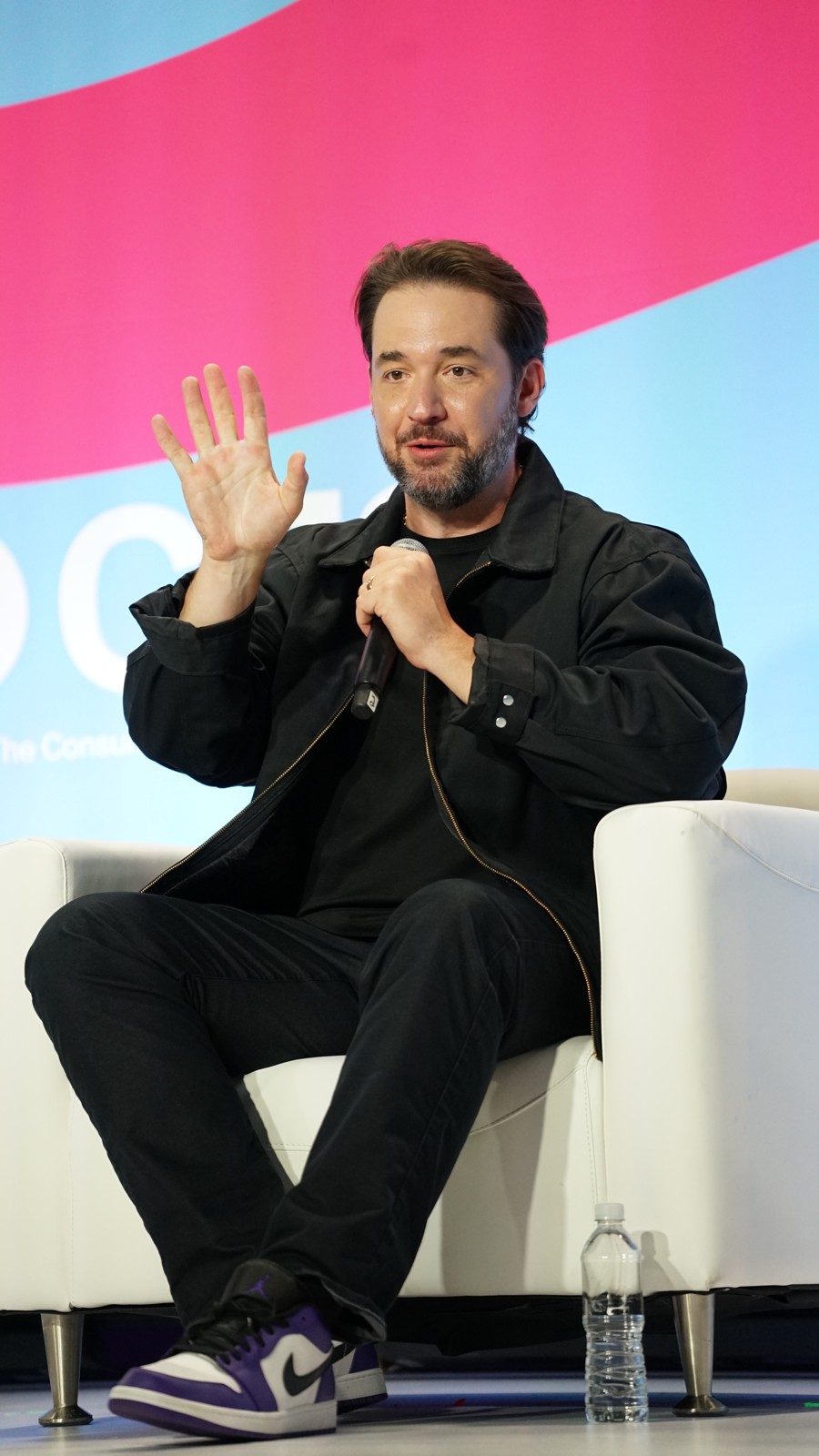
Founder and managing partner of Dragoneer Investment Group, the San Francisco technology investor; agreed in 2026 to take control of the Minnesota Timberwolves and Lynx · Montebello, California → Cambridge, Massachusetts → San Francisco
Two calls made by hand, not formulas. how we score →
Summary
Stad grew up in Montebello, one of five children in a family of modest means, and went to Harvard on financial aid.
McKinsey, TPG and Stanford business school followed, then a job at the Investment Group of Santa Barbara. In 2012 he founded Dragoneer. Forbes puts him at $5.3 billion and lists him as self-made. How he assembled his first outside money is not established.
Where they worked
How it happened
A Harvard alumni profile from January 2018 says Stad grew up in Montebello, a small city outside Los Angeles, one of five children in a family of modest means, and was the first of them to graduate from high school. It calls him a first-generation college student who was accepted at Harvard with a generous financial aid package. It adds that a fund for students in need paid for a winter coat. He took his AB in 2001. His parents, their work and the household structure are not established in anything opened here.
The same profile says he worked at McKinsey & Company and then in private equity at TPG, then went to business school. Stanford's business school is named in Forbes, and MarketScreener dates the MBA to 2008. Sources disagree on whether McKinsey or TPG came first. In a 2023 interview transcript he says he was a summer intern at Citi about 23 years earlier, and that Bob Rubin, whom he had helped with a speech, told him to learn finance and business before going to Washington. Who paid for the MBA is not established.
After business school he joined the Investment Group of Santa Barbara. The Harvard profile says that experience made him want to chart his own course. Forbes also lists an earlier role as president and commissioner of the San Francisco Finance Corporation, a city body. Dates for it are not given in the pages opened here.
Wikipedia, Forbes and the Harvard profile all date the founding of Dragoneer Investment Group to 2012. In the 2023 transcript Stad says he started "what I'm doing" in 2007 with $1 million of assets, which does not match, and the transcript's own note says 2012. Wikipedia says its long-duration capital comes from endowments, foundations, sovereign wealth funds and family offices. What separates this from an ordinary fund launch is that his pay for the work is a share of other people's capital, so most of the wealth depends on assembling that capital, and who his first backers were is not established.
Per Wikipedia, Dragoneer ran public-market and growth-equity funds from 2012 on and listed three blank-check companies in 2020 and 2021. The first merged with CCC Information Services and the second with Cvent. Forbes says the firm manages about $37 billion and has backed OpenAI, Anthropic, Spotify and Uber. Wikipedia's infobox gives $22.6 billion for 2024 and Sports Illustrated says over $35 billion, so the size depends on the date. How much of the firm he personally owns is not established.
ESPN's report on 21 August 2026, as relayed by Sports Illustrated, said Stad would buy most of Marc Lore's stake in the Minnesota Timberwolves and Lynx at a $4.5 billion valuation, becoming the controlling owner. A joint statement called the deal pending league approval, so it was not final when the sources were read. Sports Illustrated says he had been a limited partner in the Lore and Rodriguez group, and that his wife Elisa is expected to serve as governor.
Forbes showed $5.3 billion on 21 October 2026, listing him as 47, living in San Francisco, with venture capital as the source and self-made status. The figure is an estimate. The split between stakes in Dragoneer, fund interests and cash is not established.
The coded evidence
Thirteen groups, every claim sourcednot established
Not established. Nothing opened states it, and coded.ethnicities is left empty rather than guessed from his hometown.
↗ alumni.harvard.eduBorn in the United States per the Harvard profile, which calls him a native of Montebello; parents' birthplace is not established.
migration none is a placeholder, since the enum has no unknown option.
↗ alumni.harvard.edunot established
Not established. He had earlier worked in consulting, private equity and at the Investment Group of Santa Barbara.
↗ aletteraday.substack.comnot established
The profile says three children under six in early 2018, well after the 2012 founding. Number at founding is not established.
↗ alumni.harvard.edunot established
Not established. The household value in the coded block is a placeholder because the enum has no unknown option.
↗ alumni.harvard.eduNot established; the Harvard profile says he was the first in his family to graduate from high school and a first-generation college student.
The profile quotes him; this reflects his own account.
↗ alumni.harvard.eduLives and runs the firm in San Francisco per Forbes.
↗ forbes.comSays in a 2023 interview transcript that helping with a speech for Bob Rubin led to advice to learn finance and a Citi summer internship; Harvard and Stanford then fed the consulting and buyout jobs.
Single-source recollection, summarized from a fetch tool's reading of the transcript. Rubin's title at the time was not checked.
↗ aletteraday.substack.comMBA, Stanford Graduate School of Business; AB, Harvard University (2001).
Forbes gives the degrees; the Harvard profile gives AB '01; MarketScreener dates the MBA to 2008.
↗ forbes.comnot established
Not established. Harvard undergraduate was on a generous financial aid package; MBA funding is unknown.
↗ alumni.harvard.eduSays he started with $1 million of assets, in a 2023 interview transcript.
Source of that $1 million is not established, which is why originCapital prior-high-income is an inference from his earlier pay and not a documented fact.
↗ aletteraday.substack.comnot established
Not established. Wikipedia says capital comes from endowments, foundations, sovereign wealth funds and family offices.
↗ en.wikipedia.orgInstitutional limited partners fund the vehicles; Wikipedia describes more than $17 billion of long-duration capital and says the firm also uses secondary purchases and convertible notes.
Wikipedia's figures are tied to different dates than Forbes's $37 billion.
↗ en.wikipedia.orgA multi-fund investment firm, with funds from 2012 on, three SPACs in 2020 and 2021, and stakes in private technology companies.
↗ en.wikipedia.orgFounded in 2012, after the financial crisis and before the 2020-2021 boom in private technology valuations.
Authored framing from the dates, not a sourced claim about his strategy.
↗ en.wikipedia.org33
Forbes age 47 in October 2026 and a 2012 founding. If he started in 2007 as he says, he was about 28. The birth year is inferred.
↗ forbes.comTechnology investing, public and growth-stage private markets
↗ forbes.com5300000000
Forbes real-time figure on 21 October 2026, matching the queue's roughly $5.3 billion. A point-in-time estimate.
↗ forbes.comJournalistic estimate
↗ forbes.com2026
↗ forbes.comNot established. The net worth is an estimate of firm and fund interests and the split with realized cash is unknown.
↗ forbes.comWealth comes from owning a share of a firm and its funds. Forbes lists the source as venture capital and rates him self-made. Pay is not established.
↗ forbes.comWith his wife, pledged $3 million in 2022 to UCSF Benioff Children's Hospitals to start the Stad Center for Pediatric Pain.
↗ forbes.comUncapped
↗ forbes.comStructural context
The cost-of-failure score comes from this person's own money and circumstances. But who they were in America carried its own weight, the same way their household or income did, and it shaped how hard the path was just as much. That part isn't in the cost-of-failure number. It's here instead.
Men held about 90% of Fortune 500 CEO seats in 2023, and a wider majority of the rungs below. The ladder is widest for them the whole way up.
↗ forbes.comAmong the people recorded here — men: 225. Representation here is who reached these outcomes, not equal odds of reaching them.
Controlled comparisons
Each holds one thing constant and varies another, so the difference is the point. A list of similar names wouldn't tell you anything.