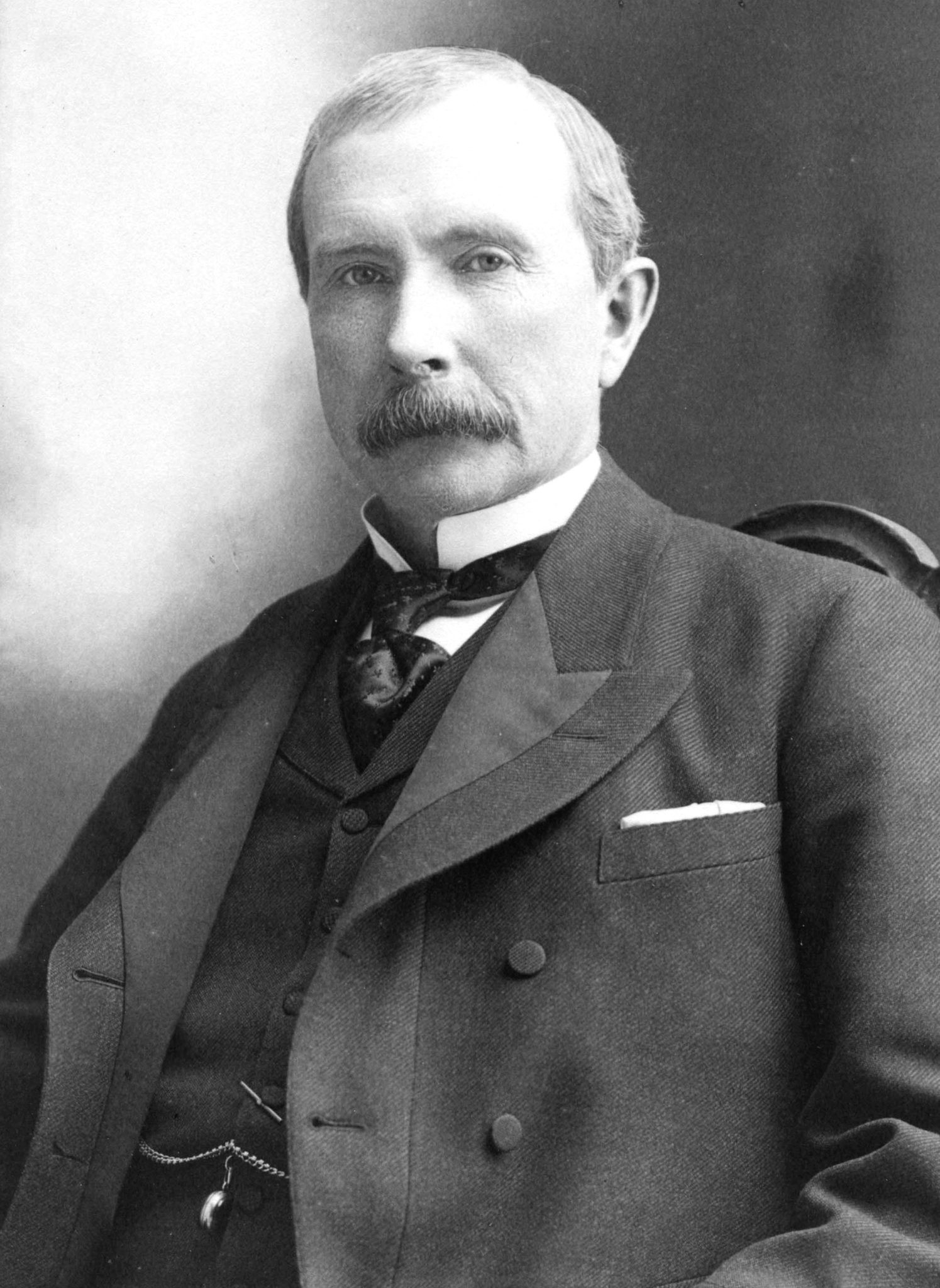
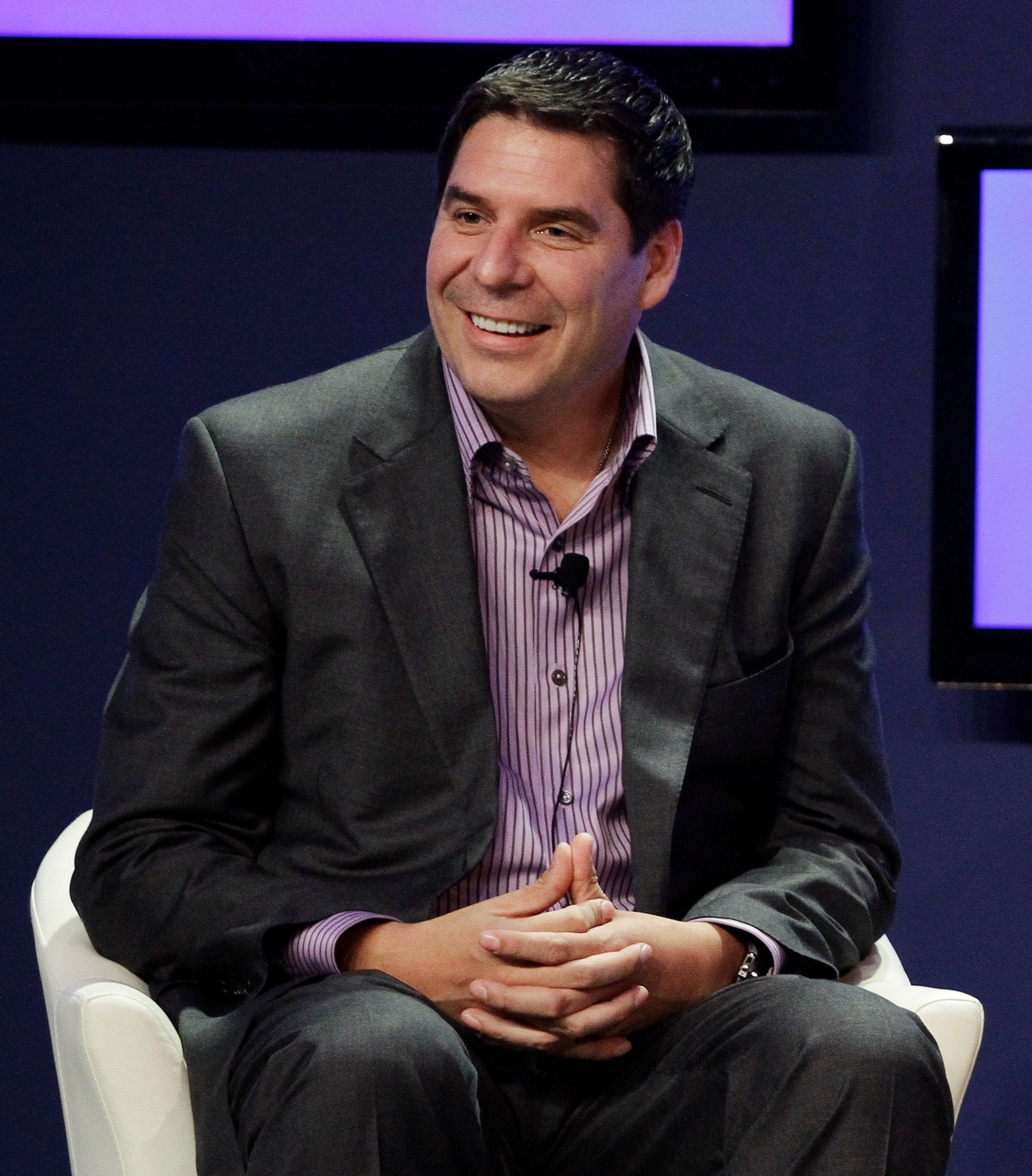
Marcelo Claure
Founder of Brightstar Corporation; former CEO of Sprint; former COO of SoftBank Group; co-owner of Club Bolívar · b. 1970 · Guatemala City, Guatemala
Two calls made by hand, not formulas. how we score →
Summary
Born in Guatemala to a Bolivian father posted abroad for the UN, he finished school in La Paz and arrived at Bentley University near Boston in 1989.
A cell-phone store he was handed as a student grew into a small retail chain, which he liquidated to start Brightstar in Miami in 1997. SoftBank's 2013-14 buyout of that business made him a billionaire before he ran Sprint and then SoftBank itself.
How it happened
Claure was born on December 9, 1970, in Guatemala City. His father worked as a geologist for the United Nations diplomatic service, and the postings took the family to Morocco when he was an infant and then to the Dominican Republic through his childhood before they settled in La Paz, Bolivia, where he finished school at Instituto Domingo Savio and the American Cooperative School. He has described the constant relocation as an early education in operating outside his home turf.
He arrived in the United States in 1989 to study at what was then Bentley College, starting at the University of Lowell before transferring, and earned a B.S. in economics and finance in 1993. While still a student he ran a business trading airline frequent-flyer miles that grew to about 25 employees within a year. His move into telecommunications came almost by chance: a cell-phone store owner in the Boston area offered him the business, and within about two years he had built it into roughly 150 retail locations across the Northeast. Wikipedia's account of the same period has him buying a cellular retailer, USA Wireless, in 1995 and selling it a year later, then running California-based Small World Communications for two years before relocating to Miami — the exact sequence of those early deals is not fully consistent across sources, but both accounts agree he was running cell-phone retail operations well before Brightstar existed.
In October 1997 he and a partner, Dave Peterson, liquidated the assets of their existing retail business and borrowed additional capital to launch Brightstar in Miami, aiming to supply and service wireless devices for carriers and manufacturers expanding into Latin America. The first-year sales target was $50,000; the company did $14 million. Brightstar grew for sixteen years without ever taking on an institutional equity investor, eventually operating in 50 countries with contracts sourcing and servicing phones for carriers including Verizon and AT&T.
In October 2013 SoftBank paid roughly $1.1 billion for about 57% of the holding company behind Brightstar, with a path to 70% through warrants, leaving Claure with a documented 43% stake and the titles of vice chairman and CEO. Less than a year later, in August 2014, SoftBank paid him approximately $298 million for his remaining 37.7%, taking the company to full ownership and taking Claure to zero. That second transaction is the moment his Brightstar equity became cash rather than a private company he still ran — the structural event this record treats as the pivot, since everything that followed (Sprint, SoftBank, his later investment vehicles) was built from realized capital and a relationship with Masayoshi Son, not from Brightstar itself.
He joined Sprint's board in January 2014 and became president and CEO that August, the same summer as the Brightstar buyout closed. Sprint was losing billions of dollars a year when he arrived; press coverage credits him with steering the company back toward profitability and pushing the merger case with T-Mobile that finally closed in April 2020, after which he stayed on T-Mobile's board.
In May 2018 he became chief operating officer of SoftBank Group and CEO of SoftBank Group International, with oversight that extended into Vision Fund portfolio companies including Arm and Boston Dynamics. In October 2019 — after Adam Neumann's ouster and WeWork's collapsed IPO, neither of which happened on Claure's watch — he was named WeWork's executive chairman to lead the company's restructuring, installing Sandeep Mathrani as CEO in 2020 and staying through WeWork's eventual 2021 public listing before being replaced as chairman in March 2022. He left the SoftBank COO role in early 2022; reporting at the time cited a compensation dispute with Son, describing Claure as expecting a package Son would not commit to in writing after years in which Claure had been paid around $17 million annually.
Since leaving SoftBank he has run Claure Group, his family investment office, and co-launched Bicycle Capital in 2023, a Latin America-focused venture fund. He became Shein's group vice chairman in 2023 and, in 2025, partner and co-chairman of Brightstar Capital Partners — a private-equity firm unrelated to the wireless company he founded, despite the shared name. He has controlled the operating rights to Bolivia's Club Bolívar since 2008 and took a 10% stake in New York City FC in 2024. He was also part of the original 2018 ownership group behind Miami's MLS expansion franchise alongside David Beckham and Masayoshi Son; that stake was bought out by the Mas brothers in September 2021, in a deal that followed Claure reporting a roster-rules violation to the league that cost the club a $2 million fine. He was no longer an Inter Miami owner by the time the club signed Lionel Messi in 2023.
The coded evidence
Thirteen groups, every claim sourcedBolivian; born in Guatemala City to a Bolivian father and raised largely in La Paz, Bolivia.
Coarse public-record coding; ethnicity/national origin is a noisy, interpretive category for a childhood spread across four countries.
↗ en.wikipedia.orgFirst-generation immigrant to the United States; arrived at about 18, in 1989, to attend Bentley College.
↗ en.wikipedia.orgSpanish, likely, given a Bolivian father and schooling in La Paz and the Dominican Republic.
Inferred rather than directly documented; the family also lived in Francophone/Arabic-speaking Morocco during his infancy.
↗ en.wikipedia.org0
No documented employment gap from his mid-1990s entry into wireless retail through his current roles.
↗ en.wikipedia.orgNo documented housing precarity at any point; his father's UN diplomatic postings provided stable, employer-linked housing through his childhood in Morocco, the Dominican Republic, and Bolivia.
↗ ilctr.orgAt Brightstar's 1997 founding, funding came from liquidating a profitable existing retail business plus borrowed capital, not from a family income floor or an outside salary carrying him through the build.
↗ ilctr.orgBrightstar's 1997 launch included borrowed capital alongside liquidated business assets; no figure for the amount or terms of that debt is documented in sources reviewed.
↗ ilctr.orgnot established
No documented homelessness, food insecurity, or comparable instability at any stage of his career.
↗ en.wikipedia.orgnot established
No period of visible poverty, chosen or imposed, appears in the record reviewed.
↗ en.wikipedia.orgFather worked as a geologist for the United Nations diplomatic service, which took the family to Morocco, the Dominican Republic, and Bolivia. Mother's occupation is not established in sources reviewed.
↗ en.wikipedia.orgNeither parent was self-employed.
His father's UN diplomatic-service post reads as salaried employment rather than self-employment, though this is inferred rather than stated outright.
↗ en.wikipedia.orgnot established
Not established, though a UN geologist post implies at least a university science credential.
↗ en.wikipedia.orgA professional, internationally mobile family carrying diplomatic standing through the father's UN post, rather than documented generational wealth or a named family business.
↗ en.wikipedia.orgAttended Instituto Domingo Savio and the American Cooperative School of La Paz, private international schools consistent with a professional-income household able to afford English-language private education abroad; no specific tuition sacrifice is documented.
↗ ilctr.orgGuatemala City at birth; childhood then split between Morocco, the Dominican Republic, and La Paz, Bolivia, with no specific neighborhoods documented.
↗ en.wikipedia.orgInstituto Domingo Savio and the American Cooperative School, both private international schools in La Paz, through his 1989 graduation.
↗ ilctr.orgAt least four international moves before adulthood — Guatemala City at birth, Morocco in infancy, the Dominican Republic through childhood, and La Paz, Bolivia for secondary school — followed by relocation to the United States at about 18, in 1989, for university.
↗ en.wikipedia.orgnot established
No documented downgrade on arrival in the U.S.; he entered a private university directly rather than experiencing the credential-recognition or income-collapse pattern seen in some immigrant profiles.
↗ en.wikipedia.orgBuilt his career in U.S. telecommunications and, later, global technology investing — industries with few Latin American-born executives at the top through the period he rose in them. He is frequently described as Bolivia's most prominent business figure and one of the most visible Latino executives in U.S. telecom, but no specific documented incident of bias against him personally is established in sources reviewed.
↗ en.wikipedia.orgA cell-phone store owner in the Boston area offered him the business while he was still a student, which became his entry into wireless retail.
↗ ilctr.orgTwo prior cell-phone retail ventures — USA Wireless, bought in 1995 and sold a year later, and California-based Small World Communications, which he led for two years — supplied the industry experience and, per his own account, the liquidated capital that funded Brightstar's 1997 launch.
↗ en.wikipedia.orgSkill, Network
↗ en.wikipedia.orgDave Peterson, his business partner in launching Brightstar in Miami in October 1997.
↗ ilctr.org24
Approximate age at the 1995 USA Wireless purchase, based on a December 1970 birth date.
↗ en.wikipedia.orgnot established
No public profile or press presence documented prior to Brightstar.
↗ en.wikipedia.orgB.S. in economics and finance, Bentley College (now Bentley University), 1993, after beginning at the University of Lowell; honorary Doctor of Commercial Science, Bentley University.
↗ bentley.eduRan a business trading airline frequent-flyer miles while still a student, which grew to roughly 25 employees within a year.
↗ ilctr.orgDirect — began at the University of Lowell, then transferred to Bentley College, with no community-college or military detour.
↗ en.wikipedia.orgHe later joined Bentley University's board, which received an honorary doctorate; no documentation that the Bentley network supplied his early wireless-industry contacts.
↗ bentley.eduProceeds from liquidating his existing cell-phone retail holdings, plus additional borrowed capital, pooled with co-founder Dave Peterson to launch Brightstar in Miami in October 1997.
↗ ilctr.orgIt paid its own way from the start. Revenue came before any outside money.
First-year sales target was $50,000; actual first-year sales were $14 million.
↗ ilctr.orgFunded from the liquidated value of his earlier cell-phone retail business rather than salary savings from employment.
↗ ilctr.orgBrightstar operated for sixteen years, from 1997 to 2013, without any institutional equity investor, funded by revenue and debt, reaching operations in 50 countries and contracts with carriers including Verizon and AT&T before SoftBank bought a majority stake in October 2013 and the remainder in August 2014.
↗ group.softbankSoftBank paid approximately $1.1 billion for roughly 57% of Brightstar in October 2013 and approximately $298 million for Claure's remaining 37.7% in August 2014, fully cashing him out. He redeployed a portion of that capital into later ventures (Claure Group, Bicycle Capital, stakes in soccer clubs) rather than founding one direct successor company.
↗ group.softbankPersonal experience in cell-phone retail translated into a business-to-business distribution and services model aimed at wireless carriers and manufacturers expanding into Latin America.
↗ ilctr.orgnot established
No documented failed venture; his early companies (a frequent-flyer trading business, USA Wireless, Small World Communications) were sold or transitioned rather than described as failures in sources reviewed.
↗ en.wikipedia.orgnot established
↗ en.wikipedia.org43
Approximate age at the August 2014 SoftBank buyout of his remaining Brightstar stake, based on a December 1970 birth date.
↗ group.softbankGlobal wireless-device distribution was consolidating through the 2000s and early 2010s as carriers outsourced device logistics and servicing, while SoftBank was aggressively expanding into U.S. telecom, culminating in its Brightstar purchase and, months later, its Sprint acquisition.
↗ en.wikipedia.orgMiami, Florida, where Brightstar was headquartered.
↗ en.wikipedia.orgBuilt Brightstar from scratch in 1997. His later chapters (Sprint, SoftBank) involved joining and running existing companies as a hired executive rather than building or buying them himself.
↗ en.wikipedia.org26
Approximate age at Brightstar's October 1997 founding, based on a December 1970 birth date.
↗ en.wikipedia.org17
From Brightstar's October 1997 founding to the August 2014 sale of his remaining stake.
↗ group.softbankWireless-device distribution and telecommunications, later technology and Latin America-focused venture and private-equity investing.
↗ en.wikipedia.org2100000000
Forbes real-time tracker figure, as of September 19, 2026. Forbes attributes his wealth to stakes in Brightstar Capital Partners and SHEIN, T-Mobile shares from his Sprint years, and other holdings — an aggregation of largely private stakes rather than a single public equity position. Bloomberg separately estimated his net worth at $2 billion as of August 2022.
↗ forbes.comJournalistic estimate
Forbes models several private-company and fund stakes rather than a single disclosed filing figure.
↗ forbes.com2026
↗ forbes.com17000000
Reported figure for his SoftBank COO compensation in 2020, cited in coverage of his January 2022 departure. SoftBank Group is Japan-listed and does not disclose individual executive pay through U.S.-style proxy statements, so this is a journalistic estimate rather than a filing figure.
↗ euronews.comJournalistic estimate
↗ euronews.comHis Brightstar wealth was fully realized as cash by August 2014, when SoftBank bought his last shares outright — unlike a founder who stays in illiquid private equity. His current wealth includes both realized capital redeployed into new ventures and paper stakes in private companies (Brightstar Capital Partners, SHEIN) that have not been sold.
↗ group.softbankHis Brightstar-era wealth came from selling ownership of a company he built, not from salary. His subsequent SoftBank income (roughly $17 million reported for 2020) was executive compensation with no ownership stake behind it, which is the dynamic that produced the 2022 pay dispute.
↗ euronews.comCredited with returning Sprint toward profitability and closing its merger with T-Mobile; later oversaw parts of SoftBank's Vision Fund portfolio and led WeWork's board through its 2021 public listing. Named an Ernst & Young Entrepreneur of the Year and a World Economic Forum Young Global Leader; sits on T-Mobile's board.
↗ en.wikipedia.orgUncapped
Uncapped as Brightstar's founder-owner; his subsequent SoftBank executive chapter was capped/negotiated compensation, which is what the 2022 pay dispute was about.
↗ group.softbanknot established
No regulatory action against Claure personally found in sources reviewed.
↗ en.wikipedia.orgnot established
No self-admitted rule-boundary conduct documented in sources reviewed.
↗ en.wikipedia.orgAs part of Inter Miami's early ownership group, Claure reported a roster-rules violation by the club to MLS, which fined the team $2 million — a detail reported alongside the September 2021 buyout of his and Masayoshi Son's ownership stakes by the Mas brothers.
The MLS press release confirms the ownership change; the roster-fine detail and its connection to the buyout comes from secondary reporting.
↗ mlssoccer.comturnaround operator, aggressive dealmaker, demanding of pay commensurate with results
↗ euronews.comPress
↗ euronews.com5
CNBC, CNN, Bloomberg, Axios, and Euronews all reported the January 2022 departure and pay dispute independently.
↗ euronews.comBefore
His reputation as a turnaround executive was established during the Sprint years, before the 2022 SoftBank pay dispute.
↗ en.wikipedia.orgMixed
An asset in fundraising and dealmaking circles for most of his career; the 2022 departure reporting was a brief liability moment in the press.
↗ euronews.comThe reputation was deliberately built, through books, press, and PR.
Active public profile through World Economic Forum appearances, industry award circuits, and executive media coverage.
↗ en.wikipedia.orgWeWork's near-collapse and its 2019 failed IPO are widely dramatized (including in the series "WeCrashed"), but that period centers on co-founder Adam Neumann and predates Claure's October 2019 arrival as executive chairman to run the restructuring.
↗ en.wikipedia.orgRebuilt an independent platform after the 2022 SoftBank exit through Claure Group, Bicycle Capital, a SHEIN vice-chairman role, and a 2025 partnership at Brightstar Capital Partners, with no lasting reputational damage evident in coverage reviewed.
↗ en.wikipedia.orgStructural context
The cost-of-failure score comes from this person's own money and circumstances. But who they were in America carried its own weight, the same way their household or income did, and it shaped how hard the path was just as much. That part isn't in the cost-of-failure number. It's here instead.
Men founded the companies that took nearly all the venture funding and almost every top outcome, a tailwind that never shows up in one person's own circumstances.
↗ techcrunch.comImmigrants and their children are overrepresented among America's biggest companies, as founders and as senior leaders. They got there through the visa, credential, and network hurdles that make the path harder to even start down.
↗ forbes.comAmong the people recorded here — men: 169. Representation here is who reached these outcomes, not equal odds of reaching them.
Controlled comparisons
Each holds one thing constant and varies another, so the difference is the point. A list of similar names wouldn't tell you anything.