Matthew Prince
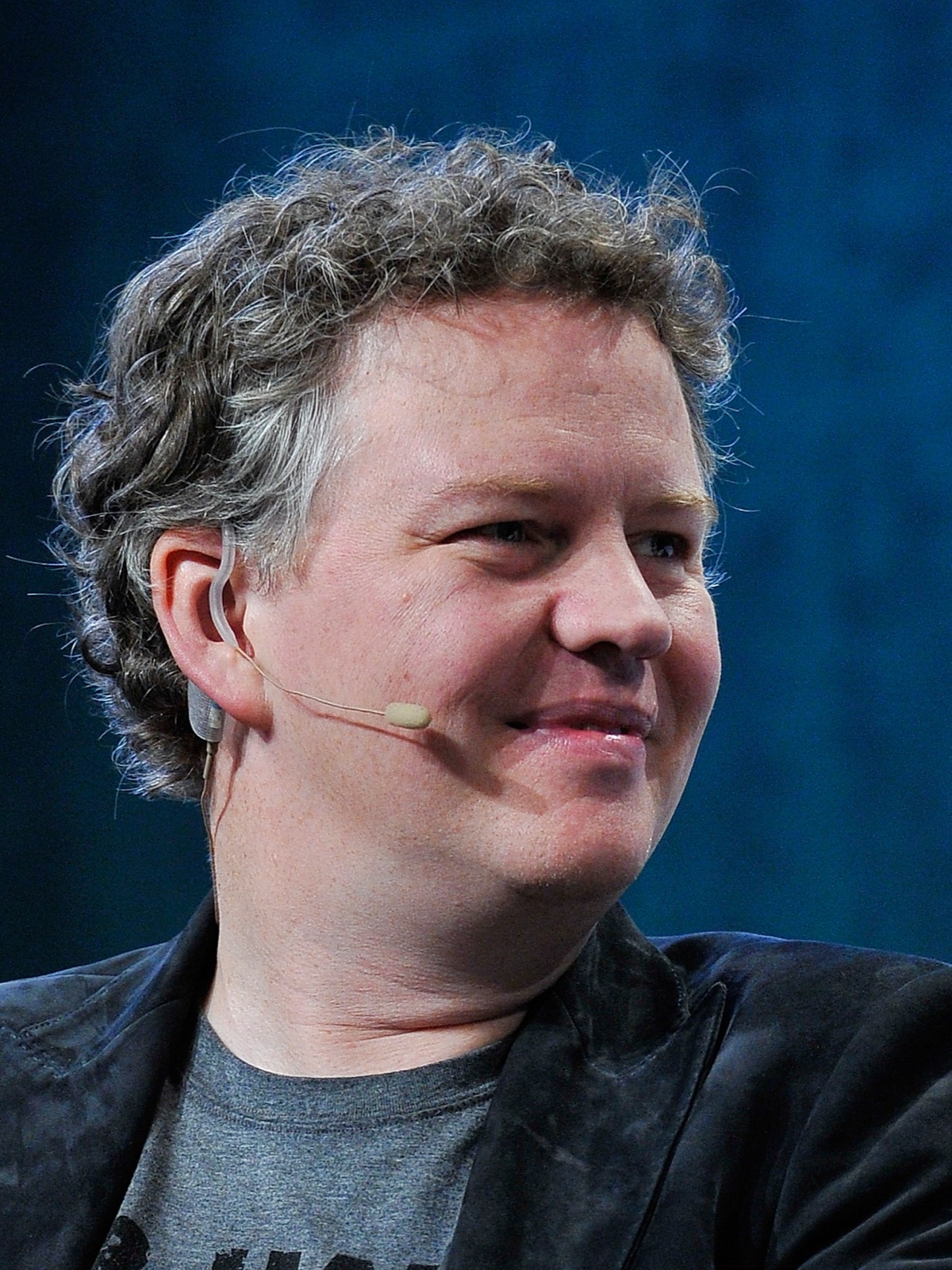
Co-founder and CEO of Cloudflare, the network security and delivery company · b. 1974 · Salt Lake City, Utah; raised in Park City
Two calls made by hand, not formulas. how we score →
Summary
He built a spam-tracking project with a friend while working as a lawyer, then met his Cloudflare co-founder at Harvard Business School, where the idea won a plan contest worth about $50,000.
A roughly $2M venture round followed within months. Three degrees and a law-firm career came first. He now holds 39% of the votes through a dual-class share structure.
Where they worked
How it happened
Prince was born in Salt Lake City and raised in Park City. Wikipedia says his father was a former journalist and restaurateur who owned a stock brokerage, and his mother owned several gift stores. He went to a private school in Salt Lake City, then to Trinity College in Connecticut, where he majored in English literature with a computer science minor.
He earned a law degree at the University of Chicago in 2000 and, per Wikipedia, worked at Latham & Watkins while he studied. Wikipedia says the National Do Not Call Registry and the CAN-SPAM Act inspired him to start Unspam Technologies with Lee Holloway, who became its chief software architect. Project Honey Pot, an open-source tool that traces the sources of spam, grew out of it. He also taught cyberlaw at the University of Illinois Chicago from 2003.
In 2009 he took time off to get an MBA at Harvard Business School. There he told a classmate, Michelle Zatlyn, about Project Honey Pot, and she saw that it could go from tracking threats to blocking them. Holloway built the first prototype while the three wrote a business plan for class. The plan won a Harvard Business School contest. Accounts of the prize differ: $20,000 in one, $25,000 in cash plus $25,000 of services in another.
Cloudflare was founded in July 2009. Its Series A closed in November 2009 with Venrock and Pelion Venture Partners; TechCrunch later put it at about $2.05M. The company launched at TechCrunch Disrupt in September 2010 and raised a $20M Series B led by New Enterprise Associates, then a $50M round from Union Square Ventures.
Cloudflare listed on the NYSE on September 13, 2019 at $15 a share. Class B shares carry ten votes each, and Prince is the largest Class B holder. In the 2026 proxy he beneficially owned 75.7% of the Class B stock and 39.0% of the total vote, counting trust holdings and options or RSUs vesting within 60 days. His 2025 pay was reported at about $60.6M, nearly all of it RSUs valued at grant. Forbes put his net worth at $9.5B in October 2026 and scores him 8 on its self-made scale.
The coded evidence
Thirteen groups, every claim sourcedInferred from the family history on Wikipedia and public photographs. He has not described his ethnicity in any source opened.
↗ en.wikipedia.orgnot established
Not established. His salary and savings in 2009 are not documented in the sources opened.
↗ en.wikipedia.orgFather, John Browning Prince, was a former journalist and restaurateur who owned a stock brokerage firm; mother owned several gift stores.
Wikipedia only; no primary source opened.
↗ en.wikipedia.orgA parent worked for themselves, the strongest known predictor of founding.
Inferred from a business-owning father and a mother who owned shops.
↗ en.wikipedia.orgRowland Hall-St. Mark's School, a private school in Salt Lake City.
Wikipedia lists the school with the year 1988, which does not fit a graduation date; whether he attended through high school is unclear.
↗ en.wikipedia.orgGrew up in Park City, Utah, not a software hub. Moved to Chicago for law school, then to the Bay Area for the company.
Cloudflare's headquarters is at 101 Townsend Street, San Francisco per the 2026 proxy. When he moved is not established.
↗ en.wikipedia.orgProject Honey Pot, an existing open-source spam-tracking community, and a Harvard Business School business-plan contest.
↗ en.wikipedia.orgMichelle Zatlyn, a Harvard Business School classmate, and Lee Holloway, his partner on Unspam and Project Honey Pot.
↗ techcrunch.comnot established
Not established. He earned his JD in 2000 and worked in law and Unspam until Cloudflare in 2009, but the career timeline is incomplete.
↗ en.wikipedia.orgMBA, Harvard Business School, 2009 (George F. Baker Scholar). Earlier a BA from Trinity College, 1996, and a JD from the University of Chicago Law School, 2000.
↗ en.wikipedia.orgnot established
Not established. How the three degrees were paid for is not stated in the sources opened. credentialFunding coded none provisionally.
↗ en.wikipedia.orgWorked at Latham & Watkins while pursuing his law degree.
Wikipedia states it in one line; no primary source opened.
↗ en.wikipedia.orgA Harvard Business School business-plan contest prize, reported as $20,000 in one account and $25,000 cash plus $25,000 of in-kind accounting and legal services in another, then a Series A of about $2M in November 2009.
Prize accounts conflict; the amounts come from search-result summaries, not pages read in full. Wikipedia names it the Dubilier Prize at US$50,000.
↗ blog.cloudflare.comSeries A in November 2009 with Venrock and Pelion Venture Partners (about $2.05M per TechCrunch), a $20M Series B led by New Enterprise Associates, and a $50M round from Union Square Ventures.
Series A investors per Cloudflare's own story page; amounts per TechCrunch headlines surfaced in search, not opened in full.
↗ cloudflare.comDual class. Class A carries one vote a share, Class B ten. As of April 30, 2026 he beneficially owned 45,508 Class A and 25,693,312 Class B shares: 75.7% of Class B and 39.0% of total voting power. Figures include trust holdings and options or RSUs vesting within 60 days.
↗ sec.govHis vote share (39.0%) is far above his share of the economic equity because Class B shares carry ten votes. The 2019 S-1 put his holding at 16.6% of all outstanding shares, per TechCrunch.
↗ techcrunch.comnot established
Not established. Unspam's outcome is not documented in the sources opened, so no failure count is given.
↗ en.wikipedia.orgFounded in July 2009, weeks after the end of the 2008 recession, while seed and Series A venture rounds were scarce.
The recession dates are general knowledge, not from the cited page. The page supports the November 2009 Series A.
↗ cloudflare.comNetwork security and web infrastructure
↗ forbes.com9500000000
Forbes real-time figure of October 24, 2026. Profile lists him as self-made, age 51, Park City, Utah, self-made score 8.
↗ forbes.comJournalistic estimate
↗ forbes.com2026
↗ forbes.com60551052
Total compensation for 2025 in the summary compensation table. $58.25M of it is RSUs at grant-date fair value, not cash received. Salary was $537,500.
↗ sec.govProxy statement
↗ sec.govMostly paper wealth in Cloudflare stock. The proxy figures count shares and RSUs he can vest within 60 days; his sales of stock were not checked.
↗ sec.govWikipedia lists him as a World Economic Forum Technology Pioneer and a member of the Council on Foreign Relations. He and his wife bought The Park Record newspaper in March 2023.
↗ en.wikipedia.orgUncapped
↗ forbes.comStructural context
The cost-of-failure score comes from this person's own money and circumstances. But who they were in America carried its own weight, the same way their household or income did, and it shaped how hard the path was just as much. That part isn't in the cost-of-failure number. It's here instead.
Men founded the companies that took nearly all the venture funding and almost every top outcome, a tailwind that never shows up in one person's own circumstances.
↗ techcrunch.comAmong the people recorded here — men: 225. Representation here is who reached these outcomes, not equal odds of reaching them.
Controlled comparisons
Each holds one thing constant and varies another, so the difference is the point. A list of similar names wouldn't tell you anything.