Orlando Bravo
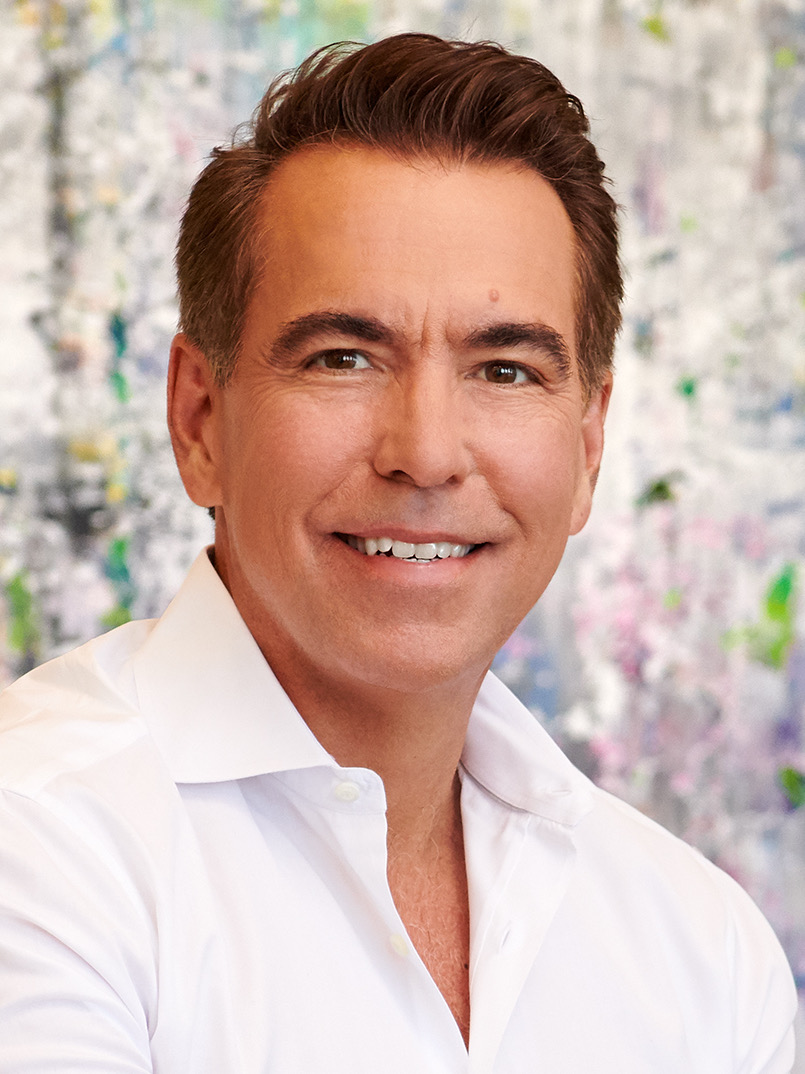
Co-founder and managing partner of Thoma Bravo, a software-focused private equity firm · b. 1970 · Mayagüez, Puerto Rico
Two calls made by hand, not formulas. how we score →
Summary
Born to a family running a shipping agency for Mayagüez's tuna fleet, he grew up in a gated community, went to private schools, and trained at Nick Bollettieri's tennis academy.
Brown, a Stanford JD and MBA, then Morgan Stanley, then a 1997 hire at a Chicago buyout shop, where he pushed it toward software deals nobody wanted and built Thoma Bravo into one of private equity's largest firms.
How it happened
Bravo was born in 1970 in Mayagüez, on Puerto Rico's west coast. His grandfather founded Bravo Shipping in 1945 as an agent for the tuna-fishing factory ships that supplied the StarKist, Neptune, and Bumble Bee canneries at the port; his father ran it after him. The family lived in a gated community in the hills above the city, and Orlando and his younger brother Alejandro attended private schools and ran around on the family's motorboat.
He took up tennis at eight, training on courts at a local university and a Hilton, and by his early teens the family was driving two and a half hours to San Juan most weekends so he could play tougher competition. In 1985, at fifteen, he left Mayagüez for Bradenton, Florida, to train at Nick Bollettieri's academy, the same program that produced Andre Agassi and later Maria Sharapova. He came back to Puerto Rico for high school at Academia de la Inmaculada Concepción, ranked among the island's top junior players.
He earned a B.A. in economics and political science from Brown University in 1992, Phi Beta Kappa, and has said his tennis background helped get him admitted. From there he went to Stanford, finishing a J.D. at Stanford Law School and an M.B.A. at the Graduate School of Business, both completed without any debt documented in the record.
He started in mergers and acquisitions at Morgan Stanley in New York before moving into private equity. In 1997 Carl Thoma and Bryan Cressey hired him at Thoma Cressey Equity Partners in San Francisco, initially to work IT-services deals. His first attempts, in business consulting and web design, went nowhere.
Around 2000 he redirected the group toward buying established enterprise software companies instead — unglamorous, high-margin, recurring-revenue businesses that most buyout shops of the era ignored. The 2002 acquisition of Prophet 21, a distribution-software company, returned roughly 4.7 to 5 times the firm's money and became the proof of concept. He made partner at thirty and ran the software practice from there, extending the same playbook — buy an established vendor, bolt on acquisitions, tighten the operation, hold cash flow steady — deal after deal.
The firm was renamed Thoma Cressey Bravo around 2005-2007 in recognition of what his software group had built, then split into Thoma Bravo in 2008 as a standalone firm with Carl Thoma, focused exclusively on software and technology-enabled services. Bravo became its public face and managing partner, and the firm scaled from a single Chicago buyout shop's software sideline into a specialist that, by 2026, had run roughly 600 software acquisitions worth an aggregate $325 billion in enterprise value and managed about $170 billion in assets across offices in Chicago, Dallas, London, Miami, New York, and San Francisco.
Forbes named him "Wall Street's best dealmaker" in 2019, the year he also debuted on the Forbes 400 as the first Puerto Rican-born billionaire. As of September 2026 Forbes puts his net worth at $11.6 billion. After Hurricane Maria hit Puerto Rico in 2017 he personally flew in supplies, and in 2019 he and his foundation committed $100 million to a startup accelerator for the island; he also gave $25 million to Brown, which named an economics research center after him, and served as a Brown trustee from 2019 to 2023.
The coded evidence
Thirteen groups, every claim sourcednot established
No clear self-identified race is documented; Puerto Rican identity is coded separately as ethnicity rather than assumed here.
↗ en.wikipedia.orgNot an immigrant in the international sense. Born in Mayagüez, Puerto Rico, a US territory, so he was a US citizen at birth; he moved to the US mainland (Florida, then Rhode Island, California, and New York) as a teenager and young adult for school and work, a domestic relocation rather than a cross-border migration.
↗ en.wikipedia.orgSpanish
Inferred from growing up in Mayagüez, Puerto Rico; not directly documented.
↗ en.wikipedia.orgA stable, comfortable two-parent household in a gated community in the hills above Mayagüez; the family ran a shipping agency and could afford private schools and an elite tennis academy. No housing precarity is documented at any point.
Forbes' 2019 profile of Bravo's family background; the outlet blocks automated fetches, so this content was corroborated through search results and a secondary trade-press profile rather than a direct fetch.
↗ forbes.comMorgan Stanley salary followed directly by a hire at an established Chicago buyout partnership; unlike a founder risking personal capital, Bravo joined an existing firm as a salaried associate building toward carried interest, with no personal financial exposure documented.
↗ en.wikipedia.orgFather, Orlando Bravo Sr., ran Bravo Shipping, an agency handling the tuna-fishing factory ships that supplied the StarKist, Neptune, and Bumble Bee canneries at the port of Mayagüez. Mother's occupation is not established in the sources reviewed.
The outlet blocks automated fetches; corroborated via search results.
↗ forbes.comA parent worked for themselves, the strongest known predictor of founding.
↗ forbes.comHis grandfather, also named Orlando Bravo, founded Bravo Shipping in 1945; the business passed to his father, giving the family multigenerational standing in Mayagüez's port economy before Orlando was born.
↗ forbes.comA two-generation family shipping business tied to the tuna trade, not a fortune, but a locally prominent, comfortable standing in Mayagüez that preceded his own career by decades.
↗ forbes.comNo second job or sacrifice for tuition is documented; the family appears to have funded private schooling and an elite tennis academy directly out of the shipping business's income.
↗ forbes.comHis parents drove him two and a half hours to San Juan most weekends through his early teens so he could train against stronger players, then sent him to Florida at fifteen to enroll at Nick Bollettieri's academy — a sustained, funded commitment to a high-variance athletic path that only a family able to absorb the cost and the time could make.
↗ forbes.comA gated community in the hills above Mayagüez, Puerto Rico; comfortable enough for private schools and a family motorboat.
↗ forbes.comPrivate schools in Mayagüez through childhood, then Academia de la Inmaculada Concepción, a private Catholic school, for high school.
↗ en.wikipedia.orgMayagüez (childhood) to Bradenton, Florida (tennis academy, age 15) and back to Mayagüez for high school, then Providence for Brown, Palo Alto for Stanford, New York for Morgan Stanley, and San Francisco for Thoma Cressey — an elite-education-and-finance-hub trajectory rather than a family migration.
↗ en.wikipedia.orgCarl Thoma and Bryan Cressey hired him directly into Thoma Cressey Equity Partners in 1997 to work IT-services deals; the specific introduction or referral isn't established in the sources reviewed.
↗ pe-insights.comThoma Cressey Equity Partners, joined 1997. It gave him a seat inside an established buyout partnership, capital to deploy, and the room to redirect a struggling IT-services practice toward the software-buyout strategy that built his career.
↗ en.wikipedia.orgCredibility, Network, Skill
↗ en.wikipedia.org27
First private-equity role at Thoma Cressey in 1997; sources vary slightly (1997-1998) on the exact year, some placing it just after his Stanford degrees were finished.
↗ en.wikipedia.org5
Roughly from his 1992 Brown graduation to the 1997 Thoma Cressey hire, spanning Stanford and Morgan Stanley.
↗ en.wikipedia.org2
Morgan Stanley, then Thoma Cressey/Thoma Bravo — the only employer of his entire post-Stanford career, now spanning roughly three decades.
↗ en.wikipedia.orgPrivate tennis coaching from age eight, then a paid slot at Nick Bollettieri's academy in Florida starting at fifteen — an expensive, sustained investment in outside instruction, funded by the family.
↗ en.wikipedia.orgNick Bollettieri's tennis academy (a selective pipeline that also produced Andre Agassi and Maria Sharapova) into Brown, then a Stanford JD/MBA — an elite athletic and academic pipeline for his generation.
↗ en.wikipedia.orgJ.D., Stanford Law School, and M.B.A., Stanford Graduate School of Business, both 1998; B.A. in economics and political science, Brown University, 1992, Phi Beta Kappa.
↗ bravofamilyfoundation.orgnot established
Not documented for either Brown or Stanford; no debt is mentioned in any source reviewed.
↗ en.wikipedia.orgDirect — Brown undergraduate straight into a joint Stanford JD/MBA, then straight into Morgan Stanley and private equity, with no gap or detour.
↗ en.wikipedia.orgBrown and a Stanford JD/MBA placed him inside the same elite finance-and-law pipeline that fed Wall Street and West Coast private equity in the 1990s; his own foundation's bio credits his tennis background with helping his Brown admission.
↗ bravofamilyfoundation.orgnot established
Not applicable in the usual founder sense — he joined an existing buyout partnership as a salaried hire rather than funding a venture of his own from savings.
↗ en.wikipedia.orgThoma Bravo itself is the vehicle: a private equity partnership that raises capital from outside limited partners and deploys it into software-company buyouts, paying its partners carried interest on the gains. Bravo joined the predecessor firm in 1997, made partner at thirty, and has run the software practice and then the whole firm continuously since — a compounding general-partner position, not a single company he founded and grew. By 2026 the firm managed roughly $170 billion in assets.
↗ thomabravo.comRather than consuming the returns from Thoma Bravo's growth, he redirected a large share into the Bravo Family Foundation's $100 million Rising Entrepreneurs Program for Puerto Rico (2019) and a $25 million gift to Brown that established the Orlando Bravo Center for Economic Research.
↗ bravofamilyfoundation.orgHe redirected an underperforming IT-services deal team toward buying established, high-margin enterprise software companies instead — a strategy most buyout shops of the late 1990s and early 2000s ignored — after the group's early consulting and web-design bets went nowhere.
↗ pe-insights.comBravo is managing partner and the firm's public face, but Thoma Bravo is a multi-partner partnership he built alongside Carl Thoma and others rather than a company he owns outright or controls through a dual-class structure; his influence rests on track record and internal standing built over three decades.
↗ thomabravo.comnot established
His early deals at Thoma Cressey in business consulting and web design are described as underperforming before he redirected the group toward software; these were firm-level portfolio bets rather than a personal venture of his own failing.
↗ pe-insights.comOne continuous run at a single firm from 1997 to the present, with no gap, reset, or return to a different employer.
↗ en.wikipedia.org32
Approximate age at the 2002 Prophet 21 deal that proved out the software-buyout strategy.
↗ pe-insights.comJoined an established Chicago buyout firm in 1997 as private equity was maturing into a large asset class, then built a software-buyout specialty in the early 2000s before enterprise software was widely treated as a distinct, buyable category — a first-mover position inside an otherwise crowded and well-capitalized industry.
↗ pe-insights.comJoined an existing buyout partnership rather than founding a firm from scratch, then built a new software-focused practice inside it that eventually became its own standalone firm, Thoma Bravo, in 2008.
↗ en.wikipedia.org27
Approximate age when he joined Thoma Cressey Equity Partners in 1997, the start of his compounding partnership stake.
↗ en.wikipedia.orgnot established
The opposite pattern applies — he built his practice in San Francisco, a financial and technology hub, rather than at a deliberate distance from one.
↗ en.wikipedia.orgPrivate equity — software and technology-enabled services buyouts
↗ thomabravo.com11600000000
Forbes real-time tracker, September 19, 2026, ranked #291 globally. Coded from Bravo's personal net worth as reported by Forbes, not from Thoma Bravo's assets under management (roughly $170 billion as of March 2026) — AUM is client capital, not his own wealth. Other trackers show figures from $3.7 billion to $12.8 billion depending on date and methodology; band only.
↗ forbes.comJournalistic estimate
Thoma Bravo is a private partnership; no filing discloses his personal GP stake or carried interest.
↗ forbes.com2026
↗ forbes.comnot established
Not established. As a private-partnership managing partner, his annual carry and distributions were never subject to proxy-statement-style disclosure.
↗ forbes.comNearly all of it is wealth rather than salary: appreciation and carried interest on a general-partner stake in Thoma Bravo built since 1997, concentrated in the firm's growth into a roughly $170 billion software buyout specialist rather than in any single deal.
↗ thomabravo.comNamed "Wall Street's best dealmaker" by Forbes in 2019, the year he also became the first Puerto Rican-born billionaire on the Forbes 400. Chairman and co-founder of the Bravo Family Foundation, which committed $100 million to Puerto Rico's entrepreneurship ecosystem after Hurricane Maria; gave $25 million to Brown University, which named an economics research center after him; served as a Brown trustee (2019-2023) and sits on the Memorial Sloan Kettering Cancer Center board.
↗ bravofamilyfoundation.orgUncapped
↗ thomabravo.comnot established
No regulatory finding or consent decree against Bravo personally is documented in the sources reviewed.
↗ en.wikipedia.orgnot established
No criminal charge or proceeding is documented in the sources reviewed.
↗ en.wikipedia.orgnot established
No adverse civil judgment against Bravo personally is documented in the sources reviewed.
↗ en.wikipedia.orgnot established
No co-founder or investor ownership dispute is documented in the sources reviewed.
↗ en.wikipedia.orgbest dealmaker, Disciplined, software specialist, Philanthropist
Cited via the article's canonical URL; the outlet blocks automated fetches, but the "Wall Street's best dealmaker" characterization is its 2019 headline.
↗ forbes.comPress
↗ en.wikipedia.org5
Wikipedia, Thoma Bravo's own team page, the Bravo Family Foundation bio, Forbes, and a trade-press profile, among others reviewed.
↗ en.wikipedia.orgBefore
His reputation as a leading dealmaker formed through the 2000s software-buyout run, well before his 2019 Forbes 400 debut.
↗ en.wikipedia.orgAsset
His name on a software deal has functioned as a credibility signal to sellers, co-investors, and limited partners for roughly three decades.
↗ thomabravo.comnot established
Some deliberate public profile-building is evident (foundation leadership, university gifts, board seats), but no publicity campaign, book, or media effort beyond ordinary trade-press coverage is documented.
↗ en.wikipedia.orgnot established
No reputational event requiring recovery is documented in the sources reviewed.
↗ en.wikipedia.orgStructural context
The cost-of-failure score comes from this person's own money and circumstances. But who they were in America carried its own weight, the same way their household or income did, and it shaped how hard the path was just as much. That part isn't in the cost-of-failure number. It's here instead.
Men held about 90% of Fortune 500 CEO seats in 2023, and a wider majority of the rungs below. The ladder is widest for them the whole way up.
↗ forbes.comAmong the people recorded here — men: 169. Representation here is who reached these outcomes, not equal odds of reaching them.
Controlled comparisons
Each holds one thing constant and varies another, so the difference is the point. A list of similar names wouldn't tell you anything.