Palmer Luckey
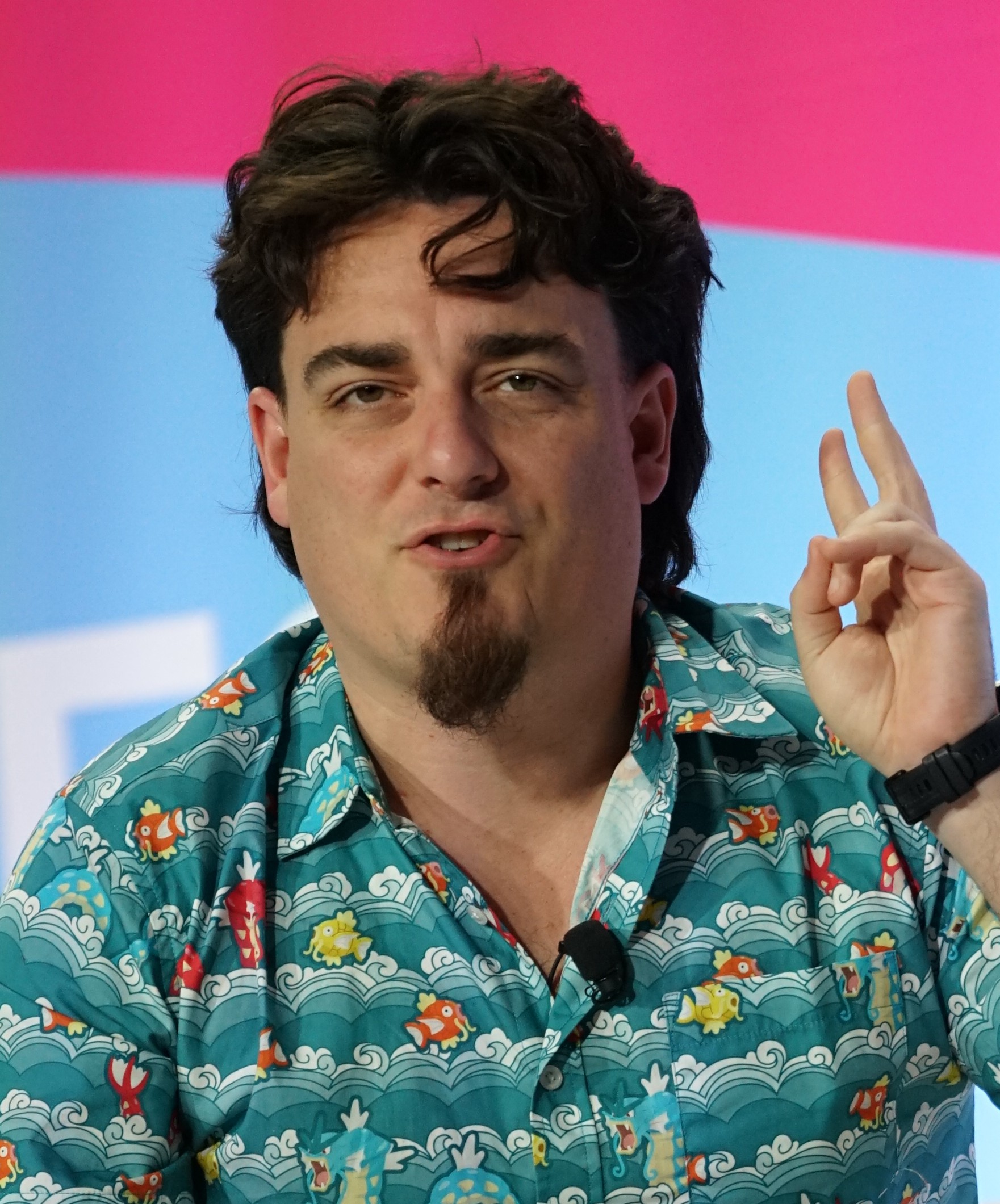
born Palmer Freeman Luckey
Founder of Oculus VR, sold to Facebook for about $2 billion; founder and chairman of the defense-technology company Anduril Industries · b. 1992 · Long Beach, California
Two calls made by hand, not formulas. how we score →
Summary
Homeschooled in a stable, modest Long Beach household, Luckey spent his teens self-funding VR headset prototypes with iPhone-repair money.
Facebook bought Oculus, the company that grew out of them, for about $2 billion when he was 21. Pushed out after a 2016 political-donation controversy, he founded the defense-tech company Anduril in 2017; Forbes now puts his net worth near $6 billion.
How it happened
Palmer Freeman Luckey was born September 19, 1992, in Long Beach, California, the only son among four children. His father worked at a car dealership, and his mother homeschooled him and his three younger sisters. The household was comfortable rather than wealthy or precarious — stable enough that his parents could tolerate a teenager who spent most of his free time and money building railguns, Tesla coils, and lasers, some of which caused him real injuries. He took sailing lessons as a boy and, at fourteen, began taking classes at Golden West College and Long Beach City College while still being homeschooled at home.
Around 2009, at sixteen, Luckey started collecting old and prototype virtual-reality headsets and posting about them on internet forums, then began building his own. He paid for parts with money he made repairing and reselling water-damaged iPhones, at least $36,000 over several years by his own later account, plus part-time work as a groundskeeper, a sailing coach, and a computer-repair technician. He also landed part-time work at the University of Southern California's Institute for Creative Technologies, a defense-funded research lab, helping build VR systems for BRAVEMIND, a U.S. Army program treating PTSD, which put military-grade display hardware in front of him years before he could have afforded it himself. Between 2009 and 2012 he built more than fifty successive prototypes, each one closing the gap between the bulky, narrow-field headsets on the market and what he thought was actually possible.
In April 2012 he founded Oculus VR to turn the prototype into a product. He sent an early unit to John Carmack at id Software, who demoed it publicly at E3 that June, and Valve's Gabe Newell also gave it his backing — validation from two of the industry's most respected engineers that no amount of marketing could have bought. On August 1, 2012, Oculus launched a Kickstarter campaign for the Rift; it hit its $250,000 goal within four hours and closed at $2,437,429, about ten times the target. Brendan Iribe, Michael Antonov, and Nate Mitchell joined him as co-founders and ran the business side while Luckey, not yet twenty, focused on hardware. Spark Capital and Matrix Partners led a $16 million Series A in June 2013, and Andreessen Horowitz led a $75 million Series B that December — real institutional money, on top of the Kickstarter backers, before the company had shipped a consumer product.
On March 25, 2014, Mark Zuckerberg announced that Facebook was buying Oculus for roughly $2 billion: $400 million in cash, 23.1 million Facebook shares valued at about $1.6 billion, and up to $300 million more tied to milestones. Luckey was 21. Forbes estimated his personal stake was worth somewhere north of $500 million within about a year of the deal closing, and he later described spending some of it on a house and a fleet of military vehicles he'd wanted since childhood. The sale made him one of the youngest people ever to become wealthy from a company he'd started as a teenager's hobby, though most of that wealth arrived as Facebook stock and contingent payments rather than cash in hand.
In September 2016, Luckey gave $10,000 to Nimble America, a group backing pro-Trump, anti-Clinton billboards, and offered to match other donations from a Reddit forum supporting the campaign. Several developers threatened to pull support from Oculus, and Luckey posted a public apology saying he regretted how his actions had reflected on the company and its partners, adding that he'd acted as a private citizen rather than as an Oculus representative. Separately, ZeniMax Media had sued Oculus and Luckey alleging misuse of trade secrets tied to id Software's Carmack; a February 2017 jury found no trade-secret misappropriation but did find Luckey had violated a non-disclosure agreement, awarding zero damages against him personally on that count while assessing $500 million in copyright and related damages against the company, of which he was initially held responsible for $50 million — a figure a judge eliminated when total damages were reduced on appeal in 2018. Luckey left Facebook in March 2017 with no official reason given. Asked directly during 2018 Senate testimony why Luckey was gone, Zuckerberg said only that it "was not because of a political view," while Luckey and later reporting described a company that had quietly sidelined him for months before the departure and pressured him to publicly support a third-party candidate. He hired an employment lawyer and negotiated a payout reported at $100 million or more, arguing California law barred Facebook from retaliating against him for political activity. The full truth of why he left is disputed and, on the public record, unresolved.
In April 2017, a month after leaving Facebook, Luckey co-founded Anduril Industries with Trae Stephens, Matt Grimm, Brian Schimpf, and Joseph Chen, his former Oculus hardware lead. Stephens, a former Palantir executive, had met Luckey through Peter Thiel's circle at a 2014 retreat, and Thiel's Founders Fund seeded the new company from the start. The idea was that a Silicon-Valley product company, not a traditional defense prime, could build autonomous sensors, drones, and software for the U.S. military faster and cheaper than Lockheed or Raytheon. It was an argument that had few takers in tech after employee revolts at Google over Pentagon contracts, but one Luckey, freshly wealthy and freshly pushed out of Facebook, was positioned to make without needing anyone's permission. Anduril's founding is the structural pivot in Luckey's financial life rather than the Facebook sale: the roughly $500 million-plus he took out of Oculus put him in the $100 million-to-$1 billion band, comfortable but not remotely where his fortune sits today. Everything above that came from building Anduril, and it is Anduril's compounding value, not the earlier exit, that explains his current net worth.
Anduril built its Lattice software platform to fuse data from drones, towers, and sensors, and shipped hardware including Ghost autonomous helicopters, Sentry surveillance towers, Anvil interceptor drones, and later cruise missiles and jet-powered autonomous aircraft. Early contracts included a 2018 pilot deploying surveillance towers for U.S. Customs and Border Protection along the southern border, followed by contracts with the Marine Corps, the Air Force's Advanced Battle Management System (worth up to roughly $950 million), a $1 billion counter-drone contract with U.S. Special Operations Command, and government customers in the U.K. and Australia. The company's private valuation went from roughly $1 billion in 2019 to $2 billion in 2020, $4.6 billion in 2021, $14 billion in 2024, and $61 billion in a 2026 funding round, with reported 2025 revenue around $2 billion and about 7,000 employees. Its border-surveillance towers have drawn criticism from the ACLU and immigration advocates, who argue the technology pushes migrants toward more dangerous crossing routes and normalizes constant surveillance of the border; its work on autonomous weapons has drawn separate criticism from researchers and ethicists who argue lethal systems that select targets without direct human control deserve more public debate than they've gotten. Supporters, including current and former defense officials, counter that the alternative is ceding the technology to rivals like China, and Bloomberg has described Anduril as tech's most controversial startup — a label the company has never particularly tried to shed.
Forbes put Luckey's net worth at about $6 billion as of September 2026, ranking him roughly 690th in the world, almost entirely on the strength of his Anduril stake rather than any liquid holding. He married Nicole Edelmann in 2019, and they have one child; they live in Newport Beach, California, not far from Anduril's Costa Mesa headquarters and well outside the traditional Bay Area tech corridor. He remains Anduril's executive chairman and its public face, still known for going barefoot at industry events and for collecting decommissioned military hardware, including helicopters and a Navy patrol boat, alongside a defense company now valued in the tens of billions.
The coded evidence
Thirteen groups, every claim sourcedNo specific ancestry beyond "White American" is documented in the sources reviewed.
↗ en.wikipedia.orgMulti-generational American; no documented recent immigration in the family line.
↗ en.wikipedia.org0
No documented gap out of technical work between his teenage tinkering, Oculus, and Anduril.
↗ en.wikipedia.orgA stable, comfortable-but-modest two-parent household in Long Beach on a car salesman's income; no housing precarity is documented at any point, and he lived at home while building his early prototypes and attending community college as a teenager.
↗ en.wikipedia.orgLiving with his parents through his teens meant food and shelter were never at risk while he spent years and thousands of dollars on headset prototypes; the money for the prototypes themselves came from his own part-time and gig work, not a parental subsidy.
↗ en.wikipedia.orgAs an unmarried teenager living at home, he carried no household or caregiving obligations of his own, which left his time free for hobbyist engineering.
↗ en.wikipedia.orgnot established
No student debt or other debt figure is documented; he never completed a degree that would have required a loan payoff.
↗ en.wikipedia.orgnot established
No period of visible poverty, chosen or imposed, is documented; the household was stable throughout.
↗ en.wikipedia.orgHis father worked at a car dealership; his mother was a homemaker who homeschooled Palmer and his three younger sisters.
↗ en.wikipedia.orgNeither parent was self-employed.
Described as working at a dealership rather than owning one, though the sources reviewed don't state this explicitly either way.
↗ en.wikipedia.orgnot established
Homeschooling avoided private-school tuition costs; no specific family sacrifice for schooling is documented.
↗ en.wikipedia.orgHis parents tolerated and effectively enabled years of expensive, sometimes dangerous hobbyist engineering — railguns, Tesla coils, lasers, and dozens of headset prototypes — and supported an unconventional academic path, homeschooling him and allowing him to start community college classes at fourteen rather than insisting on a standard high school track.
↗ en.wikipedia.orgLong Beach, California.
↗ en.wikipedia.orgHomeschooled by his mother, with dual-enrollment community college courses at Golden West College and Long Beach City College starting at fourteen, then California State University, Long Beach, where he studied journalism before withdrawing to focus on Oculus full time.
↗ en.wikipedia.orgPart-time work as a teenager at the University of Southern California's Institute for Creative Technologies, a defense-funded VR research lab, put him directly next to military-grade display hardware and applied VR research years before he could have accessed or afforded either on his own — a level of technical access most hobbyists his age never got.
↗ en.wikipedia.orgHis peer community wasn't geographic but online: virtual-reality enthusiast forums, including one he founded himself (ModRetro Forums) for restoring and modifying old hardware, where he traded notes with other hobbyists years before the VR industry existed in any commercial sense.
↗ en.wikipedia.orgnot established
He stayed in Southern California through his childhood, Oculus, and into Anduril; no family relocation is documented.
↗ en.wikipedia.orgJohn Carmack, of id Software, publicly demoed an early Rift prototype at E3 2012 after Luckey sent him a unit, and Valve's Gabe Newell also backed the project — validation from two of the industry's most respected technical figures that helped the Kickstarter and the earliest hires take Oculus seriously. Later, Trae Stephens, a former Palantir executive Luckey met through Peter Thiel's circle at a 2014 retreat, became his Anduril co-founder and the connective tissue to Founders Fund's seed money.
↗ en.wikipedia.orgOculus's first backers came cold, through Kickstarter, rather than from any pre-existing personal or professional relationship.
↗ en.wikipedia.orgHis part-time role at USC's Institute for Creative Technologies supplied technical skill and access to a small professional VR research community before Oculus existed. Later, Oculus and the Facebook sale functioned as the launch platform for Anduril, supplying Luckey personal capital, an operator's track record, and the reputation that made Founders Fund's early backing possible.
↗ en.wikipedia.orgCapital, Credibility, Network, Skill
↗ en.wikipedia.orgHe built his own following on VR enthusiast forums and then cold-sent a prototype directly to John Carmack rather than going through any industry gatekeeper or investor introduction — a door he built rather than one that was opened for him.
↗ en.wikipedia.orgOculus VR (2012): Brendan Iribe, Michael Antonov, and Nate Mitchell, met through the VR community, handled the business side while Luckey focused on hardware. Anduril (2017): Trae Stephens, Matt Grimm, and Brian Schimpf, all former Palantir executives, plus Joseph Chen, his former Oculus hardware lead.
↗ en.wikipedia.org16
First paid technical work around age sixteen, repairing and reselling iPhones and doing computer repair, alongside starting his headset-prototype hobby.
↗ en.wikipedia.orgWithin the small VR-enthusiast forum community he had real standing and recognition before founding Oculus, though not public fame in any broader sense; that changed once Carmack and Newell endorsed the project publicly in 2012.
↗ en.wikipedia.orgRather than pitching an established gaming or electronics company, he crowdfunded directly from the public on Kickstarter after building credibility with individual industry figures — a route around the companies that had mostly written VR off as a failed 1990s fad.
↗ en.wikipedia.org1
USC's Institute for Creative Technologies, part time, before founding Oculus; otherwise self-employed through odd jobs and his own ventures.
↗ en.wikipedia.orgThrough his part-time role at USC's Institute for Creative Technologies he had hands-on access to defense-funded, military-grade VR display hardware years before it was commercially available or affordable to a hobbyist.
↗ en.wikipedia.orgnot established
No formal gifted program, magnet school, or competition circuit is documented; his path was self-directed and homeschool-based.
↗ en.wikipedia.orgnot established
No degree completed. Attended Golden West College and Long Beach City College starting at fourteen, then California State University, Long Beach, studying journalism, before withdrawing to work on Oculus full time.
↗ en.wikipedia.orgWorked part-time jobs (device repair, groundskeeping, sailing instruction, and later USC's Institute for Creative Technologies) throughout his community-college and university years.
↗ en.wikipedia.orgHomeschool to dual-enrolled community college at fourteen to a public state university, withdrawing before completion to found a company — an unconventional, self-directed sequence rather than a standard K-12 to four-year track.
↗ en.wikipedia.orgHe funded his prototype-building years with money from repairing and reselling water-damaged iPhones — by his own account at least $36,000 over several years — plus part-time work as a groundskeeper, sailing coach, and computer-repair technician, all before Oculus VR was formally founded.
↗ en.wikipedia.orgIt needed capital up front, before it earned anything.
Oculus raised Kickstarter and venture money well before shipping a revenue-generating consumer product.
↗ en.wikipedia.orgOculus's earliest prototypes were entirely self-funded from his own part-time and gig income, not family money; this is closer to wage-savings than to a prior high-salary career, since he was a teenager with no formal employment history when he started.
↗ en.wikipedia.orgOculus's Kickstarter campaign (August 2012) raised $2,437,429 from the public, about ten times its $250,000 goal. Spark Capital and Matrix Partners then led a $16 million Series A in June 2013, and Andreessen Horowitz led a $75 million Series B that December, with Spark, Matrix, and Formation 8 participating — institutional venture money arriving only after the crowdfunded prototype had already proven demand.
↗ crunchbase.comAnduril is a private company; its funding has come from a sequence of venture rounds led by Founders Fund, Andreessen Horowitz, General Catalyst, and others, with no public listing and no SEC filings disclosing Luckey's personal share count or voting control.
↗ en.wikipedia.orgRather than consuming all of his roughly $500 million-plus Oculus payout, he redirected a meaningful share of the capital and, more importantly, the credibility it bought him into co-founding and seeding Anduril in 2017.
↗ en.wikipedia.orgOculus grew directly from his own teenage frustration, as a collector of old and prototype VR headsets, with how bulky and narrow-field every existing design was. Anduril grew from his and his co-founders' view that Silicon Valley had grown allergic to defense work, visible in employee revolts at companies like Google over Pentagon contracts, and that a product-focused startup, not a traditional prime contractor, could build autonomous military hardware faster and cheaper.
↗ en.wikipedia.orgnot established
Anduril is privately held with no SEC filings; his exact equity percentage and any voting-control structure are not publicly disclosed.
↗ en.wikipedia.org0
No separate, discrete failed venture is documented before Oculus; his path was continuous hobbyist iteration rather than distinct startup attempts.
↗ en.wikipedia.orgHe absorbed the modest, parts-level cost of each prototype himself, from his own part-time earnings; no one else carried the financial risk of his teenage experimentation.
↗ en.wikipedia.org50
He is reported to have built more than fifty successive headset prototypes between roughly 2009 and 2012 before Oculus's first Kickstarter-funded Rift development kit.
↗ en.wikipedia.orgLiving at home and working part-time jobs sustained him through years of unpaid prototype-building; there was no gap of unemployment or crisis between attempts.
↗ en.wikipedia.orgAnduril launched into a defense-technology market where the Pentagon was increasingly open to buying commercial, software-defined hardware from startups rather than only from traditional primes like Lockheed Martin and Raytheon, even as much of the rest of Silicon Valley was pulling back from military contracts amid employee pressure. That gap, a willing customer facing a reluctant industry, is much of what Anduril was built to occupy.
↗ en.wikipedia.orgOrange County, California, where Anduril is headquartered in Costa Mesa, rather than the Bay Area.
↗ en.wikipedia.orgBuilt from scratch as a new company, though founded alongside experienced operators recruited from Palantir rather than solo.
↗ en.wikipedia.org9
From Anduril's April 2017 founding through 2026, with valuation compounding from roughly $1 billion in 2019 to $61 billion by 2026.
↗ en.wikipedia.orgAnduril is based in Orange County rather than Silicon Valley, and Luckey has lived in Newport Beach rather than relocating to the Bay Area, a deliberate distance from the traditional tech hub even as the company competes directly with Bay Area-adjacent defense-tech peers.
↗ en.wikipedia.orgnot established
Not established; no detailed account of his personal spending relative to income is documented beyond notable purchases like a house and a collection of military vehicles.
↗ en.wikipedia.orgConsumer virtual-reality hardware (Oculus VR, 2012-2017); defense and autonomous-systems technology (Anduril Industries, 2017-present)
↗ en.wikipedia.org6000000000
Forbes real-time tracker, September 20, 2026, ranking him roughly #690 globally. Overwhelmingly composed of his illiquid stake in privately held Anduril, which investors valued at $61 billion in a May 2026 funding round; band figure only.
↗ forbes.comJournalistic estimate
Derived from Anduril's private funding-round valuation and Luckey's estimated ownership share; no filing discloses his exact stake, since Anduril has no SEC reporting obligation.
↗ forbes.com2026
↗ forbes.comnot established
Not established. Neither Oculus (acquired, not public) nor Anduril (private) has ever been subject to proxy-statement-style compensation disclosure for Luckey.
↗ forbes.comThe 2014 Facebook deal included a real cash component ($400 million) alongside stock and a milestone-based earn-out, so some of his Oculus wealth was realized directly. His current net worth is overwhelmingly unrealized: an illiquid stake in a private company valued by its investors, not money he has taken off the table.
↗ en.wikipedia.orgEntirely a function of founder equity appreciation at Oculus and then Anduril, not salary; no meaningful income history is documented at either company.
↗ en.wikipedia.orgBuilt the Oculus Rift, credited with reviving mainstream interest in consumer virtual reality; built Anduril into a major U.S. defense contractor with billion-dollar-scale Air Force and Special Operations contracts and government customers in the U.K. and Australia; sanctioned symbolically by China in December 2025 over Anduril's role supplying Taiwan; revived the ModRetro brand in 2024 as a handheld game-console maker.
↗ en.wikipedia.org5
From founding Oculus VR in 2012 to founding Anduril, the venture that produced his current wealth position, in 2017.
↗ en.wikipedia.orgUncapped
↗ en.wikipedia.orgnot established
No regulatory finding or consent decree against Luckey personally is documented; China's December 2025 sanctions over Anduril's Taiwan-related sales are a foreign government action against him, not a U.S. regulatory finding, and are reported to have negligible practical effect.
↗ en.wikipedia.orgZeniMax Media sued Oculus and Luckey over alleged misuse of trade secrets connected to id Software co-founder John Carmack's work. A February 2017 jury found no trade-secret misappropriation, but did find Luckey personally violated a non-disclosure agreement, awarding zero damages against him on that finding; it separately assessed $500 million in copyright and false-designation damages against the company, of which Luckey was initially held responsible for $50 million. A judge reduced the total award on appeal in 2018, which eliminated Luckey's personal portion.
↗ en.wikipedia.orgnot established
No co-founder or investor ownership dispute at Anduril is documented in the sources reviewed.
↗ en.wikipedia.orgLuckey has confirmed on the record that he personally donated to Nimble America, a pro-Trump political group, in September 2016, and publicly apologized at the time for how it affected perceptions of Oculus and its partners, while maintaining he acted as a private citizen rather than as a company representative.
↗ en.wikipedia.orgBefore
Both the ZeniMax verdict (February 2017) and the political-donation controversy and Facebook departure (September 2016 to March 2017) preceded Anduril's founding in April 2017, the coded pivot.
↗ en.wikipedia.orgIncidental
The relationship that produced Anduril's Founders Fund backing (Trae Stephens, via Peter Thiel's circle) dates to a 2014 retreat, before either the donation controversy or the Facebook departure. Losing his role at Facebook freed his time and gave him a reason to found a new company sooner, but the underlying opportunity did not depend on the controversy itself.
↗ en.wikipedia.orgCivil wrong
The ZeniMax matter was an adjudicated civil case (NDA violation, copyright and false-designation damages against the company); the political donation was lawful political speech that produced reputational rather than legal consequences.
↗ en.wikipedia.orgNone
His initial $50 million personal liability in the ZeniMax case was eliminated on the 2018 reduction of damages; the donation controversy cost him his Facebook role and standing but no fine or personal legal liability.
↗ en.wikipedia.orgnot established
No documented labor dispute or finding involving Anduril as an employer.
↗ en.wikipedia.orgself-taught hardware prodigy, Gadfly, hawkish moderniser of defense procurement, outsider to Silicon Valley's political consensus
↗ en.wikipedia.orgPress
↗ en.wikipedia.org4
Wikipedia's Palmer Luckey and Anduril Industries pages, Forbes's profile, and Bloomberg's reporting (cited via Wikipedia), among a much larger body of coverage.
↗ en.wikipedia.orgBefore
His public reputation as a self-taught, unconventional engineer formed during the Oculus years, well before Anduril or its defense-industry criticism existed.
↗ en.wikipedia.orgMixed
An asset in fundraising and defense-sector credibility, where his reputation as a builder willing to work with the Pentagon is core to Anduril's pitch; a liability with parts of the tech press and immigration and arms-control advocates who criticize the company's border and autonomous-weapons work.
↗ en.wikipedia.orgThe reputation accrued from behaviour rather than being manufactured.
He gives interviews and is a visible political donor, but has not built a books-and-speaking-circuit personal brand the way some tech founders have; his public image reads as consistent with his own stated views rather than obviously managed.
↗ en.wikipedia.orgAnduril's border-surveillance work is criticized by some, including the ACLU and immigration advocates, who argue it normalizes constant surveillance and pushes migrants toward more dangerous routes, and its autonomous-weapons work draws separate concern from researchers who want more public debate about lethal systems operating with limited human control. It is supported by others, including current and former defense officials, who argue the alternative is ceding the technology to strategic rivals. Both views coexist in public coverage of the company without either one displacing the other.
↗ en.wikipedia.orgStructural context
The cost-of-failure score comes from this person's own money and circumstances. But who they were in America carried its own weight, the same way their household or income did, and it shaped how hard the path was just as much. That part isn't in the cost-of-failure number. It's here instead.
Men founded the companies that took nearly all the venture funding and almost every top outcome, a tailwind that never shows up in one person's own circumstances.
↗ techcrunch.comWhite founders are heavily overrepresented among funded companies and top-tier wealth relative to their share of the population, an edge that has nothing to do with a person's own money.
↗ techcrunch.comAmong the people recorded here — men: 169 · White subjects: 114. Representation here is who reached these outcomes, not equal odds of reaching them.
Controlled comparisons
Each holds one thing constant and varies another, so the difference is the point. A list of similar names wouldn't tell you anything.