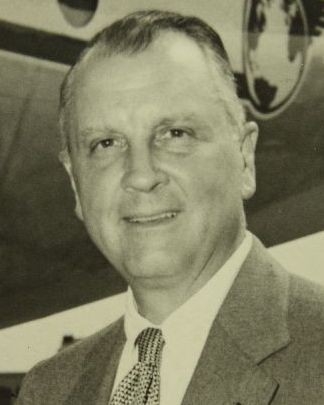
Patrick Collison
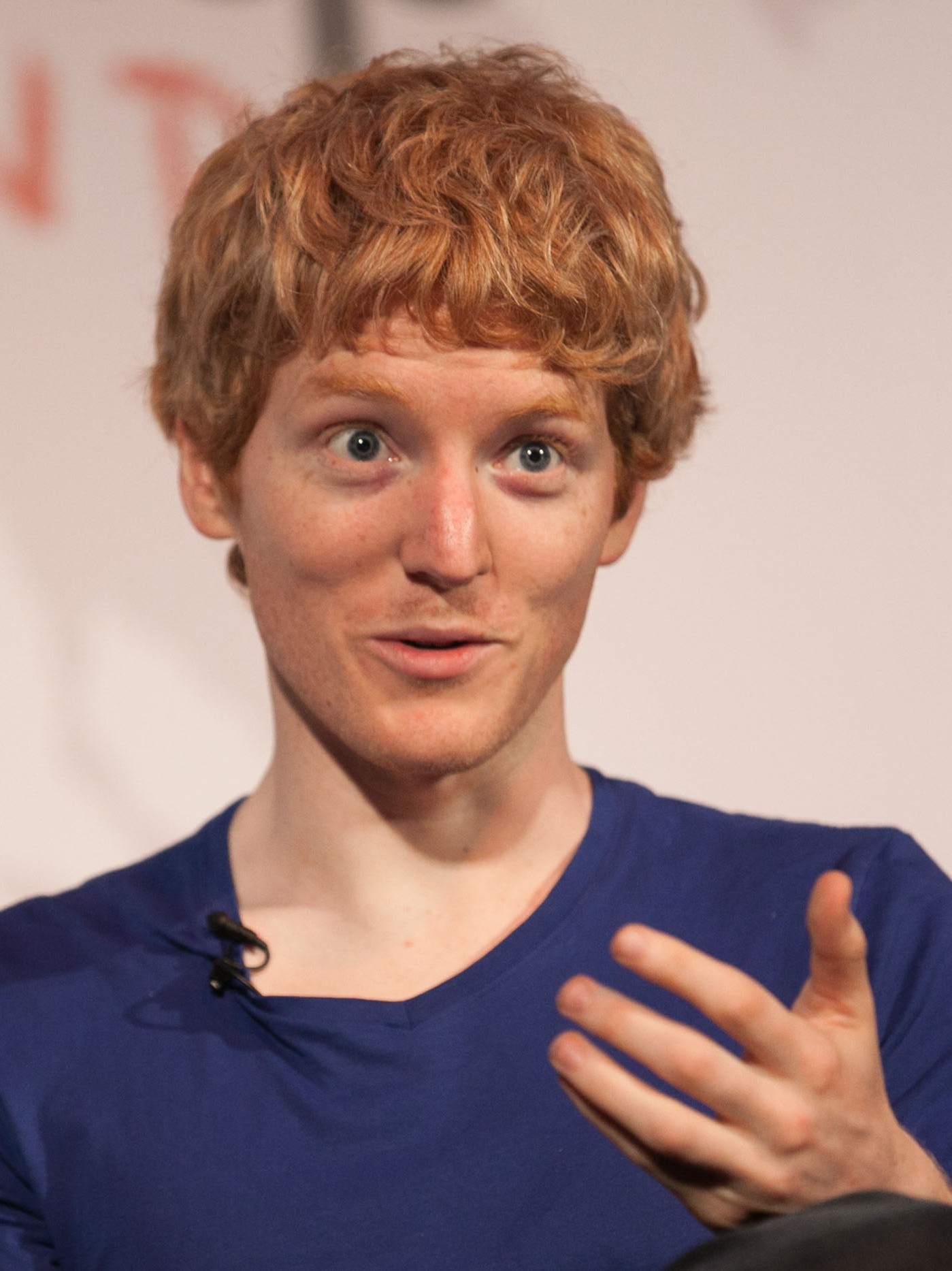
Co-founder and CEO of Stripe · b. 1988 · Limerick, Ireland → Dromineer, County Tipperary
Two calls made by hand, not formulas. how we score →
Summary
Raised by a microbiologist mother and a hotelier father in rural Ireland, he had computers and encouragement early, won Ireland's Young Scientist prize at sixteen, and sold his first company at nineteen for real capital.
He co-founded Stripe with his brother John in 2010, building one of the world's most valuable private companies. Moving to the US for MIT was an elite move, not a barrier.
How it happened
Patrick Collison was born September 9, 1988, in Limerick, Ireland, and raised in Dromineer, a small village on Lough Derg in County Tipperary. His father, Denis Collison, trained as an electrical engineer before becoming an entrepreneur, eventually running a twenty-four-room hotel on the lakeshore, the Sail Inn. His mother, Lily Collison, had a background in microbiology and later ran her own corporate training business from the family home. Patrick and his younger brother John attended a small local primary school with fewer than twenty students per class, then Gaelscoil Aonach Urmhumhan, an Irish-language immersion school. He started programming at ten.
At sixteen he won Ireland's Young Scientist and Technology Exhibition with Croma, a programming language he built himself, and received the prize from President Mary McAleese. He sat his Leaving Certificate, the exam that normally ends Irish secondary school around eighteen, two years early, and was admitted to MIT on the strength of qualifying exams he'd taken at thirteen. Money was comfortable throughout; whatever pressure he felt was self-imposed, not financial.
He enrolled at MIT in 2006 but soon co-founded Auctomatic with John, a tool for eBay power sellers, and both eventually left school to work on it full time. Y Combinator's interest pulled them to California. In March 2008, Live Current Media bought Auctomatic for roughly $5 million; Patrick was nineteen. It wasn't a founding-myth fortune, but it gave both brothers real capital and a credibility line years before either had built anything lasting.
In 2009 the brothers began building a simple API for accepting online payments, working out of Palo Alto under the placeholder name /dev/payments; Delaware doesn't allow a leading slash in a corporation's name, so they renamed it Stripe. Y Combinator backed the project in its Summer 2009 batch, and the company incorporated in 2010. In 2011 it closed a roughly $2 million seed round led by Sequoia Capital and Andreessen Horowitz, with individual checks from PayPal alumni Elon Musk, Peter Thiel, and Max Levchin — investors who understood payments infrastructure from the inside, not just a bet on two young founders.
Stripe stayed private and kept raising: a 2021 round valued it at $95 billion, and by 2023 a slowing venture market cut that to $50 billion in a down round, alongside layoffs affecting about 14% of staff that November. The company kept growing anyway. By February 2026 a tender offer valued Stripe at $159 billion, and it was processing an estimated $1.9 trillion in payments annually. Patrick and John are reported to jointly hold a controlling interest in the company, though Stripe has never disclosed the exact structure.
He's written and funded outside the company nearly as much as he's built inside it. Fast Grants, launched with economist Tyler Cowen in 2020, moved COVID-19 research funding in days instead of months; the Arc Institute, co-founded in 2021, backs biomedical researchers outside the standard grant cycle; and a 2019 essay he wrote with Cowen argued for treating the study of scientific and economic progress as its own academic field. He joined Meta's board in April 2025.
Forbes put his net worth at $17.5 billion as of September 2026, almost entirely in Stripe equity that has never been taken public and mostly can't be sold. It's a wealth figure built on a private company's own valuation of itself rather than a market price, but at that size it's hard to call the number fiction.
The coded evidence
Thirteen groups, every claim sourcedFirst-generation immigrant to the US; born and raised in Ireland, emigrated at around 18 to attend MIT and never moved back.
↗ forbes.comEnglish at home, though he attended an Irish-language immersion primary school (Gaelscoil Aonach Urmhumhan).
↗ irishexaminer.com0
No documented gap out of work; Auctomatic, then Stripe, ran continuously from his late teens onward.
↗ en.wikipedia.orgA comfortable, stable two-parent household. His father owned and ran a twenty-four-room lakeside hotel in Dromineer; his mother ran a corporate training business from home after a career as a microbiologist. No housing instability is documented at any point.
↗ nenaghguardian.ieBy the time Stripe started, he already had roughly half of a $5 million Auctomatic sale behind him, and Y Combinator plus a $2 million seed round followed within about two years of incorporation. He was never building on nothing.
↗ en.wikipedia.org0
No dependents documented during Stripe's founding years; he married in 2022, well after the company was established.
↗ en.wikipedia.orgnot established
No student debt or other debt figure is documented; he did not complete a degree, and the family appears to have had the means to cover schooling.
↗ en.wikipedia.orgnot established
No homelessness, food insecurity, or comparable instability is documented at any point.
↗ en.wikipedia.orgFather Denis Collison trained as an electrical engineer, then became an entrepreneur running a twenty-four-room hotel on Lough Derg; mother Lily Collison had a background in microbiology and later ran her own corporate training company from the family home.
↗ irishexaminer.comA parent worked for themselves, the strongest known predictor of founding.
Both parents ran their own businesses — the hotel and the training company.
↗ irishexaminer.comNot explicitly stated in degree terms, but both parents trained professionally — father as an electrical engineer, mother as a microbiologist — implying tertiary education for both.
↗ irishexaminer.com2
Two brothers, including Stripe co-founder John Collison; a third brother is less publicly documented.
↗ en.wikipedia.orgParents supported early computing and academic pursuits; he began programming at ten and the family backed his 2005 Young Scientist project rather than steering him toward a safer, more conventional path.
↗ nenaghguardian.ieDromineer, County Tipperary — a small village on Lough Derg in rural Ireland.
↗ nenaghguardian.ieA small local primary school with fewer than twenty students per class, then Gaelscoil Aonach Urmhumhan (Irish-language immersion), then Castletroy College for secondary school, before MIT.
↗ irishexaminer.comNo documented technology-industry cluster in rural County Tipperary; his exposure to programming came from self-teaching at home rather than proximity to working practitioners.
↗ en.wikipedia.orgHis own brother John was pursuing the same interests in the same household and later co-founded both Auctomatic and Stripe with him — an intense peer density of one, inside the family itself.
↗ en.wikipedia.orgLeft rural Ireland for the US around 2006 to attend MIT. Y Combinator's interest in Auctomatic then pulled the brothers to California, where they built and based Stripe from 2009 onward.
↗ forbes.comnot established
No documented discrimination or exclusionary barrier. As a white, English-speaking, MIT-credentialed Irish immigrant, he entered US tech and venture-capital circles with minimal friction — his immigration reads as an elite talent move rather than a barrier.
↗ en.wikipedia.orgY Combinator accepted Auctomatic informally around 2007-08, which pulled the brothers to California, and then formally backed the /dev/payments project — later renamed Stripe — in its Summer 2009 batch.
↗ ycombinator.comCredibility, Network, Idea
↗ ycombinator.comJohn Collison, his younger brother — the same partnership as Auctomatic, this time as co-founder and president of Stripe.
↗ en.wikipedia.org18
Co-founded Auctomatic, his first company, around age 18-19, while still enrolled at MIT.
↗ en.wikipedia.org0
No conventional employer is documented between MIT and founding his own companies.
↗ en.wikipedia.orgnot established
No documented account of purchased private tutoring or early access to scarce equipment; he began programming at ten on an ordinary home computer, largely self-taught.
↗ en.wikipedia.orgIreland's national Young Scientist and Technology Exhibition, a selective science-fair pipeline he won outright at sixteen, plus admission to MIT on the strength of qualifying exams taken at thirteen.
↗ irishexaminer.comAttended MIT, admitted on the strength of qualifying exams taken at thirteen; did not complete a degree, dropping out after co-founding Auctomatic and then Stripe.
↗ irishexaminer.comnot established
Not documented; he left without completing a degree and no debt figure is reported.
↗ en.wikipedia.orgCo-founded and worked on Auctomatic while still an enrolled MIT student, before leaving to pursue it and later Stripe full time.
↗ en.wikipedia.orgSkipped ahead through Irish secondary schooling, sitting his Leaving Certificate two years early, then went directly to MIT — a globally elite research university — without an intermediate credentialing step.
↗ irishexaminer.comMIT supplied both the path into Y Combinator and early exposure to Silicon Valley; even after leaving without a degree, being a dropped-out MIT student carried real weight with early investors.
↗ en.wikipedia.orgThe roughly $5 million cash sale of Auctomatic to Live Current Media in March 2008, split with his brother John — real capital years before Stripe existed.
↗ en.wikipedia.orgIt needed capital up front, before it earned anything.
Stripe took Y Combinator backing and then a seed round relatively early rather than reaching meaningful revenue on its own first.
↗ en.wikipedia.orgAuctomatic's sale proceeds gave him a personal capital cushion before Stripe's 2011 seed round — an early self-funding buffer distinct from any Stripe revenue, and distinct from family money.
↗ en.wikipedia.orgY Combinator's Summer 2009 batch (as /dev/payments); a roughly $2 million seed round in 2011 led by Sequoia Capital and Andreessen Horowitz, with individual checks from Elon Musk, Peter Thiel, and Max Levchin; a 2021 round at a $95 billion valuation; a March 2023 Series I of $6.5 billion at a $50 billion valuation; and a February 2026 tender offer valuing the company at $159 billion.
↗ en.wikipedia.orgPayPal alumni investors Elon Musk, Peter Thiel, and Max Levchin brought direct payments-industry operating experience alongside their capital, not just passive checks.
↗ en.wikipedia.orgStripe has raised across more than a dozen private rounds over 15+ years without going public. Patrick and John Collison are reported to jointly hold a controlling interest, though Stripe has never disclosed the exact ownership breakdown.
↗ en.wikipedia.orgBegan programming at ten; the Croma programming language that won the 2005 Young Scientist prize was built before he was legally an adult, and Auctomatic was founded and sold (age 18-19) before he turned twenty.
↗ irishexaminer.comAuctomatic's proceeds were reinvested into founding further companies rather than spent; he has remained Stripe's CEO and a major shareholder rather than cashing out.
↗ forbes.comThe idea came from his and John's own frustration, as developers themselves, with how hard it was to integrate online payments; they built a simple API — originally called /dev/payments — to fix the problem for people like themselves.
↗ en.wikipedia.orgReported to retain joint controlling interest with his brother despite Stripe raising well over a dozen institutional rounds — an unusual outcome for a company that has taken this much outside capital. The precise mechanism isn't publicly disclosed, since Stripe remains private.
↗ en.wikipedia.org0
Auctomatic, his first venture, was a successful if modest exit rather than a failure; no documented failed attempt before Stripe.
↗ en.wikipedia.orgFounded as e-commerce was accelerating while online payments infrastructure remained notoriously hard for small developers to integrate; incumbents required lengthy underwriting, while Stripe offered a few lines of code.
↗ en.wikipedia.orgPalo Alto, California, having relocated from Ireland and MIT for Y Combinator.
↗ en.wikipedia.orgBuilt — Stripe was an original product built by the brothers, not an acquisition.
↗ en.wikipedia.org16
From the 2010 incorporation to 2026, with his equity position compounding throughout as CEO.
↗ en.wikipedia.orgPayments infrastructure and fintech (Stripe)
↗ en.wikipedia.org17500000000
Forbes real-time billionaires tracker, as of September 23, 2026. Derived from Stripe's most recent private tender-offer valuation ($159B in February 2026), not a disclosed shareholding percentage — read as a band figure rather than a precise point value.
↗ forbes.comJournalistic estimate
↗ forbes.com2026
↗ forbes.comnot established
Not established. Stripe is private and files no proxy statement, so no disclosed salary or compensation figure exists.
↗ forbes.comAlmost entirely illiquid; his wealth is tied to a private-company equity stake that has never been taken public, though periodic tender offers — most recently valuing Stripe at $159 billion in February 2026 — allow partial liquidity for employees and early investors.
↗ en.wikipedia.orgWealth is founder equity in a company that has never gone public, not accumulated salary. No compensation figures exist publicly because Stripe doesn't file proxy statements.
↗ en.wikipedia.orgStripe became one of the most valuable privately held technology companies in the world, processing roughly $1.9 trillion in payment volume annually as of 2026. He joined Meta's board in April 2025, co-founded Fast Grants (2020) and the Arc Institute (2021), and co-authored the "Progress Studies" essay with economist Tyler Cowen in 2019.
↗ en.wikipedia.org6
Years from Stripe's 2010 founding to a roughly $9.2 billion valuation in 2016, when the brothers were named the world's youngest self-made billionaires.
↗ en.wikipedia.orgUncapped
↗ en.wikipedia.orgnot established
No regulatory finding against Collison or Stripe personally is documented. In March 2026 the FTC sent an industry-wide warning about "debanking" practices to Stripe and three other payment processors — reported as a warning, not a finding of wrongdoing specific to Stripe.
↗ en.wikipedia.orgnot established
↗ en.wikipedia.orgnot established
No adverse civil judgment against Collison personally is documented.
↗ en.wikipedia.orgnot established
↗ en.wikipedia.orgUnrelated
No documented conduct finding exists to assess for instrumentality; included for schema completeness.
↗ en.wikipedia.orgStripe cut about 14% of its workforce in November 2022, and separately sent layoff notices to roughly 300 employees in January 2025, amid broader tech-sector contraction — reported as business restructuring rather than a labor-practice finding.
↗ en.wikipedia.orgintensely intellectual, widely-read generalist, product-and-engineering-focused operator, unusually low-key relative to peer founders of similar wealth, an influential voice in "Progress Studies" and scientific-funding reform
↗ forbes.comPress
↗ en.wikipedia.org4
Rough count across Wikipedia-cited press, Forbes, and Irish regional outlets independently covering the family and company.
↗ en.wikipedia.orgBefore
His reputation as a prodigy formed with the 2005 Young Scientist win, well before Stripe's major scale-up.
↗ irishexaminer.comAsset
↗ forbes.comThe reputation accrued from behaviour rather than being manufactured.
No evidence of a managed publicity operation; his public profile appears to derive from his own essays and interviews and from Stripe's own visibility rather than a cultivated media campaign.
↗ en.wikipedia.orgNo reputational crisis requiring recovery is documented for Collison personally; Stripe's 2022-2023 down-round and layoffs were covered as sector-wide macroeconomic adjustment rather than a personal failing.
↗ en.wikipedia.orgStructural context
The cost-of-failure score comes from this person's own money and circumstances. But who they were in America carried its own weight, the same way their household or income did, and it shaped how hard the path was just as much. That part isn't in the cost-of-failure number. It's here instead.
Men founded the companies that took nearly all the venture funding and almost every top outcome, a tailwind that never shows up in one person's own circumstances.
↗ techcrunch.comWhite founders are heavily overrepresented among funded companies and top-tier wealth relative to their share of the population, an edge that has nothing to do with a person's own money.
↗ techcrunch.comImmigrants and their children are overrepresented among America's biggest companies, as founders and as senior leaders. They got there through the visa, credential, and network hurdles that make the path harder to even start down.
↗ forbes.comAmong the people recorded here — men: 169 · White subjects: 114. Representation here is who reached these outcomes, not equal odds of reaching them.
Controlled comparisons
Each holds one thing constant and varies another, so the difference is the point. A list of similar names wouldn't tell you anything.