Queen Latifah
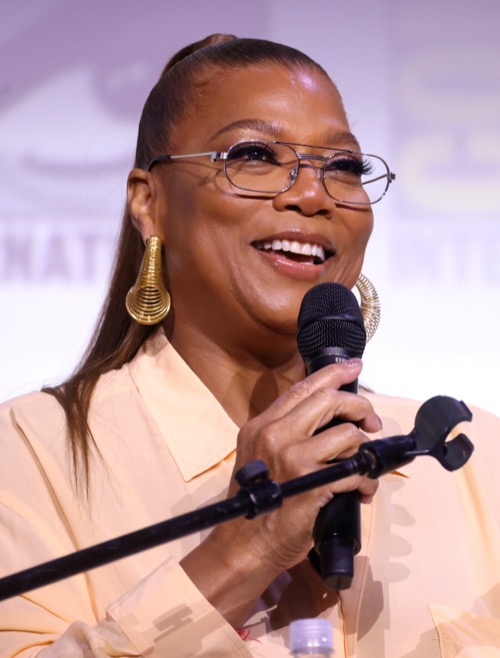
born Dana Elaine Owens
Rapper and actress (Queen Latifah); co-founder and CEO, Flavor Unit Entertainment · b. 1970 · Newark, New Jersey
Two calls made by hand, not formulas. how we score →
Summary
Dana Owens grew up in a two-income Newark and East Orange household that became single-mother after her parents divorced when she was eight.
She broke into hip-hop as a teenage MC with a pro-woman message in a genre almost entirely run by men, then spent three decades turning that recognition into acting, hosting, and endorsement paychecks, plus part ownership of the company she still runs.
How it happened
Dana Elaine Owens was born March 18, 1970, in Newark, New Jersey, and raised mostly in nearby East Orange. Her father, Lancelot Owens, was a Newark police officer; her mother, Rita Owens, taught art at Irvington High School. Her parents separated in 1978, when she was eight, and she was raised primarily by her mother from then on, with an older brother, Lance Jr., who followed their father into the police department. In high school she started rapping with friends as Ladies Fresh, and her mother invited a local DJ, Mark James, known as Mark the 45 King, to a school dance. His family's basement in East Orange became a gathering spot for the crew, who started calling themselves Flavor Unit.
A demo James recorded of her rapping, "Princess of the Posse," made its way to Fab 5 Freddy, who passed it to Dante Ross at Tommy Boy Music. Tommy Boy released her debut single, "Wrath of My Madness," in 1988, and her debut album, All Hail the Queen, came out in 1989, when she was nineteen. The album's "Ladies First," a duet with the British rapper Monie Love, is often cited as one of the first collaborative tracks by two women rappers who weren't part of the same group. Rap in 1989 was built almost entirely by and for men, and she arrived inside it as a teenager with a record explicitly arguing for women's place in it. Everything that followed, the acting, the talk show, the endorsement deals, traced back to that record making her a name.
On April 26, 1992, her brother Lance Jr. was killed in a motorcycle accident, riding a bike she had bought him. She has spoken about it publicly for decades since, including in a 2006 interview where she described still wearing the motorcycle's key around her neck. Her third album, Black Reign, released the following year, became the first album by a solo female rapper to go gold, and its single "U.N.I.T.Y." won a Grammy and took on street harassment and the objectification of Black women directly, the same resistance her earlier work had already been pushing against, now made explicit.
In 1991 she and her manager, Shakim Compere, founded Flavor Unit Records and Management in Jersey City, with her as CEO. It started small, handling her own music and a handful of other Flavor Unit artists, and grew over the following two decades into Flavor Unit Entertainment, a production company based first in New Jersey and later Miami. By the 2010s it had a multi-year deal with Netflix to premiere its films and a programming partnership with the cable network Centric, and has produced more than fifteen films along with television series including the Scream reboot.
She played Khadijah James on Fox's Living Single from 1993 to 1998, then Cleopatra "Cleo" Sims in Set It Off in 1996. Her role as Matron Mama Morton in the 2002 film Chicago earned her an Academy Award nomination, the first for a female rapper. In 2001 she signed on as a spokesperson for CoverGirl, fronting the Queen Collection line developed for women of color, a relationship that ran for more than a decade. More roles followed: Bringing Down the House, Hairspray, the Bessie Smith biopic she also produced, and the lead in CBS's The Equalizer from 2021 to 2025.
Estimates put her net worth around $60 million, built mostly from three decades of film, television, and endorsement fees rather than from a single equity windfall, though she still runs Flavor Unit and holds a stake in it. In 2021 she became the first rapper, of either gender, to receive BET's Lifetime Achievement Award; in 2023 she became the first female rapper named a Kennedy Center honoree. In 2022 she broke ground on RISE Living, an affordable housing development in Newark named for her mother.
The coded evidence
Thirteen groups, every claim sourcedDescendant
A 2020 episode of Finding Your Roots traced ancestors to freed people listed in an 1860 Virginia census; no recent-generation immigration history is documented for either parent's family.
↗ en.wikipedia.orgSang in the choir at Shiloh Baptist Church in Bloomfield, New Jersey, as a child.
↗ biography.comBoth parents worked steady public-sector and municipal jobs (police officer, public-school art teacher) until their divorce when she was eight; after that she was raised primarily on her mother's teaching salary. Some secondary profiles describe a period in public housing, but that specific detail is not corroborated in the primary biographical sources reviewed here, so it is left uncoded rather than asserted.
↗ en.wikipedia.orgNo evidence of family capital or savings behind the early record deal; the household income floor during her teenage years was a single public-school teacher's salary.
↗ encyclopedia.comThe hardship was imposed, not chosen. There was nothing to fall back on.
A working single-parent household by circumstance, not a chosen austerity against a standing family safety net.
↗ en.wikipedia.orgFather Lancelot Owens was a Newark police officer; mother Rita Owens taught art at Irvington High School, the school Latifah later graduated from.
↗ thepositivecommunity.comHer grandfather ran a hardware store in Newark, a detail she has referenced in describing her family's long standing in the city, but no sustained mentorship or capital role for him is documented.
↗ thepositivecommunity.comHer mother invited a local DJ, Mark James, to a high school dance; his basement in East Orange became the practice space for the crew that named itself Flavor Unit, and that basement scene led directly to her first record deal.
↗ encyclopedia.com2
Attended Catholic school before transferring to Irvington High School, where her mother taught. A complete count of every school attended is not established.
↗ njhalloffame.orgNewark, then primarily East Orange, New Jersey.
↗ en.wikipedia.orgCatholic elementary schooling, then Irvington High School, a New Jersey public school.
↗ njhalloffame.orgCame up inside the Flavor Unit crew centered on DJ Mark James's East Orange basement, a scene that also produced other New Jersey hip-hop acts of the same period.
↗ en.wikipedia.orgnot established
Raised entirely within the Newark/East Orange area of New Jersey; no childhood relocation documented.
↗ en.wikipedia.orgHer breakout single "Ladies First" and the later "U.N.I.T.Y." made the resistance she faced as a woman in hip-hop the explicit subject matter of her music, addressing street harassment and the objectification of women directly rather than only working around it.
↗ en.wikipedia.orgDJ Mark James ("Mark the 45 King") recorded her early demo and passed it to Fab 5 Freddy, who connected her to Dante Ross, an A&R at Tommy Boy Music, who signed her.
↗ encyclopedia.comTommy Boy Music, an independent New York rap label, released her debut single and album.
↗ en.wikipedia.orgCapital, Credibility, Network
↗ en.wikipedia.orgInformal apprenticeship inside DJ Mark James's East Orange basement scene with the crew that became Flavor Unit, before any label deal existed.
↗ en.wikipedia.orgShakim Compere managed her from early in her career and became her business partner in Flavor Unit; the two still run the company together.
↗ en.wikipedia.orgAttended Borough of Manhattan Community College, studying communications, but did not complete a degree; a 2018 honorary Doctor of Fine Arts from Rutgers is not an earned credential.
↗ njhalloffame.orgnot established
The advance or terms of the 1988 Tommy Boy signing are not disclosed in the sources reviewed.
↗ en.wikipedia.orgNo outside investment (venture or private equity) is documented for Flavor Unit; it appears to have grown on her earnings as a performer plus revenue from its own production and licensing deals, including agreements with Netflix and Centric.
↗ en.wikipedia.orgnot established
Masters and publishing terms of her original Tommy Boy and later Motown deals are not established from public sources.
↗ en.wikipedia.orgCo-owns and runs Flavor Unit Entertainment, a production and management company, rather than working purely as hired talent inside someone else's company.
↗ en.wikipedia.orgFlavor Unit grew directly out of the teenage crew she was already part of, rather than from a separately conceived business plan.
↗ en.wikipedia.org1
Flavor Unit Entertainment is an ownership stake she holds and runs. Her cosmetics, spirits-adjacent, and food endorsements (CoverGirl, Pizza Hut, Jenny Craig) read in the sources reviewed as paid spokesperson and licensing deals rather than equity stakes.
↗ en.wikipedia.orgSigned during hip-hop's first wave of major and prominent independent-label investment in rap acts in the late 1980s, and released a record with an explicitly pro-woman message into a genre whose commercial voice was almost entirely male at the time.
↗ en.wikipedia.orgBuilt a fee-earning career across music, television, and film over three decades, and separately built a production company, rather than acquiring an existing position in either.
↗ en.wikipedia.orgMusic, film, television, and celebrity endorsement
↗ en.wikipedia.org60000000
Aggregator estimate with no disclosed methodology; treat as a wide band, not a point figure. No Forbes profile exists for her (forbes.com/profile/queen-latifah returns 404).
↗ celebritynetworth.comAggregator
↗ celebritynetworth.comnot established
Individual per-film fees are documented (e.g. reported $10M for Beauty Shop) but no reliable single-year peak-income aggregate is established.
↗ celebritynetworth.comDocumented earnings are overwhelmingly fee-for-work: per-film paychecks, a television-hosting salary, and a multi-year cosmetics endorsement contract, rather than an appreciating asset she owns outright. The exception is her stake in Flavor Unit Entertainment, whose value is not publicly disclosed.
↗ celebritynetworth.comAcademy Award nomination (Chicago, 2002); Grammy Award for U.N.I.T.Y.; Primetime Emmy for Bessie (2015); first hip-hop artist with a Hollywood Walk of Fame star (2006); first rapper of either gender to receive BET's Lifetime Achievement Award (2021); first female rapper named a Kennedy Center honoree (2023); inducted into the Rock and Roll Hall of Fame (2026).
↗ en.wikipedia.orgCapped
Most documented income is per-project fee work with a negotiated ceiling. Her Flavor Unit ownership stake is the uncapped exception, but its scale is not publicly disclosed.
↗ en.wikipedia.orgArrested in 1996 on charges of marijuana and loaded-handgun possession in New Jersey. Convicted of driving under the influence in Los Angeles County in 2002 and placed on three years' probation.
↗ en.wikipedia.orgAfter
↗ en.wikipedia.orgUnrelated
Personal legal matters years after her 1989 breakout, unconnected to how she built her career.
↗ en.wikipedia.orgCrime
↗ en.wikipedia.orgPersonal liability
Court probation in the 2002 DUI case; outcome of the 1996 charges is not detailed in the sources reviewed.
↗ en.wikipedia.orgPioneering, Trailblazing, Unifying, Versatile
↗ en.wikipedia.orgPublic
↗ en.wikipedia.orgBefore
The pioneering-female-MC reputation formed with her 1989-93 music before her film and television crossover.
↗ en.wikipedia.orgAsset
Her name and reputation are the sellable asset behind the CoverGirl deal and her long run of leading film and television roles.
↗ en.wikipedia.orgStructural context
The cost-of-failure score comes from this person's own money and circumstances. But who they were in America carried its own weight, the same way their household or income did, and it shaped how hard the path was just as much. That part isn't in the cost-of-failure number. It's here instead.
Across film, music, and digital, ownership and control stay in far fewer women's hands than men's. For one measure, women directed only about 12% of 2023's top-grossing films.
↗ assets.uscannenberg.orgIn the creative and media industries, recognition comes far more easily to underrepresented creators than the ownership it should turn into. Among 2023's top-grossing film directors, for one measure, eight were Black.
↗ assets.uscannenberg.orgAmong the people recorded here — women: 54 · Black subjects: 58. Representation here is who reached these outcomes, not equal odds of reaching them.
Controlled comparisons
Each holds one thing constant and varies another, so the difference is the point. A list of similar names wouldn't tell you anything.