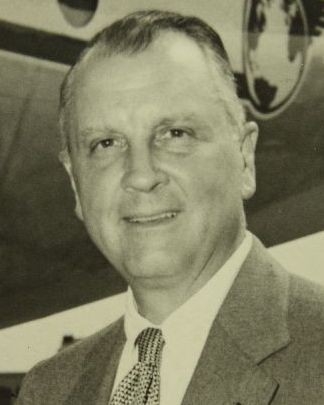
Reed Hastings
Co-founder and former CEO, Netflix · b. 1960 · Boston, Massachusetts
Two calls made by hand, not formulas. how we score →
Summary
He sold his first company for roughly $750 million at thirty-six and put $2.5 million of it into Netflix, keeping about 70% of the company.
Netflix nearly died in 2000 when Blockbuster turned down a $50 million buyout during the dot-com crash, but Hastings always had a Boston Brahmin family and a first fortune behind him. A bet that was already de-risked before it began.
How it happened
His father was a Department of Health, Education and Welfare lawyer under Nixon; his mother, Joan Amory Loomis, was a Boston Brahmin debutante who raised her children to be suspicious of the world she came from. That world included her grandfather Alfred Lee Loomis, a Wall Street financier who became one of the twentieth century's most consequential amateur physicists, funding and running the private lab that helped develop radar and pushing the science behind the atomic bomb. Hastings went to Buckingham Browne & Nichols, an elite private day school in Cambridge, and sold vacuum cleaners door to door during a gap year before Bowdoin.
He tried Marine officer training at Quantico the summer after his freshman year and didn't commission, choosing the Peace Corps instead, "out of a combination of service and adventure." From 1983 to 1985 he taught math at a rural high school of about 800 students in Swaziland. MIT rejected his computer science application; Stanford didn't, and he finished a master's there in 1988.
He founded Pure Software in 1991, a maker of debugging tools, and struggled badly at managing it as it grew, at one point asking his own board to consider replacing him. The company went public anyway in 1995, merged with Atria in 1996, and the combined company was sold to Rational Software in 1997 for a deal valued at roughly $700 to $750 million in stock. Hastings became Rational's chief technical officer and left soon after. This is the part of the story that makes everything after it a much smaller bet than it looks like.
He and Marc Randolph, a former Pure Software employee, founded Netflix later that same year. Hastings put in $2.5 million of his own money against $100,000 from a few angels, which left him owning roughly 70% of the company outright. When Jeff Bezos offered to buy Netflix for $14 to 16 million in its early days, Hastings turned it down. The closer call came during the dot-com crash in 2000, when Netflix tried to sell itself to Blockbuster for $50 million and Blockbuster's CEO said no.
Netflix went public in 2002, pivoted to streaming in 2007, and never adopted the dual-class share structure that lets so many tech founders keep control while their ownership shrinks — one share, one vote, the whole way. Hastings' stake fell from roughly 70% at founding to under 1% today, mostly through the ordinary math of dilution, stock sales, and giving: a single 2024 gift moved $1.1 billion of Netflix stock to charity in one transaction. He stepped down as CEO in January 2023, stayed on as chairman, and is leaving the board in mid-2026.
The coded evidence
Thirteen groups, every claim sourcedNative-born, multi-generational American on both sides; the Loomis line traces to colonial New England.
↗ en.wikipedia.orgA financially secure two-parent household (a federal-agency lawyer father and a mother from a wealthy old Boston family) meant no real risk of housing loss at any point, before or after Netflix.
↗ en.wikipedia.orgBy the time Netflix launched he had already banked a share of a roughly $700-750 million acquisition from selling his prior company. There was no year in which he needed Netflix to pay his bills.
↗ en.wikipedia.orgNetflix came close to a real crisis during the 2000-2001 dot-com crash, when the company tried to sell itself to Blockbuster for $50 million and was turned down. That was a genuine near-death moment for the business, though not a personal-finance one for Hastings.
↗ en.wikipedia.orgThe hardship was chosen. There was a home to go back to if it failed.
The Peace Corps years in Swaziland (1983-85) and the door-to-door vacuum-cleaner gap year were chosen adventure and service, not imposed hardship, against a family that could have absorbed him back at any point. Test: if it had gone on five more years, he'd have gone home to Boston.
↗ en.wikipedia.orgFather Wilmot Reed Hastings Sr. was an attorney for the U.S. Department of Health, Education and Welfare under the Nixon administration. Mother Joan Amory Loomis was a Boston Brahmin debutante who, per multiple accounts, was repelled by the high-society world she came from and raised her children to disdain it.
↗ en.wikipedia.orgNeither parent was self-employed.
↗ en.wikipedia.orgThe Loomis family's scientific and financial standing (Alfred Lee Loomis's lab produced multiple Nobel laureates' collaborators and several relatives held prominent public and academic posts) put Hastings within an unusually well-connected extended family, even though there's no record his own parents drew directly on it.
Inferred from the family's documented standing rather than a direct account of contact or use.
↗ en.wikipedia.orgHis maternal great-grandfather was Alfred Lee Loomis, a Wall Street investment banker turned amateur physicist who funded and ran a private laboratory at Tuxedo Park that helped develop radar ahead of World War II, chaired the wartime Microwave Committee, and advised the Manhattan Project. It's multi-generational institutional standing on the mother's side, independent of what his own parents earned.
↗ en.wikipedia.orgBuckingham Browne & Nichols School, an elite private day school in Cambridge, Massachusetts.
↗ en.wikipedia.orgRaised in the Boston area; no documented childhood relocation beyond normal family moves. Left for college in Maine, then Africa, then California over the following decade.
↗ en.wikipedia.orgMet Audrey MacLean, CEO of Adaptive Corp., at his first job in 1990; he later credited her with teaching him the value of focus ("it is better to do one product well than two products in a mediocre way").
↗ en.wikipedia.orgMarc Randolph, a former Pure Software employee, co-founded Netflix with him in 1997; they met through Hastings' own prior company.
↗ en.wikipedia.org27
First software-industry job at Adaptive Technology after finishing his Stanford MS in 1988.
↗ en.wikipedia.org3
Roughly three years at Adaptive Technology before founding Pure Software in 1991.
↗ en.wikipedia.org1
One employer (Adaptive Technology) before founding his own companies; every venture after that was one he started.
↗ en.wikipedia.orgStudied electrical/computer topics at Stanford's Computer Science department in the mid-1980s, ahead of most peers on formal programming and systems training at that time.
↗ en.wikipedia.orgMS in Computer Science, Stanford University, 1988 (after being rejected by his first choice, MIT). BA in Mathematics, Bowdoin College, 1983.
↗ en.wikipedia.orgDirect: private day school to a selective liberal-arts college (Bowdoin) to a top-ranked CS master's program (Stanford), with a Peace Corps interlude in between.
↗ en.wikipedia.orgPut $2.5 million of his own money into Netflix at founding in 1997, drawn from proceeds of selling Pure Atria to Rational Software that same year. This is the third capital class the schema distinguishes from family transfer and outside investment: a founder funding a second venture from a first one's exit.
↗ en.wikipedia.orgNetflix's initial capitalization was Hastings' own $2.5 million against roughly $100,000 from a handful of angel investors, at a pre-money valuation of about $3 million.
Blog-sourced breakdown of the founding cap table; not a primary filing, but consistent with other public accounts of the $2.5M figure and the ~70% resulting stake.
↗ jermainebrown.orgReinvested his share of the Pure Atria sale directly into a new company rather than retiring on it or diversifying into passive investments.
↗ en.wikipedia.orgSaid the idea came from a $40 late fee he owed a video store for "Apollo 13." Randolph later said Hastings invented the anecdote to explain the subscription model after the fact; Blockbuster reportedly couldn't find the transaction in its records and asked him to stop telling the story.
The late-fee origin story is contested by his own co-founder. Reported here as a disputed founding anecdote, not established fact.
↗ en.wikipedia.orgNetflix never adopted dual-class shares; it has always been one class of common stock, one vote each, unlike Meta or Alphabet. His stake fell from roughly 70% at founding to under 1% by 2026 through ordinary IPO dilution, later funding, stock sales, and giving — including a single $1.1 billion stock gift to the Silicon Valley Community Foundation in January 2024. Voting power tracked economic ownership down the whole way; he never used a share structure to keep control while his stake shrank.
↗ en.wikipedia.org0
Pure Software struggled under his management but IPO'd and sold successfully; no failed prior venture is documented.
↗ en.wikipedia.orgTurned down an offer of $14-16 million from Jeff Bezos to acquire Netflix in its early years, while he still held roughly 70% of the company himself.
↗ en.wikipedia.orgFounded during the first wave of consumer internet retail (1997), just as DVDs were replacing VHS and made a mail-order rental model practical. Survived the 2000-2001 dot-com crash that killed many contemporaries, including its own attempted $50 million sale to Blockbuster falling through.
↗ en.wikipedia.orgBuilt Netflix from scratch rather than acquiring an existing video-rental or mail-order business.
↗ en.wikipedia.org26
Served as CEO from 1999 to January 2023, then executive chairman; stepping down from the board in mid-2026.
↗ en.wikipedia.orgSubscription streaming media and, earlier, software
↗ en.wikipedia.org4500000000
Forbes Real-Time Billionaires estimate as of August 17, 2026; fluctuates daily with Netflix's share price. Band only, never a continuous value. Wikipedia cites a higher $6.6 billion Forbes figure from May 2025; the gap reflects large charitable stock gifts and share-price movement since, not a single stable number.
↗ forbes.comJournalistic estimate
↗ forbes.com2026
↗ forbes.com51073237
2022 total compensation per Netflix's Summary Compensation Table in its 2023 DEF 14A proxy statement: $650,000 salary, $49,408,182 in option awards, $1,015,055 other compensation. Nearly all of it is stock options he elected to take instead of cash, per Netflix's pay-in-options culture.
↗ sec.govProxy statement
↗ sec.govOverwhelmingly wealth, not salary, and by design: Netflix lets executives choose their own cash-versus-option split, and Hastings consistently chose to take almost all of his allocatable compensation in stock options rather than cash. His fixed salary sat around $650,000-$700,000 for years regardless of the total.
↗ sec.govFormer president of the California State Board of Education (2001-2005); founding backer of multiple California charter schools; lifetime giving exceeds $2 billion, including a single $1.1 billion Netflix-stock gift to the Silicon Valley Community Foundation (2024) and $120 million split among UNCF, Morehouse College, and Spelman College (2020), the largest individual scholarship gift to HBCUs on record at the time.
↗ en.wikipedia.orgPublicly acknowledged struggling as a first-time manager at Pure Software and asking his own board to consider replacing him as CEO because he was losing confidence in the role.
↗ en.wikipedia.orgIncidental
The management struggle didn't produce the capital that funded Netflix; the sale did, regardless of how it was run.
↗ en.wikipedia.orgBuilt Netflix's "Freedom and Responsibility" culture: no formal vacation or sick-leave policy, and what Netflix calls a "keeper test" that gives even adequately-performing employees a generous severance package rather than keeping them on. Hastings posted the internal culture guide publicly in 2009 and later co-wrote a book about it, "No Rules Rules" (2020). It's a demanding, high-churn management philosophy he chose to describe openly rather than one that was exposed by reporting.
↗ en.wikipedia.orgDemanding, Blunt, Data driven, unusually candid about failure
↗ en.wikipedia.orgPress
↗ en.wikipedia.orgAfter
The "culture guru" reputation formed after Netflix's success, from the 2009 public culture deck and 2020 book, not before.
↗ en.wikipedia.orgMixed
↗ qz.comThe reputation was deliberately built, through books, press, and PR.
The culture deck (2009) and "No Rules Rules" (2020) were deliberate public artifacts, not accrued reputation from behavior alone.
↗ en.wikipedia.orgHis political giving crosses party lines by dollar volume — he has backed Hillary Clinton, opposed a Newsom recall, called for Biden to withdraw in 2024, then made his largest-ever single-candidate donation to a pro-Harris PAC weeks later. That last gift triggered a visible round of subscriber cancellation threats in September 2024, a reputational split between his business audience (largely unaffected) and a segment of politically engaged subscribers.
↗ qz.comThe 2024 cancellation backlash doesn't appear to have moved Netflix's subscriber numbers or his standing with investors in any lasting way; no financial recovery was needed because no financial damage was ever documented.
Absence of reported subscriber-number impact, not a confirmed measurement of recovery.
↗ en.wikipedia.orgStructural context
The cost-of-failure score comes from this person's own money and circumstances. But who they were in America carried its own weight, the same way their household or income did, and it shaped how hard the path was just as much. That part isn't in the cost-of-failure number. It's here instead.
Men founded the companies that took nearly all the venture funding and almost every top outcome, a tailwind that never shows up in one person's own circumstances.
↗ techcrunch.comWhite founders are heavily overrepresented among funded companies and top-tier wealth relative to their share of the population, an edge that has nothing to do with a person's own money.
↗ techcrunch.comAmong the people recorded here — men: 115 · White subjects: 74. Representation here is who reached these outcomes, not equal odds of reaching them.
Controlled comparisons
Each holds one thing constant and varies another, so the difference is the point. A list of similar names wouldn't tell you anything.