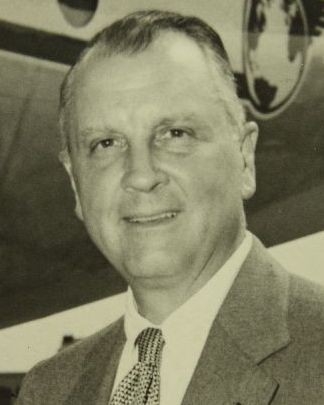
Reid Hoffman
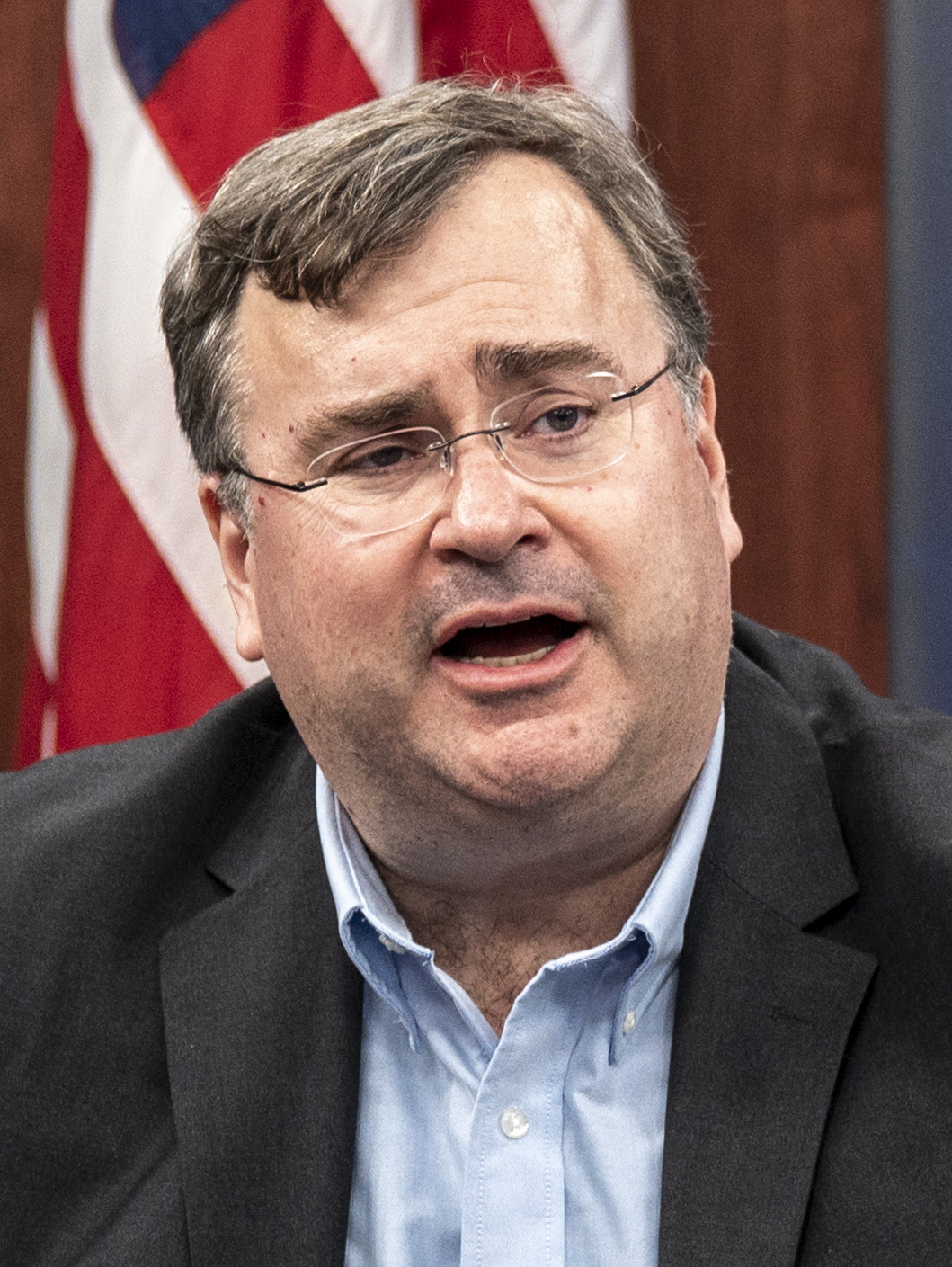
born Reid Garrett Hoffman
Co-founder of LinkedIn; early PayPal executive; Greylock Partners venture capitalist · b. 1967 · Berkeley, California
Two calls made by hand, not formulas. how we score →
Summary
Born in Palo Alto to two lawyer parents who split when he was about one, Hoffman grew up with his mother in Berkeley, then made his way to Stanford and a Marshall Scholarship at Oxford.
He helped run PayPal through its sale to eBay, put the proceeds into LinkedIn in 2003, and kept his stake through Microsoft's $26.2 billion purchase in 2016. He's been a Greylock partner since 2009.
How it happened
Hoffman was born on August 5, 1967, in Palo Alto, California. Both of his parents were lawyers, and they divorced when he was about a year old. He was raised mainly by his mother, Deanna Ruth Rutter, in Berkeley, and attended public schools there through Martin Luther King Jr. Middle School. Unhappy with the local high school, he spent a year lobbying his father with newspaper clippings about crime at Berkeley High until his parents agreed to send him somewhere smaller, first the College Preparatory School on the Berkeley-Oakland border, then the Putney School, a progressive boarding school in Vermont that mixed academics with farm work.
He returned to Northern California for Stanford, where a freshman advisor's suggestion to look for patterns in the classes he "had to take" led him into Symbolic Systems, a program combining philosophy, linguistics, and computer science. He graduated with distinction in 1990. A Marshall Scholarship then took him to Wolfson College, Oxford, for a master's in philosophy, finished in 1993. He had pictured an academic career as a kind of public intellectual, but decided professional philosophy reached too few people and started looking for something with more direct effect.
Back in California he got a job at Apple through his Stanford connections, working on eWorld, an early online service that failed commercially but left him with useful stock warrants in AOL. In November 1997 he founded SocialNet, one of the first dating and social-matching sites. That didn't work either, and rather than keep trying he returned what money was left to his investors. His Stanford classmate Peter Thiel then invited him onto PayPal's board, and in January 2000, with SocialNet still struggling, he joined the company full time as an operating executive, variously described as its COO and later its executive vice president. He helped the team survive a cash crunch by pivoting toward processing payments for merchants, and stayed through eBay's $1.5 billion purchase of PayPal in 2002.
Late in 2002, while still at PayPal, Hoffman started building LinkedIn in his living room with Allen Blue, Konstantin Guericke, Eric Ly, and Jean-Luc Vaillant, funding the earliest months himself with money from the eBay sale. The site launched in May 2003 and had about 4,500 members after its first month. He served as CEO, then as president of products, then as CEO again, before becoming chairman. Sequoia Capital led a $4.7 million round that November, and Greylock Partners invested in a later round years before Hoffman joined the firm himself. LinkedIn went public in 2011 with his stake valued at roughly $2.3 billion, and in June 2016 Microsoft bought the company outright for $26.2 billion in cash, the deal that turned his founder's equity into the core of his fortune.
He joined Greylock Partners as a partner in November 2009, investing in companies including Airbnb, Aurora Innovation, and Figma while staying on LinkedIn's board as chairman until the Microsoft deal closed. He wrote or co-wrote a run of bestsellers on career and startup strategy, among them The Start-Up of You, The Alliance, and Blitzscaling, and launched the Masters of Scale podcast in 2017. He backed OpenAI early, sat on its board, and resigned in March 2023 over a conflict of interest; he co-founded Inflection AI in 2022 with Mustafa Suleyman, and later Manas AI. He also became one of the more visible Democratic donors in tech, co-founding the immigration-advocacy group FWD.us and giving to a long list of campaigns and causes.
Forbes puts his net worth at about $2.7 billion as of September 2026, built mostly on his Microsoft shares from the LinkedIn sale, his Greylock partnership, and a wider portfolio of tech investments. He holds a CBE from the UK government for services to entrepreneurship, sits on several company and nonprofit boards, and remains one of the more recognizable voices arguing that AI should be built to expand human agency rather than replace it.
The coded evidence
Thirteen groups, every claim sourcedNo specific ancestry beyond "White American" is documented in the sources reviewed.
↗ en.wikipedia.orgDescendant; no documented recent immigration in the family line.
↗ en.wikipedia.orgnot established
Not established in the sources reviewed; his parents are described as politically active rather than religious.
↗ achievement.orgA stable, professional-class household throughout childhood despite his parents' divorce when he was about one; both parents were practicing attorneys, and the family could afford private-school tuition once he and his father decided public high school wasn't working. No housing precarity is documented at any point.
↗ achievement.orgBy the time he started LinkedIn in late 2002 he had salary and equity history from Apple and PayPal, plus proceeds from eBay's 2002 acquisition of PayPal, which he used to fund LinkedIn's earliest months himself before any outside round closed.
↗ en.wikipedia.orgFather, William Parker Hoffman Jr., was an attorney who worked in a legal clinic and took on pro bono cases, including work to have the documentary "Death in the West" declared a public-interest film to shield it from tobacco-industry litigation. Mother, Deanna Ruth Rutter, was also an attorney; after the divorce she focused on raising Reid and his younger brother.
↗ achievement.orgnot established
Not clearly established either way; his father is described as working in a legal clinic rather than solo practice.
↗ achievement.orgBoth parents held law degrees.
↗ achievement.org1
A younger brother, Chris, is mentioned in secondary profiles; not confirmed in a primary source.
↗ en.wikipedia.orgNo specific second job or sacrifice for tuition is documented; the family appears to have been able to afford private schooling directly once the decision was made.
↗ achievement.orgHis parents divorced when he was about one year old; he was raised primarily by his mother in Berkeley, though his father remained involved in decisions such as the campaign to move him to a private high school.
↗ en.wikipedia.orgBerkeley, California, a university town with a strong public-school base and, in his case, access to private alternatives.
↗ achievement.orgPublic schools in Berkeley through Martin Luther King Jr. Middle School, then two private schools: the College Preparatory School on the Berkeley-Oakland border, and the Putney School, a progressive boarding school in Vermont, for high school.
↗ achievement.orgPalo Alto (birth) to Berkeley (childhood) to Vermont (Putney) to Stanford (undergraduate) to Oxford, England (Marshall Scholarship) and back to California for Apple, Fujitsu, PayPal, and LinkedIn — a standard elite-education-to-tech-hub trajectory rather than a family migration.
↗ en.wikipedia.orgPeter Thiel, a Stanford classmate, invited him onto PayPal's board of directors while SocialNet was struggling, and Hoffman joined the company full time in January 2000.
↗ achievement.orgPayPal, January 2000 to October 2002. It supplied operating experience surviving a cash crisis, a stake that turned into real money at eBay's $1.5 billion acquisition, and a lasting network of PayPal alumni — later nicknamed the "PayPal Mafia" — who went on to found or fund many of the next decade's major technology companies.
↗ en.wikipedia.orgCapital, Credibility, Network, Skill
↗ en.wikipedia.orgLinkedIn was co-founded with Allen Blue, Konstantin Guericke, Eric Ly, and Jean-Luc Vaillant, several of them PayPal- or Stanford-adjacent contacts.
↗ en.wikipedia.org26
First paid technology-industry work at Apple, around 1994, after returning from Oxford.
↗ achievement.orgBy 2003 he already had standing in Silicon Valley as one of the operating executives behind PayPal's sale to eBay, giving LinkedIn built-in credibility with early hires, press, and investors.
↗ en.wikipedia.org4
Apple, Fujitsu, and PayPal as an employee, before founding LinkedIn and later joining Greylock as a partner.
↗ achievement.orgStanford's Symbolic Systems program into a Marshall Scholarship at Oxford, an elite, selective pipeline for his generation.
↗ en.wikipedia.orgM.St. in Philosophy, Wolfson College, Oxford (1993), on a Marshall Scholarship; B.S. with distinction in Symbolic Systems, Stanford University (1990).
↗ en.wikipedia.orgnot established
Not documented; the Marshall Scholarship funds tuition and living costs, and no debt is mentioned for Stanford.
↗ en.wikipedia.orgDirect — private secondary school into an elite undergraduate program, then straight into a funded graduate scholarship abroad, with no gap or detour.
↗ en.wikipedia.orgStanford put him in Peter Thiel's orbit, which led directly to the PayPal board seat; Oxford and the Marshall Scholarship added a second layer of elite credentialing on top of it.
↗ achievement.orgHis own money from PayPal's stock and eBay's 2002 acquisition funded LinkedIn's first months before any outside investor was involved.
↗ news.linkedin.comIt needed capital up front, before it earned anything.
LinkedIn launched free to join, with venture funding arriving well before significant monetization.
↗ en.wikipedia.orgSalary and equity from Apple and PayPal, plus proceeds from eBay's PayPal acquisition, gave him the personal capital to self-fund LinkedIn's founding before Sequoia's round closed.
↗ en.wikipedia.orgSequoia Capital led a $4.7 million Series A round in November 2003, LinkedIn's first outside institutional money. Greylock Partners invested in a later round, years before Hoffman became a Greylock partner himself in 2009.
↗ news.linkedin.comLinkedIn went public on the NYSE in May 2011 with a dual-class share structure: Class B common stock, held by founders, executives, and directors, carried 10 votes per share, against one vote per share for the publicly traded Class A stock.
↗ sec.govRather than consuming his PayPal-era proceeds, he redirected them into founding LinkedIn, and later into Greylock's fund and a wide personal portfolio of startup and philanthropic investments.
↗ en.wikipedia.orgDrawn from his own prior venture: SocialNet had tried to build trust-based matching for dating and other relationships and failed; Hoffman concluded a professional, identity-verified network — where people had real incentive to keep their information accurate — could work where a dating-style site hadn't.
↗ achievement.orgPer LinkedIn's original 2011 S-1, Hoffman and his wife, as trustees of a family trust, held 19,066,032 shares — about 21.4% of the company's capital stock pre-offering — over which he retained sole voting and dispositive power, separate from shares held by Greylock entities in which he had no voting or dispositive power. The dual-class structure meant his and other founders' Class B shares carried outsized voting power relative to their economic stake.
↗ sec.govWhen SocialNet failed, Hoffman chose to return what remaining money there was to his investors rather than keep attempting to make the company work — an unusual, self-imposed limit on how long he'd let others' capital ride on a losing bet.
↗ achievement.orgSalary and equity from Apple, Fujitsu, and then PayPal sustained him between SocialNet's 1999-2000 closure and LinkedIn's 2002-2003 founding; there was no gap of unemployment or wage labor outside the tech industry.
↗ achievement.orgFounded in the trough after the dot-com crash, when consumer internet startups were viewed skeptically and a "professional," B2B-flavored network positioned LinkedIn apart from the dating and social sites that had just failed en masse, SocialNet among them. It also arrived alongside the broader wave of companies started or funded by former PayPal colleagues.
↗ en.wikipedia.orgHis living room in the San Francisco Bay Area, where LinkedIn's earliest work happened before the company had an office.
↗ en.wikipedia.orgBuilt from scratch, alongside four co-founders, rather than acquiring an existing product or company.
↗ en.wikipedia.org23
From LinkedIn's late-2002 founding through 2026. He stayed involved as chairman through the 2016 Microsoft sale, then continued compounding wealth through his Microsoft shares and, in parallel, his Greylock partnership stake since 2009.
↗ en.wikipedia.orgnot established
The opposite pattern applies — he built directly inside the Bay Area technology hub rather than at a deliberate distance from it.
↗ en.wikipedia.orgTechnology and venture capital — professional-networking software, payments, and, more recently, artificial intelligence investing
↗ greylock.com2700000000
Forbes real-time tracker, September 17, 2026, ranked #1,580 globally. Forbes notes it excludes more than $1.5 billion in charitable-impact investments he holds through donor-advised funds; band figure only.
↗ forbes.comJournalistic estimate
Derived from his Microsoft share holdings (from the LinkedIn deal), his Greylock partnership stake, and other private and public investments; no single filing discloses a comprehensive personal net worth figure.
↗ forbes.com2026
↗ forbes.comnot established
Not established. As chairman rather than an executive officer of publicly traded LinkedIn, and as a partner in a private venture partnership since 2009, his annual income was never subject to proxy-statement-style disclosure the way a public-company CEO's would be.
↗ forbes.comAlmost entirely wealth rather than salary: appreciation on founder equity carried from LinkedIn's 2003 founding through its 2011 IPO and 2016 sale to Microsoft, plus a general-partner stake at Greylock held since 2009.
↗ en.wikipedia.orgCo-authored several bestselling books on careers and startups (The Start-Up of You, The Alliance, Blitzscaling, Impromptu, Superagency) and hosts the Masters of Scale and Possible podcasts. Co-founded the immigration-advocacy group FWD.us in 2013. Named a Commander of the Order of the British Empire (CBE) in 2017 for services to entrepreneurship. Sat on the boards of Microsoft, Airbnb, and OpenAI (resigned 2023); co-founded Inflection AI (2022) and Manas AI (2025).
↗ en.wikipedia.org9
From starting his tech career at Apple around 1994 to founding LinkedIn in late 2002.
↗ achievement.orgUncapped
↗ sec.govnot established
No regulatory finding or consent decree against Hoffman personally is documented in the sources reviewed.
↗ en.wikipedia.orgnot established
No founder or co-founder ownership dispute at LinkedIn is documented in the sources reviewed.
↗ en.wikipedia.orgIn January 2019, after reporting revealed he had funded "Project Birmingham," an experimental disinformation effort deployed during the 2017 Alabama special Senate election, Hoffman apologized publicly, said he should have asked more questions about how the money was being used, and called funding it a mistake.
↗ en.wikipedia.orgAfter
The 2017 Project Birmingham episode came more than a decade after LinkedIn's founding and years after his defining wealth event.
↗ en.wikipedia.orgUnrelated
Political-donor conduct well after LinkedIn's founding and sale; it did not produce his wealth or standing.
↗ en.wikipedia.orgLegal gray
Funding a political-messaging experiment was not itself illegal, though it drew criticism as deceptive campaign conduct.
↗ en.wikipedia.orgNone
No fine, suit, or personal liability resulted; the consequence was reputational, met with a public apology.
↗ en.wikipedia.orgNetworker, strategic thinker, prolific author, Convener, AI-era public intellectual
↗ greylock.comPress
↗ en.wikipedia.org5
Wikipedia, Greylock's own bio, Forbes, the Academy of Achievement interview, and SEC filings, among others reviewed.
↗ en.wikipedia.orgBefore
His reputation as a well-connected, strategically minded operator was established through the PayPal years and LinkedIn's rise, well before any later controversy.
↗ en.wikipedia.orgAsset
His name and network have functioned as a credibility and access signal for founders, co-investors, and, since 2009, Greylock's own deal flow.
↗ greylock.comThe reputation was deliberately built, through books, press, and PR.
A sustained run of bestselling books, two podcasts, and heavy conference and media presence reflect a deliberately built public profile beyond the deals themselves.
↗ en.wikipedia.orgStructural context
The cost-of-failure score comes from this person's own money and circumstances. But who they were in America carried its own weight, the same way their household or income did, and it shaped how hard the path was just as much. That part isn't in the cost-of-failure number. It's here instead.
Men founded the companies that took nearly all the venture funding and almost every top outcome, a tailwind that never shows up in one person's own circumstances.
↗ techcrunch.comWhite founders are heavily overrepresented among funded companies and top-tier wealth relative to their share of the population, an edge that has nothing to do with a person's own money.
↗ techcrunch.comAmong the people recorded here — men: 169 · White subjects: 114. Representation here is who reached these outcomes, not equal odds of reaching them.
Controlled comparisons
Each holds one thing constant and varies another, so the difference is the point. A list of similar names wouldn't tell you anything.