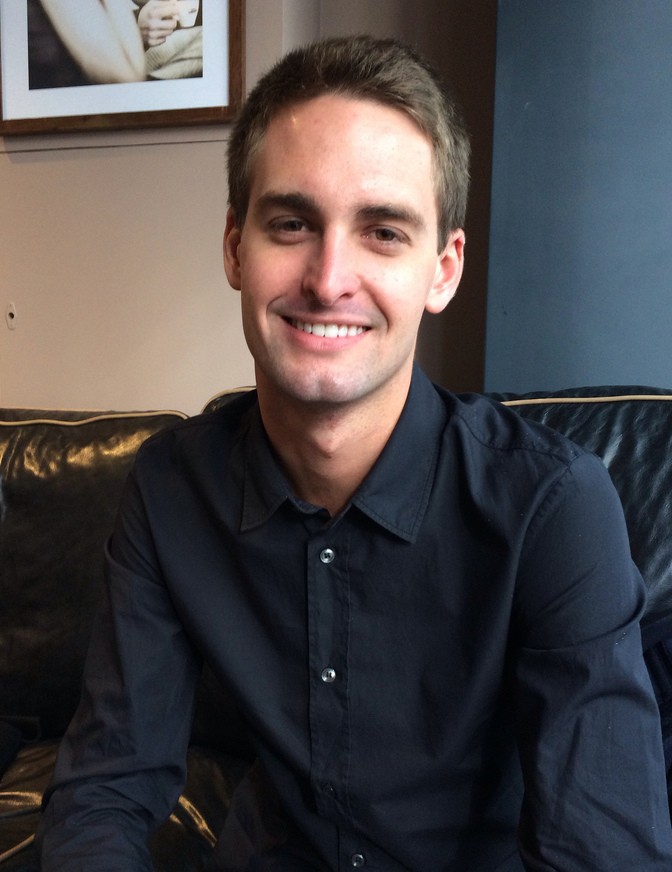
Robert Langer
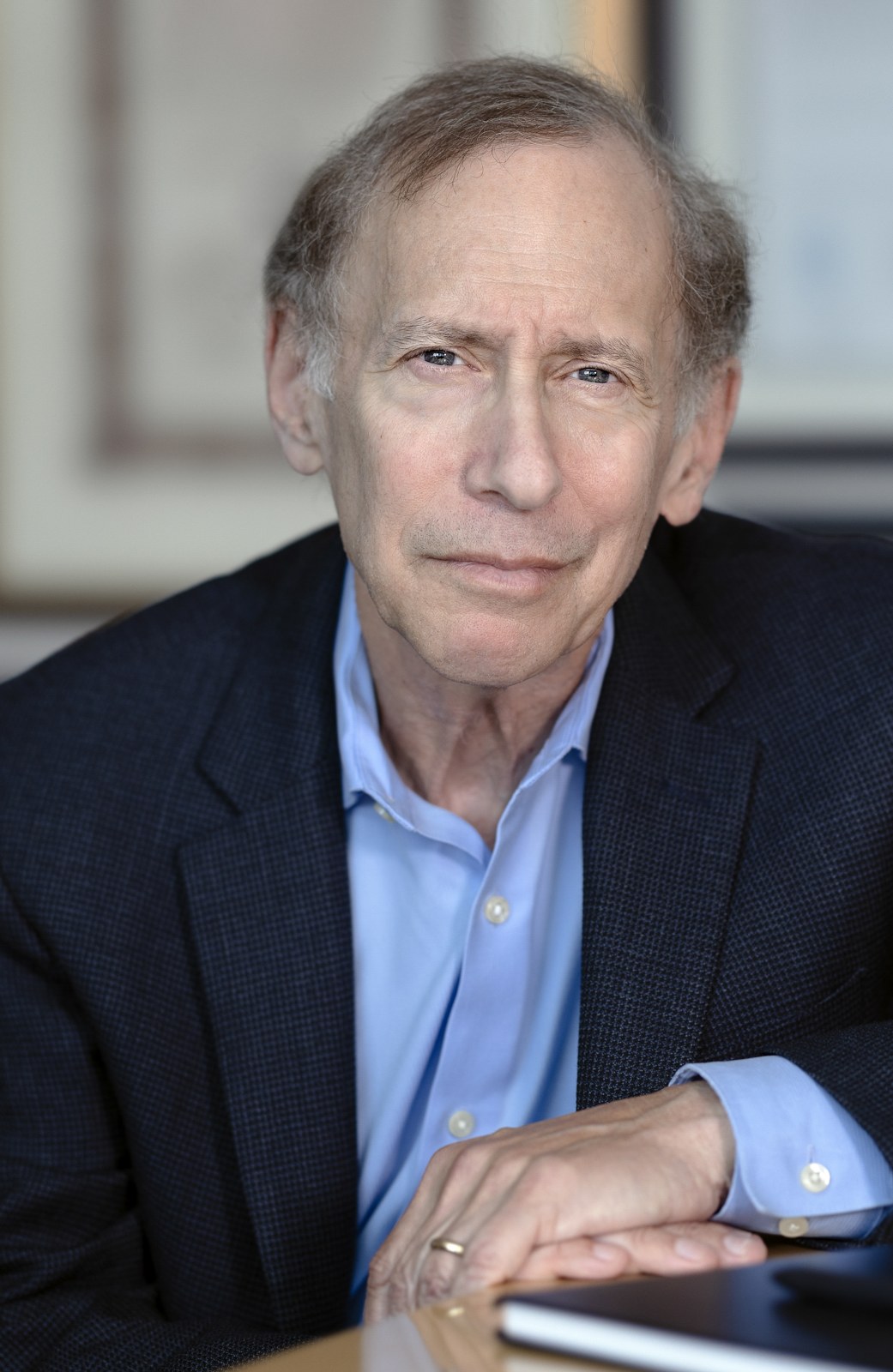
born Robert Samuel Langer Jr.
MIT Institute Professor and bioengineer; pioneer of controlled drug delivery and tissue engineering whose lab has spun out roughly forty biotech companies, including co-founding Moderna · b. 1948 · Albany, New York
Two calls made by hand, not formulas. how we score →
Summary
A liquor-store owner's son from Albany earned an engineering degree at Cornell and a doctorate at MIT, then turned down twenty oil-company offers to take an unfunded postdoc in a cancer-surgery lab.
Decades of patents and roughly forty spinout companies followed, but the fortune came from one 2010 side bet: Moderna, a long-shot mRNA startup where he kept a small, unsold equity stake.
Where they worked
How it happened
Langer was born in Albany, New York, in 1948, the son of a small liquor-store owner and a homemaker. His father played math games with him at the kitchen table, and a chemistry set in the basement turned into a hobby, then a plan. No one in the family worked in science.
After his 1974 doctorate at MIT, during an oil-industry hiring boom, Langer turned down twenty job offers from companies including Exxon. He wanted to work on something closer to medicine instead, and applied to roughly forty universities and hospitals. Almost none wrote back. A colleague's tip eventually pointed him toward Judah Folkman, a Harvard surgeon running an unconventional cancer lab at Boston Children's Hospital, who hired him as a postdoc — one of the few people willing to take a chemical engineer into a medical lab.
His first nine grant applications were rejected. Senior colleagues told him his controlled-release polymer work wasn't real engineering, and one advised him to start looking for another job. A 1976 patent on his core discovery was turned down five times before he located a 1979 paper by rival chemists that inadvertently backed his claim. None of this cost him his MIT salary once he had it, but it delayed the credibility that eventually let the science become companies.
Starting with Enzytech in 1987, later merged into Alkermes, Langer began turning lab discoveries into companies rather than leaving them in journals. Neomorphics, Focal, and dozens more followed. By the 2000s his MIT lab functioned as something close to an incubator, spinning out a new company every year or two, almost always with him as a minority-equity scientific founder rather than an operator.
In 2010, at 62, Langer co-founded Moderna with venture builder Noubar Afeyan of Flagship Pioneering and fellow scientists Derrick Rossi, Kenneth Chien, and Timothy Springer. It was one more company among dozens, built on an idea most of the field doubted: using synthetic messenger RNA as a drug platform. He took a small equity stake, as he had elsewhere, and kept his MIT professorship. Nothing about the founding looked different from his others. A decade later, Moderna's mRNA platform became a COVID-19 vaccine credited with saving millions of lives, and his few-percent stake became the overwhelming majority of his net worth.
Forbes reports that Langer owns about 3% of Moderna and has never sold a share. That means his fortune, reported by Forbes at $2.2 billion as of October 2026, rises and falls with the stock: it peaked far higher in 2021 on vaccine revenue and fell sharply as that revenue dried up, before partly recovering. He holds more than 1,400 patents, is credited as the most-cited engineer in history, and has won most of the top prizes in science and engineering, including the National Medal of Science, the Millennium Technology Prize, and the Queen Elizabeth Prize for Engineering.
The coded evidence
Thirteen groups, every claim sourcedcoded.ethnicities is set to the broad "European American" facet bucket at low confidence for the same reason — no source located specifies a finer ancestral, national, or religious origin, and none should be invented.
↗ achievement.orgnot established
Not established. Family's religious affiliation is not stated in any source consulted.
↗ achievement.orgEnglish
↗ kavliprize.orgHis parents' home in Albany was the documented fallback through childhood and college. By the time of his unconventional 1974 career move — turning down oil-industry job offers to pursue a postdoc with no guaranteed path — he had just finished his doctorate, had no dependents, and could have returned home had the plan failed.
↗ kavliprize.orgHeld a continuous MIT faculty salary from 1977 onward. By Moderna's 2010 founding he was a tenured, named Institute Professor with decades of patent-licensing income and several prior company stakes, so that specific bet carried no risk to his household income.
↗ en.wikipedia.orgnot established
Not documented during the years he was building his career. He later had three children (Michael, Susan, and Sam) with his wife Laura, whom he met in 1986, after his academic position was already established.
↗ kavliprize.orgNone documented. After finishing his doctorate in 1974 he faced roughly forty rejected job and faculty applications and nine rejected grant proposals before Judah Folkman hired him — a stretch of professional rejection, not housing or food insecurity.
↗ achievement.orgFather, Robert Sr., ran a small liquor store in Albany after earlier operating a billiard parlor in Troy, NY; mother, Mary, was a homemaker who raised Robert and his sister, Kathy.
↗ achievement.orgA parent worked for themselves, the strongest known predictor of founding.
↗ achievement.orgnot established
Not documented whether the family's retail income was specifically directed toward his Cornell tuition; plausible given the family ran a small business, but not confirmed.
↗ achievement.orgHis father played math games with him at home and, along with his high-school guidance counselor, actively steered him toward engineering. Neither parent had a scientific or professional background to model the path, but both sanctioned it.
↗ kavliprize.orgnot established
No moves before adulthood documented beyond the single town of Albany; not established as an issue either way.
↗ kavliprize.orgGrew up on Tudor Road in Albany, NY; no ZIP-level mobility- percentile join performed.
↗ kavliprize.orgThe Milne School, a public demonstration/laboratory school in Albany affiliated with the New York State College for Teachers (now SUNY Albany).
↗ kavliprize.orgMid-century Albany was a state-government and insurance-industry town, not a life-sciences or chemical-engineering cluster; no documented childhood proximity to his eventual field.
↗ kavliprize.orgAlbany, NY (childhood) → Ithaca, NY (Cornell, 1966–1970) → Cambridge, MA (MIT doctorate, 1970–1974) → Boston, MA (Judah Folkman postdoctoral fellowship, 1974–1977) → Cambridge, MA (MIT faculty, 1977 onward, permanent).
↗ en.wikipedia.orgAfter roughly forty unanswered job and faculty applications following his 1974 doctorate, a colleague, Barry Bunow, suggested he contact Judah Folkman at Boston Children's Hospital. Folkman — known for hiring unconventional researchers — took him on as a postdoctoral fellow, the opening that led to his drug-delivery and tissue-engineering work.
↗ kavliprize.orgJudah Folkman's surgery-research lab at Boston Children's Hospital/Harvard Medical School supplied the lab space, mentorship, and legitimacy for a chemical engineer to do cancer-adjacent biomedical research; his subsequent MIT faculty appointment (from 1977) became the long-term institutional base for his roughly forty company spinouts.
↗ en.wikipedia.orgCredibility, Skill
↗ en.wikipedia.orgModerna (2010) was co-founded with venture creator Noubar Afeyan of Flagship Pioneering, along with fellow scientists Derrick Rossi, Kenneth Chien, and Timothy Springer. Afeyan's firm supplied the venture-creation structure and initial capital; Langer and the other scientist-founders supplied the mRNA/delivery science.
↗ en.wikipedia.org1
MIT has been his sole employer continuously since 1977, even as he co-founded roughly forty separate companies alongside it.
↗ en.wikipedia.orgScD in Chemical Engineering, MIT (1974); BS in Chemical Engineering, Cornell University (1970).
↗ en.wikipedia.orgnot established
Not established. coded.credentialFunding is coded "self-funded" at low confidence — no scholarship, family-funding, or loan record was located for either degree; MIT doctoral students in his field are typically supported by teaching/research assistantship stipends, but the exact funding arrangement for his own degrees is not confirmed in the sourced record.
↗ en.wikipedia.orgWorked as a teaching assistant at Cornell; during his MIT doctorate he also helped design a chemistry curriculum for the Group School, an alternative school for high-school dropouts, and tutored in underprivileged Boston-area communities.
↗ kavliprize.orgA public-school-to-flagship-research-university ladder: a public demonstration high school in Albany, an engineering degree at Cornell, and a doctorate at MIT — an accessible, merit-based STEM credential path rather than one requiring family wealth or an elite feeder network.
↗ kavliprize.orgJudah Folkman's lab functioned as the critical network node: Folkman's reputation and Harvard/Boston Children's Hospital affiliation gave Langer's controlled-release work the legitimacy to be taken seriously despite initial rejection by nine grant review panels.
↗ achievement.orgnot established
No specific first-dollar amount is documented for his first company, Enzytech (1987, co-founded with Alexander Klibanov, later merged into Alkermes).
↗ achievement.orgModerna's 2010 founding round was assembled by Flagship Pioneering (Noubar Afeyan's venture-creation firm), which supplied the initial seed capital and operating structure; the scientist co-founders, including Langer, contributed intellectual property and founding equity rather than cash.
↗ en.wikipedia.orgFlagship Pioneering operates as an engaged "venture creation" firm rather than a passive check-writer, building the company around the scientific founders' work and installing its own operating leadership (Stéphane Bancel became CEO in 2011).
↗ en.wikipedia.orgModerna raised substantial venture and later public capital before and after its December 2018 IPO; it is a widely-held public company with no dual-class structure favoring the scientific founders. Forbes reports Langer's stake at roughly 3%; Wikipedia reports 4.0%. He has said he has never sold a share.
↗ forbes.comPatents from Langer's lab are typically assigned to MIT under standard university technology-transfer policy, with inventors entitled to a statutory royalty share rather than personal ownership of the patents themselves — the same assignment structure used in the Cohen-Boyer patent that founded Genentech.
↗ en.wikipedia.orgLanger holds an economic equity stake only; Moderna's governance is a standard single-class public-company board structure, with no voting-control mechanism reserved for him or the other scientist-founders.
↗ en.wikipedia.org0
No collapsed venture is documented; each company he has co-founded either continued operating, merged, or was acquired. His personal financial exposure at each founding was limited, since he retained his MIT salary and patent-royalty income throughout.
↗ en.wikipedia.orgPrimarily outside venture investors (Flagship Pioneering, and later Moderna's public shareholders) absorbed the capital risk; Langer's own exposure at each founding was mostly forgone time plus a minority equity stake.
↗ en.wikipedia.orgIn 2010, synthetic-biology and stem-cell research were maturing, mRNA therapeutics were an unproven and widely doubted technology platform, and Flagship Pioneering had pioneered a "venture creation" model of building biotech startups around in-house scientific theses rather than externally pitched ideas.
↗ en.wikipedia.orgCambridge, Massachusetts, where he had already been based at MIT for more than three decades; no relocation was required for the Moderna founding.
↗ en.wikipedia.org62
The wealth-defining engine (Moderna equity) started at 62; the underlying scientific engine — his controlled-release drug- delivery breakthrough — started decades earlier, at 28, in 1976.
↗ en.wikipedia.org16
Moderna's value was negligible for its first decade and inflected sharply with the COVID-19 vaccine's late-2020 emergency authorization and 2021 revenue; the 2021 peak has since given back much of its value, so the compounding has not been monotonic.
↗ forbes.comBiomedical engineering — controlled drug delivery, tissue engineering, and, via Moderna, mRNA therapeutics.
↗ en.wikipedia.org2200000000
Forbes real-time tracker figure as of October 1, 2026. Reflects his roughly 3% Moderna stake (Forbes says unsold) plus stakes in other biotech companies from his lab (e.g. SQZ Biotechnologies, Seer, Sigilon, Vivtex). This figure is inherently volatile: Moderna's stock, and so Langer's wealth, peaked far higher in 2021 on COVID-19 vaccine revenue, then fell sharply as that revenue collapsed and the stock declined through 2022–2024 — a Fortune piece (fortune.com, Aug. 2026) reported him crossing back above $1 billion only months earlier. This file codes the current figure, not the 2021 peak, and coded.magnitude (band 5, $1–10B) follows the current figure.
↗ forbes.comPublic equity
Primarily his disclosed/estimated Moderna share count marked to the current public stock price, per Forbes' methodology, not a filed personal net-worth disclosure.
↗ forbes.com2026
↗ forbes.comnot established
Not documented and not his primary wealth driver; he is not a salaried company executive, and no proxy-statement-level compensation record exists for him.
↗ en.wikipedia.orgAlmost entirely paper wealth in a single public stock: Forbes and Langer himself both describe him as never having sold a share of Moderna, meaning his reported net worth tracks the stock's volatility rather than any realized, diversified gain.
↗ forbes.comAn MIT professor's salary is a small fraction of his reported net worth; nearly all of it is appreciation (and depreciation) in unsold equity positions across Moderna and roughly a dozen other biotech spinouts, not earned income.
↗ forbes.comWidely described as "the Edison of medicine." One of 12 MIT Institute Professors, the university's highest faculty rank; holds more than 1,400 granted and pending patents; described as the most-cited engineer in history with an h-index around 340 and over 486,000 citations. Winner of the National Medal of Science (2006), Charles Stark Draper Prize (2002), Millennium Technology Prize (2008), Breakthrough Prize in Life Sciences (2014), Queen Elizabeth Prize for Engineering (2015), and Kavli Prize (2024). His lab has trained more than 400 people who went on to become professors.
↗ en.wikipedia.orgUncapped
↗ en.wikipedia.orgNo personal regulatory, criminal, or civil action against Langer is documented in the sourced record consulted for this profile.
↗ en.wikipedia.orgBrilliant, Relentless, generous mentor, Humble
Drawn from recurring characterizations across profile pieces (MIT Technology Review's "The Problem Solver," the Kavli Prize autobiography, and the Academy of Achievement interview) by colleagues, mentees, and in his own on-record reflections.
↗ achievement.orgPublic
His scientific reputation was long held mainly by academic insiders; Moderna's COVID-19 vaccine broadened it to a general public audience, a legitimate public-health matter noted here neutrally.
↗ forbes.com4
Approximate count of independently authored profile pieces consulted (MIT Technology Review, Kavli Prize, Academy of Achievement, Forbes); not an exhaustive count.
↗ technologyreview.comBefore
His scientific reputation — prizes, patent count, citation record — was established well before Moderna's 2010 founding and especially before its COVID-era fame.
↗ en.wikipedia.orgAsset
↗ achievement.orgThe reputation accrued from behaviour rather than being manufactured.
Reputation appears to have accrued from four decades of peer-reviewed output and prizes rather than deliberate media construction, though post-Moderna fame did bring a wider profile.
↗ achievement.orgStructural context
The cost-of-failure score comes from this person's own money and circumstances. But who they were in America carried its own weight, the same way their household or income did, and it shaped how hard the path was just as much. That part isn't in the cost-of-failure number. It's here instead.
Men founded the companies that took nearly all the venture funding and almost every top outcome, a tailwind that never shows up in one person's own circumstances.
↗ techcrunch.comAmong the people recorded here — men: 225. Representation here is who reached these outcomes, not equal odds of reaching them.
Controlled comparisons
Each holds one thing constant and varies another, so the difference is the point. A list of similar names wouldn't tell you anything.