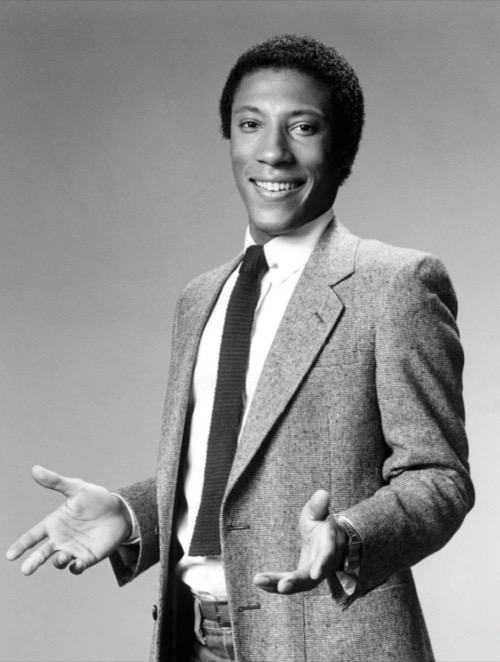
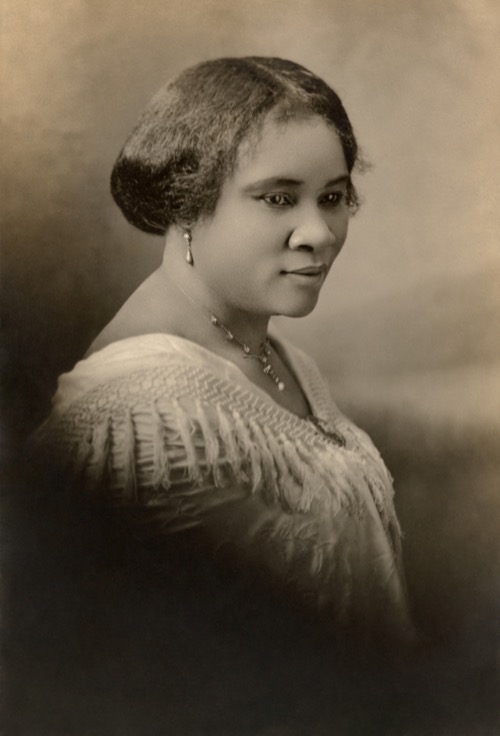
Roy Clay Sr.
Led HP's first computer division; founder, ROD-L Electronics · b. 1929–2024 · Kinloch, Missouri
Two calls made by hand, not formulas. how we score →
Summary
He led the HP team that built the company's first computer, then in 1971 walked away from that ceiling and in 1977 founded ROD-L Electronics outright.
HP made him historically important; owning ROD-L is what actually made him money, and it was a modest amount by Silicon Valley standards. He got there from a Missouri town with no running water, under Jim Crow.
How it happened
Born in 1929 in Kinloch, Missouri, a segregated Black town outside St. Louis, the fourth of what he and his family have described as either eight or nine siblings in a two-parent household with no running water or electricity until he was twelve. As a teenager working a summer gardening job in nearby Ferguson, he has recounted being stopped by police and told not to show his face in the town again. His mother told him he would face racism the rest of his life and it was never to be the reason he didn't succeed.
He graduated from segregated Douglass High School, then in 1951 earned a mathematics degree from Saint Louis University, becoming one of the first Black students to graduate from the school. A recruiter at McDonnell Aircraft turned him down on the spot, telling him the company had no jobs for "professional Negroes." He taught school for a while, then in 1956 talked his way into computer programming, moving to California in 1958 for a radiation-tracking job at Lawrence Livermore National Laboratory and later writing Fortran compilers at Control Data.
David Packard recruited him to Hewlett-Packard in 1965 to start a computer division the company didn't yet have. He led the team that built the HP 2116A, HP's first computer, brought to market in 1966, and became General Manager of the Computer Division and the highest-ranking Black employee at HP. He used the position to recruit out of historically Black colleges as well as Stanford's new computer science program.
He left HP in 1971 over disagreements about the computer division's direction and spent several years advising the venture firm Kleiner Perkins on technology investments, work later credited toward its bets on Tandem, Compaq, and Intel. In 1977 he founded ROD-L Electronics in Menlo Park, making electrical-safety test equipment, and owned it outright rather than taking outside money. The company's clients came to include HP, IBM, AT&T, and Xerox.
In 1973 he became the first Black member of the Palo Alto City Council and was later elected vice mayor. In 1987 he became the first Black member of San Francisco's Olympic Club and received anonymous death threats over it; he later served as the club's president. He published a memoir, "Unstoppable," in 2022, and became known around Silicon Valley as its godfather for how many Black engineers he brought into the industry. He died in 2024 at 95. ROD-L stayed a small company; his significance to the industry was never really about the size of it.
The coded evidence
Thirteen groups, every claim sourcedDescendant, multi-generational American
↗ en.wikipedia.orgNo fallback of any kind. He was born in Kinloch, Missouri, the fourth of a large family in a two-parent household with no running water or electricity until he was twelve.
↗ fosteringpromise.orgBy the time he founded ROD-L Electronics in 1977 he had roughly two decades of steady technical salaries behind him, from Lawrence Livermore through HP, plus consulting income advising Kleiner Perkins — a real floor by then, though not one that existed at the start of his life or career.
↗ fosteringpromise.orgHis son Chris Clay said in an obituary interview that his father's success was "enabled by unwavering support of his wife," Virginia Clay, and that family was always his highest priority even when it meant turning down lucrative offers.
↗ paloaltoonline.comThe hardship was imposed, not chosen. There was nothing to fall back on.
Imposed poverty under segregation, not a chosen austerity.
↗ fosteringpromise.orgHis father, Charles Clay, worked in building maintenance; his mother, Emma Jean Clay, was a seamstress.
Single detailed source for the specific occupations.
↗ fosteringpromise.org8
Wikipedia describes him as "the fourth of nine children," implying eight siblings. A later family obituary quote instead describes "nine brothers and sisters" in a household of eleven, which doesn't square exactly with either count. Treat the sibling count as approximate.
↗ en.wikipedia.orgKinloch, Missouri, a segregated, under-resourced Black town adjacent to Ferguson.
↗ en.wikipedia.orgDouglass High School, a segregated public school.
↗ en.wikipedia.orgOne of the first Black students to graduate from Saint Louis University, a previously all-white Catholic university in a former slave state, earning a mathematics degree in 1951.
↗ en.wikipedia.orgAs a teenager working a summer gardening job in Ferguson, Missouri, he has recounted being stopped by police and told not to come back to the town, or there would be trouble — the officers are not named in any account. After graduating with a mathematics degree, a recruiter at McDonnell Aircraft told him outright that the company had no jobs for "professional Negroes."
Attributed to his own and his family's public accounts; the police involved are described only by role, never named.
↗ postnewsgroup.comTurned away from engineering work because of his race, he made recruiting Black engineers a throughline of his own career afterward — building HP's pipeline from historically Black colleges and, by one account, making ROD-L one of Silicon Valley's larger employers of Black engineering professionals.
↗ postnewsgroup.comHP co-founder David Packard personally recruited him in 1965 to start a computer division the company did not yet have.
↗ fosteringpromise.orgHewlett-Packard. Leading its first computer division gave him the engineering credibility and industry standing that made him useful to Kleiner Perkins as a technical adviser, and gave ROD-L a founder who could sell test equipment directly to HP, IBM, AT&T, and Xerox.
↗ paloaltoonline.comCredibility, Network, Skill
↗ paloaltoonline.comRejected by McDonnell Aircraft after his math degree with an explicit racial refusal, he taught school for a period, then in 1956 moved into computer programming — a redirection that led to Lawrence Livermore, Control Data, and eventually HP.
↗ postnewsgroup.comBS in Mathematics, Saint Louis University, 1951.
↗ en.wikipedia.orgA direct four-year degree from a Catholic university, then several years of teaching and technical jobs at Livermore and Control Data before reaching HP, rather than a single unbroken path from school into tech.
↗ en.wikipedia.orgnot established
No documented figure for ROD-L's founding capital. Not established.
↗ fosteringpromise.orgIt paid its own way from the start. Revenue came before any outside money.
↗ postnewsgroup.comROD-L Electronics appears to have been funded from his own savings and consulting income after leaving HP in 1971 and advising Kleiner Perkins for several years. No family transfer or outside investor is documented.
↗ fosteringpromise.orgNo outside capital documented. He owned ROD-L Electronics outright as founder and president, selling directly to industrial customers, including HP, IBM, AT&T, and Xerox, from early on.
↗ forbes.comOwned ROD-L Electronics outright as founder and president; the company manufactured its own safety-testing equipment rather than reselling someone else's.
↗ forbes.comIdentified electrical-safety and dielectric-withstand ("hipot") testing as a market need from years spent inside HP's computer hardware business, then founded ROD-L in 1977 to serve it.
↗ forbes.com0
No failed ventures are documented before ROD-L. His early setback was employment discrimination, not a failed business.
↗ en.wikipedia.orgRising demand for electrical and computer-safety certification as personal computers proliferated in the late 1970s — a market he entered from inside the industry rather than as an outsider.
↗ forbes.comMenlo Park, California; already in the Bay Area since 1958.
↗ en.wikipedia.orgBuilt ROD-L Electronics from scratch rather than acquiring an existing test-equipment maker.
↗ forbes.com47
ROD-L appears in business directories as still operating into the 2020s, decades after its 1977 founding, though at a modest scale throughout. Duration is approximate.
↗ rocketreach.coComputer engineering and electrical-safety test equipment
↗ en.wikipedia.orgnot established
No credible personal net-worth estimate exists. ROD-L is privately held; one business-data aggregator lists its annual revenue near $1 million in recent years, which suggests a small company rather than a large one, but this is not a verified figure. Not established.
↗ rocketreach.conot established
No compensation figures were ever disclosed for his HP General Manager role or his ROD-L income. Not established.
↗ en.wikipedia.orgA capped salary at HP followed by ownership of a small, privately held company. Real ownership, but ROD-L does not appear to have grown into the kind of appreciating asset base that produced large wealth for founders who built venture-backed or public companies in the same era.
↗ rocketreach.coLed the team behind HP's first computer and became the highest-ranking Black employee at HP; first Black member of the Palo Alto City Council and later vice mayor; first Black member of San Francisco's Olympic Club, later its president; widely known as the "Godfather of Silicon Valley" for the Black engineers he recruited into the industry; published a memoir, "Unstoppable," in 2022.
↗ paloaltoonline.comUncapped
Uncapped in structure once he owned ROD-L outright, though the outcome he actually reached stayed modest. His historical significance in computing is far larger than his personal fortune, and that gap is real, not an oversight.
↗ forbes.comSelfless, Resilient, Generous, Trailblazing
↗ paloaltoonline.comInsiders
Characterizations come from colleagues, mentees, and family speaking after his death, not press coverage during his active career.
↗ paloaltoonline.comAsset
↗ paloaltoonline.comThe reputation accrued from behaviour rather than being manufactured.
↗ paloaltoonline.comStructural context
The cost-of-failure score comes from this person's own money and circumstances. But who they were in America carried its own weight, the same way their household or income did, and it shaped how hard the path was just as much. That part isn't in the cost-of-failure number. It's here instead.
Men founded the companies that took nearly all the venture funding and almost every top outcome, a tailwind that never shows up in one person's own circumstances.
↗ techcrunch.comBlack-founded startups got roughly 0.5% of US venture funding in 2023, while Black Americans are about 14% of the population. That gap holds no matter where a founder personally started.
↗ techcrunch.comAmong the people recorded here — men: 115 · Black subjects: 58. Representation here is who reached these outcomes, not equal odds of reaching them.
Controlled comparisons
Each holds one thing constant and varies another, so the difference is the point. A list of similar names wouldn't tell you anything.